|
||||||||||||||||||||||
![Australia's First Online Journal Covering Air Power Issues [ISSN 1832-2433]](APA/APA-Title-Analyses.png "Australia's First Online Journal Covering Air Power Issues [ISSN 1832-2433]") |
||||||||||||||||||||||
![F-22A Raptor, FB-22, F-22E, F-22N and Variants Index Page [Click for more ...]](APA/f-fb-22.png "F-22A Raptor, FB-22, F-22E, F-22N and Variants Index Page [Click for more ...]") |
 |
![People's Liberation Army Air Power Index Page [Click for more ...]](APA/pla-air-pwr.png "People's Liberation Army Air Power Index Page [Click for more ...]") |
 |
 |
 |
 |
 |
 |
![Military Ethics, Culture, Education and Training Index Page [Click for more ...]](APA/ethx-culture.png "Military Ethics, Culture, Education and Training Index Page [Click for more ...]") |
 |
||||||||||||
 |
![Russian / Soviet Weapon Systems Index Page [Click for more ...]](APA/rus-weps.png "Russian / Soviet Weapon Systems Index Page [Click for more ...]") |
 |
 |
 |

|
 |
 |
 |
 |
 |
||||||||||||
 |
 |
 |
||||||||||||||||||||
| Last Updated: Mon Jan 27 11:18:09 UTC 2014 | ||||||||||||||||||||||
|
||||||||||||||||||||||
|
||||||||||||||||||||||
|
||||||||||||||||||||||
|
|
|
|
|
|
|
|
|
|
|
||||||||||||
|
|
|
|
|
|
|
|
|
|
|
||||||||||||
| |
|
|
||||||||||||||||||||
| Last Updated: Mon Jan 27 11:18:09 UTC 2014 | ||||||||||||||||||||||
|
||||||||||||||||||||||
The RAAF's Professional Mastery Problem: Symptoms, Causes and Measures to Reskill the RAAF |
|||||||||||||||||||||||||||||||||||||||||||||||||||||||||||
|
Air Power Australia Analysis
2008-06
12th July, 2008 by Air Commodore Ted Bushell AM (Retd) and Dr Carlo Kopp, SMAIAA, MIEEE, PEng Text © 2008 E. J. Bushell, C Kopp |
|||||||||||||||||||||||||||||||||||||||||||||||||||||||||||
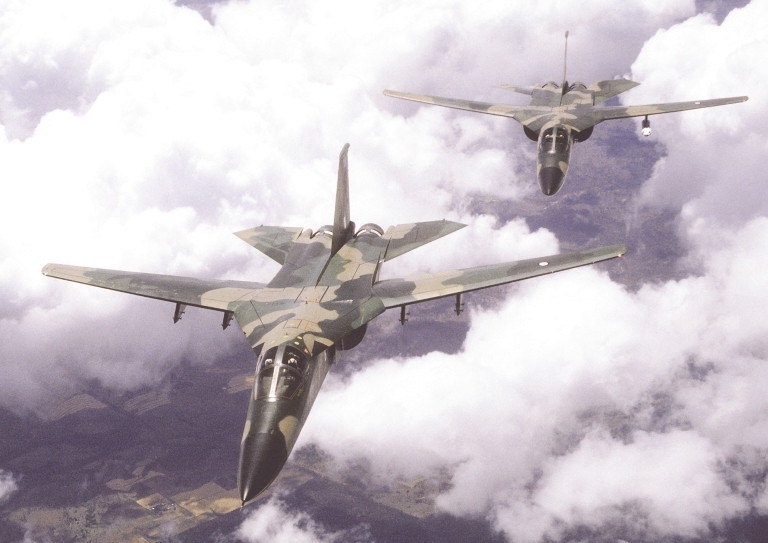 The technological and analytical skill levels in the current RAAF officer corps have fallen well below the standards seen during the 1960s, 1970s and 1980s (US DoD image circa 1980). |
|||||||||||||||||||||||||||||||||||||||||||||||||||||||||||
|
|||||||||||||||||||||||||||||||||||||||||||||||||||||||||||
IntroductionThe
Royal Australian Air Force is today facing the single greatest
challenge it has confronted in its 86 year history. That challenge is
recovering the professional mastery which has been lost over the last
two decades due to downsizing, outsourcing, restructuring, deskilling
and
the inevitable management difficulties that followed.
The severity of the problem cannot be understated. Air forces are inherently technologically centred military services. Every aspect of tactics, operations, strategy, planning and support is permeated with technological issues, be they in the employment and support of systems, or in the skills sets of personnel. An air force which cannot effectively master its technology is, simply, unable to perform its basic role. The reality of the RAAF's progressive deskilling and consequent loss of professional mastery is disturbing, but no less disturbing than the reluctance to acknowledge the problem, both within Defence as an organisation, and within much of the parliamentary community. It amounts to a national embarrassment, but embarrassments are only fixed if the problem is properly acknowledged, analysed, quantified, and corrected. The problem of RAAF deskilling is not isolated within the Australian Defence Organisation. The long series of poor choices made in strategy definition, capability development and procurement points to a deeper and broader problem, encompassing the two sister services, the capability development bureaucracy, the acquisition bureaucracy, and key Defence areas such as Strategy Branch. However, the RAAF, due to its nature, is the Service most sensitive to loss of professional mastery, making it the most appropriate case study of this problem. This analysis will follow a systematic approach to identify the scale of the problem, with the aim of producing hard metrics to define remedial measures. Observing the Symptoms of the Professional Mastery ProblemThere
is much anecdotal evidence of the deskilling problem, but a far
larger and more concerning collection of evidence is to be found in
formal public documents.
Perhaps the most illustrative of the anecdotal items includes an observation, in 2004, made by a serving senior RAAF officer to one of the authors, specifically that the Russell Offices bureaucracy was characterised by ’institutionalised mediocrity’. No less illustrative is a more recent observation circulating in the Australian analytical community, that “Within Russell Offices, Defence have repealed the laws of physics”. Formal public statements and documents are however much more useful as a tool for the forensic analysis of problems with professional mastery. This is for several good and practical reasons:
The
first illustrative case study involves evidence provided by the then
Chief of Air Force and Chief of Defence Force in late 2003 to the
Federal parliamentary Joint Standing Committee on Foreign Affairs,
Defence and Trade. A forensic analysis co-authored by one of the
authors of this analysis established at least fourteen instances of
basic domain knowledge not being understood, several instances of
inappropriate cost inflation, and eleven key items of evidence being
omittedi.
The second illustrative case study is a public briefing document entitled ’Consideration of Defence Input to Defence Annual Report for FY02/03’, produced in response to the above cited forensic analysis, after considerable delay by Defence. Forensic analysis of the latter document yielded even more disturbing results than the preceding evidence, as the document was produced in response to a series of specific criticisms. No less than 49 errors of fact, misunderstandings of basic domain knowledge, and non-sequitur conclusions were found. The summary conclusions of the forensic analysis foundii: “The document displays an intellectually incoherent rationale for current force structure planning. Much of this rationale is centred in assumptions and premises about regional capabilities, technological capabilities and the viability of networking which have little or no basis in observable facts. The reasoning presented for the decision to retire the F-111 is centred in beliefs and opinions, rather than intellectually rigorous analysis. Similar problems abound in the cases presented for networking and for the choice of the JSF over the F-111.” The third illustrative case study can be found within the evidence provided by Defence to the Federal parliamentary Joint Standing Committee on Foreign Affairs, Defence and Trade inquiry into Regional Air Superiority in 2006. A forensic analysis of this evidence yielded no less disturbing conclusions, summarised thusiii: “The evidence presented by senior Defence officials to this Inquiry demonstrates a much higher frequency in errors of fact, non sequitur conclusions and lack of rigour, compared to the evidence presented in 2004 in relation to these matters. There is a remarkable consistency of misunderstanding, non sequitur conclusions and errors of fact, a rejection of alternatives and risks, selective bias in analysis, absence of contingency plans, and poor definition of objectives. This is no different from that observed in recent and well documented overseas decision failures”. The fourth illustrative case study is a 29th October, 2007, document posted, without attribution, on the Defence website, entitled ’THE ADF AIR COMBAT CAPABILITY’. Forensic analysis of this document yielded a total of 42 errors of fact, 17 non-sequitur conclusions, and 32 instances of ’spin doctoring’ where the author(s) attempted to alter the manner in which a typical reader would assess a statementiv. Two observations can be made from these case studies:
However,
most remarkable is the sheer breadth and depth of the fallacies which
are accepted internally within the Defence organisation as fact, and
put to Government, Parliament and the public as being true. These
encompass such areas as:
These
evidence a deep and pervasive literacy problem
in basic domain knowledge, in solving technological and
strategic problems, and in the ability to solve logically and
rationally the kind of problems that characterise military staff work
in a highly technological era.
Less publicly visible are the damaging effects arising from staff deskilling, as they percolate down to operational units. A mainwheel falling from an F-111 due to an improperly secured wheelnut is public knowledge, as well as aircrew illuminating road traffic with a laser designator, a fuel tank explosion in an F-111 due to the retention, despite contractor advice, of defective components, and a whole range of other skills related maintenance, support and operational problems observed with RAAF aircraft and training operations. That there have not been any fatal accidents in recent years is evidently more due to good luck than good management. The same cannot be said for the operation of aircraft by other two service armsv. Clearly visible effects of deskilling at this time include:
These examples indicate that the RAAF is
confronting
a
deep and pervasive systemic problem due to personnel deskilling,
especially prominent in the areas of science, technology,
foreign capability analysis, strategy, military science and thinking,
and critical reasoning techniques.
This problem is cumulative, in the sense that the organisation's internal belief system has been contaminated with numerous false beliefs in lieu of verifiable facts, and that contamination will propagate and reinforce itself over time. As a result, the RAAF will find itself in an ’alternative reality’ which is not aligned with the physical reality around it. This is a strategically dangerous state for any organisation to be in, especially a military service. If this problem is not corrected, and remedial measures introduced rapidly and aggressively, the only possible outcome is a major operational failure and defeat in combat if the RAAF is put to use in its stated role. Analysing the Causes of the Professional Mastery ProblemIn looking into the nature and extent of the de-skilling of the RAAF, and its consequences, it is important to first review the structure of the Service before the implementation of the DER/DRP and CSP. At that time, the RAAF’s Technical Services element:
Together,
the Aircraft Depots and the Maintenance Squadrons safeguarded the
RAAF’s operational independence, developed the deeper-level
expertise need for the planning and introduction of new capabilities,
and provided a reserve of resources able to support prolonged
deployments.
The organisation and functions of the RAAF, developed over some 60 years of experience in peace and war, were directed towards:
The RAAF Technical Services organisation
demonstrated its competence through many emergencies, not the least in
Vietnam where it earned much commendation from the US forces in that
theatre, refer Annex C for a more detailed summary.
At that time, the Chief of Air Force (CAF) had command and control over all RAAF elements and the resources need to meet his Air Power responsibilities. The short and direct lines of command and control enabled the RAAF to absorb the inevitable ebbs and flows in Government policy and funding with a controlled, minimum impact on core operational capabilities and the support infrastructure. Support plans could also be varied quickly to meet changing Air Staff Plans and Programmes, while protecting the Defence Industry Base upon which the Air Force depended. The Technical Services Branch carried out the functions listed above under one Technical Services Chief supported by 718 engineers who maintained a sound level of expertise in the aircraft operated, the systems fitted, and the technological environment in which they operated. The Service was recognized as being the most capable air force for its size in the world. The Decline in Technical Mastery in the RAAF Since the mid-1970s, the RAAF’s Technical Services function has been subjected to ‘Death by a Thousand Cuts’, the main milestones being: The RAAF Re-organisation (1982 on). Under the prolonged and unrealistic financial constraints imposed on the Services following the Tange structural changes, the RAAF sought economies by moving from its traditional Engineering, Maintenance and Supply support structure centred on AFO and HQ Support Command to Weapon System support elements located at the operational bases. Unfortunately, RAAF implementation plans were overtaken by government driven structural changes. The Sanderson Review (1989). This structural review led to the downgrading of the RAAF’s Development and Technical Services Branches, the latter ceasing to exist in 1989, although fragments drifted through the organisation until 1993. This review also required the three Service Offices to have a common structure, and later limited their manpower to 100, both decisions being imposed without thought for the marked differences between the Services in the technology operated and supported. The General List. About the same time, the RAAF introduced a ‘General List’, which included all officers of the rank of Group Captain and above, so as to provide a pool from which higher management posts could be filled. In effect, it resulted in important posts being filled by officers with inadequate qualifications. The inevitable impacts upon force structure decisions, source selection, and project management competencies have been well illustrated over the years since. The Impact of the Defence Efficiency Review (DER), the Defence Reform Programme (DRP), and the Commercial Support Programme (CSP) From 1996, these programmes, driven mainly by achieving ‘savings’ without thought for their impact on the management of the Service and its technical support base, reduced the span and depth of RAAF technical responsibility. Contractors failed to fill the resulting engineering support gap on the grounds of cost. The DER/DRP imposed mainly structural changes and manpower constraints that saw the RAAF’s size reduced significantly. The CSP concentrated on outsourcing RAAF maintenance work, contracting out the work of the three Aircraft Depots and the majority of that done at the four major Maintenance Squadrons, as well as other RAAF units. The RAAF has been left with the lowest and least skilled maintenance tasks done at Operating (Flight Line) level. Support Command Re-organisation. Firstly, the RAAF’s Support Command (later Logistics Command) was absorbed by Support Command Australia, which was then absorbed by Defence Materiel Organisation (DMO) which also assumed responsibility for both in-service support and the acquisition of new capabilities. The continued inability of DMO to properly specify, source and procure the needs of the RAAF through a lack of the required technical skills and management experience has been endemic. The impacts of these changes have been to:
These impacts became visible
firstly
in a fall in airworthiness standards which led to the establishment
of a Director General Technical Airworthiness in 1990. Then,
continued poor maintenance standards led the CAF to form a Director,
Maintenance Policy and Planning in 2007. While these
responses will be helpful, their effectiveness will be limited
severely so long as the RAAF does not have a Technical Services
organisation at AFO level to achieve the visibility and control
needed to ensure effective engineering and maintenance support across
the Force. Detailed discussion
of the
role and importance of Technical Services functions and the penalties
that flow from ignoring them can be found earlier publications on
RAAF maintenance and airworthiness.
The role and importance of engineering support to the RAF was put well by Air Marshal Sir Roderick Hill, and his observations are quite applicable to the RAAF today: “In our view, air operations will always depend for their success to a marked extent on the right handling of the related technical problems. Intelligent direction of scientific and engineering resources, as well as of the men who apply them, is therefore fundamental. The evolution of a common technical doctrine and a strong corporate feeling is prerequisite to really efficient and economic management. The RAF is steadily becoming more dependent for its offensive power on technical imagination, skill and accomplishment, while technical equipment is increasing in variety of use and scope of function. In these circumstances, leadership and the creation of a powerful unifying influence is of primary importance, without it technical endeavour may well tend to be sectional and separatist. Nevertheless, while firmly harnessed to operational requirements, the vigour of technical initiative has by all possible means to be sustained. It is here that the balancing effect of professional judgement is indispensable.” Interestingly, the strongest support for Hill’s views came from the senior members of the General Duties Branch of the RAF and, in essence, the decision spelt the end of a generalist approach to what remains a specialist function. Today, the RAAF has reverted to 'generalist' managment, its engineers absorbed into a culture of ‘management’ rather than one of professional engineering. The current structure of the RAAF has become sectional and separatist as Hill foresaw. There is no powerful unifying influence; nor is there evidence of any balancing professional judgement between operations and engineering. That the RAAF today still faces the structural, organisational, and skills problems entrenched over the past 25 years or so is evidenced in the Deputy CAF’s recent article ‘Re-engineering the RAAF’. He cites, for examplevii:
The
first point suggests a breakdown in the unity of direction that should
flow down the chain of command and control
from the CAF to the lowest levels of the RAAF, resulting in
uncertainty that must impact in turn upon morale and ethos. The second
reflects
ineffective co-ordination between Air Staff planning and personnel
management. The third a disconnect between Air Staff planning and
resource management, especially recruitment, training, finance, and
manpower development. The fourth points to the absence of a
Force-wide Technical Services management organisation able to
establish and maintain maintenance efficiency, effectiveness and
airworthiness standards across all Fleets. The fifth is a reactive
response to problems that have been allowed to develop. It
epitomises management lagging and reacting rather than leading
firmly. This is a totally inadequate and dangerous management
concept for a Military Service that should need no further comment!
RAAF Operational Mastery The adverse impacts of interminable structural changes have also been reflected in a decline in the professional mastery of operational staffs, particularly where they interface with technology, support elements, and the Defence bureaucracy. Within the RAAF organisation pre-DER/DRP/CSP, Air Staff officers gained practical management experience through having to work with the supporting branches, mainly Technical Services, Material, Supply, Personnel, and Administration, requiring them to understand the critical interdependencies involved at Air Force Office, Command, and Base levels and at RAAF elements overseas . However, the ‘gutting’ of the Service’s capabilities, together with the current AFO and Force Element structures have reduced dramatically the span and depth of Air Staff officer professional and management expertise in much the same way that Engineer officer expertise has been affected. Coupled with the lack of the tertiary knowledge required of senior Air Staff officers to perform at the higher levels in such specialist areas as force structure and force development, the problem becomes more critical. Impacts Summary What we see is the breakdown of the ability of the CAF to manage Australia’s air power as a coherent force; an organisation that has lost its way trying to survive and navigate the multitudinous changes that have been imposed since Tange; a force following management concepts that are wholly unsuited to any military force, a force not structured or organised to manage its core dependencies; a force constrained by the overwhelming preoccupation of the bureaucracy with exercising financial power, making it and the RAAF unable to respond coherently and timely to changing needs; a force that carries primary responsibility for the defence of Australia, but is ‘supported’ by a bureaucracy that does not accept any responsibility. In summary, the current organization, management approaches, and skills base do not, and can not, assure the CAF that his force elements will provide him with the performance that he must have to meet his operational responsibilities as a fully integrated and unified Force. This situation points to a serious lack of the required professional mastery. Education Standards in the RAAF Officer Corps – Then and Now The 'classical' educational and training model for the RAAF officer corps, as implemented during the pre-Tange era, comprised a range of possible entry and growth paths, both for aircrew and engineers. Traditionally, the RAAF’s engineering corps comprised:
In
1980, with the RAAF’s trade structure having to face the
proliferation of integrated systems and computer control, a Systems
Technician specialisation was introduced.
All engineer as well as trade training was anchored firmly on what was needed to maintain and develop the Air Force technologically. In essence, the engineer corps highlighted the need for a technology focussed Air Force in contrast to the general air crew concept that flying was an end in itself. The
Engineer Corps then undertook both specialist and staff training, as
follows:
At
all levels of training and experience, there was a constant thread
that emphasised airworthiness and the many and diverse activities
that go to make it up. Members were also inculcated with both the ethos
of the engineer and that of the Service as a whole. A more detailed
discussion of engineer training is in Annex A of this document.
Before
the DER/DRP/CSP changes, RAAF pilots entered the Service via:
No
1 FTS also trained pilots for the other services.
Navigator training was conducted at the School of Air Navigation (SAN) and Air Electronic Officer (AEO) training at the School of Radio and SAN. Entrants for these categories came often from 1 BFTS students who did not qualify as pilots, and serving members. On graduation, these aircrew were posted for operational training at:
Selected
officers would then be selected for further training and experience
overseas through exchange posts, and facilities such as the Central
Navigation and Control School (UK) and the Empire Test Pilots’
School (UK) or the USN Test Pilots’ School (US).
Air staff members then progressed through the ranks, taking their promotion examinations, and professional development courses in common with the officers of the other branches (psc and jssc). Some were selected for courses overseas such as those at the Royal College of Defence Science (UK), USAF Institute of Technology, and the Air Warfare College (US). Although the number of Air Staff officers having tertiary qualifications varied considerably across the ranks, they still represented a significant percentage, and by graduating its RAAF College pilots with a BSc, the Service was clearly endeavouring to raise the general technological awareness of its operational staffs. The tertiary qualifications at the time are summarised in Annex B. Unfortunately, these basic qualifications do not seem to have been followed up with post-graduate qualifications in fields such as science, technology-based operational analysis and air power development. The Air Staff seemed to be content to leave the management of technology in the hands of the Technical Services Chief, perhaps not surprisingly, as that Branch had performed consistently well. However, having lost that support base when the Technical Services Branch and HQ Support Command were dismantled, the RAAF faced a great void in its ability to manage technology in both operational and technical support areas. The contemporary in-service undergraduate and postgraduate professional education system reflects the current focus on ’jointery’ and this is reflected in tri-service teaching establishments. Undergraduate education is provided for officer cadets by the Australian Defence Force Academy (ADFA) in Canberra, which is affiliated with the University of New South Wales, a Go8 (Group of Eight) university. This places the quality of undergraduate education provided in the same bracket as other first tier Australian universities, and graduates are awarded accredited degrees in their respective disciplines, which cover most of the categories found at other Go8 universitiesviii. Postgraduate staff education is primarily provided by the Australian Command and Staff College (ACSC) and the Centre for Defence and Strategic Studies (CDSS), both part of the Australian Defence College. The ACSC amalgamates the three previous single service staff colleges into a single entity, and its purpose is to provide ’classical’ staff college courses to mid ranking officers. The CDSS course is aimed at senior officers (colonel and 1-star), and covers strategic leadership and command, the strategic setting, higher command, capability development, and policy development. The CDSS is accredited to award Graduate Certificates, Graduate Diplomas, or Master of Arts degrees in Strategic Studies via Deakin University (non Go8). Historically, the RAAF has also posted a small number of high achieving mid ranking officers overseas, to undertake research or coursework Masters degrees at the US Air Force Institute of Technology and the UK Cranfield University Defence College of Management and Technology. A
mid ranking or senior general duties branch RAAF officer will
therefore have completed staff college training, and in some
instances a coursework Masters degree, the latter mostly in
management related disciplines, or humanities, frequently involving
strategic studies, all of which may be categorised as ’soft
disciplines’. What is observed much less frequently are
research masters degrees in sciences, engineering, operations
research and other ’hard disciplines’. Doctorates (PhD,
DSc, DS) are exceptionally rare, regardless of the discipline in
question. RAAF Engineers will typically have a higher fraction of
Masters degrees, especially in engineering and the MBA category, but
few of these will be research degrees.
The latter contrasts strongly with the US Air Force, an excellent benchmark, which has a good number of senior and mid ranking officers with PhD degrees, a robust proportion of which are in the ’hard disciplines’. The educational background most senior RAAF officers have is primarily orientated towards management and leadership, with some component of service specific strategy and doctrine. What is largely absent is training in research skills, especially skills involving hard science areas like mathematics, physics, operations research, engineering and military strategy and science. A coursework Masters degree, which in the globalised tertiary education system is typically similar in depth and difficulty to the final year in undergraduate studies, cannot provide the depth of domain knowledge, research skills and critical thinking taught in a research Masters or PhD from a world class university. To believe otherwise is to discard a century of empirical experience, in which many high achieving and innovating military officers on the global stage had exactly this type of postgraduate education. In the rapidly evolving and technologically complex strategic environment Australia finds itself in now, the RAAF officer corps is mostly equipped with the wrong kind of postgraduate education and as a result, is seriously deficient in the kind of intellectual skills sets critically required for success. How to Fix the Professional Mastery ProblemFailure
to correct the problems inherent
in the RAAF's current staff training and education mechanisms will
have dire consequences not only for the RAAF as an organisation, but
also for the Australian community which is funding it. In extremis, the end state
of the current trend is best observed in a range of Third World air
forces, where professional mastery is largely absent with planning
choices made for arbitrary reasons.
In particular, there is a genuine risk that the current deskilling problems will contaminate advice provided to the current Air Combat Capability Review, and the current White Paper development process, damaging the outcomes produced by both reviews. To remedy the situation it will be necessary to introduce a series of short, medium and long term measures, which will need to be implemented with promptly and efficiently, both to protect the RAAF from the cumulative problems it is experiencing, and to protect the Defence organisation as a whole from poor advice and its inevitable consequences.
These
measures are essential if change is to be effected, and the RAAF and
community are to be protected from the cumulative damage of the last
three decades of mandated change.
Long Term Measures to Resurrect Professional Mastery If the RAAF is to be resurrected as a coherent Force, based upon sound mastery and management of its technology, it would be sensible to:
Given
a proper organisational structure, the skills required to manage the
RAAF’s current and planned technology will need to be
established for both maintenance and engineering functions. The
former must provide the basic and advanced skills to carry out and
manage all maintenance tasks. Within those areas involved with higher
level engineering tasks, engineers will have to be competent in
technology, analysis techniques, and technical management.
Unfortunately, the management of technology has not been well served
by the tertiary institutions, so RAAF may have to develop these
courses in conjunction with a selected tertiary organisation.
Such changes will go far towards re-establishing the RAAF as a skilled and experienced operator and supporter of high technology air power with the necessary professional mastery. The Role of Education in Restoring Professional Mastery Organisational structure and practical skills alone cannot address all of the cumulative problems observed, and education and training will have to play a major role. All newly qualified junior officers should have a university undergraduate degree. The Non-Graduate or Direct Entry category for aircrew, which requires high school Year 12 education only, should be amended, such that the officer candidate is required to do a university undergraduate degree as part of their training process.
There is another important consideration in relation to undergraduate university degree education of officer candidates. The reality is that since the early 1990 amalgamation of the University system, there has been a strong trend away from teaching durable fundamental knowledge, in favour of more marketable vocational and applied skills. This, combined with the ongoing decline in the quality of much of available high school education, especially in the sciences, presents some important problemsx. A Non-Graduate or Direct Entry aircrew applicant in 1970 will have been far better educated in English language skills, basic science including mathematics and physics, than many current university graduates in soft or applied science disciplines. Most university academics in Australia have to contend with undergraduate student literacy problems in English language, mathematics and physics, all a result of an underperforming high school system. In practical terms, a university graduate with an honours degree entering the RAAF today may have poorer skills in these key areas than a high school graduate of 30-40 years ago. A military aviator today must be competent in basic physics and mathematics to properly understand tactics and the technology he/she is using – and his opponent is using against him/her. Every aviator needs this foundation knowledge, and needs to be competent in using it. While modern aircraft might be easier to fly than Sabres or Mirages, the complexity of the systems, sensors, weapons and computer equipment which runs this equipment is in many respects greater. For a warrior to prevail, or even survive, in this type of environment, he/she has to play every technological advantage he/she has against his/her opponent, and doing that competently requires solid understanding – not just the ability to regurgitate lecture notes or slides. This and the current unsuitability of the skills imparted by typical undergraduate university education leads to one inevitable conclusion. The RAAF will need to engage one or more universities to provide undergraduate courses which are optimised for aircrew, with a 'classical' education in mathematics, physics and problem solving, to provide aircrew with appropriate foundation skills sets. The issue of postgraduate education for mid ranking and senior officers is no less important. The RAAF will need selected decision makers and planners for staff positions who are intellectually equipped to provide disciplined and rigorous analytical and problem solving capabilities. This skills set is today primarily produced by postgraduate research degrees such as masters or doctorates in science or engineering, at upper tier universities. A model which might be appropriate is that espoused by US General Curtis E LeMay, Commander of Strategic Air Command and later Chief of Staff Air Force, who was a vocal advocate of intensive training and high standards of education in the officer corps. LeMay favoured officers seeking higher promotions who completed postgraduate research degrees from top tier US universities, with a bias toward science, engineering, operations research and strategy, all disciplines of high value in strategic planning staff work. In
practical terms, an RAAF officer should not be promoted to GPCAPT or
higher, unless that officer has completed a rigorous high quality
postgraduate research degree in an intellectually
difficult and relevant discipline. Areas such as science,
engineering, operations research and strategy should be favoured,
over other, less relevant disciplines. A coursework masters
degree,
especially in a 'soft' discipline, should not be counted as a useful
measure of academic achievement in assessing a mid-ranking or senior
officer for promotion. A problem which is likely to arise is that the
quality of earlier undergraduate education may preclude entry to the
higher quality universities, and suitable strategies will need to be
developed to overcome such difficulties. In
summary, the RAAF will need to change the type of education its
officers receive, from the undergraduate level to the postgraduate,
to provide skills sets which are relevant for staff work in a
complex, technologically driven planning and warfighting environment. |
|||||||||||||||||||||||||||||||||||||||||||||||||||||||||||
| The
Language of Professional Mastery One reliable measure of
professional mastery within an organisation is the clarity of thinking
and expression in its writings. Traditionally, the RAAF placed
great emphasis on Service writing, with conciseness, clarity of thought
and expression key elements in its courses and examinations. High
standards were set and maintained for Service Papers Appreciations, and
General Service Writing, and failure to reach the required standards
was to place a limit upon a member’s career. The reasons were
simple – a lack of clarity of thought and expression cannot be
tolerated in any military organisation. The consequences of false
or confused information were too high to accept, particularly so in a
high technology service.
Today, little evidence remains of those high standards. A recent example of current standards is seen in the discussion paper released by the Air Power Development Centre titled ‘An Air Force of Influence: A Strategic Framework for the Future Air Force’. Any document which includes such sentences as the following must cause concern: “Faced with a choice of distinct but equally viable means of satisfying the challenges presented through these developments and afforded by this opportunity, we, the Air Force’s senior leadership, have chosen to continue Air Force’s maturation as a key strategic national security contributor by transforming our force into a strategic one. We call this strategic force an air force of influence.” This standard of thinking and writing is quite unacceptable in any organisation, let alone a military one. George Orwell summarised well our increasingly widespread inability to express ourselves clearly: “Don’t you see that the whole aim of Newspeak is to narrow the range of thought?” (George Orwell, ‘1984’.), and: “A man may take a drink because he feels himself to be a failure, and then fail all the more completely because he drinks. It is rather the same thing that is happening to the English language. It becomes ugly and inaccurate because our thoughts are foolish, but the slovenliness of our language makes it easier for us to have foolish thoughts. The point is that the process is reversible. Modern English, especially written English, is full of bad habits which spread by imitation and which can be avoided if one is willing to take the necessary trouble. If one gets rid of these habits one can think more clearly, and to think clearly is a necessary first step toward political regeneration : so that the fight against bad English is not frivolous and is not the exclusive concern of professional writers.” (George Orwell, ‘Politics and the English Language’.) Those wishing to be led entertainingly through the manner in which we have largely lost the habit of thinking clearly and using clear English are referred to ‘Death Sentence – the Decay of Public Language’ (Don Watson, Random House, 2003.) If the RAAF is to recover and develop its professional mastery, it must start at the fundamental levels of thinking and expression. |
|||||||||||||||||||||||||||||||||||||||||||||||||||||||||||
| The
Role of Defence Materiel Organisation (DMO) The contracting methodology
adopted by the DMO is based upon an approach used in the USA during the
1980s and 90s, known as ‘Total System Performance Based Contracting’.
This approach resulted in financial and capability consequences that
were far from optimal. The DMO versions of long-term equipment supply
and support contracts are based upon the DMO ethos of ‘De-risking
Projects’, a hazardous concept unique for any industrialised Nation,
and an approach not recognised by any Risk Management Standard.
In effect, it places responsibility for the engineering, project management, maintenance, and supply support of Australia’s primary defence capabilities wholly in the hands of non-Australians reporting to overseas companies. Local support is limited to those simple tasks involved with repair by replacement, stores accounting, and shipping. Deeper level maintenance, together with the skills base involved, will be evacuated to overseas facilities, in keeping with the business development strategies set in train by overseas contractors during the early 1990s. That is, management of our front line defence assets will move out of Australian control into the control of foreign companies, and at considerable long-term cost. When questioned about this in the case of the Super Hornet, a senior executive of one overseas prime replied “But this was always going to be the case with the JSF, anyway!” This approach is seen by DMO as transferring risk from Defence to the Contractor, but no contract can ever achieve this. If a contractor defaults for any reason, the prime risk – that is, any adverse impact upon Australia’s force readiness, responsiveness, flexibility, effectiveness and, in the case of aircraft, airworthiness.– must always be borne by the RAAF, and hence Australia, not the contractor. DMO can only impose commercial sanctions upon any defaulting contractor, or attempt to as a long and expensive legal process inevitably takes over. Finally, the whole concept is in direct conflict with the policies of successive governments of both persuasions which have emphasised the criticality of a robust Defence Industry Base to underpin Australia’s self-reliance. In fact, current policies herald a marked, possibly total, withering of Australia’s remaining Defence Aerospace Industry. Current DMO contracting practices are inimicable with government policies and will also be a major impediment to the re-skilling of the RAAF, and indeed the re-skilling of Australian Industry.
|
|||||||||||||||||||||||||||||||||||||||||||||||||||||||||||
Summary and ConclusionsThere is much empirical and public evidence which shows that the the RAAF has suffered a critical loss of professional mastery, especially in areas related to basic military science and military technology.The consequences of this problem range from public statements containing numerous factual and logical errors, across poor decisions in capability development and procurement, to incorrect advice to Government and parliament on a range of operational, technical, strategic and force structure planning issues. The root causes of this deep and pervasive problem can be traced back to the disestablishment of the RAAF's Branch structure, especially the Engineering Branch, during the progressive implementation of the Defence Efficiency Review (DER), the Defence Reform Programme (DRP), and the Commercial Support Programme (CSP), and a failure to introduce and implement alternative measures for maintaining critical intellectual skills sets in engineering, science, operational analysis and strategy. The consequence of this is that the current RAAF officer corps is mostly not equipped with a suitable educational background or experience profile to master the kind of problems which arise in management and planning of complex and intellectually demanding areas. Solving this problem will require a combination of short, medium and long term measures, detailed in this paper. Unless a sustained and aggressive effort is made to re-skill the RAAF, and DMO ceases to enter into long-term, ‘De-risking’ contracts, the cumulative and ongoing effects of de-skilling will not only continue to damage the RAAF severely, but will also cause ongoing and increasing damage to Australia’s Defence Industry Base and its key military capabilities. Acknowledgments:The authors wish to express their gratitude to the six expert reviewers, in Australia and the United States, who contributed cogent, incisive and relevant critique of the draft of this paper.  |
|||||||||||||||||||||||||||||||||||||||||||||||||||||||||||
Annex A - Education Standards in the RAAF Engineer Officer Corps“For sixty years, no activity has been more important to the RAAF’s professional well-being than its education and training programs. It was primarily through these programs that after the trials of WW11 and the neglect of the interim period, the RAAF reinvented itself as one of the world’s premier high-technology defence forces.” (The Australian Centenary History of Defence, Vol2, The Air Force, Alan Stephens, 2001). Traditionally, the RAAF’s engineering corps comprised:
In 1980, with the RAAF’s trade structure having to face the proliferation of integrated systems and computer control, the Systems Technician was introduced, but the important balance between systems and trade technicians in fault diagnosis and rectification may not have been fully resolved. The RAAF also drew its engineers from:
All engineer as well as trade training was anchored firmly on what was needed to maintain and develop the Air Force technologically. In essence, the engineer corps highlighted the need for a technology focussed Air Force in contrast to the general air crew concept that flying was an end in itself. The type of tertiary qualifications that were held are identified at Annex B. Specialist and Staff Training. The Engineer Corps then undertook both specialist and staff training, as follows:
On entering the RAAF, engineers were employed so as to maximise their expertise while providing them with appointments that would develop their technical and management expertise throughout their careers. This required a continuous dialogue between Personnel Branch where career development was planned and the Technical Services Branch. ‘Practical’ engineers with previous maintenance experience could be posted to a wide range of appointments at:
At all levels of training and experience, there was a constant thread that emphasised airworthiness and the many and diverse activities that go to make it up. They were also inculcated with both the ethos of the engineer and that of the Service as a whole. Two lessons stand out from this period, which were emphasised by Alan Stephens in his book ‘The Royal Australian Air Force’:
|
|||||||||||||||||||||||||||||||||||||||||||||||||||||||||||
Annex B – Selected Statistics
SAMPLE TERTIARY QUALIFICATIONS – ENGINEER BRANCH PRE – DER/DRP/CSP
Those without tertiary qualifications comprised: Gp Capt: 37.5%Wg Cdr: 33.6% Sqn Ldr: 30.2% Flt Lt: 44.7% Flg Off: 53.5% Plt Off: 80% Note: Non-tertiary qualified officers comprised many from the NCO and W Officer ranks who had completed an Engineering Apprentice course and had gained considerable practical experience in maintenance and project management. Source: The
Air Force List – 1981. SAMPLE
TERTIARY
QUALIFICATIONS –GENERAL DUTIES BRANCH
PRE – DER/DRP/CSP
Air Cdre: 29% Gp Capt: 14% Wg Cdr: 18.9% Sqn Ldr: 12.3% Flt Lt: 22.3% Source: The Air Force List – 1981. Annex C – PERFORMANCE STATISTICS – NO. 9 SQUADRON RAAF VIETNAM THEATREJUNE 1966 TO DECEMBER 1971 5.5 Years (2,000 Days) Including 2.5 Years (900 Days) of Gunship Operations] Deployment Strength: 8 x Bell UH-1B Iroquois Helicopters and about 90 personnel Mature Unit Strength: 16 x Bell UH-1H Iroquois Helicopters and about 170 personnel Hours Flown: 58,768 Sorties: 237,806 Passengers: 414,818 Freight: 12,207 tonnes Casevacs/Medevacs: 4,357 personnel Weapons Expenditure: 7.62mm – 15,512,361 rounds / 2.75 inch Rockets – 29,285 rounds Maintenance Effort: 250 Major Servicings & approximately 1,800 Intermediate Servicings Aircraft Availability: Averaged 13 of 16 aircraft on line daily; about 83 percent Aircraft Attrition: 7 lost due multiple causes and 23 suffered battle damage Casualties: Killed – 6, Wounded – 8, Injured – Under review HONOURS & AWARDS, NO. 9 SQUADRON RAAF VIETNAM WAR – 1966 to 1971 (The Australian Order of Precedence of Awards) 4 x DSO (Companion of the Distinguished Service Order) 2 x MBE (Member of the Order of the British Empire) 32 x DFC (Distinguished Flying Cross) RAN 1, RAAF 26, RNZAF 5 1 x CGM (Conspicuous Gallantry Medal) 1 x GM (George Medal) 9 x DFM (Distinguished Flying Medal) 1 x BEM(G) (British Empire Medal for Gallantry) 2 x BEM (British Empire Medal) 38 x MID (Mentioned-in-Dispatches) RAN 2, RAAF 34, RNZAF 2 1 x Vietnamese Cross of Gallantry (with Silver Star) Source: National Curator, No. 9 Squadron Association Inc., 2005 Endnotes:
|
|||||||||||||||||||||||||||||||||||||||||||||||||||||||||||
Air Power Australia Analyses ISSN 1832-2433  |
|||||||||||||||||||||||||||||||||||||||||||||||||||||||||||
|
|||||||||||||
|
|
|
|
|
|
|
|
|
|
|
|||
|
|
|
|
|
|
|
|
|
|
|
|||
| |
 |
|
|||||||||||
| Artwork, graphic design, layout and text © 2004 - 2014 Carlo Kopp; Text © 2004 - 2014 Peter Goon; All rights reserved. Recommended browsers. Contact webmaster. Site navigation hints. Current hot topics. | |||||||||||||
|
Site Update
Status:
$Revision: 1.753 $
Site History: Notices
and
Updates / NLA Pandora Archive
|
|||||||||||||
|
|
Tweet | Follow @APA_Updates | |||||||||||
|
|
|||||||||||||
|
|
|||||||||||||






