|
||||||||||||||||||||||
 |
||||||||||||||||||||||
![F-22A Raptor, FB-22, F-22E, F-22N and Variants Index Page [Click for more ...]](APA/f-fb-22.png "F-22A Raptor, FB-22, F-22E, F-22N and Variants Index Page [Click for more ...]") |
 |
![People's Liberation Army Air Power Index Page [Click for more ...]](APA/pla-air-pwr.png "People's Liberation Army Air Power Index Page [Click for more ...]") |
 |
 |
 |
 |
 |
 |
![Military Ethics, Culture, Education and Training Index Page [Click for more ...]](APA/ethx-culture.png "Military Ethics, Culture, Education and Training Index Page [Click for more ...]") |
 |
||||||||||||
 |
![Russian / Soviet Weapon Systems Index Page [Click for more ...]](APA/rus-weps.png "Russian / Soviet Weapon Systems Index Page [Click for more ...]") |
 |
 |
 |

|
 |
 |
 |
 |
 |
||||||||||||
 |
 |
 |
||||||||||||||||||||
| Last Updated: Mon Jan 27 11:18:09 UTC 2014 | ||||||||||||||||||||||
|
||||||||||||||||||||||
|
||||||||||||||||||||||
|
||||||||||||||||||||||
|
|
|
|
|
|
|
|
|
|
|
||||||||||||
|
|
|
|
|
|
|
|
|
|
|
||||||||||||
| |
|
|
||||||||||||||||||||
| Last Updated: Mon Jan 27 11:18:09 UTC 2014 | ||||||||||||||||||||||
|
||||||||||||||||||||||
Revisiting
“A
Farewell to Arms - Revisited”
|
||||||||||||||||||||||||
|
Air Power
Australia - Australia's Independent Defence Think Tank
|
||||||||||||||||||||||||
| Air Power Australia NOTAM 6th January, 2008 |
||||||||||||||||||||||||
Peter Goon, BEng (Mech), FTE (USNTPS), Head of Test and Evaluation, Air Power Australia |
||||||||||||||||||||||||
|
||||||||||||||||||||||||
| Editor's Note: In early 2005 Peter Goon released “A Farewell to Arms - Revisited” in which he forensically dissected a range of Defence arguments and claims related to the cost of operating the F-111 vs. operating the F/A-18A/B fleets. Using public data released by Defence in the Defence Annual Reports series, the analysis clearly demonstrated that Defence had misunderstood the cost structures of their own basic capabilities, and moreover, made a series of claims to the government of the day, the parliamentary committees and the public which put simply, bore little resemblence to physical reality. Indeed, one then serving senior RAAF officer observed, upon reading the document, that the Defence leadership were “hoisted on their own petard”. The findings of this analysis confirmed what reliability theory modelling predicts , insofar as proper maintenance and ageing aircraft program management can result in causes of unreliability and increased operating cost being “engineered out” of a system. Indeed, the reports emanating from Red Flag exercises in recent years indicated that the F-111s were delivering much better availability and reliability than the much newer by construction aircraft types participating [A]. Since “A Farewell to Arms - Revisited” was released, instead of correcting the record, Defence reacted by further reducing the detail of cost structure reporting for capabilities in the Defence Annual Reports series. Australia's new Government is now left to clean up the mess produced by the Defence bureaucracy over the last decade. While former ministers Nelson and Hill have much to answer for, at the root of many of their most damaging decisions and choices was erroneous advice tendered by the Defence bureaucracy. Revisiting “A Farewell to Arms - Revisited” presents a good opportunity to assess exactly how erroneous that advice actually was. Dr Carlo Kopp, SMAIAA, MIEEE, PEng Editor and Head, Capability Research, Air Power Australia 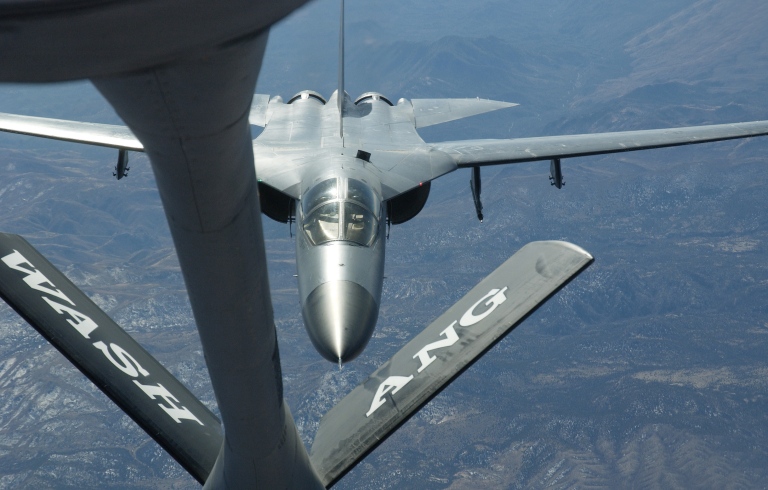 RAAF
F-111 at a recent Red Flag exercise (US Air Force).
|
||||||||||||||||||||||||
|
In his last year as the Vice Chief of the Defence Force, Lieutenant General Des Mueller provided some intriguing insights into the workings of senior levels of the Department Defence. His observations were communicated through various forums, presentations and writings, including his speech to the SIMTECH Conference that year and his retirement legacy paper entitled “A Farewell to Arms”. The message was delivered in such an erudite manner that it led one senior defence staffer to note that it was “typically classic Des Mueller”. Such a comment was echoed, in dominant groupthink style, by several other senior officials. However, stripping out the diplomatic niceties, one message is clear. Decision making in the Defence senior leadership group is heavily influenced by perceptions, rumours, hearsay and innuendo. Realities and facts, such as those derived from the laws of physics and defence community specialists with expert knowledge, play too little part in the process. This article outlines one example of the problem. In this case, the issue involved has more serious than most consequences for Australia’s defence capabilities. In evidence to the Joint Standing Committee on Foreign Affairs, Defence and Trade (JSCFADT), on 15 December 2003, the Chief of Air Force, Air Marshal Angus Houston, states: “The other factor that is really important here is that, if we look back over the last few years, the F-111 has cost us an extra six per cent per year over the last few years. We project into the future that it will continue to cost us more as each year passes. We are working on five per cent compounded, which is probably a fairly conservative estimate. So, for reasons of capability and cost, we think the decision we have made [the early retirement of the F-111 fleet circa 2010] is a reasonable one and gives the Australian government and the Australian people a good strike capability well into the future.” Two principal inferences are encouraged by such statements. First, the F-111 is expensive relative to other air force capabilities. Second, the F-111 will place an intolerable burden on the Defence budget in future years. Other pronouncements, both publicly and internal to Defence, indicate the general perception within the organisation, particularly in the civilian and military senior leadership group, is that the F-111 is expensive to operate and maintain and a costly burden to the rest of the air force and the defence force overall. However, as history reminds us with monotonous regularity, considering only the perception argument of the equation ‘Perceptions plus Knowledge of Facts equals Reality’ invariably leads to flawed decision making, as may be seen from the following. Now, presumably, the term “the last few years” referred to above by Air Marshal Houston embraces the fiscal years of 1999 through to 2003. This being the case, the financial statements in the Defence Annual Reports (DAR) for these periods do not support the promotion of such inferences nor the assertion that the decision to retire the F-111 is reasonable “for reasons of capability and cost”. An analysis of the costs of RAAF outputs can be done using data from the financial statements in the DAR, at the following three reported levels -
Table 1 – Price to Government of RAAF Outputs in 1999/00 (Extract from DAR 99/00, Page 158 of Section 3 – Outputs) The Price to Government level of Defence accounts incorporates ‘own source revenues’ and the ‘capability usage charge’. Because of the fluctuation from year to year between capability groups within Defence outputs, these revenues and charges have the potential to skew an observer’s appreciation of the real costs at the output and capability levels.Therefore, looking more deeply into the expenses (costs) aspects of the RAAF’s financial statements shows the following.
Fortunately, though, the detailed analyses by the RAAF which underpin the statement by the Chief of Air Force to the JSCFADT, enables cost figures at this level to be derived for the F-111 over the period with a high level of confidence. Applying the reported six per cent to the Total Operating Expenses for the F-111 capability, as reported in DAR 99/00, and compounding the cost at this rate on a per annum basis results in a total operating expense for the F-111 capability in FY 02/03 of $627.7m. Over the same period (1999–2003), the Total Operating Expenses for the RAAF overall rose by some 63.7 per cent to $4,669.7m. This would indicate that the cost of capability of the F-111 is now 13.4 per cent of the total – a reduction in relative cost of some 5.1 per cent against other air force capabilities (and the F-111's proportion of the RAAF budget) over the period. The increase in the RAAF’s Total Operating Expenses of 63.7 per cent (or $1,817.6m) equates to an average rate of increase for the whole of the air force of more than 18 per cent per annum. Therefore, the stated six per cent rate of increase attributed to the F-111 capability is actually less than one third of the average annual rate of increase in operating expenses for the rest of the air force. A graphical summary of key aspects of this is in Figure 1. 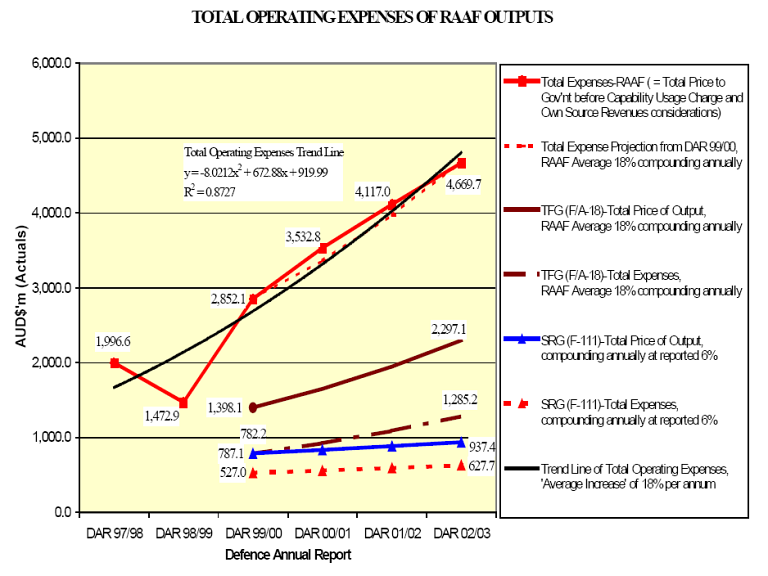 Figure 1 - Total Operating Expenses of
RAAF Outputs
The actual data points (ie. numbers reported in the DARs and those determined for the F-111 on the basis of the reported 6 per cent annual rate of increase) are shown with data markers. These data points are connected by distinguishing lines to provide a relative picture over time. Projections and trends derived from the analysis, using the nominal 18 per cent per annum average rate of increase, are shown by lines without data markers. The actual Price to Government for the F-111 as reported in DAR 99/00 is shown projected out to 2002/03 using the 6 per cent per annum compounding figure. To provide a complete comparison, the DAR 99/00 figures for Total Operating Expenses and Price to Government for the other elements of the Air Combat Capability (formerly known as Tactical Fighter Group – TFG) are shown and then projected to 2002/03. The rate of projection is the average nominal annual increase for the whole of the air force, namely 18 per cent per annum. This is considered conservative since the actual rate of increase over the period for the other capabilities (including those expenses for the TFG’s F/A-18 fighters) would have to be greater than the nominal average 18 per cent to compensate for the “under-performance” of the F-111 in these cost increase stakes. An analysis at the Total Direct Costs level shows similar trends. The reported rate of increase in costs for the F-111 (6 per cent per annum compounding) is about half the rate of increase in Total Direct Costs over the period for the whole of the air force. Not included in the Direct Costs level are expenses for depreciation/amortisation or other expenses associated with capital items and related expenditures. In regard to capabilities, using two different Measures of Effectiveness (MOE), over 50 per cent of the RAAF’s Air Strike Capability is embodied in the F-111 fleet. As the data presented in the RAAF submission dated 03 June 2004 clearly demonstrates,4 withdrawal of the F-111 in 2010 will halve Australia’s strategic strike capability. A more detailed analysis that compares other country’s current plans across the region paints an even bleaker picture.5 Many would argue that, in a perfect world, we would, of course, invest enough in our defence capabilities so such ‘gapping’ and ‘gaping’ risks as early retirement of the F-111 before a replacement was available would not be necessary. They would also say that insufficient defence funding over a long period has forced us to consider such unpalatable alternatives. But any decision to retire the F-111 early still needs to be based on careful assessment of its costs and the costs of the alternatives. It is apparent from the above analysis that the capability costings underlying the decision are seriously flawed and, thus, do not engender confidence in the course being adopted. The JSCFADT has noted this and other deficiencies in Defence’s arguments and recommended the defence minister in the next parliament conduct an inquiry, in effect, into the New Air Combat Capability Project and such related decisions as the early retirement of the F-111. If the [Editor:former] Prime Minister’s vision that “each generation of Australian’s is obliged to leave our country in better shape than they found it” is to be followed for Australia’s air combat capabilities, then the government needs to act upon the recommendations of the JSCFADT with some urgency. Moreover, how such flawed analysis made its way into the decision making process of the Department needs to be determined to ensure such circumstances do not arise in the future. 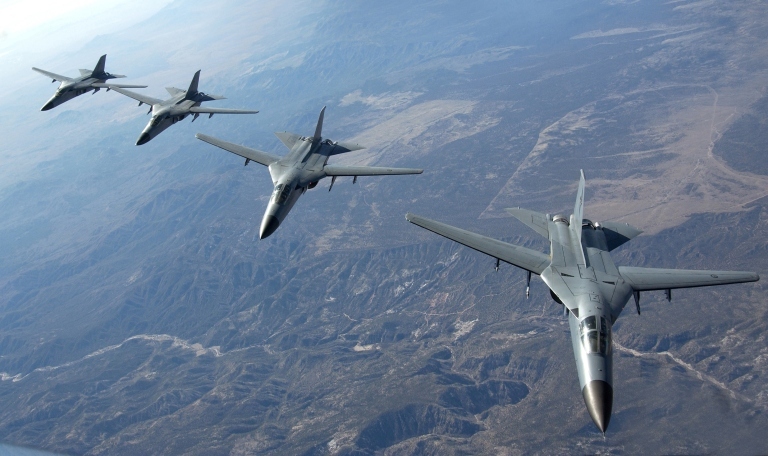 RAAF
F-111s at a recent Red Flag exercise (US Air Force).
Endnotes: A
Refer Kopp C., How
Defence Miscalculated F-111 Costs, Australian Aviation, March 2004.
1 The entry “Expensed Assets Under Construction” was only reported in two of the six reports (DAR99/00 and DAR00/01) over the period of interest. The entries against this ‘expensed item’ represented less than one per cent of the total operating expenses of interest in the baseline year (FY99/00) of the analysis. Therefore, to conservatively enable direct comparisons to be made, this entry has not been included in the analysis totals. 2 A review of Defence Annual Reports for the
past six years discloses several other interesting facts. DAR 99/00 is
the most comprehensive and informative of all the DAR over the period
by some degree, with a level of fidelity and objectivity not seen
before or since. This fidelity enables analysis down to FEG level for
not only financial but also operational performance. This provides
some clear metrics which, if they were available in subsequent years,
could form the basis for determining Measures of Performance (MOP) and
Measures of Effectiveness (MOE). One indicator of this finding is a
simple page count comparison. The RAAF Section of DAR 99/00 is 32
pages of focused data, the bulk of which is quantitative. The highest
page count seen for the RAAF section in DAR prior to 99/00 is 16 pages
(98/99) with previous years averaging about 12 pages (including the
ubiquitous organisational diagram). The RAAF sections in DAR
subsequent FY 99/00 average 7 pages (or less than 22 per cent of the
information space tabled in DAR 99/00).
3 Refer Defence Report to Government on
Outcomes and Outputs - Comparison between New and Old Outcome and
Output Structures, Issue 1.0, dated Sep 03 (http://www.defence.gov.au/im ).
4 Refer Figure 3 of Submission Number 4, Air
combat Capability, Air Force Submission to JSCFADT Inquiry dated 03
June 2004
(http://www.aph.gov.au/house/committee/jfadt/defenceannualreport_2002_2003/dar_subs.htm ). 5 Refer Submission Number 5, Analysis of
Defence Responses, Kopp/Goon dated 18 June 2004
(http://www.aph.gov.au/house/committee/jfadt/defenceannualreport_2002_2003/dar_subs.htm ). |
||||||||||||||||||||||||
| Air
Power Australia Website - http://www.ausairpower.net/ Air Power Australia Research and Analysis - http://www.ausairpower.net/research.html |
||||||||||||||||||||||||
 |
||||||||||||||||||||||||
| |
||||||||||||||||||||||||
|
|||||||||||||
|
|
|
|
|
|
|
|
|
|
|
|||
|
|
|
|
|
|
|
|
|
|
|
|||
| |
|
|
|||||||||||
| Artwork, graphic design, layout and text © 2004 - 2014 Carlo Kopp; Text © 2004 - 2014 Peter Goon; All rights reserved. Recommended browsers. Contact webmaster. Site navigation hints. Current hot topics. | |||||||||||||
|
Site Update
Status:
$Revision: 1.753 $
Site History: Notices
and
Updates / NLA Pandora Archive
|
|||||||||||||
|
|
Tweet | Follow @APA_Updates | |||||||||||
|
|
|||||||||||||
|
|
|||||||||||||






