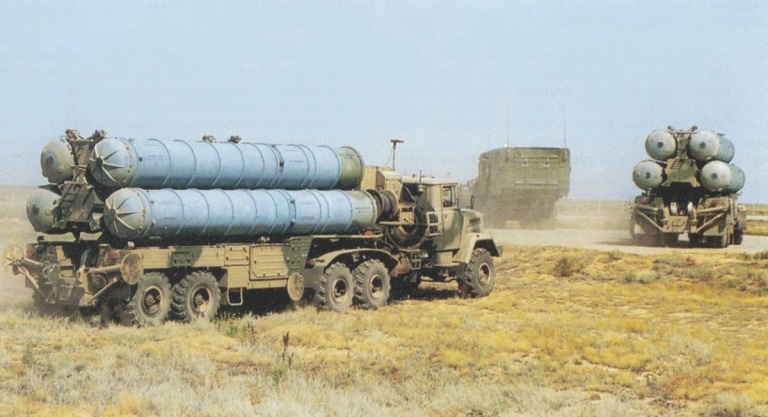
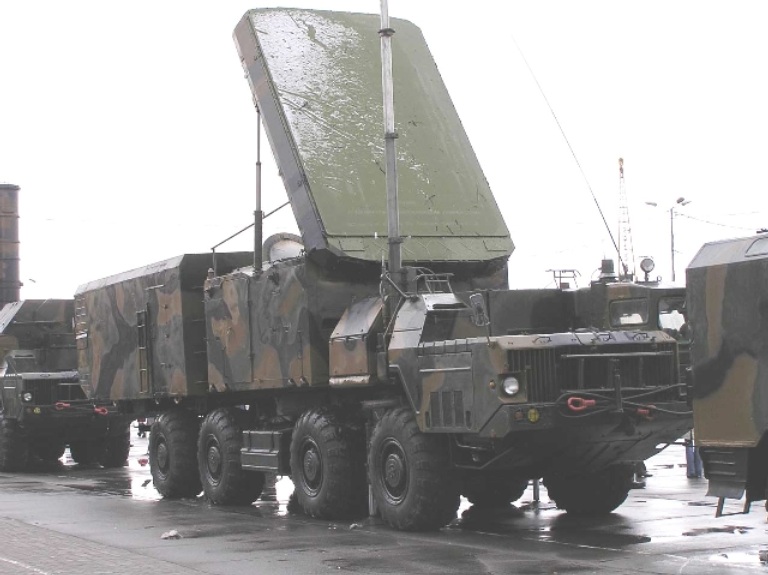
|
||||||||||||||||||||||
 |
||||||||||||||||||||||
![F-22A Raptor, FB-22, F-22E, F-22N and Variants Index Page [Click for more ...]](APA/f-fb-22.png "F-22A Raptor, FB-22, F-22E, F-22N and Variants Index Page [Click for more ...]") |
 |
![People's Liberation Army Air Power Index Page [Click for more ...]](APA/pla-air-pwr.png "People's Liberation Army Air Power Index Page [Click for more ...]") |
 |
 |
 |
 |
 |
 |
![Military Ethics, Culture, Education and Training Index Page [Click for more ...]](APA/ethx-culture.png "Military Ethics, Culture, Education and Training Index Page [Click for more ...]") |
 |
||||||||||||
 |
![Russian / Soviet Weapon Systems Index Page [Click for more ...]](APA/rus-weps.png "Russian / Soviet Weapon Systems Index Page [Click for more ...]") |
 |
 |
 |

|
 |
 |
 |
 |
 |
||||||||||||
 |
 |
 |
||||||||||||||||||||
| Last Updated: Mon Jan 27 11:18:09 UTC 2014 | ||||||||||||||||||||||
|
||||||||||||||||||||||
|
||||||||||||||||||||||
|
||||||||||||||||||||||
|
|
|
|
|
|
|
|
|
|
|
||||||||||||
|
|
|
|
|
|
|
|
|
|
|
||||||||||||
| |
|
|
||||||||||||||||||||
| Last Updated: Mon Jan 27 11:18:09 UTC 2014 | ||||||||||||||||||||||
|
||||||||||||||||||||||
Grisha's Stealth «Pidgeon Shoot» |
||||||||||||||||||||||||||||||||||||||||||||||||||||||||||||||||||||||||||||||||||||||||||||||||||||||||||||||||||||||||||||||||||||||||||||||||||||||||||||||||||||||||||||||||||||||||||||||||||||||||||||||||||||||||||||
|
Air Power
Australia - Australia's Independent Defence Think Tank
|
||||||||||||||||||||||||||||||||||||||||||||||||||||||||||||||||||||||||||||||||||||||||||||||||||||||||||||||||||||||||||||||||||||||||||||||||||||||||||||||||||||||||||||||||||||||||||||||||||||||||||||||||||||||||||||
| Air Power Australia NOTAM 23rd April, 2008 |
||||||||||||||||||||||||||||||||||||||||||||||||||||||||||||||||||||||||||||||||||||||||||||||||||||||||||||||||||||||||||||||||||||||||||||||||||||||||||||||||||||||||||||||||||||||||||||||||||||||||||||||||||||||||||||
|
||||||||||||||||||||||||||||||||||||||||||||||||||||||||||||||||||||||||||||||||||||||||||||||||||||||||||||||||||||||||||||||||||||||||||||||||||||||||||||||||||||||||||||||||||||||||||||||||||||||||||||||||||||||||||||
|
||||||||||||||||||||||||||||||||||||||||||||||||||||||||||||||||||||||||||||||||||||||||||||||||||||||||||||||||||||||||||||||||||||||||||||||||||||||||||||||||||||||||||||||||||||||||||||||||||||||||||||||||||||||||||||
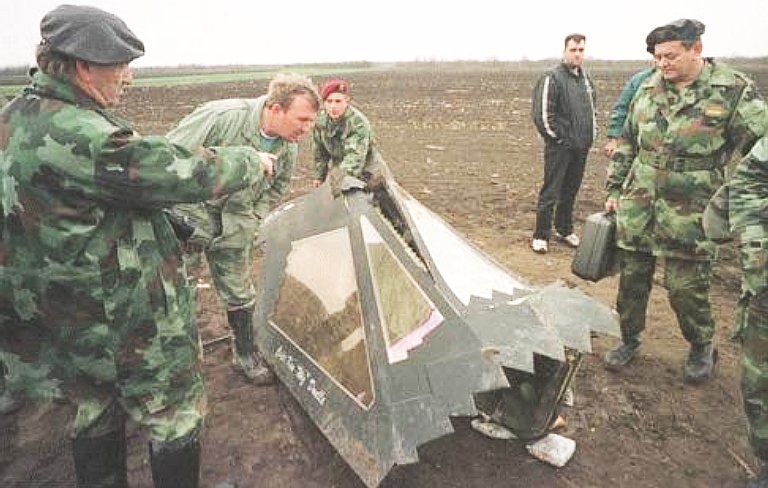 Serbian air defences successfully engaged and destroyed an F-117A Nighthawk in 1999, using a modified VHF band NNIIRT P-18 Spoon Rest acquisition radar and an obsolescent S-125 / SA-3 Goa missile system with a no less obsolescent SNR-125 / Low Blow engagement radar (Image via FAS). |
||||||||||||||||||||||||||||||||||||||||||||||||||||||||||||||||||||||||||||||||||||||||||||||||||||||||||||||||||||||||||||||||||||||||||||||||||||||||||||||||||||||||||||||||||||||||||||||||||||||||||||||||||||||||||||
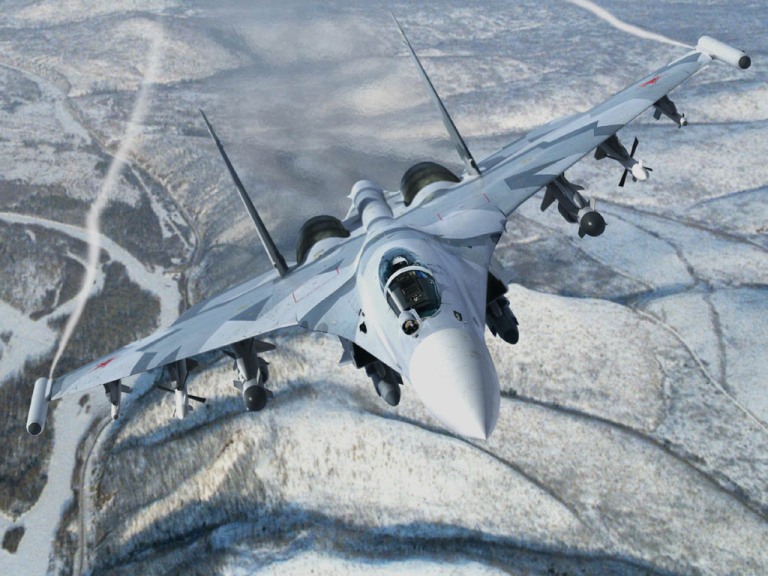
Good Friends, Ten years ago, Grisha much concerned about Amerikanski ‘Stealth’ weapons. F-117A spyplane fly anywhere, drop bomb and make much trouble. Nobody catch Nighthawk at night. Fighter planes like F-22 Raptor very fast and powerful, cannot see in time to catch him before target. Destroy SAM batteries like S-300 and open holes in defence for other attack. Even slow F-35 effective, cover battlefield and attack SAMs and army troops and tanks on ground. Do much damage. Tide begin to turn March 27, 1999 when Serbians shoot down F-117A spyplane with old S-125 'Neva-M'. Hey, if Serbians can get Amerikanski F-117A with old radio locator [Ed: radar] and missile, what can smart Russians do with latest stuff? So Russian Institute of Radio Physics and Electronics comrades scratch head and say, ‘even smart Amerikanski cannot change law of physics, so maybe we come up with new sensors, find ‘stealth’ fighters and missiles, and direct smart missile to kill box’. They look at old radars and realise that Amerikanski ‘stealth’ is designed to beat radio locators working at wavelength of much less than one metre. So, if using wavelength of many metres, get good radio locator reflection from wings, body, tail. Even small ‘stealth’ missile like JASSM has length 4.27 metres and wingspan 2.4 metres. Perfect tuned reflectors for VHF radio locator waves. Even better the VHF radio wave get deep into target skin so radar absorber paint not work. Much cheaper and faster to use old radio locator and give new insides. Russki transistors make frequency of GigaHertz, so ‘solid state’ at 50 or 100 MegaHertz no problem. Also have smart digital electronika, can change radio locator beam direction with phase change. When signal comes back, can use smart computers and software to know much about target. Then put radio locators in network, some GigaHertz, some 100 MegaHertz, and learn more. Spread radio locators around, and even jamming source found with triangle computer. So, Institute of Radio Physics and Electronics and Nizhniy Novgorod Research Institute of Radioengineering  comrades work together on old system. Design new transmitter and
receiver, smart computer to process radio location reflections, write
software to make AFAR [Ed: AESA – Active Electronically Steered
Array] beams dance like Bolshoi Ballet. Many, many fancy steps not
seen before in meter-wave radio locator. Engineers tell Grisha how
they find target, probe around and locate exactly. Pretty good for
VHF radar.
comrades work together on old system. Design new transmitter and
receiver, smart computer to process radio location reflections, write
software to make AFAR [Ed: AESA – Active Electronically Steered
Array] beams dance like Bolshoi Ballet. Many, many fancy steps not
seen before in meter-wave radio locator. Engineers tell Grisha how
they find target, probe around and locate exactly. Pretty good for
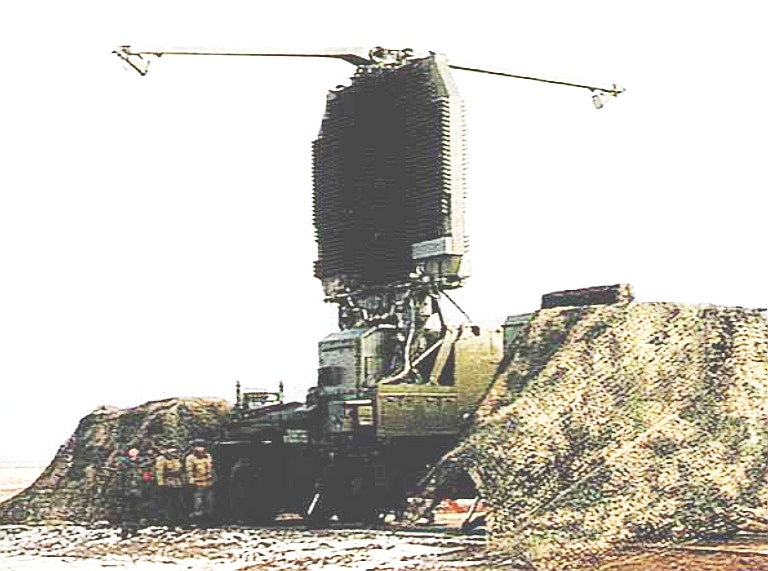
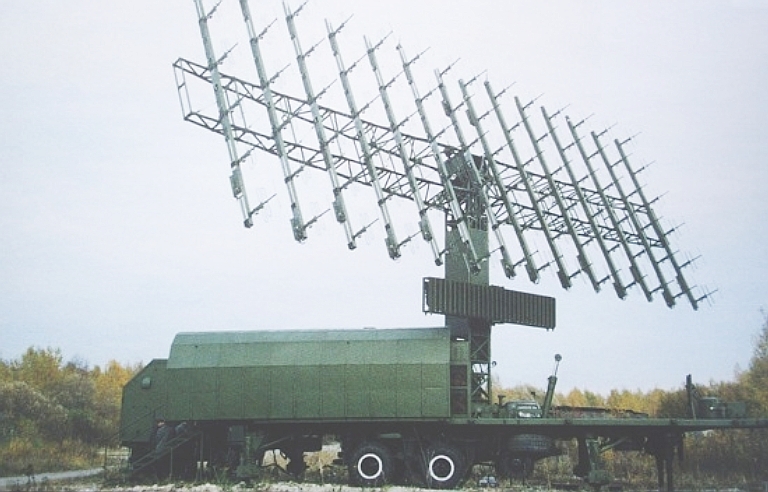
VHF radar. Some very fine things about long wave radio locator. Fighter aircraft cannot easy install antenna to find long wave radio locator, and Amerikanski HARM rocket [ Ed: AGM-88 anti-radiation missiles] cannot find transmitter either – its self guidance head [Ed: seeker] antenna much too small and dumb. 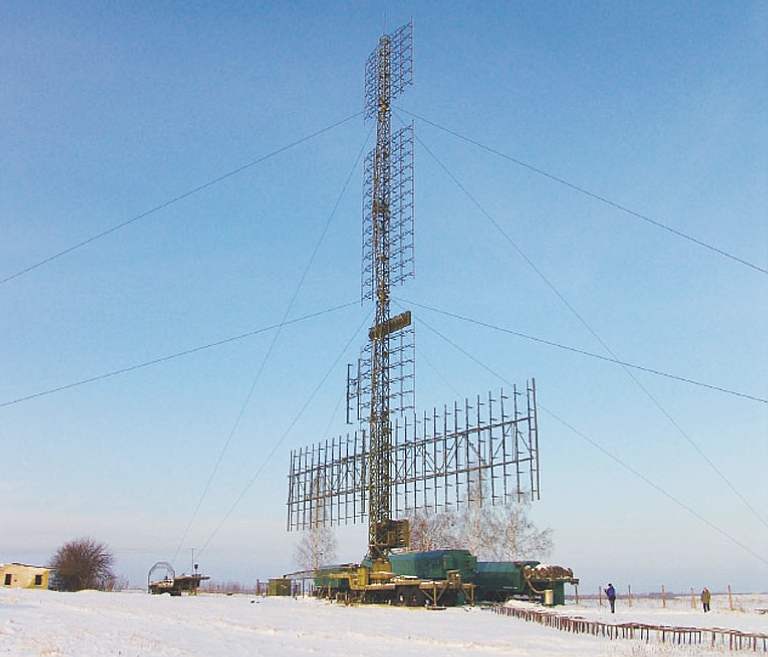 The NNIIRT 55Zh6-1 Nebo UE / Tall Rack 3-Dimensional Surveillance Radar is by far the most powerful and capable Russian VHF band early warning radar. This enormous relocatable surveillance radar uses an inverted T arrangement of horizontally polarised dipole arrays, providing electronic beam-steering in addition to the mechanical sweep of the antenna system. Squinted auxiliary arrays are employed for heightfinding array sidelobe cancellation. Stated tracking accuracy is 400 metres in range, 24 min in azimuth, and a heightfinding accuracy of around 2,500 ft at at a range of 110 NMI, making it suitable as an acquisition radar for the S-300PMU-1/2 and S-400 systems. (NNIIRT).
Biggest radio location
system is
55Zh6-1 NEBO-UE. This radio locator shows target position in three
coordinate system. Coverage is 500 km range, 40 km height and
all-round [Ed: 360° mechanical antenna steering]. Detection ranges
for a combat fighter flying at 10,000 m are 300 km and 20,000 m are
400 km; targets flying at 500 m can be found at least 65 km. Radio
locator also very accurate: 500 m in range, 850 m in height and half
degree in azimuth. So, can link with new S-400 Triumf [Ed: SA-21
Growler] system, send big 48N6DM missile 400 km. Smart enough to
guide missile to kill box so target not know it has company coming.
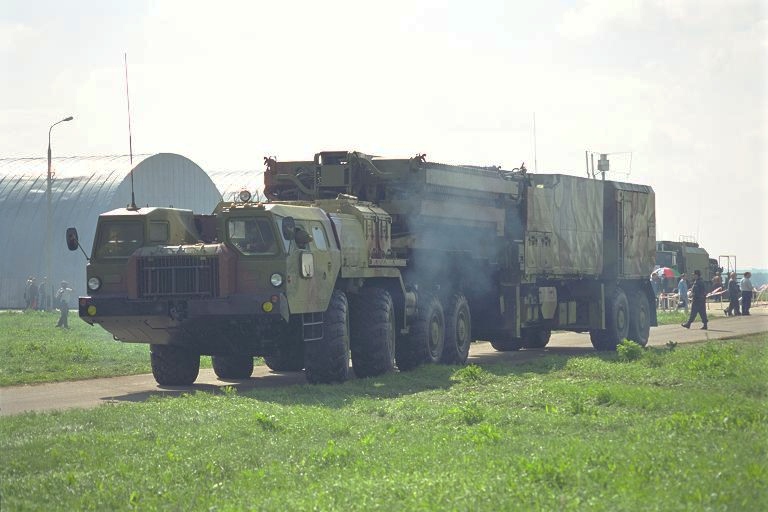
64N6E
Big Bird Deployed (above) and stowed (below). This Aegis-like 2 GHz
band phased array acquisition radar is the core of late model
S-300PMU-2 Favorit / SA-20 Gargoyle and S-400 Triumf / SA-21
Growler missile battery. The radar can be deployed/stowed for
"shoot and scoot' operations in a mere 5 minutes. Stated tracking
accuracy is 200 metres in range, 30 min in azimuth, and 35 minutes in
elevation.
 The
tracking accuracy of recent Russian VHF early warning and acquisition
radars is easily adequate for guiding a BVR missile like the R-27ET1/EA
or R-77/R-77T into a safe seeker acquisition box (KnAAPO).
NEBO-SVU is little
brother of NEBO
UE designed for missile battery. This one find, shoot and run with
Triumf ZRK [Ed: SA-21 Growler SAM system] so if Pigeon sees it,
Pigeon most probably dead before it puts bomb onto SAM or radio
locator. Can also link to air combat plane like Sukhoi or MiG. Send target location by satellite or radio link so planes fly with no radar transmission. Kill two ways – use Infrared sensor like OLS-35 to find target and plane send killer missile. Also use VHF radio locator target coordinates inside interceptor plane computer which then send missiles. Amerikanski call this ‘Network Centric Warfare’. Russians do this for many years, so is old dogma with new teeth.
Amerikanski call new stuff ‘game changer’. New VHF radio locator change air combat game. Can see ‘Stealth’ planes and missiles, link to new missiles and kill target easily. So Chuck emperor stealth cloak gone, now naked in sky for all to see. |
||||||||||||||||||||||||||||||||||||||||||||||||||||||||||||||||||||||||||||||||||||||||||||||||||||||||||||||||||||||||||||||||||||||||||||||||||||||||||||||||||||||||||||||||||||||||||||||||||||||||||||||||||||||||||||
| Critical
Analysis
Dr Carlo Kopp, SMAIAA, MIEEE, PEng Editor APA Colonel Medved's observations
on the Russian effort to develop and deploy a new generation of digital
VHF search and acquisition radars to support Ground Controlled
Intercept (GCI) and Surface to Air Missile (SAM) batteries reflect very
closely a number of items published in the Russian military and
industry press.
The loss of the F-117A Nighthawk callsign Vega 31 in Yugoslavia was a wakeup call which has evidently not been heeded in the West. The Serbians disclosed only that "unspecified modifications" were made to the P-18 Spoon Rest VHF acquisition radar which provided the SA-3 Goa battery with target location, evidently accurately enough for several salvoes of SA-3 command link guided missiles to inflict fatal damage on 82-086 resulting its loss. The Serbian missile battery, commanded by Zoltan Dani, used pooled intelligence data and intermittent track data from previous raids to position the SA-3 battery and Spoon Rest for an ambush, which succeeded. No less interesting was a comment made by an irate NNIIRT engineer to US analyst Richard Fisher two years later, that the P-18 Spoon Rest in question was covertly subjected to the NNIIRT digital solid state upgrade, in violation of the arms embargo on Serbia, and that the Serbians in a quid-pro-quo deal provided the upgrade package to the Chinese, who are the world's largest operator of the Spoon Rest VHF radar, with at least 65 deployed HQ-2 SAM batteries. 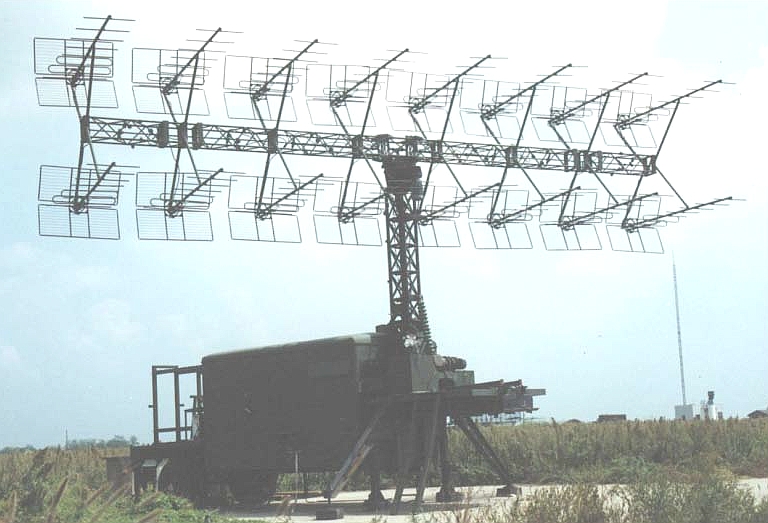 China remains the world's largest user of the P-18 Spoon Rest VHF radar family, deployed to support at least 65 batteries of the HQ-2 SAM. Russian industry alleges that China stole the NNIIRT digital upgrade package designed for Russian built P-18s for their own use. Depicted a Chinese built YLC-8 VHF radar, based on the P-18 (via Sinodefence.com). 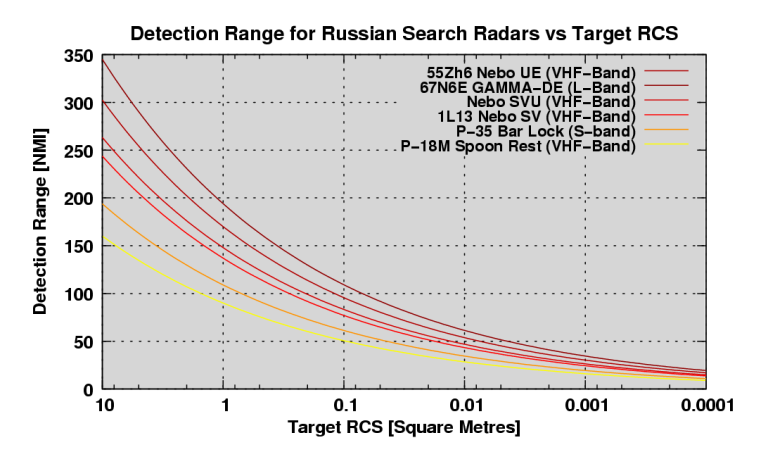 Russian industry publications state quite bluntly that US stealth designs have been largely optimised to defeat decimetric and centimetric band radars by shaping and the use of absorbent materials. The Russians have also observed publicly that the long wavelength of the Russian VHF band radars makes defeat by shaping difficult if not impossible, and that the thickness of absorbent coatings required to defeat VHF band radars would be prohibitive. These are correct observations. The shaping features of US stealth fighters are dimensionally such that they fall into the resonance and Raleigh scattering regimes for VHF band radars, where shape has little impact on the Radar Cross Section. Their observations on skin depth are also correct, as resistive and lossy materials always exhibit greater skin depth than conductors such as aluminium skins. So a fighter with stealth design features faces an interesting challenge when confronting a VHF band radar. Most of the carefully faceted, serrated and blended shaping features so effective at beating decimetric and centimetric band radars will appear as blobs to a VHF radar and reflect across a wide range of angles, losing their capability to scatter impinging radiation away from the radar illuminating the aircraft. The shaping of the planform is also less than entirely effective, unless it is very disciplined in the manner of the Northrop YF-23A or B-2A designs. The issue of skin depth is also of concern. Surface coatings designed to attenuate creeping surface waves in the decimetric and centimetric bands will typically be too thin to cope with VHF band radiation, which will penetrate through to the underlying skin panel and structural materials, which will likely be electrically conductive. While a well shaped stealth fighter will have a lower VHF band signature than a legacy fighter festooned with external fuel tanks and radars, it will certainly not be a marble or tennis-ball sized reflector. 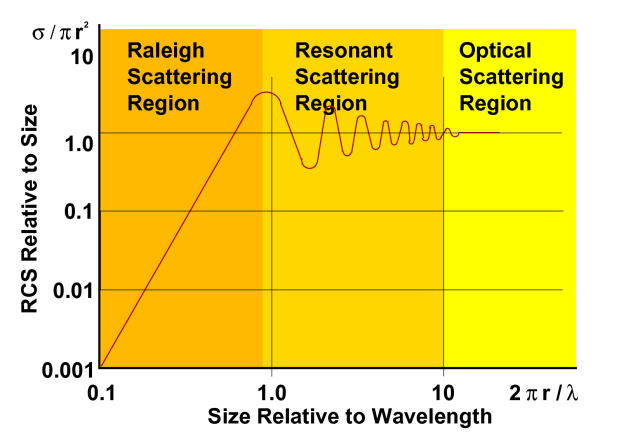 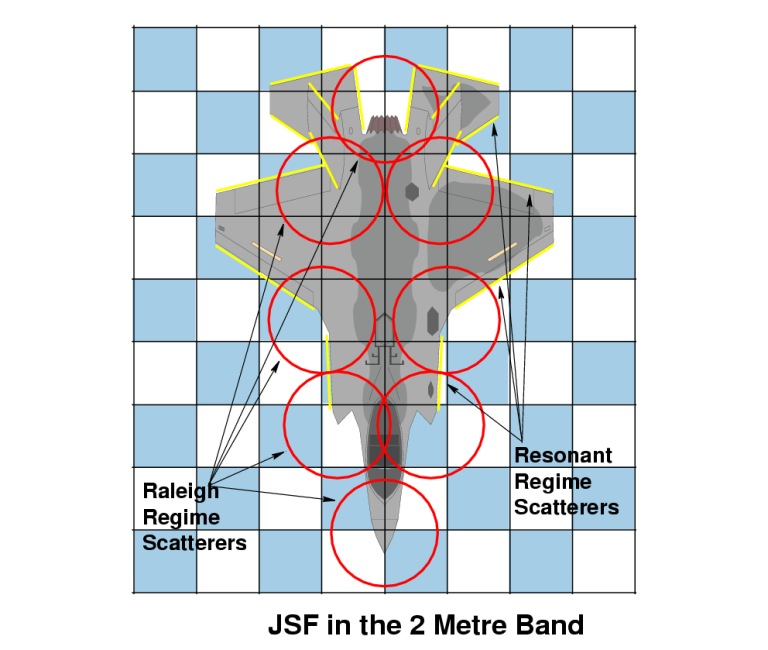 For instance, let us consider the F-35 JSF in the 2 metre band favoured by Russian VHF radar designers. From a planform shaping perspective, it is immediately apparent that the nose, inlets, nozzle and junctions between fuselage, wing and stabs will present as Raleigh regime scattering centres, since the shaping features are smaller than a wavelength. Most of the straight edges are 1.5 to two wavelengths in size, putting them firmly in the resonance regime of scattering. Size simply precludes the possibility that this airframe can neatly reflect impinging 2 metre band radiation away in a well controlled fashion. The only viable mechanism for reducing the VHF band signature is therefore in materials, especially materials which can strongly attenuate the induced electrical currents in the skins and leading edges. The physics of the skin effect show that the skin depth is minimised by materials which have strong magnetic properties. The unclassified literature is replete with magnetic absorber materials which have reasonable attenuation performance at VHF band, but are very dense, and materials which require significant depth to be effective if lightweight. The problem the JSF has is that it cannot easily carry many hundreds of pounds of low band absorber materials in an airframe with borderline aerodynamic performance. Some technologies, such as laminated photonic surface structures might be viable for skins, but the experimental work shows best effect in the decimetric and centimetric bands. Thickness again becomes an issue. The reality is that in conventional decimetric to centimetric radar band low observable design, shaping accounts for the first 10 to 100 fold reduction in signature, and materials are used to gain the remainder of the signature reduction effect. In the VHF band shaping in fighter sized aircraft is largely ineffective, requiring absorbent materials with 10 to 100 fold better performance than materials currently in use. In the world of materials, getting twice the performance out of a new material is considered good, getting fivefold performance exceptional, and getting 100 fold better performance requires some fundamental breakthrough in physics. One possible strategy which may be viable against VHF band radars is active cancellation, where the aircraft emits a waveform identical to the impinging threat radar waveform, but out of phase so the two cancel each other out. This is not feasible in the upper bands, but is feasible in the lower bands, assuming a suitable VHF antenna can be integrated without compromising microwave band radar signature. The drawback of active cancellation is that the opponent can deploy VHF band passive receivers and simply listen for the sidelobes emitted by the active cancellation system to track the aircraft. As the JSF, like the retired F-117A, is totally reliant upon stealth for survival, in an environment with VHF threats it has no simple fallback technique other than staying on the ground in its hardened shelter. This is unlike the F-22A which has supersonic cruise to fall back upon, and is harder to acquire by missile seekers since its microwave band stealth is so much better. What is abundantly clear is that VHF radars will have much better detection performance against fighter sized stealth aircraft, compared to decimetric and centimetric band radars. The numerous Russian publications covering the Nebo EU and Nebo SVU indicate that these are modern designs, with the full suite of digital signal processing and data processing techniques applied. The might operate in the same VHF band as the 1943 GEMA Mammut and Wassermann radars, but they are substantially new technology designs using state of the art technology. 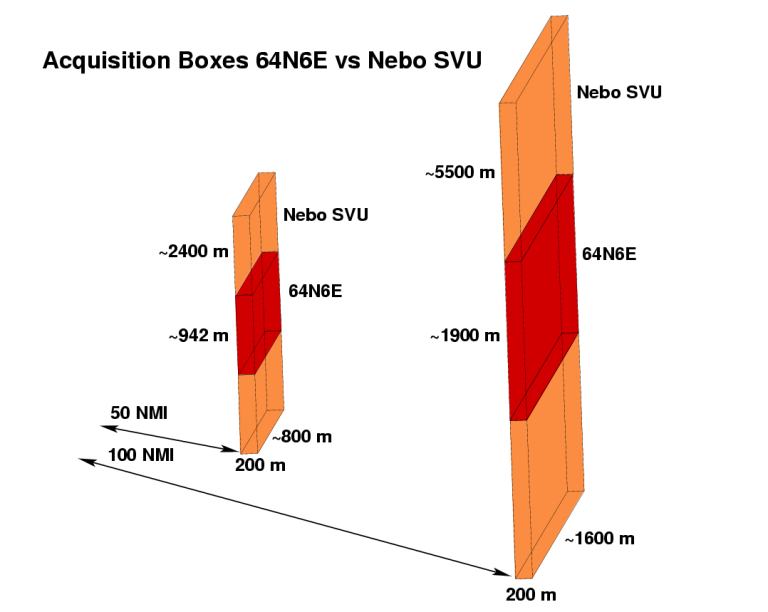 The smaller Nebo SVU, described in a Russian press release as "... the Nebo-SVU mobile VHF radar with an active phased-array antenna system featuring unique capabilities to detect stealthy aerial targets...", is especially concerning from a strategy perspective. It is the most mobile VHF acquisition radar ever built, and its angular error performance was clearly engineered so it can be used as a SAM battery target acquisition system. Its performance is so close to the 64N6E Big Bird family of radars as not to be an accident. How was such high angular measurement accuracy achieved in a VHF radar? Clearly the re-engineering of the conventional Nebo SV into the active array (AESA) Nebo SVU was done with this aim. The Nebo SVU can provide high beamsteering agility, within a limited angular range compared to a centimetric band AESA, which allows it to perform high speed electronic sequential lobing to emulate highly accurate monopulse angle tracking techniques. The threefold disparity in elevation and bearing accuracy simply reflects the respective aspect ratios of the arrays used. The error box of the Nebo SVU is sufficiently small to permit a SAM or AAM with an active or infrared seeker to be flown near enough to the target to acquire it and initiate terminal homing. Colonel Medved's observations are consistent with published specifications for these VHF radars. Whether the Nebo SVU is used as a cheaper substitute for a 64N6E or paired with a 64N6E, clearly the radar has what it takes to cue a 30N6E series engagement radar. If these systems are all networked following current Russian practice, the battery's 5N63 / 54K6E series command post can launch the missiles remotely and datalink them to the aimpoint through most of the flight trajectory. When near enough, the missile switches to its own terminal homing seeker to complete the engagement. What the Russians have not disclosed, but is clearly obvious, is that pairing the Nebo SVU and 64N6E allows the operators to discriminate between a low observable and conventional radar target and adjust tactics accordingly. If the target is invisible on the decimetric band 64N6E but visible on the VHF band Nebo SVU, then clearly it is low observable, and a missile trajectory flown under datalink control using updates generated by the VHF radar is needed, rather than a conventional engagement sequence where the 30N6E locks up the target and autonomously completes the engagement. Missile range performance permitting, this opens up other options such as flying a 'dogleg' curved missile trajectory to effect a beam attack terminal phase, so the missile's seeker is illuminating the less stealthy beam aspect of the aircraft rather than its most stealthy front aspect. Once the Russians deploy and market this capability, we can expect a follow-on effort by less technologically capable players to adapt many legacy SAM systems to perform in a similar fashion. While the S-75 / HQ-2 / SA-2 Guideline and S-125 / SA-3 Goa are not taken seriously by contemporary Western planners, supported by an accurate digital 3D VHF radar in the class of the Nebo SVU, with frequency agile digital datalinking and a terminal homing seeker, they become viable again. Serbia and Saddam's Iraq both experimented with the retrofit of infrared AAM seekers on legacy Soviet era SAMs, and this is not outside the reach of Iran, or North Korea. There is no doubt that it is within the reach of Chinese industry and academia, who have already engineered 2D derivatives of the Spoon Rest. The Chinese would have no difficulty in engineering an indigenous Nebo SVU lookalike. The US has enjoyed an unchallenged technological monopoly on stealth capabilities for almost three decades, and the notion that potential opponents would sit by idly is not realistic. The Russian effort in VHF radar, and also surface wave HF radar, clearly shows that they have been thinking long and hard about how to blunt the sharp end of US capabilities. Unless the US makes a major investment in improving VHF band stealth materials, and in parallel, develops credible VHF band jamming capabilities, it will lose enough of its advantage to suffer a major loss in strategic potential. S-300PMU-2 Favorit / SA-20 Gargoyle / S-400
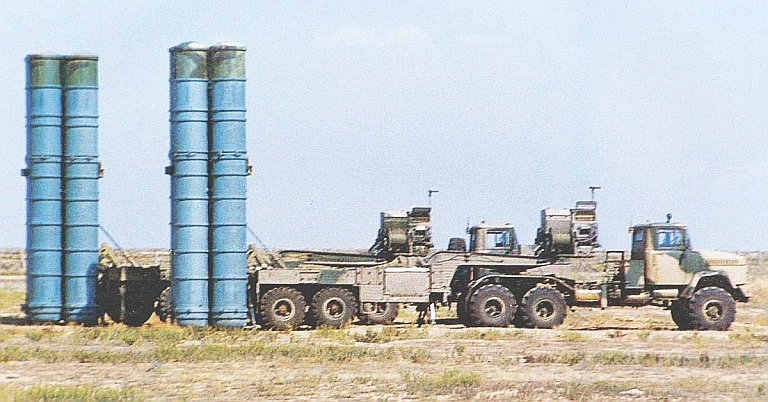
Triumf / SA-21 Growler
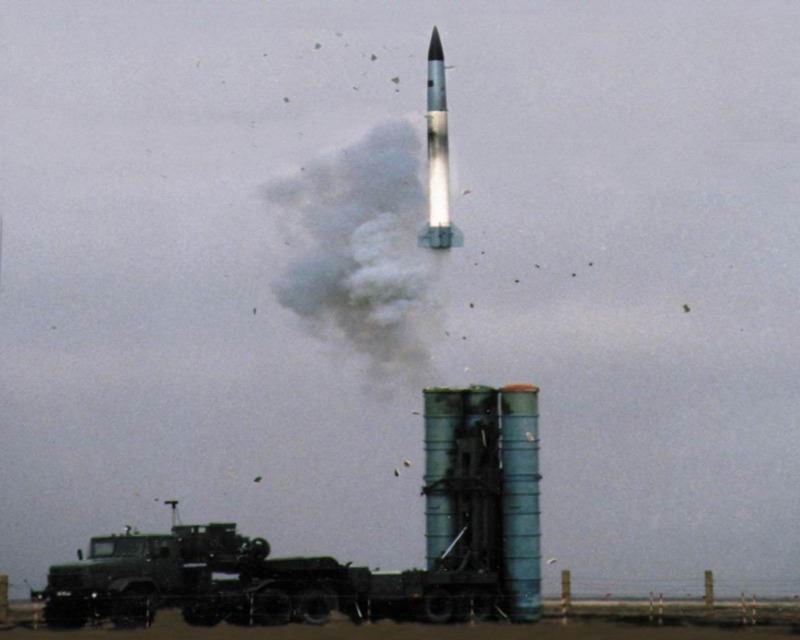 48N6 Missile Launch (above) and road
mobile 5P85TE
TEL (below). The S-300PMU is often labelled "Russia's Patriot".
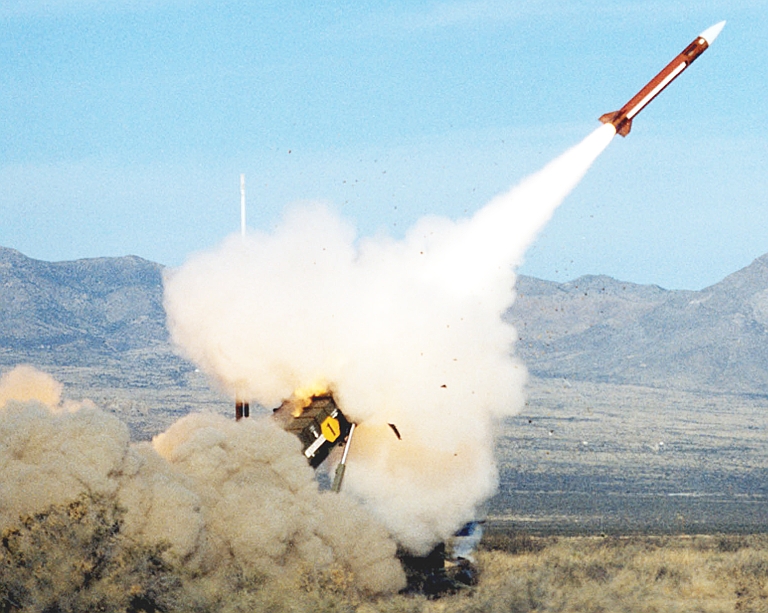
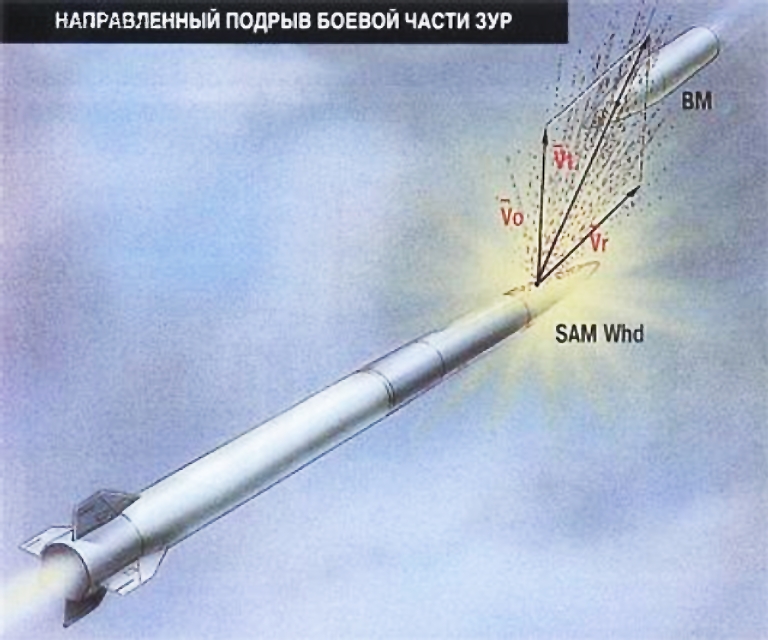 Late variants of the Fakel 48N6 SAM include a directional warhead intended to increase lethality against ballistic and aircraft type targets. While the 48N6 is a direct replacement for the command link guided 5V55 in early S-300PT/PS/PMU batteries, it is far more capable with Track Via Missile (TVM) terminal homing similar to the MIM-104 Patriot, and datalink aided midcourse guidance. Enhancements to later variants include more intelligent autopilot algorithms to maximise range. The extended range 48N6DM now deploying with Russian S-400 / SA-21 Growler batteries is claimed to exceed a range of 200 nautical miles against an aerial target (Fakel). 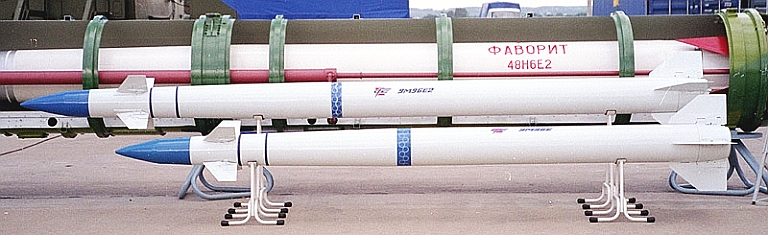 The latest addition to the formidable S-300PMU family of SAM systems is the Fakel 9M96E and 9M96E2 agile SAM/ABM interceptor missiles (above), direct equivalents to the Lockheed-Martin PAC-3/ERINT family of missiles. These weapons have inertial midcourse guidance and active radar terminal seekers, with combined canard and thruster controls to maximise G capability at all altitudes. Both weapons were designed from the outset as dual role, and are intended to allow an S-300PMU series battery to engage ballistic missiles, aircraft at all altitudes, and precision guided munitions targeting the battery elements. The 9M96 series weapons are like the 48N6 series 'cold launch' ejection designs, and a four round launch tube package can replace a single 48N6E series launch tube on the 5P85 series TEL (below). The 9M96 series weapons are part of the S-400 / SA-21 Growler system, but may also appear in block upgrades on the later S-300PMU variants (lower image © Miroslav Gyűrösi).  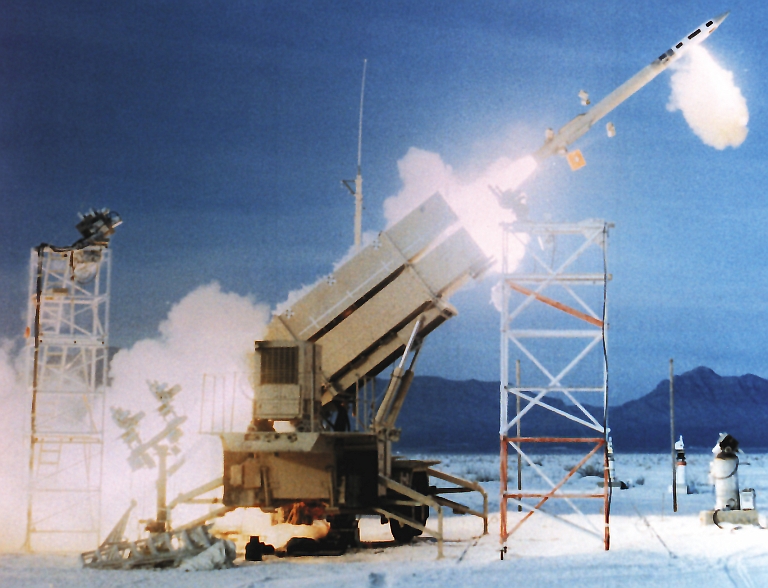 Patriot
PAC-3 interceptor launch (above), and MIM-104 Patriot PAC-1 launch
(below) (US DoD).
 Further Reading:
|
||||||||||||||||||||||||||||||||||||||||||||||||||||||||||||||||||||||||||||||||||||||||||||||||||||||||||||||||||||||||||||||||||||||||||||||||||||||||||||||||||||||||||||||||||||||||||||||||||||||||||||||||||||||||||||
| Footnote: Col. Grisha Medved is a former retired fighter pilot. |
||||||||||||||||||||||||||||||||||||||||||||||||||||||||||||||||||||||||||||||||||||||||||||||||||||||||||||||||||||||||||||||||||||||||||||||||||||||||||||||||||||||||||||||||||||||||||||||||||||||||||||||||||||||||||||
| Air
Power Australia Website - http://www.ausairpower.net/ Air Power Australia Research and Analysis - http://www.ausairpower.net/research.html |
||||||||||||||||||||||||||||||||||||||||||||||||||||||||||||||||||||||||||||||||||||||||||||||||||||||||||||||||||||||||||||||||||||||||||||||||||||||||||||||||||||||||||||||||||||||||||||||||||||||||||||||||||||||||||||
 |
||||||||||||||||||||||||||||||||||||||||||||||||||||||||||||||||||||||||||||||||||||||||||||||||||||||||||||||||||||||||||||||||||||||||||||||||||||||||||||||||||||||||||||||||||||||||||||||||||||||||||||||||||||||||||||
| |
||||||||||||||||||||||||||||||||||||||||||||||||||||||||||||||||||||||||||||||||||||||||||||||||||||||||||||||||||||||||||||||||||||||||||||||||||||||||||||||||||||||||||||||||||||||||||||||||||||||||||||||||||||||||||||
|
|||||||||||||
|
|
|
|
|
|
|
|
|
|
|
|||
|
|
|
|
|
|
|
|
|
|
|
|||
| |
|
|
|||||||||||
| Artwork, graphic design, layout and text © 2004 - 2014 Carlo Kopp; Text © 2004 - 2014 Peter Goon; All rights reserved. Recommended browsers. Contact webmaster. Site navigation hints. Current hot topics. | |||||||||||||
|
Site Update
Status:
$Revision: 1.753 $
Site History: Notices
and
Updates / NLA Pandora Archive
|
|||||||||||||
|
|
Tweet | Follow @APA_Updates | |||||||||||
|
|
|||||||||||||
|
|
|||||||||||||