|
||||||||||||||||||||||
 |
||||||||||||||||||||||
![F-22A Raptor, FB-22, F-22E, F-22N and Variants Index Page [Click for more ...]](APA/f-fb-22.png "F-22A Raptor, FB-22, F-22E, F-22N and Variants Index Page [Click for more ...]") |
 |
![People's Liberation Army Air Power Index Page [Click for more ...]](APA/pla-air-pwr.png "People's Liberation Army Air Power Index Page [Click for more ...]") |
 |
 |
 |
 |
 |
 |
![Military Ethics, Culture, Education and Training Index Page [Click for more ...]](APA/ethx-culture.png "Military Ethics, Culture, Education and Training Index Page [Click for more ...]") |
 |
||||||||||||
 |
![Russian / Soviet Weapon Systems Index Page [Click for more ...]](APA/rus-weps.png "Russian / Soviet Weapon Systems Index Page [Click for more ...]") |
 |
 |
 |

|
 |
 |
 |
 |
 |
||||||||||||
 |
 |
 |
||||||||||||||||||||
| Last Updated: Mon Jan 27 11:18:09 UTC 2014 | ||||||||||||||||||||||
|
||||||||||||||||||||||
|
||||||||||||||||||||||
|
||||||||||||||||||||||
|
|
|
|
|
|
|
|
|
|
|
||||||||||||
|
|
|
|
|
|
|
|
|
|
|
||||||||||||
| |
|
|
||||||||||||||||||||
| Last Updated: Mon Jan 27 11:18:09 UTC 2014 | ||||||||||||||||||||||
|
||||||||||||||||||||||
United Kingdom: F-35 or F-22?
|
||||||||
|
Air Power
Australia - Australia's Independent Defence Think Tank
|
||||||||
| Air Power Australia NOTAM 25th February, 2009 |
||||||||
|
||||||||
|
||||||||
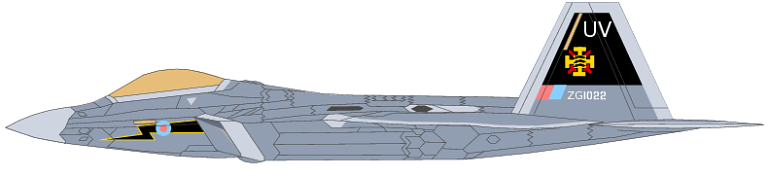 As the unit procurement costs of the F-35 Joint Strike Fighter progressively converge with the unit costs of the F-22A Raptor, and the F-35 becomes progressively less survivable as threats evolve, it is time for the UK to cut its losses, bail out of the JSF program, and opt for the F-22A instead. A US Air Force study published in 2000 identified Britain as one of three allies who could be supplied the F-22 without any risk of technology leakage (Author). |
||||||||
|
The
F-35 Lightning II Joint Strike Fighter is designed to defeat threats
that will have been superceded well before this aircraft enters
operational service. The performance of the F-35 is suffering seriously
from the conflicting design requirements that it was intended to meet.
As a result, the F-35 is shaping up to be a technological failure, a
delivery schedule and 'affordability' failure, and a techno-strategic
failure. This will place Britain in the position of having to
look at replacement options, which are extremely limited in view of
developing threat capabilities. The question that must inevitably arise
is: 'Should Britain Ask the United States for the F-22?' Britain remains the largest single
overseas partner in
the F-35 program, and as this program unravels, Britain stands to lose
much more than the other partner nations in a sunk investment not
producing
any direct return, and in political
embarrassment. From a political perspective, America needs to start
thinking
about what alternatives it can offer the British as credible
substitutes for
the uncompetitive and technically troubled F-35. The F-16E, F/A-18E/F
and
F-15E/SG do not qualify as credible substitutes given the proliferation
of high
technology Russian designed Flanker fighters and double digit SAMs on
the
global stage. None of these types can survive in such an environment. Britain’s intent to procure the
expensive and
underperforming F-35 for the Royal Air Force and Royal Navy has
produced
intensive domestic criticism, some well
informed and
technically correct, some less so. What is clear however is that
Britain does
need new technology fighters to replace a range of increasingly less
viable
legacy aircraft, as well as the Royal Navy’s now retired Sea Harriers. About a decade ago the F-22A Raptor was
proposed as an
alternative to the domestically built Eurofighter Typhoon. Britain’s
influential aerospace industry lobby killed that proposal, rubbishing
the F-22
with some very dubious DERA JOUST simulations, which claimed the “Typhoon
was 81
percent as good as an F-22”. Forensic analysis showed this
was
nonsense,
an assessment since
then borne out by the operational experience of the US Air Force flying
the
F-22 against a range of conventional fighters. Current planning for the Royal Air Force
and Royal
Navy is to procure the F-35B STOVL JSF as a replacement for the RAF
Harrier
GR.7/9 fleet, the Jaguar GR.3, retired in 2007, and the Royal Navy Sea
Harrier
FA.2, retired in 2006. Cited numbers vary between 150 and 138 aircraft,
although reports emerging from the UK late last year suggested a
reduction to
as few as 85 aircraft. This is a
far cry from the euphoric speculation of early 2002, when senior RAF
staff
officers privately suggested to their Canberra colleagues that the RAF
should
be replacing its remaining Panavia Tornado GR.4s, Tornado F.3s, and
earlier
built Typhoons, with the F-35A JSF. Over the next two decades Britain will
need to replace
most if not all of its combat aircraft with credible new technology
replacements. The only new fighter in the UK inventory is the Typhoon
F.2, which
is technologically comparable to currently built American F-15 and
F/A-18E/F
fighters. While more agile than these legacy US fighters, it is equally
vulnerable to advanced SA-20/21/23 Surface to Air Missile systems, and
new
generation Su-35BM class Flanker variants. The new ramjet MBDA Meteor
Air to
Air Missile may eventually provide a credible capability against older
Flanker
variants, but will be matched over the next decade by the Russian
ramjet Vympel RVV-AE-PD missile. The
Typhoon has been justifiably
criticised for program procurement costs which have been similar in
magnitude to
the vastly better F-22 Raptor. |
||||||||
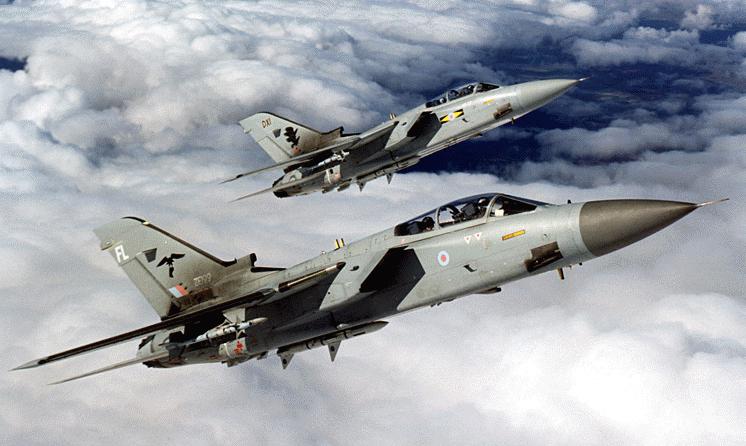
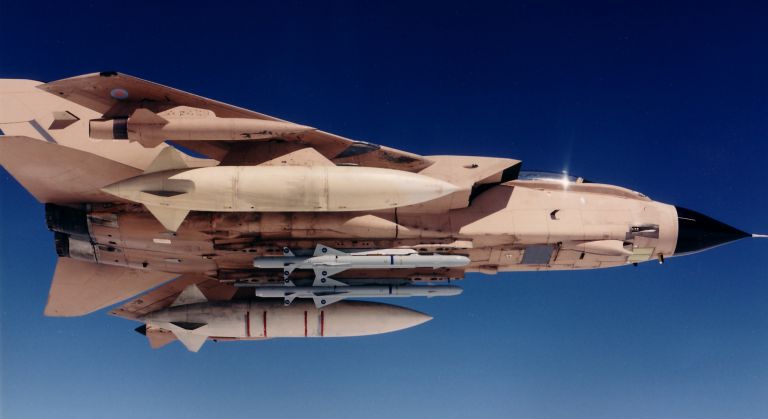 The
Royal
Air
Force will need replacements for the Tornado IDS (above) and
Tornado ADV (below), capable of penetrating advanced air defences and
defeating Su-35BM class fighters. The F-22A can perform both roles
better than any other design planned or in service (RAF image).
 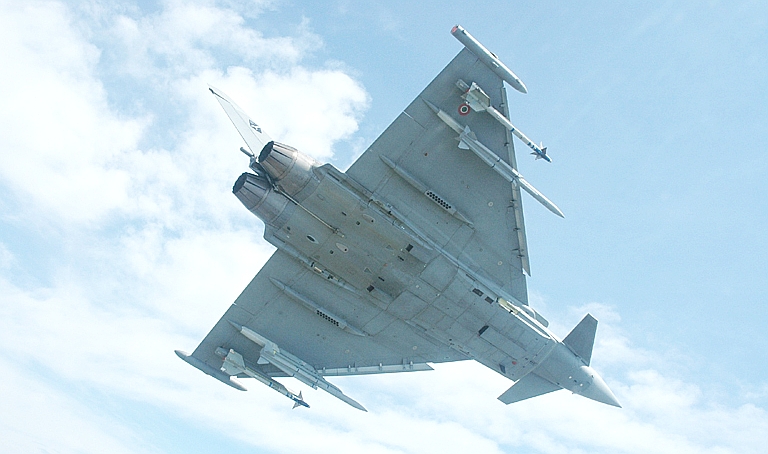 The Typhoon F.2 is one of the most
expensive fighters ever built, but lacks the stealth to penetrate
modern SAM defences, and the persistence to compete with the latest
Su-35BM class Flanker variants (MBDA image).
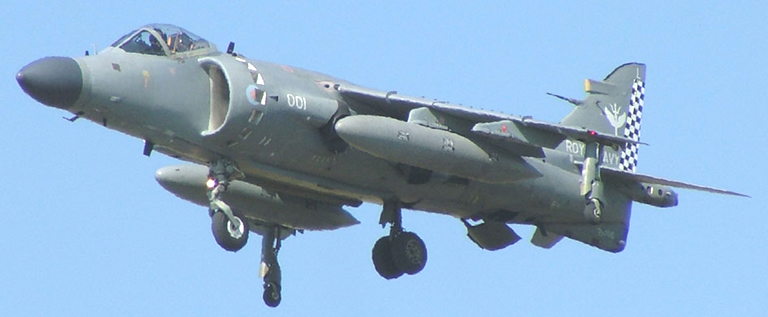 The F-35B is intended to replace the Harrier GR.9 (below) and already retired Sea Harrier FA.2 (above). With Britain's planned new carriers to be much larger than the Invincible class, and the ubiquity of modern Intelligence, Surveillance and Reconnaissance systems rendering dispersed basing almost irrelevant, there is not a compelling case for a STOVL aircraft to replace the Harrier variants (Royal Navy images). 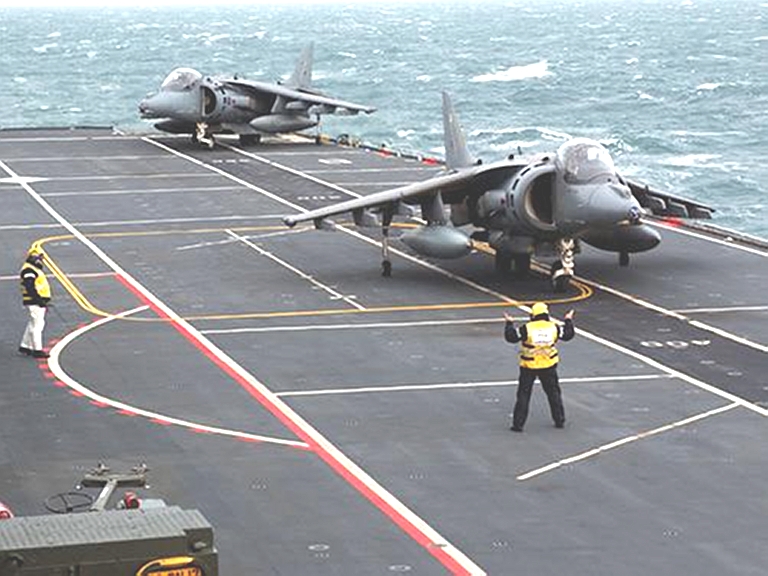 |
||||||||
|
Britain’s long term strategic needs have
been the
focus of much of the criticism directed at re-equipment plans for the
UK
fighter fleet. Sadly much of this criticism has been myopic,
concentrated on
short term considerations relating to Counter INsurgency Operations
(COIN) in
the Islamic world. In this respect Britain has suffered from the same
nonsensical very short term argument seen in the United States, and
Australia. There is little doubt that over the long
term Britain
will need to provide some credible expeditionary capabilities to
support
coalition operations on the global stage. While another Falklands
scenario is
unlikely, given the loss of Britain’s overseas colonies, the need to
intervene
globally is unlikely to vanish. If future UK governments intend to
contribute
capabilities of any real use, they will need systems which are
effective and
survivable against the modern Russian high technology systems
proliferating
globally, and also interoperable with other coalition assets. Systems
which soak up US forces as protective escorts to stay
alive
are more of a hindrance in a coalition campaign, than a contribution of
value. What should be of more concern to
Britons are the
increasingly toxic relationships between Putin’s Russia and the many
former
Soviet Republics, and former Warsaw Pact allies in Eastern Europe.
Putin’s
confrontational and coercive foreign policy and military interventions
along
Russia’s exposed Western and South Western borders have fuelled
mistrust and
resentment in nations which were already largely resentful over Soviet
era
misdeeds. The expansion of NATO eastward has been a by-product of this
progressive breakdown – not vice versa as is often claimed. Russians
feel
exposed without hundreds of kilometre deep buffer territories and this
perceived vulnerability with its resulting fears
will not disappear any time soon. While Putin’s Russia will never be
another Soviet
Union, Russia is slowly recapitalising its Cold War era military with
advanced
systems, and will have a genuine capability to project coercive air
power
against European NATO nations. If any of the myriad ongoing disputes
between
Russia and its now NATO aligned neighbours degrade into shooting
conflicts,
the
Russians will be able to drop smart bombs across much of Eastern
Europe, unless
the US Air Force deploys most if not all of its F-22 Raptors into
European NATO
airfields. Moreover, as Russia builds up numbers of the SA-21, it will
be able
to declare and effectively enforce permanent air exclusion zones up to
200
nautical miles outside its geographical borders – a
Surface-to-Air-Missile-based buffer zone that would appeal to Russian
fears of
being subjected to attack by cruise missiles and conventional aircraft. European NATO nations can look forward
to the prospect
of Moscow not only turning off the gas supply, but also exercising
military
muscle in NATO’s backyard. The expectation that the Americans will
permanently
commit their already overcommitted future F-22 fleet to cover for
European
military underinvestment is clearly asking a little too much and, at
best, fanciful thinking. It is worth observing that the character
of developing
Russian capabilities is very different from the Cold War era Soviet
model.
Rather than the vast numbers of mostly unsophisticated shorter ranging
dumb bomb
armed tactical fighters the Soviets deployed, Russia is emulating the
US model
of smaller numbers of highly sophisticated high technology long range
aircraft
armed with
precision smart weapons. Large numbers of low performance fighters,
including
the F-35, are virtually useless against Russia’s new generation Su-34
and
Su-35BM fighters. While the broader issues of European
NATO security are
bigger than Britain’s needs alone, they underscore the realities of an
uncertain future in a complex multipolar world. Technological
evolution and poorly thought out specification/definition of the F-35
design
has seen to it that by the time the F-35 would deploy, assuming it
survives its
engineering, cost and schedule problems, the F-35 will be wholly
uncompetitive
against the new generation of Russian designed weapons. That margin
will grow
as Russian and Chinese weapons evolve over the next three decades,
while the
overweight, underpowered, over-packed and under-stealthed F-35’s built
in
design limits make it increasingly outmatched. Whether Britain wishes to conduct
expeditionary
warfare in coalition or unilaterally, or participate in European NATO
continental defence, its Eurofighter Typhoons and planned F-35 JSFs
will likely
be fodder for the latest Russian weapons, unless the opposing side is
an
undeveloped Third World nation. The prospect of Russian contractor
(i.e.
mercenary) aircrew, ground-crew and missileers being deployed to Third
World
nations with the available cash introduces uncertainties even in the
latter
circumstance. It has happened before. The wisest strategy for the United
Kingdom is to
negotiate access to the F-22A Raptor and bail out of the F-35 program
at the
earliest. An even wiser strategy is to collaborate with the Americans
on the
development of a navalised F/A-22N Sea Raptor, to drive down costs for
the US
Navy, Marine Corps and Royal Navy. The uncompetitive Typhoon can be
relegated
to air defence of the British Isles, and F-22A and F/A-22N used for
expeditionary warfare and NATO air defence commitments on the continent. While much has been said and written
about not
exporting the F-22 to US allies, what is less well known is that two
studies
have been done to determine exportability of the F-22. The first of these is the public
unclassified
geostrategic and political assessment performed by then LtCol Matthew
Molloy,
USAF, who produced a 98 page study while posted to the Maxwell AFB School of
Advanced Air Power Studies of the Air University, in 1999-2000. This
document
identifies Australia, Britain and Canada as the three US allies who can
be
trusted without question to operate the F-22 and protect its technology
[1]. Less well known is a more detailed and
not publicly
released study performed by the US Air Force during the same period,
often
known as the “anti-tamper study”, which looked at risks arising from
downed
aircraft scenarios. The study also assessed the risks arising in
exporting the
aircraft to close allies, specifically Australia, which was known to
have a
developing strategic need for the F-22. The study concluded that it was
safe to
supply the very same configuration of the F-22 flown by the US Air
Force to
Australia, as the risks of unwanted technology disclosure were no
different to
those expected for the US Air Force. Considering both the Molloy study and
the
“anti-tamper” study, the notion that the Americans would not export
some
configuration of the F-22 to the United Kingdom is difficult to accept. The problems, which the Britons must
confront at a
strategic level arising from Russia’s devolving relationships with its
neighbours, and the ongoing demand for global intervention forces, are
problems
to a greater or lesser degree shared by other leading European NATO
nations.
The difficulties arising from involvement in the ill considered F-35
program
are also shared by a number of other European
NATO
nations, as well as the United Kingdom. The unavoidable strategic reality is the
European NATO
nations will need a credible capability to discourage adventurous
future
Russian behaviour in Eastern Europe, and to make a useful difference in
expeditionary warfare. None of the indigenous European fighters, or
the F-35,
will be particularly useful in either kind of contingency. Two to three
full
strength Fighter Wings comprising 50 to 70 F-22 Raptors each would
provide
enough deterrent capability and sustainable / survivable firepower to
address
Europe’s needs for decades to come. While the NATO AWACS fleet model of a
shared resource
would be a politically attractive way for Europe to deploy an export
configuration of the F-22, it would present practical operational
problems. The United States needs to think long
and hard about
how to redress Europe’s worsening strategic weakness, as it has the
potential
to soak up disproportionate US military resources in any serious
contingency.
Exporting a variant of the F-22 rather than the uncompetitive F-35
would solve
much of that problem. With the long term future of the F-22
now the subject
of intensive political, public and analytical community debate in
America, and
the F-35 Joint Strike Fighter now showing the symptoms of an incipient
technological “death spiral”, the time is right for the Obama
Administration
and H.M. Government to jointly explore the export of F-22 Raptor
variants for
the Royal Air Force and Royal Navy, as an “escape strategy” from the
F-35
program.
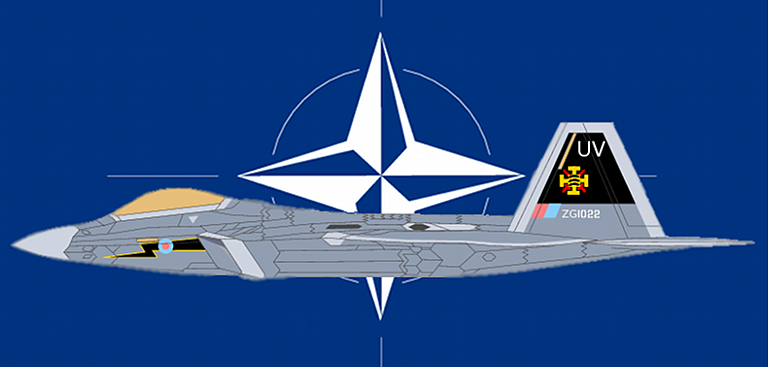
There is a good precedent: when it became clear that the Nimrod AEW.3 could not be made to work in a reasonable timescale and cost, H.M. Government cut its losses, dumped the program and promptly acquired the top tier Boeing E-3D AWACS instead. The basic strategic challenges both America and Britain face are much the same, whether we consider European NATO contingencies, or expeditionary warfare. The Alliance relationship is as close as it has ever been. All that is needed is the political courage and strategic foresight to make a break from the past, well intentioned but fundamentally flawed, choice of the F-35. |
||||||||
Endnotes:[1] Matthew H. Molloy, Lt Col, USAF , U.S. MILITARY
AIRCRAFT FOR SALE: CRAFTING AN F-22 EXPORT POLICY, SCHOOL OF
ADVANCED AIRPOWER STUDIES ,
AIR UNIVERSITY, MAXWELL AIR FORCE BASE, ALABAMA, JUNE 2000, URL: https://research.maxwell.af.mil/papers/ay2000/saas/molloy.pdf.
|
||||||||
 |
||||||||
| Air
Power
Australia Website - http://www.ausairpower.net/ Air Power Australia Research and Analysis - http://www.ausairpower.net/research.html |
||||||||
 |
||||||||
| |
||||||||
|
|||||||||||||
|
|
|
|
|
|
|
|
|
|
|
|||
|
|
|
|
|
|
|
|
|
|
|
|||
| |
|
|
|||||||||||
| Artwork, graphic design, layout and text © 2004 - 2014 Carlo Kopp; Text © 2004 - 2014 Peter Goon; All rights reserved. Recommended browsers. Contact webmaster. Site navigation hints. Current hot topics. | |||||||||||||
|
Site Update
Status:
$Revision: 1.753 $
Site History: Notices
and
Updates / NLA Pandora Archive
|
|||||||||||||
|
|
Tweet | Follow @APA_Updates | |||||||||||
|
|
|||||||||||||
|
|
|||||||||||||






