|
||||||||||||||||||||||
 |
||||||||||||||||||||||
![F-22A Raptor, FB-22, F-22E, F-22N and Variants Index Page [Click for more ...]](APA/f-fb-22.png "F-22A Raptor, FB-22, F-22E, F-22N and Variants Index Page [Click for more ...]") |
 |
![People's Liberation Army Air Power Index Page [Click for more ...]](APA/pla-air-pwr.png "People's Liberation Army Air Power Index Page [Click for more ...]") |
 |
 |
 |
 |
 |
 |
![Military Ethics, Culture, Education and Training Index Page [Click for more ...]](APA/ethx-culture.png "Military Ethics, Culture, Education and Training Index Page [Click for more ...]") |
 |
||||||||||||
 |
![Russian / Soviet Weapon Systems Index Page [Click for more ...]](APA/rus-weps.png "Russian / Soviet Weapon Systems Index Page [Click for more ...]") |
 |
 |
 |

|
 |
 |
 |
 |
 |
||||||||||||
 |
 |
|||||||||||||||||||||
| Last Updated: Mon Jan 27 11:18:09 UTC 2014 | ||||||||||||||||||||||
|
||||||||||||||||||||||
|
||||||||||||||||||||||
|
||||||||||||||||||||||
|
|
|
|
|
|
|
|
|
|
|
||||||||||||
|
|
|
|
|
|
|
|
|
|
|
||||||||||||
|
|
|||||||||||||||||||||
| Last Updated: Mon Jan 27 11:18:09 UTC 2014 | ||||||||||||||||||||||
|
||||||||||||||||||||||
| Quo
Vadis, RAAF? Parts 1 and 2 |
by Carlo Kopp First published in Australian Aviation February, March, 1999 |
|
Part 1 The Strategic Context "To conquer the command of the air means victory; to be beaten in the air means defeat and acceptance of whatever terms the enemy may be pleased to impose..." Giulio
Douhet - The Command of the Air
Australia has had the luxury, over the last few decades, of an essentially benign strategic environment. Even during the latter years of the Cold War, the only significant hostile presence in the region was the Soviet deployment to Cam Ranh Bay in Vietnam, and this was primarily a maritime threat, rather than a significant air threat. The collapse of the USSR removed this threat, but in its wake we are now seeing an economic boom throughout Asia, a boom which has produced significant economic and political rivalry in Asia. Asia has had its traditional hot spots, like the smoldering feuds between North and South Korea, and that between the RoC (Taiwan/Nationalist China) and the PRC. Added to this, the relationship between the PRC and Vietnam has been clearly hostile, as evidenced by the events of 1979, as well the PRC has had a long standing relationship of animosity with India, which goes back to the early sixties invasion of Northern Indian provinces by China's PLA. If we further factor in a traditionally poor relationship between Japan and its two nearest neighbours, Korea and the PRC, there is clearly no shortage of motives for trouble in the wider Asia-Pacific region. There exist many historical precedents for economic booms, paralleled by arms races, and culminating to open large scale military confrontations. Should we apply Blainey's models, or the more recent Bloom's models for rivalry and the potential for war, the portents are not good for peace in the wider region. In this context, Mahatir's recent statements in Japan about a unified Asian front to resist Western economic, political and military influence, could be at best described as ill-considered, and at worst an indicator of growing instability in the region (given that Malaysia's existence as an independent state is the result of at least two Commonwealth interventions on its behalf, these statements show an extraordinary forgetfulness of recent history). Whatever perspective we adopt, it is quite clear that Asia is slowly sliding down a similar path to Europe at the turn of the century, when rapid industrialisation, rapid growth of wealth, and massive competitive expansion of military forces created the conditions which led to the Great War. Australia is the only Western nation which is culturally, politically and militarily bound by geography to this region. Therefore in any major Far Eastern confrontation, Australia would play a similar geographical role to that which it played during WW2, and to that played by the UK during WW2 and more recently, in the Cold War. Australia would become the West's primary logistical support and military staging area in the Asia-Pacific. From a strategic perspective, any major Asian power would therefore have a clear interest in rendering Australia unusable for this purpose, should it wish to challenge the West in the region. The US have withdrawn from the Phillipines, and have retained only the Korean and Japanese bases, and Guam, West of Hawaii. None of these bases have strategic depth, as in Korea the US has its back to the sea (recalling the desperate stand at Pusan), and noting that the remaining bases are essentially placed on islands. Should political or military circumstances deny the West the use of these bases, Australia is all of substance that remains West of Hawaii. The most likely candidate nation for trouble in the Asia-Pacific is the PRC. At this point in history the PRC is undergoing phenomenal economic growth and is industrialising at a remarkable rate. This process is in turn produce hefty revenue, of which a significant proportion is being spent on modernising the PLA's largely fifties and sixties technology inventory. The most important recent acquisitions by the PRC are the SA-10 Surface Air Missile (SAM) area defence system, and the formidable Sukhoi Su-27SK Flanker. The PRC's current commitments amount to no less that 303 Su-27 aircraft in officially disclosed orders, with the potential for more to be built outside the terms of the Russian licence. No less importantly, the Flanker can be equipped with a wide range of high performance Air Air Missiles (AAMs). For beyond visual range (BVR) combat the aircraft can carry any variant of the R-27 Alamo, which is available with either short range or long range rocket motors, and semi-active radar homing, active radar homing, infra-red (heatseeking) and air-air anti-radiation seekers. The basic radar guided BVR Alamo variants will be supplemented, or replaced with the R-77 Adder, the Russian equivalent to the US AIM-120 Amraam. Later Alamo variants and the Adder are comparable in kinematic performance to the Amraam, subject to launch conditions and are respectable BVR combat missiles by any standard. For within visual range (WVR) combat, the Flanker can employ variants of the R-73 Archer, a missile which is clearly much superior to the established Sidewinder variants. With excellent energy manoeuvrability performance (a measure of climb rate and acceleration), superlative persistence, and a large missile load, the Flanker if deployed in numbers represents a formidable air superiority capability. While Flankers armed to the teeth with excellent missiles are a significant air superiority threat by any air combat performance driven metrics, another aspect of the aircraft is also of critical importance. The Flanker is big, and with a respectable fuel fraction carries no less than ten tonnes of internal fuel. This endows the aircraft with unmatched combat radius, usually described as in the 1000 NMI class. For comparison, the Flanker is a top of the line air superiority fighter with range performance comparable to the F-111, an aircraft with genuine strategic range. A fighter with a significant range advantage confers several fundamental strategic and tactical advantages in combat. The first is that it can outlast an opponent in a dogfight. The second is that it can establish air superiority from bases which are outside the striking range of an opponent's fighter force. The third is that it can achieve very long times on combat air patrol, at very useful ranges, making it a highly capable air defence asset. The fourth is that it can choose the axis of ingress into defended airspace, forcing an opponent to deploy significantly larger numbers of fighters and tankers to stop it. Finally, in a situation where an air defence barrier of CAPs is being contested, with a significant advantage in range, persistence and energy, it can repeatedly probe defences until it forces defending CAPs to run their tanks dry attempting to block such probing thrusts. In a high density air defence environment such as that which existed in Europe, these advantages are less prominent, because a sufficient number of short-legged fighters will be available to put up an effective barrier, and defences can be effectively layered. In a low density air defence environment, typical of the Asia-Pacific, the advantages of energy manoeuvrability and range can however be exploited to a tremendous advantage. Indeed, a half century ago the Zero proved this axiom beyond any doubt, and the subsequent outstanding success of the long legged high performance P-38 Lightning as a Zero-killer only reinforces this basic fact of life in the air combat game. The fundamental truth is that the tactical and strategic initiative is held by the player with the range and energy advantage, and initiative is a very fundamental advantage as he who holds it can choose to fight on his terms, rather than those of his opponent. To defeat a well flown and well commanded Flanker force it is necessary to deploy a fighter which can outperform the Flanker at its own game, which is energy and range. An aircraft which cannot achieve this will always have to be deployed reactively, rather than offensively, and unless the user of the Flanker is unusually stupid, this situation can be exploited to great advantage. In the context of the PRC asserting itself against Japan, South Korea, Taiwan, Vietnam, or the ASEAN nations, these advantages can be strategically quite significant. Rules of engagement will most likely prohibit bombing attacks on the PRC's mainland operating bases, so as not to elicit a nuclear response, and therefore a repeat of the Sabre/MiG-15 duels South of the Yalu will be the most likely situation which will be encountered. Because mainland China is huge geographically, it has significant strategic depth within which strategically important command-control-communications sites can be situated. As a result, the parallel warfare massed knockout blow executed against Iraq in January 1991 will be quite difficult to achieve, moreso if the concurrent destruction of critical nuclear weapons sites is required. China's deployment of mobile theatre range nuclear armed ballistic missiles significantly complicates any attempts to pre-emptively disable their nuclear retaliatory capability. As a result of this, the political imperative will be to defeat the PRC's air superiority force in a head to head air battle, as this would make it difficult for the PRC to justify nuclear retaliation. Because of Australia's strategic interests in the region, and the potential for its use as a springboard for any major Western counter-offensive against the PRC, should it choose to go to war against its Western aligned neighbours, it follows that ADF forces deployed in the region are likely to be high on the PRC's hitlist. While direct attack on the Australian continent is less likely due the distance involved, should the PRC gain a foothold in Indonesia, as the Japanese did, then the air-sea gap becomes our last line of defence. An Su-27 easily has the range to repeat the feats of the Zero in 1942. In any event, ADF forces deployed into Asia to support any coalition formed against the PRC will be potentially exposed to a significant air superiority threat. The tyranny of distance is one of the greatest problems we Australians face, and defending our enormous airspace and regional area of interest distance is the greatest obstacle we must face. Even in the context of purely defensive counter-air operations, the huge volumes of airspace to be protected present an enormous challenge even under the best of circumstances. With a string of economically vital, highly vulnerable, environmentally sensitive and exposed economic assets in the far North, such as the North-West Shelf/Barrow oil and gas fields, the eventual Timor Sea oil and gas installations, and a wide range of other less vulnerable but no less important economic assets, the defence of our airspace is likely to become an ever more important defence issue. The transit times to provide Combat Air Patrols in the Deep North will stretch any fighter force, and where fighter combat radius is being pushed to the limit, large numbers of aircraft will be needed to provide continuous CAPs on station. In this respect, having a fighter with large combat radius performance directly translates into economies in numbers of aeroplanes and pilots, support costs and tanker time, because fighter CAPs with more range can remain on station longer. Very little arithmetic is needed to show that every additional hour on station at a given (large) radius dramatically reduces the number of aircraft needed to maintain that CAP. An opponent who applies a long range fighter like the Flanker to the task of defeating Australia's air defences in the deep North will have two important advantages on his side. The first is that the RAAF is already facing a huge challenge in covering a area the size of the continental United States with a modest number of aircraft and pilots. The second is that the range advantage of the Flanker against the Hornet allows it to exploit every single tactical advantage which goes with the Flanker's range performance, to maximum effect. This has some critically important implications for the RAAF's future force structure, and these will will explore in more detail. Part 2 The ADF's Alternatives
The problematic issue for the RAAF is the Hornet. Selected in the early eighties as a fighter-bomber, with a primary air superiority role, the Hornet is a derivative of the Northrop P-530 Cobra lightweight fighter. It was developed as a "second tier" fighter, to supplement the US Navy's "first tier" F-14A/B/D Tomcat, much like the F-16 supplements the F-15 Eagle in the USAF's Hi-Lo mix. When the Hornet was selected, the regional air threat comprised primarily second and third tier Soviet fighters, which were no match for the BVR capable and by the standards of the period, highly agile Hornet. It may be argued with some weight that the Hornet was the best choice for the period, despite its combat radius and performance limitations in comparison with "first tier" Soviet fighters, which at the time were no more than prototypes under test at Ramenskoye outside of Moscow. Against second tier Soviet fighters, the Hornet could achieve high kill ratios, and the F-111 could penetrate unescorted with a high level of confidence. This is indeed the model upon which the existing RAAF force structure is built. Once we change the threat environment to include large numbers of first tier fighters, such as the Su-27SK and later Flanker derivatives, then this basic force structure begins to fall short. The Hornet's limitations in energy manoeuvrability and particularly radius mean that it will have to be kept on a short leash, lightly loaded, to maintain the agility which goes with a clean aircraft. The F-111 as a pure bomber becomes seriously threatened by a persistent long range look-down shoot-down fighter with a heavy missile load. Its primary means of defeating fighters by out-running them at very high speed is no longer effective. Therefore a fighter escort will be required into contested airspace. The Hornet's fundamental range limitation therefore becomes a constraint to the achievable combat radius of the whole of the RAAF's fast jet inventory. Moreover, this will also be true of any replacement which may be acquired for the Hornet, should it be a short legged second tier fighter. It is worth reiterating, that the radius of the air superiority umbrella provided by the RAAF's fighters will determine the operating radius limit of the whole fighter/bomber force. The RAAF therefore has two options to deal with the changing strategic environment. The first is to retain the Hornet, with some major avionic upgrades, until the planned 2015 retirement date of the F-111, at which time both aircraft are replaced. There can be some argument that the RAAF should operate only a single fighter type for both the air superiority and strike roles. This would provide significant economies in support and in training. However, a two type force does offers the advantages which go with greater role specialisation in aircraft, and specialist aircrew with more finely honed skills in their respective roles. The drawback in this strategy is that the Hornet will be of marginal tactical utility in the latter years of its life, and that a significantly greater investment into an operational tanker force will be required to extend the aircraft's combat radius and persistence, in order to escort the F-111. It is important to note that the F-111 will remain viable against a surface to air threat, if equipped with good electronic warfare equipment, and stealth coatings and shaping modifications (done with the F/A-18E), arguably until 2015. Therefore the survivability of the F-111 is compromised only by an overwhelming air-air threat. Should the RAAF choose to replace the Hornet with a comparable second tier fighter in 2015, then the radius limitations of a second tier fighter will in turn force the immediate replacement of the F-111 as well. The other option which the RAAF has is to replace the Hornet with a new fighter in 2005 or so, before the Flanker threat in the region matures to full strength. By doing so, the RAAF would avoid the block obsolescence of all of its fast jets and could arguably spread its expenditure over an additional decade, reducing the inevitable budgetary woes which go with such large replacements. Doing this would also avoid the significant costs of short term avionic upgrades to the Hornet, which would probably not be fully amortised by 2015. The central issue with either a late or early Hornet replacement is that of whether the RAAF should opt for a second tier or first tier fighter aircraft. The F-111 is a first tier strike aircraft, and as things appear it will outlive TWO generations of second tier air superiority fighters before it loses its combat viability in its primary strike role. Were the RAAF to have opted for the first tier F-15 in the early eighties, rather than the second tier F/A-18, then this aircraft would have also remained combat viable for at least 30 or more years from initial deployment. Historical experience is hard to argue with here, in that first tier combat aircraft simply provide a better long term return on investment, as they are more difficult and expensive to defeat. There are a number of new fighter aircraft available in this timescale which could be potentially applied to the task of replacing the Hornet. However, any such decision will also have a significant bearing upon when the F-111 is retired, and what is used to replace the F-111. Should the RAAF opt for a short legged second tier fighter, then the pressure will be on to replace the F-111 sooner rather than later. If the ADF wishes to retain its existing deep strike and long range maritime strike capability, provided by the F-111, then it will be under pressure to replace the F-111 with an aircraft of similar combat radius and the ability to penetrate unescorted. The latter implies a stealth aircraft of some type, and the maintenance of a two type force structure as is currently the case. Therefore it follows that the Hornet replacement will have a critical bearing on the whole long term force structure, moreso since its replacement may have to guard our skies for up to forty years or more, if current trends are continued. This is clearly a case where the long term cost effectiveness issues become vastly more important than short to medium term considerations, such as how it will look in the that decade's worth of the defence budget. The example of the F-111 supports this case convincingly, as it despite its early high cost has proven to be one of the best dollar value long term investments the ADF has even made. If we consider the strategic requirements for a future RAAF fighter force, several factors become very prominent:
The issue of radius is critical to the ability to counter the Flanker in air superiority operations, as well as the ability to provide fighter escort for the F-111 in the nearer term, and replace the F-111 in the longer term. Given the experience of the Pacific Theatre WW2 air battles, this is a requirement which must remain uncompromised and at the top of the RAAF's priorities. To compromise it is to yield the initiative to an opponent. Unlike the capability driven non-threat specific circumstances of the last three decades, the coming three decades indicate a clear threat to the wider region. Therefore the only robust long term strategy is to acquire a capability to deter, and if necessary defeat in battle this threat. The spearhead of this threat capability is the Su-27 in the hands of the PLA-AF, and other players on the Asian continent. If our DoD analytical bureaucracy needs any capability benchmark upon which to base long term planning, 350 plus Flankers is that benchmark ! Candidates for the Hornet Replacement The selection of a Hornet replacement, either for early or late deployment, will be the most important decision the RAAF will have to make in the next four decades. Therefore it is not a decision which can or should be made precipitously, as it may well determine the nation's ability to survive in a potentially very hostile and dangerous part of the world. Indeed a good choice may provide sufficient deterrent capability to help stabilise the wider region, as well as prevent aggressors from coercing Australia and its regional allies. A range of modern types are available for delivery in either timescale. Some of these are new generation aircraft, whereas some embody older technology. The best choice against the criteria outlined above is without any doubt the USAF's Advanced Tactical Fighter, the Lockheed-Martin F-22A Raptor. The F-22 has the range, energy manoeuvrability, stealth, sensor capability and weapons versatility to perfectly fill the roles of the Hornet and in the longer term, the F-111. The USAF intend to use it to replace the F-15C, F-117A, F-4G in the near term, and downstream, also the F-15E and F-111, the latter which was never replaced causing a shortfall in theatre strike capability. The baseline early build fighter variant will provide air superiority, SEAD and precision stealthy deep strike capabilities. It is intended that follow on variants or modifications to existing sensors, mission equipment and software will extend the role to include the high payload deep strike mission. A true stealth fighter with supersonic dry cruise capability and internal weapons, the F-22 has similar combat radius to the F-111 and will out-accelerate and outclimb on dry thrust an afterburning F-15C. The F-22 will become the USAF's primary air superiority and deep strike fighter. Were the RAAF to acquire it, it would provide a clearly decisive capability margin over the Flanker, and allow the retention of the deep strike capability currently provided by the F-111, when that aircraft is replaced. The issues with the F-22 will be primarily cost, as it is cca 35% more expensive than the F-15E, and exportability, as the US government is reluctant to clear the aircraft for export to any ally due its stealth capability. Both of these current issues are likely to change in time, as the USAF is exerting much pressure to get the build cost per airframe down as far as is possible so it can maximise its own deployments. In turn, this creates much pressure to export the aircraft in order to further drive costs down. Japan, South Korea and Israel would be obvious candidates for export, and Australia would be foolish to rule itself out early given the potential of the aircraft. On the plus side, a RAAF commitment to deploy 50 plus F-22 aircraft would be a significant addition to the USAF's planned 250-430 strong F-22 fleet. This would almost certainly reflect in the cost per airframe. Should other export customers be found, then the cost will drop further. Since the F-22 is a single source product, this will significantly complicate the political and the commercial side of any purchase. The RAAF will be in a weakened commercial position as the aircraft is clearly the best long term choice. The F-22 is the only true "first tier" fighter available new build at this time, combining true stealth, long range, and high energy manoeuvrability. The remaining candidates are all firmly in the domain of second tier fighters, due range and stealth limitations. All three alternatives are superb second tier fighters, but since by basic design they cannot match the range, agility and stealth of the F-22, they would need to be deployed in much larger numbers and with much stronger tanker support than the F-22 to simply match the advantages held by the Su-27. None will compete with the F-111 for combat radius, all being much smaller fighters, and therefore would be very limited replacements for 82 WG SRG complement. The author would like to note that the ideal type to fit the stated characteristics would in fact be a production variant of the Northrop YF-23 ATF demonstrator, as it was faster, longer ranging and arguably stealthier that the YF-22. However this is a moot point, since the F-22 is the only type which will be available in this class and therefore by default, it is the only contender for the position of production first tier fighter. Other first tier alternatives may evolve. One is the refurbished F-15C/E re-engined with the F-22's F119 supercruise capable turbofan. With internal fuel and conformal fuel tanks (CFT), it would carry a similar fuel load to the F-22. However, with external weapons and drop tanks it would be draggier than the F-22 costing some range, and it would also lack the all important stealth capability, imposing much greater pressure upon electronic warfare equipment for self defensive purposes. Therefore it would be a less capable albeit cheaper alternative for the mission, and with lesser survivability in a high threat AAM and SAM environment. Indeed, there may well be a case for a two type first tier fighter force, with a "silver bullet" component comprising perhaps one squadron of F-22As, and the remaining squadrons comprising an evolved F-15 subtype. The silver bullet force would perform the most difficult "first day of the war" tasks of air superiority, SEAD and stealthy deep strike, while the remainder would perform the more basic "grunt" tasks such as air defence, strike in moderate to low threat environments, battlefield air interdiction and land and maritime strike. However, the economies of such a scheme would need to be carefully explored to determine whether there is an advantage to doing so. Certainly only the F-22 and F-15 with CFTs offer the genuine unrefuelled combat radius performance which is central to the Australian problem. The Eurofighter is without any doubt the most lethal and agile of the post teen-series fighters currently entering production. With a protracted development cycle, this aircraft has been described as more expensive than an F-15, but in turn it is a much better dogfighter. In the broadest of terms the Eurofighter embodies the design philosophy of a classical European fighter, such as the late Spitfire or the FW-190D, with superb agility, handling, and firepower but modest range. While the latter can no doubt be improved with a conformal fuel tank and robust tanker support, it is together with the absence of stealth the aircraft's principal strategic limitation. The F/A-18E/F Super Hornet is the fighter which the USN originally wanted the F/A-18A to be, before the beancounters squeezed it down to fit a budget. It has a larger wing, more weapon stations, much more internal fuel and more powerful engines than the F/A-18A/B/C/D models. Limited application of stealth materials and surface/structural modifications make it much more difficult to detect than its earlier siblings, but it is by no means in the league of a true stealth fighter. In terms of agility and range performance, it falls somewhere in between the F/A-18C and the F-15, with specific performance subject to operating configuration and profile. Since the aircraft shares a good measure of commonality with the earlier F/A-18 models, it would be an easy aircraft to introduce into service. Like the Eurofighter, its principal limitations are the lack of stealth and range. The Joint Strike Fighter or JSF is currently in development, with Boeing and Lockheed competing for the production contract. The JSF is intended to replace the F-16C, the A-10, the AV-8B and Sea Harrier, and the F/A-18 as a fighter bomber with a primarily tactical air-ground role. As such, this aircraft has been intentionally designed for deployment in large numbers at low cost. Several variants are envisaged at this time, with a number of combinations of range, stealth performance and vertical or conventional take-off and landing capabilities. The JSF has been intentionally biased in performance to fit the bombing rather than air superiority mission, if for no other reason than to deny the US legislature the opportunity to kill off the F-22. The USAF's planned force structure model for the early decades of the next century will see the F-22 perform the first tier missions or air superiority and deep strike, while the JSF will perform the second tier mission of low cost fighter bomber. Like the Eurofighter and the Super Hornet, the JSF will not match the radius of the F-111, although the planned USAF variant may approach the range performance of the Flanker. Stealth performance is unlikely to match the F-22, and the aircraft's agility can at best be expected to match the Flanker. Since air-air capability is built in as a defensive rather than primary mission requirement, the JSF will remain firmly a second tier fighter aircraft. Conclusions Whether the RAAF opts to replace the Hornet earlier or later, the selection of a new air superiority fighter will be the most important decision the RAAF, and arguably the whole ADF, makes in the next few decades. Because Australia's strategic position is clearly deteriorating in the longer term, the ability to maintain an unambiguous margin of air superiority and a deep strike capability will become an increasingly important aspect of the ADF's mission. Let there be no doubt in this matter, the loss of air superiority in any regional confrontation would expose all elements of the ADF to potentially devastating air attack with modern precision weapons. It has become fashionable in some Army and Navy circles to dismiss the importance of air superiority. This is arguably a result of such organisations losing all corporate memory of what it is like to be bombed by an opponent's air force. It appears that the experience of 1942 has been wholly forgotten. It should never be forgotten. He who controls the sky holds the high ground. Holding the high ground provides the decisive advantage in a modern war, and yields the ability to totally frustrate any defensive or offensive move conducted by an opponent. The central issue in the Hornet replacement decision will be that of whether a first tier or a second tier fighter is selected. If a first tier fighter is selected, then the RAAF can maintain the initiative in counter-air operations, rendering the Flanker wholly impotent despite superior numbers. As well the replacement of the F-111 can be deferred, economies in tanker deployment can be achieved, and the type can replace the F-111 with no loss in capability. While the basic aircraft will be more expensive, economies will be achieved in total numbers of fighters deployed, total aircrew numbers, total tankers deployed, deferred F-111 replacement, and single type Hornet/F-111 replacement. Should a second tier fighter be chosen, the Flanker will at best be balanced or marginally outbalanced in capability, with the additional overheads of a robustly sized tanker force, similar inventory size to the existing fighter fleets, while the F-111 will need to be replaced sooner. Should this occur, a single fighter type force will produce a nett loss in capability as the RAAF loses the deep strike capability. Should the RAAF retain the F-111's capability, then a similar deep strike replacement will be required, producing a two type force structure with all of the cost overheads that go with it. These are the issues which the RAAF will need to grapple with in the coming decade. Clearly as the spearhead of the ADF and its single most decisive capability package in a modern war, the RAAF's future fighter aircraft selection is a decision which is too important to be compromised by partisan interservice and DoD bureaucratic politics. This must be made quite clear to all lay participants in the process, as it will be the determinant of Australia's military viability in the first half of the next century. The ADF must focus its resources into the sharp end, and air power is that sharp end. To do any less is to tempt fate most dangerously.
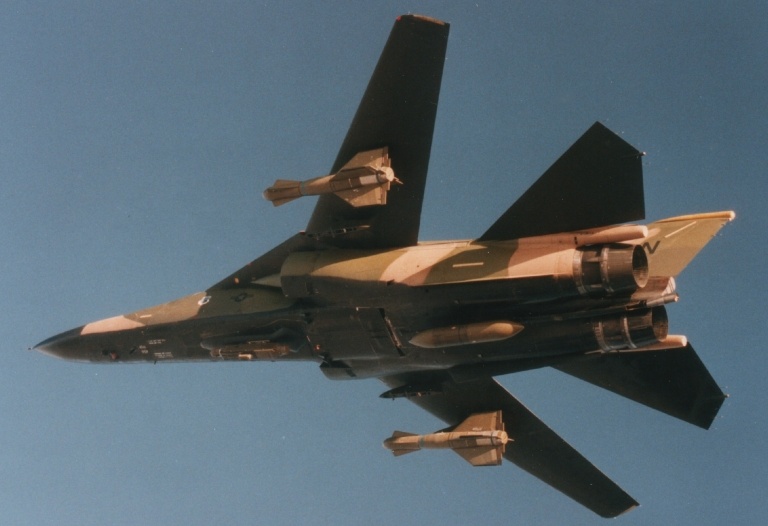
Pic.1/2 The RAAF's central force structure model since the forties has been that of a short range air superiority fighter and a long range bomber, the latter capable of unescorted penetration. Recent changes in our strategic circumstances indicate that this force structure model may no longer be appropriate, and a new model, built around a long range air superiority fighter and long range bomber, should be adopted in the longer term.
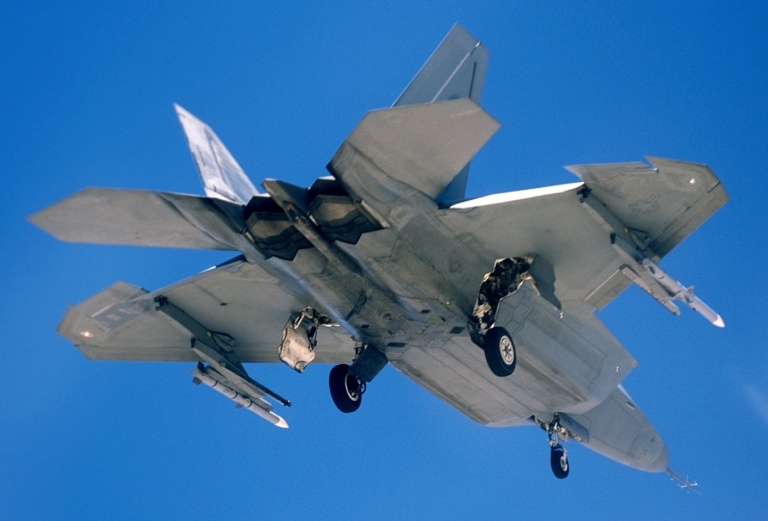
Pic.3 The USAF's new F-22A "air dominance fighter" would provide the best fit to the developing strategic environment. A true 21st century "first tier" fighter, this aircraft has combat radius comparable to the F-111, a high level of stealth performance, supersonic cruise capability, superlative agility and excellent long term growth potential. Cost will be an issue as the F-22 is about 35% more expensive than a late build F-15, although it is reputed to be "nine times as lethal as an F-15" (LMC).
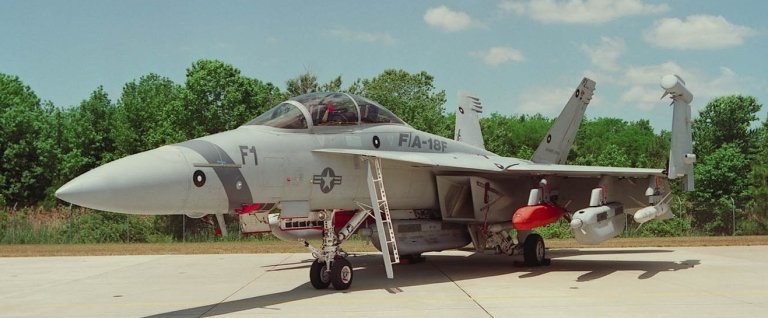
Pic.4/5 The Eurofighter and the F-18E are both excellent "second tier" fighters, which provide respectable capability in both counter-air and strike roles. The fundamental limitations of both types lie in combat radius performance, and the lack of a true stealth capability. Both of these limitations would therefore impair the aircrafts' ability to evolve further should the Flanker be further evolved in capability, or the Flanker follow-on be deployed in the next two decades (Boeing).
Pic.6 The impending massed
deployment
of
the Su-27 Flanker family of aircraft by a number of Asian nations will
swing the balance of power in the wider regional air power game
decisively against the RAAF. With standing orders for about 350 of
these
aircraft in Asia, and the prospect of more to come, the capability to
merely frustrate the Flanker will no longer be adequate to achieve
stable deterrence. To restore the existing strategic balance, the RAAF
will need to acquire a fighter with the combat radius and lethality to
decisively defeat a numerically superior Flanker force (US Air Force).
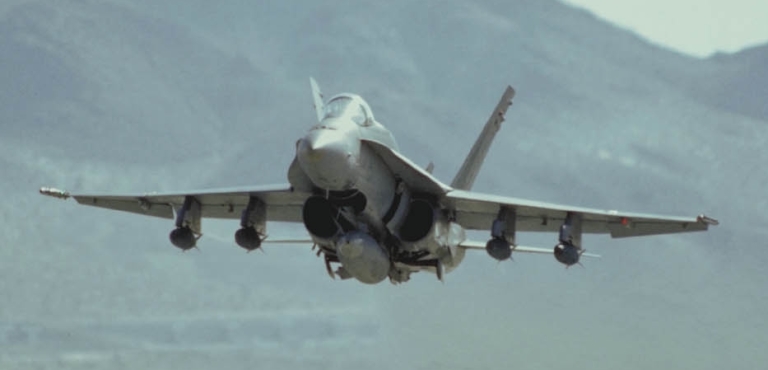
Pic.1 F-18 The F/A-18A+ Hornet is Australia's air superiority fighter, tasked with the offensive and defensive counter-air missions. This aircraft is a superb second tier fighter, and when purchased it provided a clear margin of air superiority over the wider region, who operated third tier Western and second tier Soviet fighters such as the MiG-21/F-8/J-8 Fishbed, MiG-23 Flogger and MiG-19/F-6/J-6 Farmer. Since the collapse of the Soviet Union, the best first tier Soviet types such as the Su-27 Flanker and MiG-29 Fulcrum have been sold into Asia. With the expectation of about 350 Flankers deployed in the wider region by 2005-2010, the F/A-18A has been clearly outclassed. With its 10,860 lb internal fuel capacity, it cannot compete in combat radius with the Flanker, which carries about 22,000 lb of internal fuel.
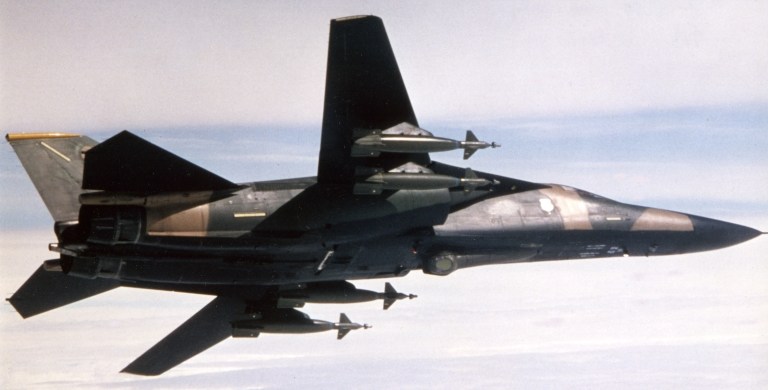
Pic.2 F-111 The F/RF-111C AUP aircraft, with new offensive avionics, new missiles, new electronic countermeasures, higher thrust engines and with RCS reduction measures applied will continue to be effective against a surface to air threat for the forseeable future. However, if confronted with overwhelming numbers of Su-27 Flankers, the F-111 loses its key advantages of speed and persistence. As a result, the aircraft will require a fighter escort into such environments. In such scenarios, the RAAF's power projection radius is primarily limited by the reach of its air superiority fighter. Therefore should the RAAF wish to retain its existing strike radius, it will need to replace the Hornet with a fighter with Flanker class combat radius.
Pic.3 MiG-29 The MiG-29 Fulcrum is at this time regionally deployed by Malaysia and India. The aircraft, which was designed to challenge the F-15A in Warpac airspace, has acquitted itself well in recent Malaysian IADS exercises with the RAAF. Numerous reports indicate that the 77 SQN deployment to the Churinga 96 Exercise led to the "scoring" defeat of the RAAF contigent by the RMAF MiG-29/Archer force. While the MiG-29 has combat radius performance inferior to the F/A-18, it has superlative agility and is an excellent dogfighter by any standard.
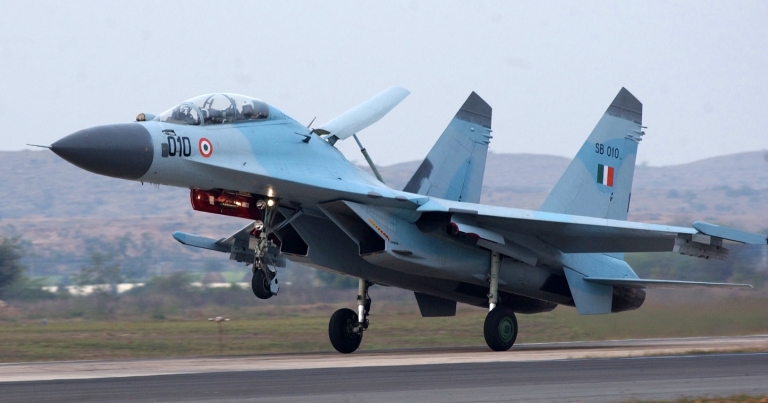
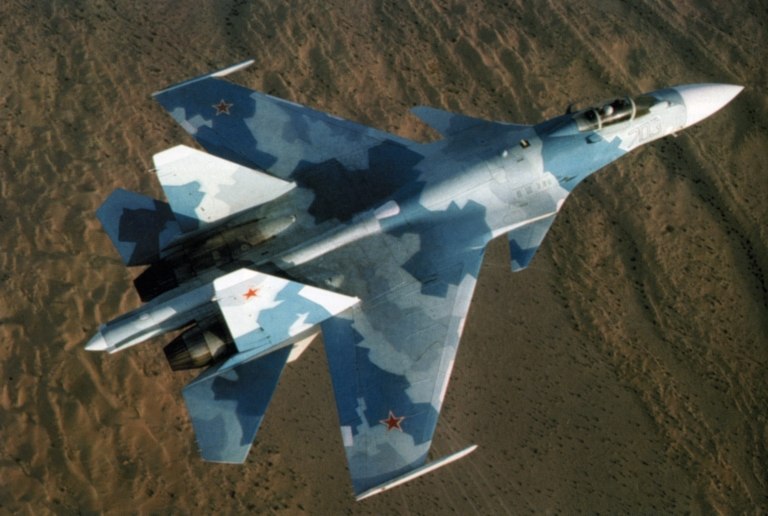
Pic.4 The impending massed deployment of the Su-27 Flanker family of aircraft by a number of Asian nations will swing the balance of power in the wider regional air power game decisively against the RAAF. With standing orders for about 350 of these aircraft in Asia, and the prospect of more to come, the capability to merely frustrate the Flanker will no longer be adequate to achieve stable deterrence. To restore the existing strategic balance, the RAAF will need to acquire a fighter with the combat radius and lethality to decisively defeat a numerically superior Flanker force. The Flanker has a combat radius in the class of the F-15E and the F-111, and is a true first tier "strategic" fighter, capable of deep penetration fighter sweeps or fighter escort missions to defend bombers. The Su-30MKI is a capable fighter bomber in its own right (RuMoD) |
|
|||||||||||||
|
|
|
|
|
|
|
|
|
|
|
|||
|
|
|
|
|
|
|
|
|
|
|
|||
 |
|
|
|||||||||||
| Artwork, graphic design, layout and text © 2004 - 2014 Carlo Kopp; Text © 2004 - 2014 Peter Goon; All rights reserved. Recommended browsers. Contact webmaster. Site navigation hints. Current hot topics. | |||||||||||||
|
Site Update
Status:
$Revision: 1.753 $
Site History: Notices
and
Updates / NLA Pandora Archive
|
|||||||||||||
|
|
Tweet | Follow @APA_Updates | |||||||||||
|
|
|||||||||||||
|
|
|||||||||||||