|
||||||||||||||||||||||
 |
||||||||||||||||||||||
![F-22A Raptor, FB-22, F-22E, F-22N and Variants Index Page [Click for more ...]](APA/f-fb-22.png "F-22A Raptor, FB-22, F-22E, F-22N and Variants Index Page [Click for more ...]") |
 |
![People's Liberation Army Air Power Index Page [Click for more ...]](APA/pla-air-pwr.png "People's Liberation Army Air Power Index Page [Click for more ...]") |
 |
 |
 |
 |
 |
 |
![Military Ethics, Culture, Education and Training Index Page [Click for more ...]](APA/ethx-culture.png "Military Ethics, Culture, Education and Training Index Page [Click for more ...]") |
 |
||||||||||||
 |
![Russian / Soviet Weapon Systems Index Page [Click for more ...]](APA/rus-weps.png "Russian / Soviet Weapon Systems Index Page [Click for more ...]") |
 |
 |
 |

|
 |
 |
 |
 |
 |
||||||||||||
 |
 |
|||||||||||||||||||||
| Last Updated: Mon Jan 27 11:18:09 UTC 2014 | ||||||||||||||||||||||
|
||||||||||||||||||||||
|
||||||||||||||||||||||
|
||||||||||||||||||||||
|
|
|
|
|
|
|
|
|
|
|
||||||||||||
|
|
|
|
|
|
|
|
|
|
|
||||||||||||
|
|
|||||||||||||||||||||
| Last Updated: Mon Jan 27 11:18:09 UTC 2014 | ||||||||||||||||||||||
|
||||||||||||||||||||||
| SAR/GMTI - A Revolution in Bombing Technology | ||||||||||
Carlo Kopp First published in Australian Aviation June, 1997 |
||||||||||
|
||||||||||
|
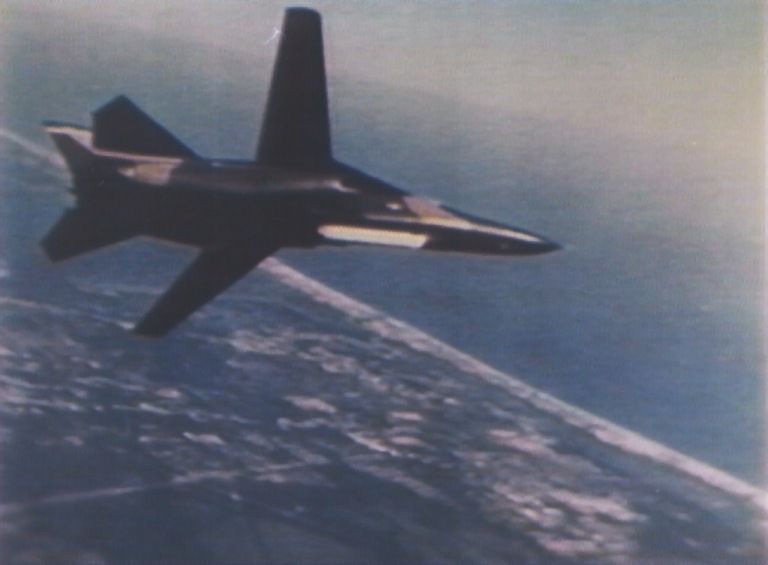
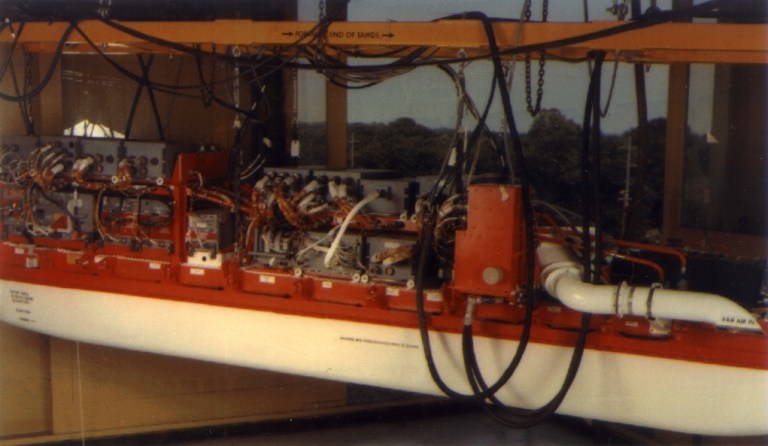
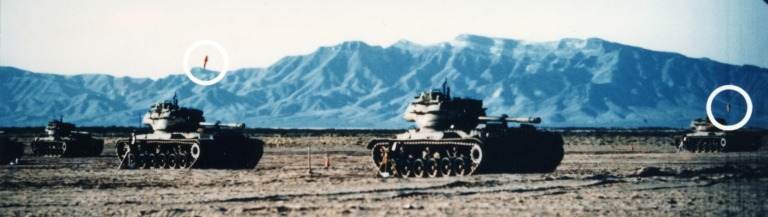
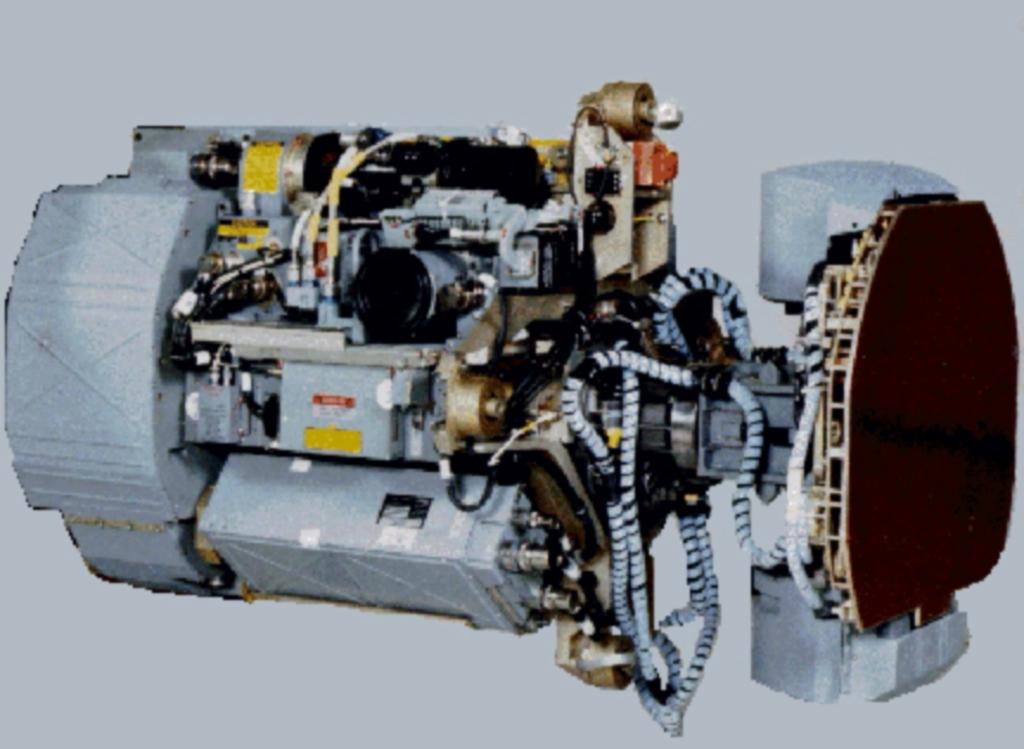
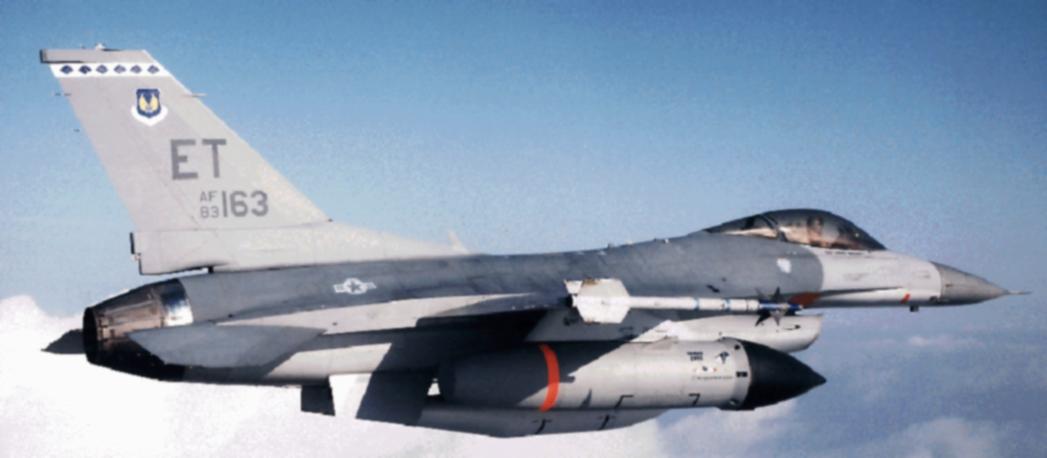
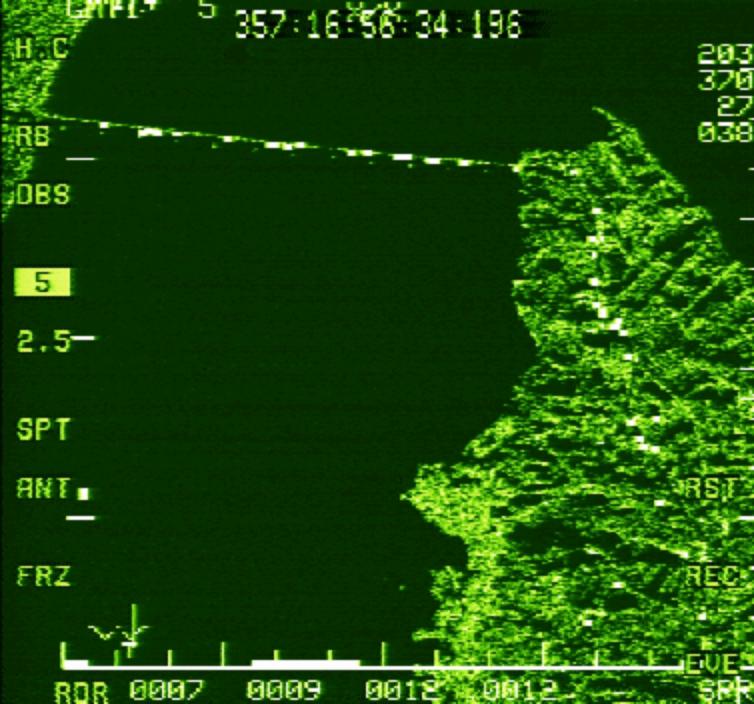
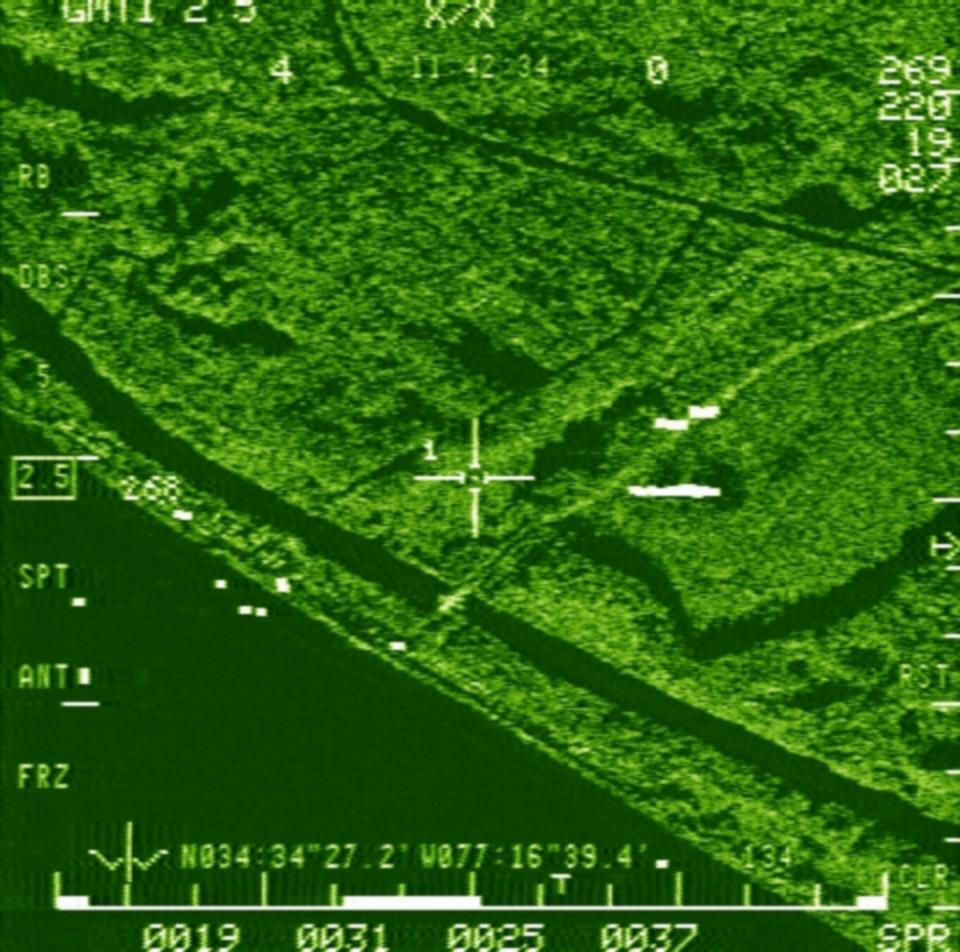
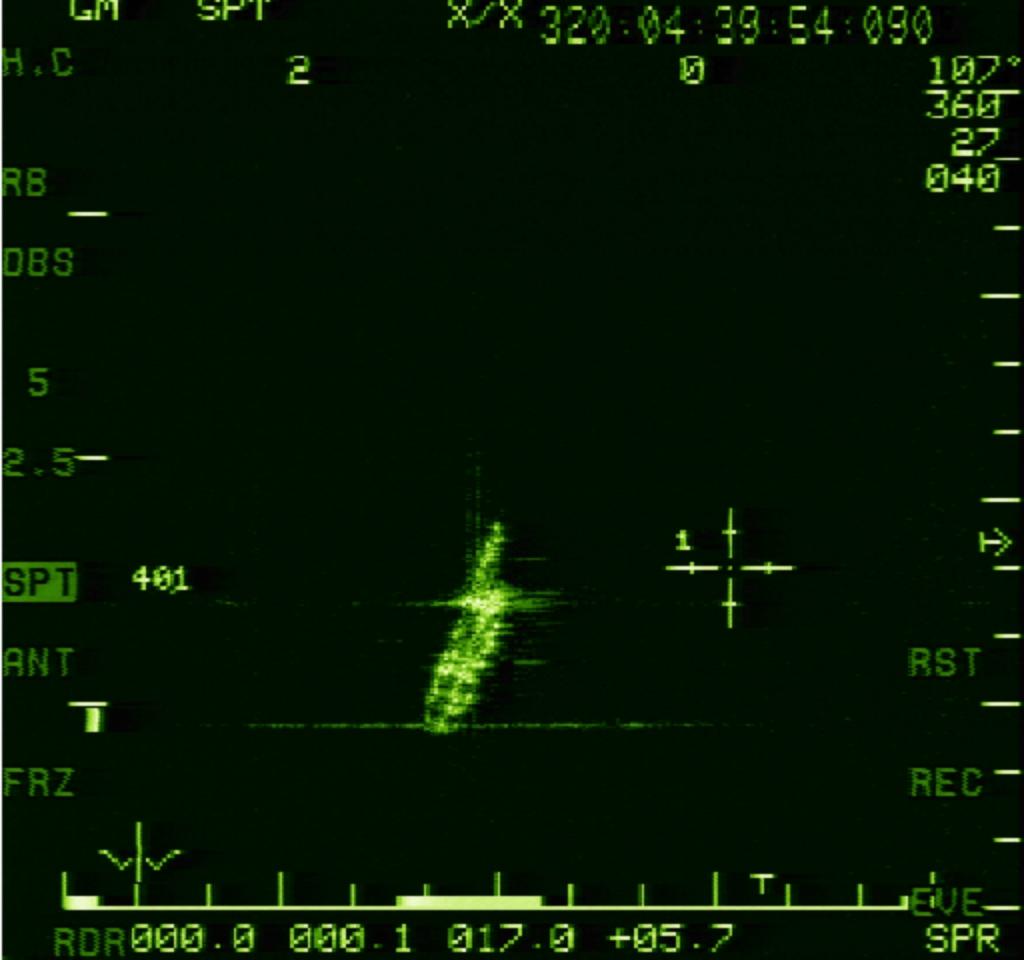
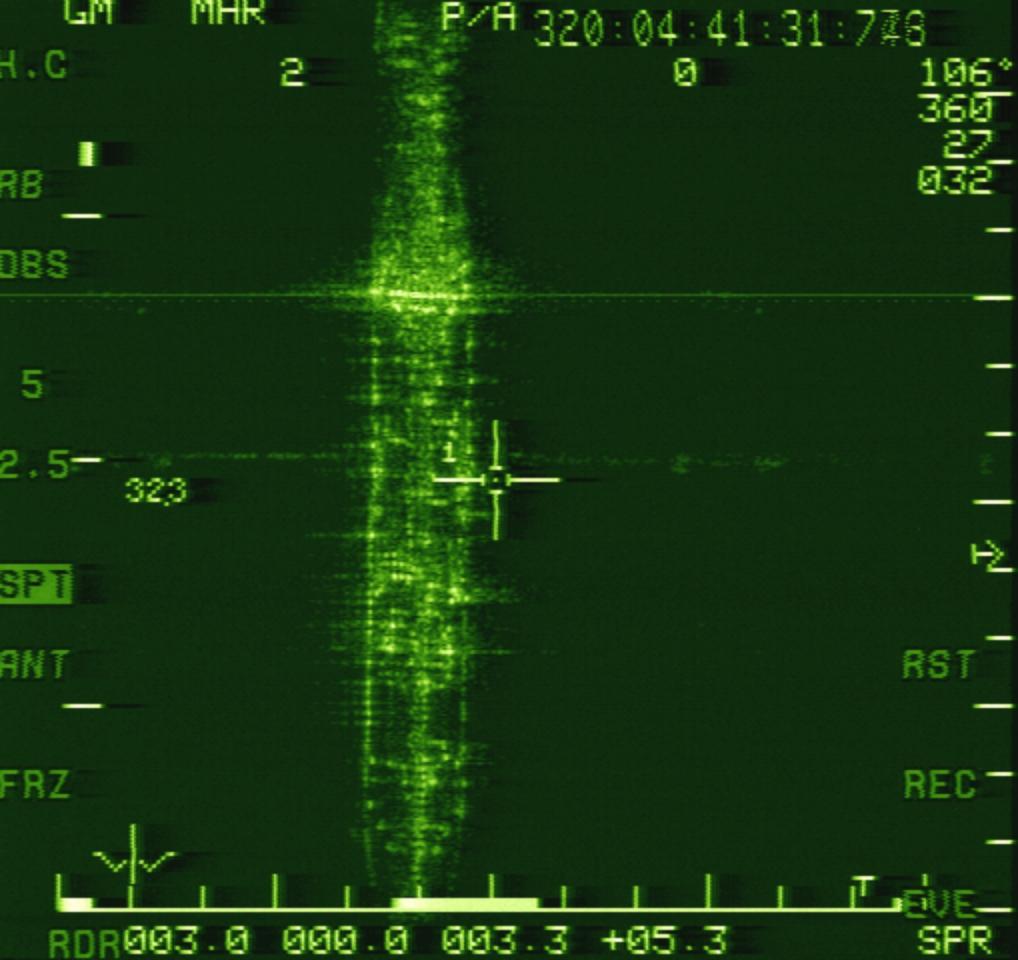
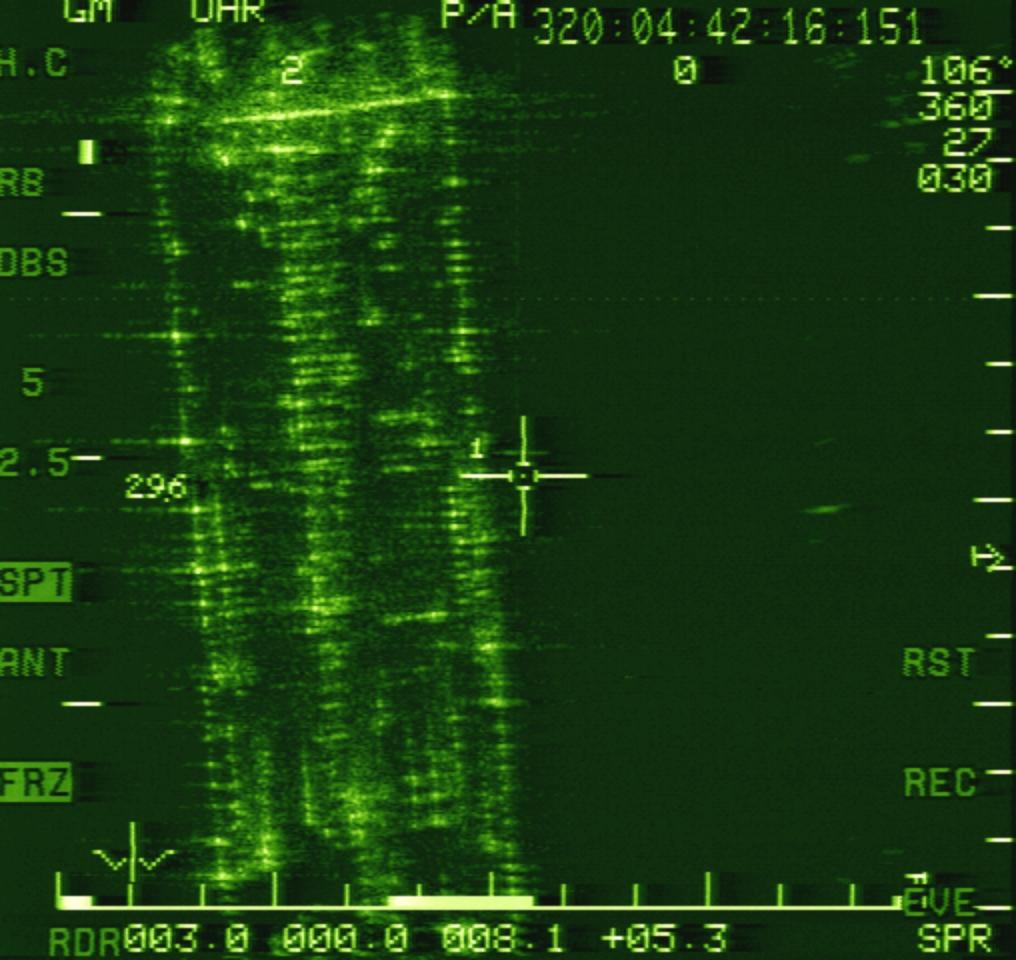
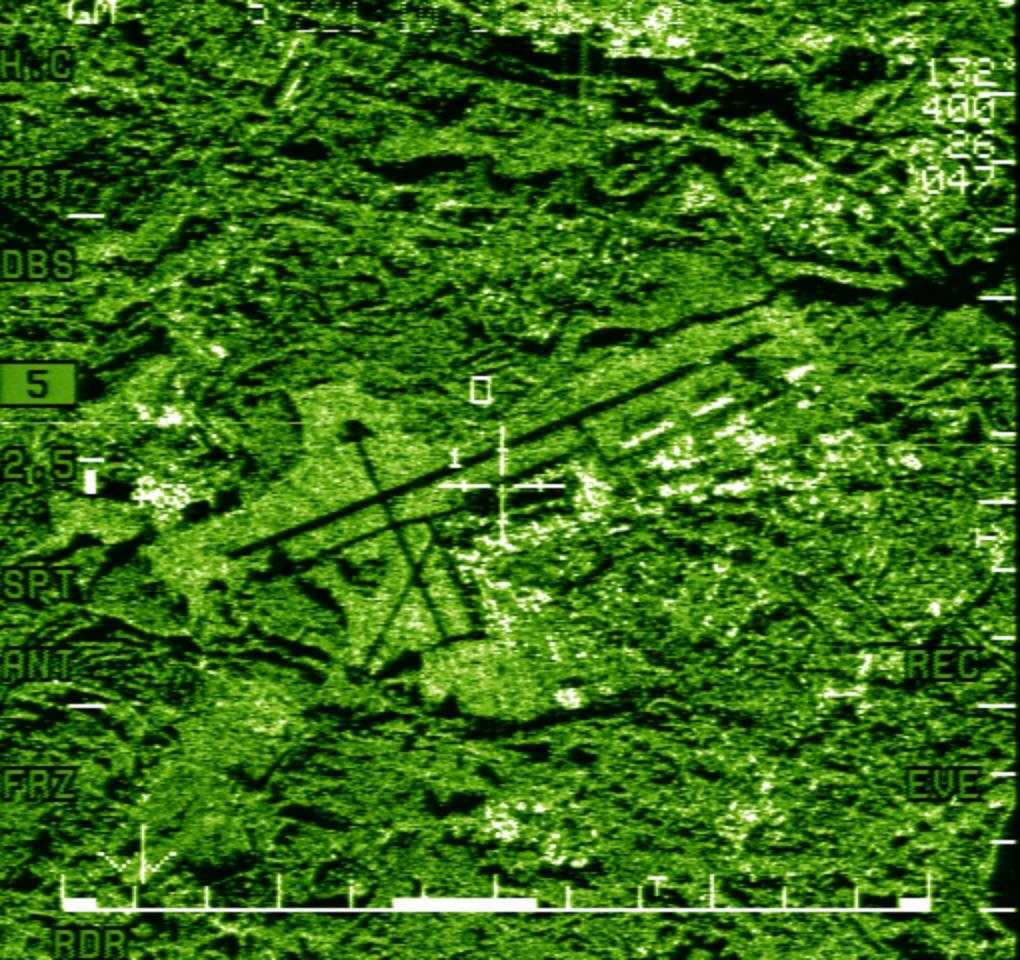
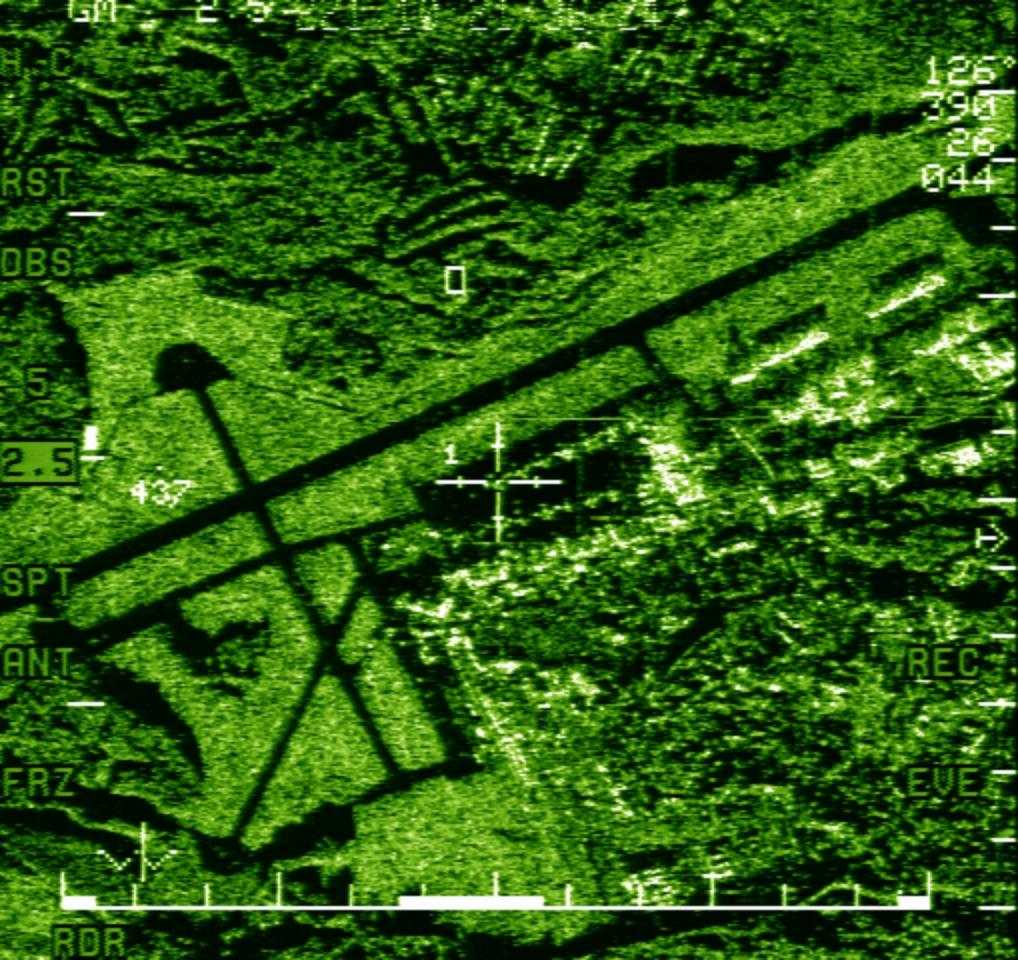
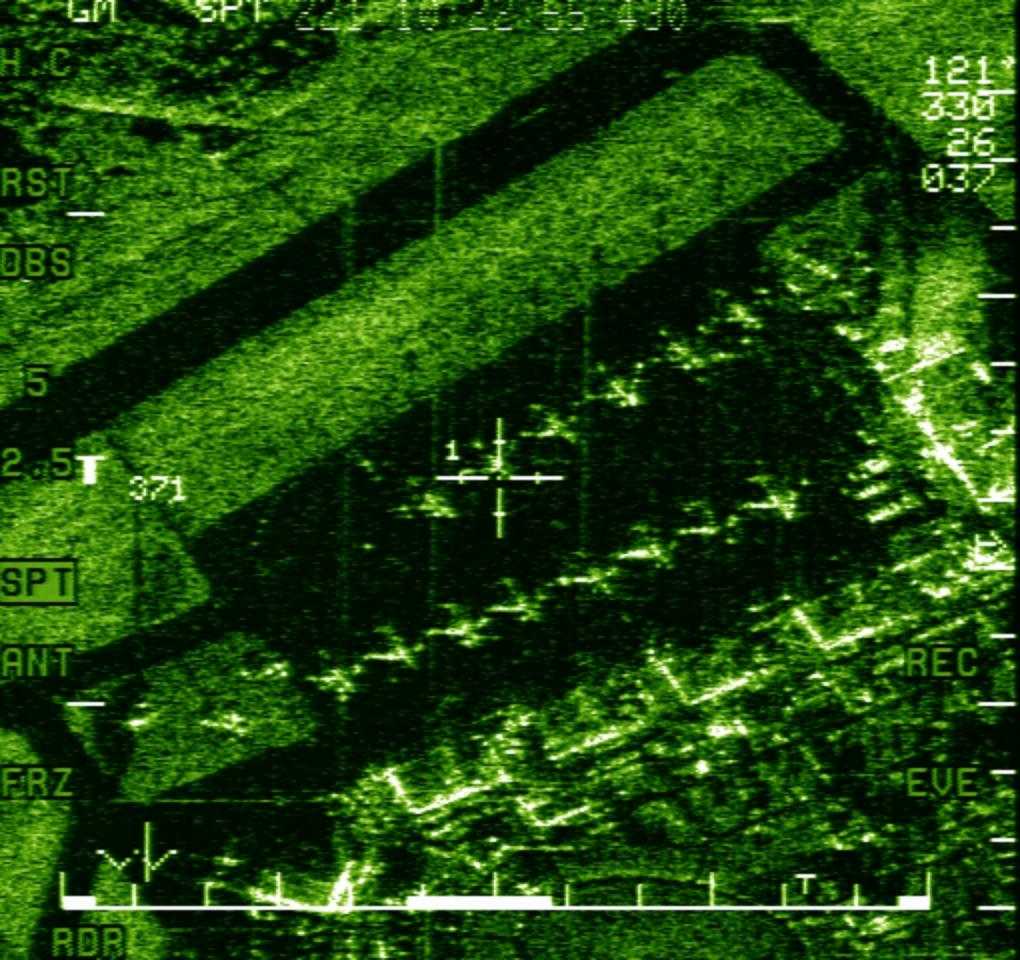
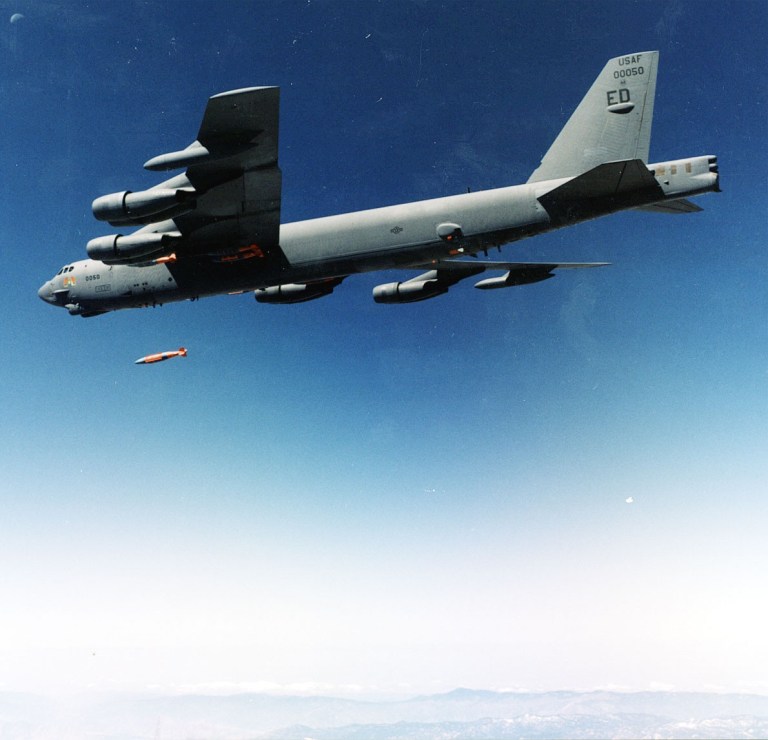
The last decade of the twentieth century has seen a number of technological paradigm shifts in air warfare - Stealth, GPS guided weapons, super-manoeuvrable fighters, agile dogfight missiles, active radar medium range missiles and a number of developments in radar. Of the latter perhaps the most significant yet least publicised has been the development and early deployment of reconnaissance, surveillance and attack radars incorporating high resolution imaging Synthetic Aperture Radar (SAR) and Ground Moving Target Indicator (GMTI) techniques. This technology promises to revolutionise battlefield and strategic bombing operations, and combined with the GPS guided bomb will displace the established thermal imager/laser designator and laser guided bomb within the next decade. The technological driver in this area is computing power. In the mid sixties Gordon Moore, now leading Intel Corp, formulated a rule which has since been labelled "Moore's Law". What Moore's Law says is that computing power per dollar spent doubles every 18 months or so. Fuelled by an insatiable commercial market demand for high speed graphics, multimedia and communications, by the mid nineties the result of this has been a virtual explosion in the performance of low cost single chip computers. Modern radar is built around digital signal processors (DSP), which are specialised computer chips which execute the signal processing software which is the core component of such radars. Indeed radars are gluttonous consumers of compute cycles, and in many past instances the full capabilities of a radar RF design were not exploited simply because there was not enough compute power in the DSPs to do so. This situation is now beginning to change, and in the next decade we can expect to see the situation reversed. We can expect to see custom DSP chips displaced by low cost volume production commercial computing chips, this is in fact the central strategy behind the F-22's core computing subsystem. Plentiful compute cycles mean that extremely complex and powerful signal processing algorithms can be employed, algorithms which may have been unthinkable for practical use one or two decades ago. In turn this means that a whole range of powerful new capabilities will become available in radars. Importantly, these radars will be smaller, lighter and more effective than their predecessors. Two particular radar techniques heavily exploit this evolutionary leap in technology and the combined use of these will change air to ground operations in many significant ways. These are SAR and GMTI. SAR/GMTI - A Strategic Perspective State of the art high resolution imaging Synthetic Aperture Radars can produce spot maps of areas hundreds of metres to kilometres in size at tens of NMI of range, with resolutions at this time as fine as one foot. In the simplest of terms, you can use such radars to produce geometrically accurate surface maps in which the smallest feature size is a foot. Therefore buildings, roads, structures, vehicles, parked aircraft, ships, fences, radio masts, radar antennas and any other features of interest can be detected, identified and accurately located in relation to the surrounding terrain. State of the art Ground Moving Target Indicator radars can detect slowly moving surface vehicles, taxiing aircraft, and hovering helicopters. In many instances, these radars can also exploit fine Doppler modulations in the radar return to identify the vehicle class or type, and even rotating radar antennas. A radar which combines these two technologies can accurately detect, locate and identify virtually any surface target, from a standoff range at a very shallow slant angle, under any weather conditions. Combined with GPS guided bombs, this is a revolutionary capability, because it extends the existing around the clock bombing capability to an all weather standoff bombing capability. The established thermal imaging/laser guided bombing technology requires that direct line of sight exists to the target, that the cloudbase is above the bombing aircraft, and that the humidity and precipitation situation is not severe. Many bombing sorties were aborted during the Gulf War as these conditions were not satisfied. Moreover getting close enough to the target to use a thermal imager exposes the aircraft to air defences. In strategic bombing operations, the use of SAR/GMTI capable radars and GPS guided weapons will allow any strategic target to be bombed under any conditions, with no loss in accuracy. If glidebombs or standoff missiles are used, air defences can be bypassed with no loss in accuracy. Because the radar can cover a much larger footprint than a thermal imager, and GPS guided weapons are wholly autonomous once released, multiple aimpoints can be engaged on a single pass. This means a from one aircraft - one target to one aircraft - many targets. It we further factor in programs such as the USAF MMTD (Miniature Munition Technology Demonstration) or small bomb program, which aims to produce a 250 lb differential GPS guided bomb with the lethality of a Mk.84 2,000 pounder and a CEP of about 5 feet, we end up with a massive increase in the potency of Western air power. Fully loaded with such weapons an F-111 or F-15E acquires the killing power of a B-52 loaded with conventional Mk.84s. Attacks upon convoys and road and rail communications deep inside hostile airspace can be conducted under any weather conditions, and surface targets of opportunity can be easily detected. Traditionally such strikes were concentrated upon choke points such as bridges, in turn this predictability gave a defender the opportunity to preposition defences. With a SAR/GMTI capable attack radar, a bomber can sweep highways and railroad lines for traffic and accurately engage that traffic once detected. In defence suppression (SEAD) operations mobile radar, SAM and AAA systems have been traditionally difficult to locate, particularly if the operators are clever and only transmit intermittently, between moves. With SAR/GMTI radar, such targets can be detected and engaged on the move. If the capability exists to detect rotating antennas, then non-emitting rotating antenna radar targets can be found and bombed. In Battlefield Air Interdiction (BAI) and Close Air Support (CAIRS) operations, moving armour and supply convoys can be readily detected and engaged on the move, again under any weather conditions. Submunition dispensing glide weapons such as the JSOW or its European cousins are specifically designed for this purpose. Indeed the JSTARS controlled ambush of the Iraqi relief column to Khafji was the precursor of what will become a more general style of BAI ops. In reconnaissance operations large areas can be mapped without the need to overfly the area of interest, thereby both alerting an opponent to your interest in the area, as well as exposing the recce aircraft to hostile fire. Because a capable SAR/GMTI sensor can overlay GMTI tracks over accurate SAR maps, activity in the area of interest becomes much easier to detect and interpret. Inclement weather is no longer the restriction it used to be for recce sorties using optical and thermal imaging cameras or linescanners. In surveillance operations, a platform with a capable SAR/GMTI radar can become like the E-8 JSTARS, a land warfare analogue to the AWACS/AEW&C, with the capability to look up to 200 NMI deep into hostile airspace to detect and track vehicular activity. The all weather standoff capability of the radar, combined with a good onboard C3 package, will allow such aircraft to vector fighters onto hostile surface contacts. In littoral maritime operations, supporting amphibious operations, suppressing coastal defences, softening up for strikes or bombardment and extracting surface forces, radars with a SAR/GMTI capability can be employed to locate small surface combatants hidden from ship borne radars by terrain, as well as to locate coastal defences, and movements of defensive equipment. Air warfare strategists recognise the important concept of the targeting cycle. This cycle involves the detection, location and identification of targets, followed be the engagement of these targets, and post strike bomb damage assessment (BDA) to determine whether reattack is required. During the Gulf War this cycle was often contracted down to hours, but more typically involved 24 to 48 hours for strategic targets. The most revolutionary change which the wide deployment of SAR/GMTI capable radars will bring is the contraction of the targeting cycle. Targets can be detected, located, identified, engaged and damage assessed in a matter of minutes. The targeting cycle is then contracted down to a look-shoot-kill-look cycle, all under arbitrary weather conditions and at standoff ranges, if suitable munitions are used. Historically, surface bound opponents have often evaded air attack through clever use of mobility and exploitation of foul weather. Whether we look at the Wehrmacht retreat up the Italian peninsula, or the Ardenne offensive, or interdiction operations in Korea and Vietnam, or Scud hunting in the Gulf, in every instance Western air superiority did not convey the ability to nail every hostile surface asset (something which air power opponents never fail to mention). The refuge of mobility and foul weather disappears once SAR/GMTI radars are widely deployed. There is no escape, if it moves it is found and killed. If it doesn't move it is a useless asset. The combination of all weather operation, precision and rapid response times is the most revolutionary change in air power ever brought about by a single technological step. And this is a step which involves a modest cost indeed as the new generation of radars will be similar in cost in existing technology, while the GPS guided bombs are similar in cost to bottom of the range laser guided bombs. The combined effect of this sensor and weapons technology will be to increase the lethality of any single combat aircraft by a factor of five to ten. It is worth noting that with continuing budgetary pressures to downsize being applied to Western fighter and particularly bomber fleets, this technology is essential if Western air power is to maintain its pre-eminent position in the World. It does mean that a credible combat capability can be retained even if force sizes are further contracted. In practical terms it means that a stealthy lightweight fighter just as the JSF can still have the lethality of an F-16 or F-18 carrying internal weapons, and that a top tier fighter such as the F-22 can have the lethality of an F-15E or F-111 while carrying internal weapons. What does not change in this equation is that you still need a big aeroplane to go a big distance, Breguet's equation cannot be escaped. A small lightweight JSF will still not be able to perform the deep strike mission of the F-111 or F-15E simply as the basic range requirement forces a bigger airframe. Therefore if you want to replace an F-111, F-15E or F-117A with a comparable deep strike fighter, you need something of a similar size and weight, ie an F-22 or similar. By the same token if you want to replace a B-52 you will need something of a similar size (eg B-2). What the small bomb technology does allow is stealth with lesser difficulty in packaging lethality into the available volume, so that designers are not faced with the dilemma of the A-12 Avenger which died because it ended up with so many internal bomb bays that the engineers had to beef up the internal structures and compromise weight and thus overall performance. The other side of this issue is that some targets such as large factory complexes, warehouses and troop formations dug in on the battlefield will be best attacked by carpeting them with dumb bombs, even if these will be "small bombs". Therefore attacking such targets will require a hefty payload. Other issues which do not change are the requirement for aircrew skills in operating such systems. If you have an onboard SAR/GMTI radar and a dozen bombs with which to hit 6 intended aimpoints, the operator must be capable of identifying the aimpoints in the cockpit imagery correctly and designating them to the nav-attack computer so the bombs can be programmed with aimpoints before release, all within the timeframe within which he would engage a single target using established laser guided weapons and Flir sensors. To fully benefit from the technology a dedicated navigator/WSO may still be required, again mitigating against lightweight single seaters. Survivability of the aircraft will continue to be an issue, moreso since increasing lethality will make them more valuable targets to an opponent - we can expect even more effort to be expended on air defences given that a single aircraft can do vastly more damage per unit than existing systems can. Stealth and stand-off range will be essential. In the light of the above, it appears that stealth will become an inevitable necessity if munition costs are to be kept to a minimum (eg dropping JDAM and MMTD vs JSOW and standoff missiles). The electronic warfare threat to radar and GPS will always exist. However, the most recent generation of GPS receivers has a significant anti-jam capability, and modern radars are built from the ground up with robust ECCM performance. In any event the successful use of countermeasures against modern radar and GPS alike requires a considerable degree of technological and operational sophistication. The required level of sophistication is yet to be seen in the wider Asia-Pacific region, and certainly will not be seen in SEA in the forseeable future. Because potential opponents have more to gain from exploiting Western GPS than jamming it, it is fair to say that the credibility of the "GPS is vulnerable to jamming" argument is often greatly overstated (mainly by opponents of air power). In summary it must be reiterated that current developments in SAR/GMTI radar, combined with GPS and Differential GPS guided small bombs represent the most significant gain in bombing capability seen since the deployment of the laser guided bomb and thermal imager. Unlike the former, which had important weather related limitations, SAR/GMTI radars and GPS guided bombs suffer none of these. The radar technology is now operationally deployed with the USAF, USN and Israeli Air Force, and the GPS guided bomb is now operational with the USAF. All of these are services with a proven recent combat track record and the experience and judgement to realistically assess that which works and that which doesn't. The consensus is evidently that the technology works robustly, as major expenditure has been allocated to deploying these technologies on a wide scale. In the Australian context this technology should be of great interest to the RAAF, given the humid and wet climatic environment in the Deep North and SEA, which is not conducive to getting good performance from 10 micron band thermal imagers such as the Pave Tack. Combining this with monsoonal weather means that thermal imagers and thus laser guided weapons are subject to weather related no-go situations far more frequently than in the temperate Northern Hemisphere. Equipping the F/RF-111C and F-111G with a suitable SAR/GMTI radar and GPS/DGPS guided bombs/glidebombs would remove this limitation completely, providing the RAAF with an unrestricted all-weather around the clock precision or accurate bombing capability, while reducing aircraft exposure to point defence weapons. The RAAF should give serious consideration to the wide adoption of this technology, and should mooted upgrades to the F-111G proceed, equip these aircraft first. An F-111G with a SAR/GMTI capable attack radar and four to six JDAMs is a formidable and highly cost effective bombing capability, whether applied to strategic bombing or Army support operations. Arguably in the latter role much more is to be gained, given the more dynamic targeting environment. The ADF has dithered far too long on the operational deployment of this technology, moreso given the superb results from DSTO's work in this area. Clearly the Minister should move decisively at the earliest possible time, override if necessary any DoD bureaucratic obstruction, and proceed to operational deployment by the turn of the century. Not to do so is to do the taxpayer a disservice. A future feature will discuss the radar technology in more detail, including some representative radars. |
||||||||||
|
||||||||||
|
||||||||||
|
||||||||||
|
|||||||||||||
|
|
|
|
|
|
|
|
|
|
|
|||
|
|
|
|
|
|
|
|
|
|
|
|||
 |
|
|
|||||||||||
| Artwork, graphic design, layout and text © 2004 - 2014 Carlo Kopp; Text © 2004 - 2014 Peter Goon; All rights reserved. Recommended browsers. Contact webmaster. Site navigation hints. Current hot topics. | |||||||||||||
|
Site Update
Status:
$Revision: 1.753 $
Site History: Notices
and
Updates / NLA Pandora Archive
|
|||||||||||||
|
|
Tweet | Follow @APA_Updates | |||||||||||
|
|
|||||||||||||
|
|
|||||||||||||