|
||||||||||||||||||||||
 |
||||||||||||||||||||||
![F-22A Raptor, FB-22, F-22E, F-22N and Variants Index Page [Click for more ...]](APA/f-fb-22.png "F-22A Raptor, FB-22, F-22E, F-22N and Variants Index Page [Click for more ...]") |
 |
![People's Liberation Army Air Power Index Page [Click for more ...]](APA/pla-air-pwr.png "People's Liberation Army Air Power Index Page [Click for more ...]") |
 |
 |
 |
 |
 |
 |
![Military Ethics, Culture, Education and Training Index Page [Click for more ...]](APA/ethx-culture.png "Military Ethics, Culture, Education and Training Index Page [Click for more ...]") |
 |
||||||||||||
 |
![Russian / Soviet Weapon Systems Index Page [Click for more ...]](APA/rus-weps.png "Russian / Soviet Weapon Systems Index Page [Click for more ...]") |
 |
 |
 |

|
 |
 |
 |
 |
 |
||||||||||||
 |
 |
|||||||||||||||||||||
| Last Updated: Mon Jan 27 11:18:09 UTC 2014 | ||||||||||||||||||||||
|
||||||||||||||||||||||
|
||||||||||||||||||||||
|
||||||||||||||||||||||
|
|
|
|
|
|
|
|
|
|
|
||||||||||||
|
|
|
|
|
|
|
|
|
|
|
||||||||||||
|
|
|||||||||||||||||||||
| Last Updated: Mon Jan 27 11:18:09 UTC 2014 | ||||||||||||||||||||||
|
||||||||||||||||||||||
| Why Australia Needs an Airborne Early Warning Capability | ||||
|
||||
|
The presence or absence of modern AEW platforms would have radically altered the flow of events - both in the Falklands and during the invasion of Lebanon, respectively. The Royal Navy need not have lost any vessels, whereas Israel could have suffered substantial losses in interdiction aircraft. In the light of these events, Australia's expected purchase of the E-2C appears more sensible than ever before, as AEW is the one capability which Australia lacks and yet sorely needs, even in peacetime. A closer look at both the Falklands conflict and the Lebanese
war will serve to illustrate exactly why AEW is such a pressing need in
a modern war. The conclusions one may draw are very convincing.
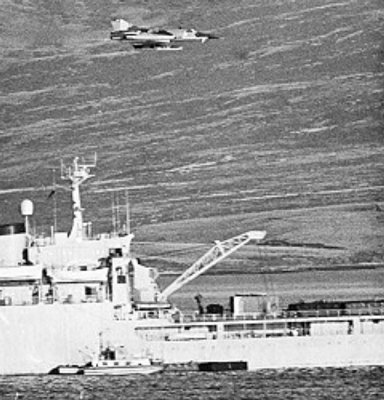
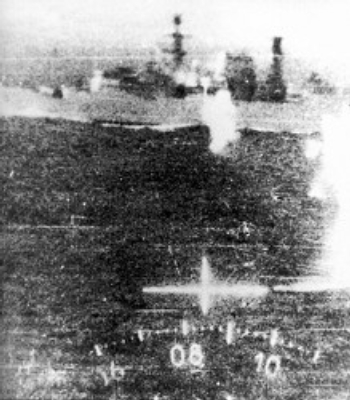
Operation Corporate - Britain's Recapture of the Falkland Islands When Argentine troops set foot on the British Falkland Islands in April, 1982, Britain was anything but prepared. Britain's last conventional, catapult equipped fixed wing carrier the Ark Royal was long gone, it's complement of supersonic F-4K Phantom air superiority/strike fighters and subsonic Buccaneer S.2 strike/recce fighters, together with the obsolete yet functional Gannet AEW.3 aircraft having been transferred to the RAF. The Phantoms and Buccaneers, modified, continued in their respective roles, but the Gannets met a sad fate having been cannibalised to supply the APS-20F surveillance radars for the RAF Shackleton AEW.2 fleet. As Britain's economic situation declined into the early eighties further cuts were suggested. The number of active warships serving in the Royal Navy was to be reduced, to pay for the upgrading of the RN's seaborne nuclear deterrent. First on the chopping block was Britain's newest major combat vessel, the light STOVL (short take-off vertical landing) carrier HMS Invincible, offered to the RAN for a dirt cheap A$430 million. At this stage in early 1982 the RN had only one other platform capable of embarking fixed wing aircraft, STOVL only, that being the former conventional carrier HMS Hermes. As the RN's envisaged role was anti-submarine / anti-shipping warfare in the North Atlantic operating in conjunction with US Navy Carrier Battle Groups, little attention was paid to in-depth anti-aircraft defence, whether by SAMs (Surface to Air Missiles) or fixed wing fighter. Pitted against aircraft of the Aviatsia Voenno-Morskovo Flota or Dal'naya Aviatsia VVS, the RN would contend with the massive Tu-20 Bear, the Tu-16 Badger and the Mya-4 Bison, hardly capable of evading shipboard surveillance radars and nimble Sea Harrier FRS.1 fighters. Nastier elements of Soviet air power, such as the Tu-26 Backfire, were to be left to the AEW E-2Cs and F-14 fighters of the screening US CBG. With the RN in such a sadly neglected shape and the nearest British base being Wideawake Field in the Ascensions, 6000 kms away, it is obvious that the temptation would have to be too great for the Argentine junta to resist. Confident of their capabilities, having bullied all their smaller neighbours and internal opposition, the Argentine armed forces decided to put on a massive display of power, humiliating one of the greatest colonial powers of all times, Great Britain. At the beginning of April, 1982, Argentine troops overpowered the small British garrison and raised their flag over the disputed islands. Britain's response was immediate, within days the bulk of the Royal Navy was despatched, determined to recapture the islands. So the war escalated, with the arrival of the Task Force in the South Atlantic, we all had the opportunity to watch it develop on television, day after day. The gutting of the Sheffield, the graphic demise of the Antelope, the daily air raids on the San Carlos beachhead, and the devastating strikes on the Sir Galahad and Tristram. British tactics were straightforward - isolate the Falklands with an air sea blockade to prevent resupply and reinforcement of the Argentine garrison, after some shelling and bombing to soften the defences, carry out an amphibious landing and recapture the islands. The naval blockade was easy to enforce as the Argentine navy wisely avoided the conflict after the surprise sinking of the cruiser Belgrano by a nuclear attack sub. The big battles were thus left to Fuerza Aerea Argentina or the Argentine Air Force (AAF). The AAF's inventory was typical of a better Third World country - a handful of supersonic Mirage IIIEAs, complemented by some 26 Israeli built Neshers (much like a Mirage V). Strike aircraft were abundant, the A-4P/Q Skyhawk numbering 80, and the local turboprop Pucara, over 60 of which were in service. All of these aircraft lacked all weather avionics for first pass attacks, all ground attack was day VFR only. The AAF did not have any Precision Guided Munitions in it's inventory, it's primary weapon being free fall iron bombs and unguided rockets, though the radio command Bullpup missile was apparently used. The only sophisticated equipment in use were a few newly delivered Super Etendard strike fighters equipped with the 40nm Exocet sea skimming anti-ship missile. Though the Etendard was no match for a Harrier in air-air combat, the Exocet was difficult to contend with. Maintaining the aerial blockade were the subsonic Sea Harriers of the RN, backed up by Type 42 destroyers equipped with the Sea Dart area defence SAM. The Sea Dart with a range of 45nm was an effective weapon, the radar picket destroyers equipped with the system deployed to the edge of the fleet, later also covering the San Carlos beachhead. The AAF knew of the Sea Dart's capabilities, the missile was ineffective at low altitudes below the horizon of the shipboard radar which provided illumination for the missile's guidance. Argentine tactics were simple - fly very low below radar while approaching the islands, at closer range the A-4s and Mirages exploited the cover provided by the land mass of West Falkland to sneak in close and surprise the British vessels. The destroyer Coventry was caught in this fashion and sunk, as were the frigates hit on air defence duty in San Carlos Bay. As it appears, the tracking radar for the Seawolf missiles was confused by close land masses, this further degrading the capability of the RN's missile screen. The Harriers were disadvantaged as their radar had little range or lookdown capability, they had to rely on vectors from the picket ships or visual acquisition. In this sense, the AAF succeeded in repeatedly surprising the RN, the most shocking incident being the raid on the two landing ships in Bluff Cove, unprotected even by SAMs. At sea the RN had to contend with the Exocet, a radar guided sea skimming missile. The gutting of the Sheffield was a rather rude awakening to the absence of close-in defence weapons on the majority of RN vessels, but the fact that a radar picket itself was a prime target was in itself more serious. This meant that pickets were not allowed to stray beyond the cover of Harriers on CAP (Combat Air Patrol), ie they were denied positions to the West of West Falkland, reducing what radar warning time was available. That allowed the AAF to reach the coast of West Falkland undetected in many instances. In flight refuelled Exocet armed Etendards had the range to strike at the fleet, providing they chose their approach wisely, they had enough time to launch their missile and escape scrambled Harriers. Two decoyed Exocets thus missed their intended target, HMS Invincible, and hit the hapless Atlantic Conveyor. As much as the RN had tried, their aerial blockade of the islands had only limited success. AAF aircraft repeatedly accessed Port Stanley under the cover of darkness, penetrating below the radar of the destroyers shelling coastal positions and avoiding the feared Harriers, which lacked the ability to detect low flying intruders at night. In spite of these setbacks, the RN decimated the AAF, 31 aircraft falling victim to the Harriers and 21 to shipboard SAMs. The following humiliation of Argentine ground forces by advancing British ground forces concluded the conflict, with the surrender of the Port Stanley garrison and HQ. As one may observe, virtually all of the vessels which were lost throughout the the conflict need not have been destroyed, had the Task Force had adequate warning of an impending attack. Radar pickets on open seas, just as vessels tasked with air defence at the beachhead, could have benefited from knowing where and when the enemy would appear. The effectiveness of the Harrier could have been increased many times, as little time would be wasted on CAP or searching for incoming targets. Surprising incoming strike aircraft would force them to jettison stores and take evasive action, disrupting AAF strikes. No differently the total number of kills could have been increased, as enemy aircraft which escaped detection would have been otherwise destroyed. The aerial blockade could have been airtight, had there been AEW to detect intruders at night and vector Harriers into kill positions. Britain had paid a great price for ignoring the need for AEW even if that price was less than expected - apparently the loss of a carrier was budgeted for. The speed with which an AEW Sea King helo was developed and fitted with an EMI Searchwater radar modified from a Nimrod MR.2 illustrates just how seriously the RN takes the matter of AEW after the Falklands. The AEW Sea King is a lash-up, though it may perform adequately, it's limited transit speed, endurance and radar range would enable it to cope only with a low density, low ECM threat level environment. Were Argentina to have possessed modern frontline first pass
strike platforms, such as the RAAF's F-111C, it is doubtful the RN
would
have even considered Operation Corporate, as it would most likely have
lost the best of it's vessels, fire control radars jammed, at night, in
miserable weather, being hit with 2000 lb free fall or laser guided
bombs. Aircraft in this class can only be stopped with capable AEW to
direct fighters. The effectiveness of virtually every defensive or
offensive operation the British carried out in the Falklands could have
been increased by the use of a modern AEW aircraft. [Click for more ...] How effective AEW can be, particularly in conjunction with
Elint (ELectronic INTelligence gathering), was well demonstrated by the
Israelis' remarkably successful operation in Lebanon, in June, 1982. In
the process of evicting the PLO from Lebanon, the IAF (Israeli Air
Force) mounted an exquisitely planned and precisely executed strike on
Syria's SAM belt, crippling one of the world's most dense air defence
systems within hours.
Four IAF F-4E Phantoms (MDC image). Operation Peace for Galilee - Israel's Invasion of Lebanon Wars between Israel and her Arab neighbours have been taking place since 1948. Typically each flare up is followed by several years of quiet as both sides ponder their mistakes and prepare for the next round. Israel had suffered heavy losses in the 1973 Yom Kippur war, when Egyptian SAMs and AAA accounted for 150 aircraft in a mere 3 days. Though the IAF was actively involved in electronic warfare even during the earlier War of Attrition, operating converted KC-97 transports for the role, the losses sustained in 1973 were taken very seriously, leading to a growing emphasis on electronic warfare and surveillance. To that effect, Israel had purchased the Grumman E-2C, not only providing AEW but also an Elint ability, built upon the aircraft's PDS (Passive Detection System) - a computerised surveillance system which monitors and identifies radar emitters up to 500nm away). It also appears that the IAF had refitted two Boeing 707 transports as Elint and jamming platforms. Aside from these specialised EW platforms, strike fighters such as the F-4E Phantom were fitted with AGM-45 Shrike (some sources indicate also AGM-78 Standard) anti radiation missiles, which home on radar transmitters. Israel's good experience during the Yom Kippur war in the use of Remotely Piloted Vehicles (RPVs) led to the development and deployment of the Scout and Mastiff RPVs, small enough to be invisible to both radar and the naked eye at several thousand feet of altitude. Further effort was focussed on the development of a new anti radiation missile, the ground launched New Zeev (Wolf). As always the IAF had effectively prepared for combat. In this instance the new F-15s and F-16s complemented the established F-4E and Kfir, the former types specialising in predominantly air-air combat, the latter focussing on air-ground strike. This array of weaponry was pitted against Syria's MiGs and SAMs. When Syria entered Lebanon in the mid-seventies, it sought to consolidate it's position against Israel. Lebanon provided a convenient forward base for advancing on Northern Israel, not to speak of a useful place to dump off the Palestine Liberation Organisation - it seems Syria's commitment to the PLO was as deep as her love for Israeli air strikes at Damascus. Syria established a massive air defence system in Lebanon, built around SAM systems stationed in the Bekaa valley. Mobile SA-6 missiles were deployed, apparently also supported by ZSU-23/4P mobile radar directed AAA (guns). This first line of defence was backed up with large ground based radars in Syria, operating in conjunction with MiG-21 Fishbed and MiG-23 Flogger fighters. Protected by Syria from any Israeli raids, the PLO had sought to attack Northern Israel. Deploying mobile Katyusha rocket launchers and heavy artillery, they sporadically shelled and rocketed Israeli settlements in the North. The Israelis did mount some air strikes against the PLO, but these had limited effect. It appears they also lost some aircraft to SAMs in the process. But the Israelis were not as idle as everyone may have thought. Site locations were identified and cataloged and extensive Elint was carried out to establish operating frequencies used for GCI (ground controlled intercept). In early June, 1982, Israel launched a massed armour attack into Southern Lebanon supported by scores of strike aircraft, the objective being the permanent removal of the PLO from Lebanon. Syria rapidly reinforced it's SAM belt, finally deploying 19 batteries of the SA-6 Gainful. The 9th, 10th and 11th of June saw the destruction of these SAMs, together with a large number of Floggers and Fishbeds. Israel executed a precise and deadly accurate attack on the Bekaa valley. Initially, RPVs were flown into radar range, these being fitted with deceptive electronic countermeasures. Using textbook EW tactics, the RPVs appeared on Syrian radar scopes as fast, low flying fighters, out on a strike mission. All SAM guidance and tracking radars were powered up, to lock on to the non-existent attackers. At this stage, several E-2C Hawkeyes were orbiting off the coast of Lebanon, these aircraft instantly detected the SAM radar systems with PDS and relayed their positions to waiting strike squadrons. Meanwhile Wolf missiles were launched at the radars, sited at the detected SAM positions. Once in range, each Wolf's seeker locked onto an emitter and the missile destroyed it. It appears as this was going on, the EW Boeing 707s were actively jamming all Syrian communications. Once the majority of the radars was crippled, the fighters moved into action. Presumably, the first wave carried Shrike ARMs, to knock out the remaining transmitters, these aircraft were backed up with cluster bomb and iron bomb armed fighters, which attacked the actual SAM launchers. The fighters flew in below Syrian ground based radar, presumably under the direction of the E-2Cs and surprised the SAM crews. Once hit by cluster bombs, the systems were disabled, iron bombs were then used to finish off the job. It appears that the IAF destroyed 19 SAM batteries and supporting 23mm, 37mm and 57mm AAA systems within an hour or so. It could be assumed that a lot of chaff was released in the initial stages to confuse the gunlaying radars on the AAA systems, as it is likely these would have escaped the ARMs in the initial attack, as the AAA would serve to defend the SAMs systems. Looking at the prospect of losing their SAMs the Syrian air force did not stand by idly. Floggers and Fishbeds were despatched to deal with the attacking Phantoms and Kfirs. But, unknown to the Syrian pilots, the E-2Cs were tracking them as they taxied along their runways. Amidst severe jamming, they were vectored into the Bekaa valley, to be ambushed by waiting F-15s and F-16s [Editor's Note 2005: the geography of region served the Israelis as the elevated terrain along the border between Lebanon and Syria created a deep blind zone for the Syrian GCI radars over the Bekaa Valley]. Of the 60 aircraft flown into Lebanon, 36 were destroyed. Israel continued with it's destruction of whatever Syrian equipment it could find in the region, mainly armour, being attacked by Phantoms and Kfirs armed with bombs, rockets and presumably Maverick missiles. Some sources indicate the use of a terminally guided antitank submunition, which blows holes through the dorsal armour of the tanks. Once again, Syria attempted to stop the carnage. Fifty MiGs flew into the Bekaa valley and Israel claims every one was shot down, ambushed by fighters directed by the E-2Cs. F-4Es, Kfirs, F-15s and F-16s participated, it appears they used all weapons from guns to radar guided Sparrows, including stocks of older Sidewinders. Having sustained such losses, the Syrians ceased their massed air attacks, leaving their ground forces at the mercy of the IAF. The Israelis surged up through Lebanon, entered Beirut and the rest is really something most of us observed on television broadcasts. Some MiGs were flown into Lebanon later, eg two Floggers were downed, followed by a recce MiG-25 Foxbat. It is fair to assume these fell victim to Sparrow firing F-15s. In a matter of two days Israel had destroyed 19 SAM batteries, their supporting AAA systems and shot down over eighty aircraft, losing only a single A-4 close support aircraft to a shoulder launched SAM. Though these results may seem incredible at a first glance, they are quite feasible. The SAM systems are easy targets once deprived of their radar, they are blind and helpless. Though it was not publicised it is fair to assume that a lot of Israeli fighters carried dedicated jammers to foil the operation of the Gun Dish, Straight Flush, Low Blow and Fan Song radars associated with the AAA, SA-6, SA-3 and SA-2 systems deployed. Combined with the disruption caused by communications jamming, chaff spreading and ARM attacks, the SAMs with their locations exposed by the E-2Cs, were defenceless targets, surprised by very low flying IAF jets. The Syrian MiGs were in an equally hopeless situation. Communications jamming deprived them of contact with their ground based surveillance radar and in the jammed and cluttered low altitude environment, their limited radars had little hope in sorting out friend from foe. The Israelis on other hand had an excellent idea of what was happening, as the E-2Cs effectively tracked all air traffic in the region, the IFF (Identification Friend Foe) systems instantly tagging the Syrians as hostiles. Thus the IAF fighters could be vectored into favourable positions to attack the Syrians without warning, while the MiGs, forced to rely on visual target detection only, were at a disadvantage. The key to Israel's stunning success in this preemptive strike lies in the use of Elint and AEW aircraft. Without the Elint capability offered by the E-2C's PDS, Israel would have found it difficult to rapidly sort out all the data gathered on the SAM radars, once baited by the drones into exposing themselves. Any delay would give the launchers time to move. The ability to track low flying aircraft allowed the E-2C to coordinate the low level strikes directed against the SAM batteries. The role AEW played in the annihilation of the MiG force was paramount. The MiGs could be lured into traps, if following GCI instructions to attack IAF jets at medium altitudes once detected by ground based radar, the MiGs could be attacked from six o'clock by low flying IAF fighters, concealed from the Syrian GCI radars. The E-2C could monitor all of this and set such traps (this could account for the high success rate of the Phantoms and Kfirs, supposedly dedicated to the ground attack phase of the operation - once having released their ordnance they could loiter at low level, awaiting a vector from the E-2C). It must be rather humiliating for the Russians to see their SAMs destroyed by cheap free fall bombs and watch new MiG-23 Floggers fall to gunfire from ageing F-4E Phantoms, but the the decisive edge in this war was provided by AEW and E-2C. Any weapon system is defenceless if it isn't aware of it's enemy's location. The combination of AEW and jamming provided Israel with all the information it needed, and denied Syria as much as was available. The results speak for themselves - an air-air kill ratio better than 80:0 against front line aircraft operated by the Warpac, ie the Soviet Frontovaya Aviatsia (Tactical Aviation). The Soviets will be seriously rethinking their air defence strategy after observing the two days of carnage that decimated (rather exterminated) an air defence system modelled on that of the Red Army and the FA. It will further accelerate their efforts to deploy AEW systems in the European theatre, backing up the AWG-9ski equipped Super Foxbats serving with the PVOS and presumably attached to units of the FA VVS [Editor's Note 2005: this expectation was optimistic in terms of Soviet capacity to adapt. The Desert Storm campaign produced a similar effect and only then did the Soviets react, by which time it was too late]. As the two wars of 1982 graphically illustrated, life without AEW in the last quarter of the twentieth century is inviting disaster. Whether one looks at offensive or defensive operations, AEW is a must for survival. Israel exploited most of what the E-2C has to offer and demonstrated enviable results in what must be a propaganda coup comparable only the Six Day War strike against Egypt. The total annihilation within hours of a front line air defence system, with losses not worth mentioning. Britain on the other hand suffered disproportionate losses when battling an unsophisticated opponent, oblivious of EW and other refinements of late twentieth century technology. Britain's success in the campaign may be attributed to a high level of professionalism, courage and the Argentines' sheer ignorance of modern warfare, combined with WW II tactics. The implications this has for Australia are numerous, but
they
all point to the necessity of acquiring AEW, the sooner the better.
Both
the RAAF and the RAN should not be denied AEW aircraft, whether fixed
or
rotary winged, the advantages offered could vastly outweigh the cost,
even in peacetime.
US
Navy image
E-2C
operator console (Northrop-Grumman image) AEW and Australia The case for AEW platforms in Australian service probably need not be discussed, it should be self-evident. Australia is in the unique position of being an isolated continent, with vast areas of sparsely or non populated territory. Though this may appeal to followers of 'Brisbane Line' defence philosophies, it creates a large number of problems which make life very difficult for small defensive forces. Logistics is one of the biggest, as one must cover a lot of distance to deploy forces and just as much distance to resupply them. Establishing for instance a chain of ground based surveillance radars and SAM systems along the Northern coastline would involve ridiculous expenses, not to speak of the dubious combat value of such a system. No differently, concentrating fixed defences around military and resource centres makes little sense, as the enemy could exploit gaps to penetrate behind the defensive screen. And good defences will be needed. The oil and gas rich North of WA would be a prime target in any war of attrition, the Barrow Island and North West Shelf installations being ideal targets for weapons such as Exocet, currently being ordered by our immediate neighbour to the North [Editor's Note 2005: since then we have seen vastly more potent cruise missiles proliferate across the region, in much greater numbers. Prophetic words?]. Airbases and harbours would also be likely targets, even if less attractive for propaganda oriented strikes - Australia would need a lot of SAMs to cover the multitude of targets. On the other hand, that is not to say that an enemy could not parachute or otherwise land commandos anywhere along the coastline, to deal with such installations. Clearly, mobile defences are essential, with the ability to deploy rapidly anywhere along the coast, anytime. The next major self-evident problem is surveillance. There is only one way of policing such a vast area as the North, in wartime or peacetime, that being via the use of AEW. It is in fact surprising that neither the RAAF nor RAN had ever focussed on AEW in the past, as the need has always been there. The way things are at this time, any aircraft from the Tu-20s of Soviet Long Range Aviation forces to low flying Cessnas, flown by drug traffickers, can cross the coast without being detected, let alone challenged. It is a sad state of affairs when the DoD apparently suggests that contrails, sighted over the Kimberley, 'probably came from a Russian Tu-20 Bear'. The fact that anyone can usually fish in Australian territorial waters, as long as they avoid the occasional chartered surveillance aircraft or perhaps Orion (the P-3C force has enough of a task policing the Indian) is rather disappointing. It would be difficult to defend the North without precise information on the enemy's location and composition - one should not expect miracles from four RF-111Cs - particularly when dealing with low flying intruders. Ground based radar would be ineffective against such aircraft, as they could cross the coast out of radar range and approach the target at low level overland. One could of course argue that such situations could be dealt with by use of the Jindalee OTH-B (Over The Horizon Backscatter) radar system, but OTH-B is a long range surveillance system and could hardly be expected to match a proven AEW system, at close range. Furthermore, exposing the capabilities of such a system in
peacetime would hardly be wise. As it appears, AEW is an unavoidable
necessity and one can only applaud the RAAF's efforts to acquire such
aircraft. Of the three possible contenders for the role, the Boeing
E-3A
Sentry, the Grumman E-2C Hawkeye and the BAC Nimrod AEW.3, the E-2C
wins
with little difficulty.
Boeing
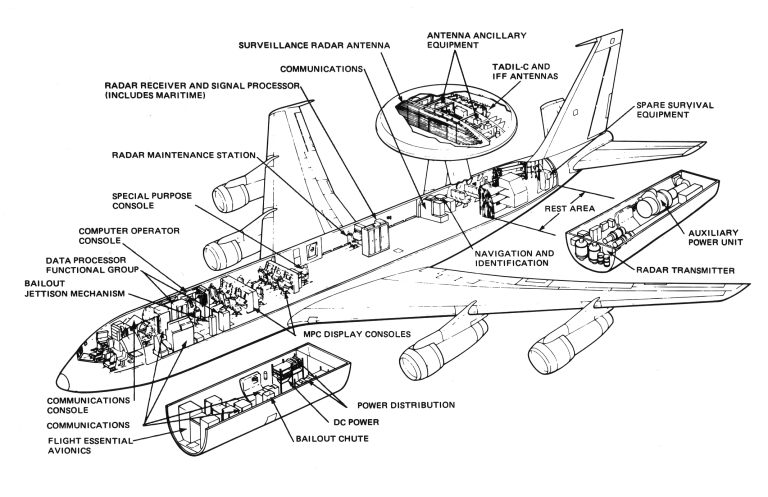
image. The E-3A was optimised for the European theatre of operations, a high density overland environment in the presence of heavy jamming, it's Boeing 707 airframe demanding airfields capable of handling such aircraft. It is too big and too expensive for the role, also lacking a PDS system and the ability to operate with limited ground support. The Nimrod AEW.3 does possess a passive surveillance system, a Loral ESM, however it is a large aircraft like the E-3A and is an immature system, still under development and being deployed this year (one could expect a lot of modifications, if only software, before the aircraft becomes a stable design) [Editor's Note 2005: shortly thereafter the Nimrod AEW.3 was axed after protracted development problems resulting from poor system engineering]. The E-2C offers a lot of advantages which are easy to observe. It has powerplant commonality with the P-3 Orion and the C-130 Hercules, both major types in the RAAF inventory, all employing versions of the T56. Built for USN carrier operation the E-2C has a rugged undercarriage and airframe, allowing for rough field operation, this capability is enhanced by full prop pitch reversal. As E-2Cs operated by the USN are usually parked on carrier flight decks, exposed to the elements, the aircraft was designed to cope with prolonged exposure to a hostile environment, which will enhance it's lifetime in a less demanding land based role. The E-2C is a mid seventies development of the earlier E-2B and as such offers a proven and mature airframe, as considerable experience has been gained in maintaining the type, availability may be high. Grumman suggest an operational readiness of 80%. Maintainability is enhanced by an Inflight Performance Monitor (IFPM) BIT system, which is claimed to isolate 8O% of all faults down to a Line Replaceable Unit. As the aircraft may be maintained with minimal resources, deployment at smaller airstrips in the NT or WA is feasible. The wing folding system is very convenient, as the aircraft may be parked under hardened aircraft shelters (HAS) or in recessed revetments, to minimise the likelihood of destruction in a surprise attack. As the E-2C is the key element in the USN's air defence system, both the F-14 and F-18 have compatible datalinks, as part of the Airborne Tactical Data System. This means that F-18A fighters can be automatically vectored via datalink onto unsuspecting targets. Conversely the X-band AN/APG-65 multimode radar of the F-18A may relay target information to the E-2C, effectively increasing the 250nm range of the E-2C's AN/APS-125 radar. As the RAAF will deploy F-18As in the North, the E-2C would perfectly fit into the future air defence system, most likely operating out of the same bases as the F-18A. In a purely defensive scenario, E-2Cs would patrol critical areas of the Timor Sea and the areas North of the Gulf of Carpentaria and Cape York. F-18As operating from the NT would standby on CAP, being supported by the 707 tankers, or wait to be scrambled from any strip of suitable length. Upon detection of hostile aircraft, the F-18As would be vectored via datalink into intercept positions, hitting targets with Beyond Visual Range missiles as the Sparrow, or by then, perhaps AMRAAM. The 250nm radar horizon of an E-2C orbiting at 30,000ft (9,000m) could provide up to twenty minutes of warning against a fast jet intruder, ample time for an F-18A on CAP to intercept. The APS-125 is claimed to have the ability pick up a low flying, fighter sized target at it's radar horizon, and detect low flying cruise missiles in high sea states, an important factor in the cyclone prone North. The system's surface surveillance capability is also very good, apparently the UHF band end-fire antenna mounted in the rotodome will allow the resolution of slow moving surface targets - patrol boat size vessels have been tracked beyond 100nm. Hostile surface vessels can thus be detected and intercepted by naval vessels or attacked by the RAAF's fighters. This feature alone is an important aspect of peacetime operations, as all surface traffic may be monitored throughout the North. The Tu-20 Bears and Tu-26 Backfires operating out of Cam Ranh Bay would also find the presence of E-2C surveillance less than desirable, as the USSR is hardly interested in arousing publicity over it's Elint/reconnaissance operations in the region. As for unauthorised civilian traffic, such as drug traffickers, USN E-2Cs have demonstrated the type's ability to cope with this type of target, in the South of the US. In some respects the capabilities of the APS-125 and it's Advanced Radar Processing System (ARPS) exceed immediate needs. The system automatically tracks 250 airborne targets, and employing inputs from the PDS and datalink sources, can track 600 targets. Employing IFF, it can differentiate between friendly and hostile tracks. Interceptors are automatically paired up with targets, depending on interceptor fuel state, type, armament, position. The central processor, a Litton L-304, then calculates the optimum flight path for intercept and relays it to the fighter, via datalink or voice link, in this fashion 40 intercepts may be controlled, alternately, ground attack missions may be directed. Grumman claim the E-2C could enhance the air defence capability of the Mirage IIIO 2.5 times, also interfacing with the existing Hubcap installations in use with the RAAF (Hubcap is an ageing GCI system acquired in the sixties). It is conceivable that the E-2C would also acquire a HF datalink, as the F-18A is expected to, to interface with the Jindalee OTH-B system. The ARPS is also credited with a very good anti-jam performance, though no figures have been released. The aircraft's ALR-59 Passive Detection System is a further asset, as demonstrated by the Israelis. PDS is credited iwth a range of 500nm, it will acquire bearing information and identify radar emitters from a computer intelligence file. The use of PDS can assist in war and peacetime operations. In peacetime, it allows undetected surveillance of enemy radar activity, combined with a bit of baiting by a low flying F-111C, any belligerent regional powers would be likely to reveal the location and composition of their radar and SAM systems, aside from any naval activity. In a wartime situation, this Elint capability would be very useful for obvious reasons. It is unlikely the RAAF will be able to afford the luxury of dedicated Elint aircraft, the E-2C would thus fill an existing gap. In an offensive scenario the E-2C has as much to offer. Preemptive strikes on hostile opponents are possible, combined with adequate preparation and EW, the E-2Cs could direct air superiority operations, air to ground strike and close support for ground forces. That does mean deterrence. Any opponent will think twice about starting a war, if it knows it is being watched continuously and that it's supposed victim can strike at will. Medium range Elint missions are feasible, as the E-2C does have 6 hrs of endurance or 9.3 hrs in the extended range version. At a current unit cost advertised as US$33.6 million the E-2C is a very good buy. It can offer the RAAF a whole new dimension in air to air operations, bolstering the capabilities of the ageing Mirage IIIO, until the F-18A reaches full operational readiness. From there, it could assume it's role in a tightly integrated air defence system which should keep intruders away from Australian shores. The F-18A's effectiveness in the air defence role hinges on the E-2C as it was designed to interface with it from the outset. If the USN regards the E-2C/F-18A combination as adequate to defend it's naval forces from aerial and surface threats, in high density environments, it is fair to assume these types can tackle any regional threat which may appear in the nearer future. The USN will rely on the E-2C as it's front line AEW platform
until 1994, when it's projected and yet non-existent replacement is to
begin entering service. With it's flexible, software configured systems
the E-2C would remain an effective system, in RAAF service, well beyond
2000. |
||||
|
|||||||||||||
|
|
|
|
|
|
|
|
|
|
|
|||
|
|
|
|
|
|
|
|
|
|
|
|||
 |
|
|
|||||||||||
| Artwork, graphic design, layout and text © 2004 - 2014 Carlo Kopp; Text © 2004 - 2014 Peter Goon; All rights reserved. Recommended browsers. Contact webmaster. Site navigation hints. Current hot topics. | |||||||||||||
|
Site Update
Status:
$Revision: 1.753 $
Site History: Notices
and
Updates / NLA Pandora Archive
|
|||||||||||||
|
|
Tweet | Follow @APA_Updates | |||||||||||
|
|
|||||||||||||
|
|
|||||||||||||