|
NKMZ
40V6M/40V6MD/40V6MT
Universal Mobile Mast
НКМЗ 40В6М/40В6МД/40В6МТ Универсальная
Передвижная
Вышка
Technical Report APA-TR-2009-0504
|
by
Dr
Carlo
Kopp, AFAIAA,
SMIEEE,
PEng
May
2009
Updated May, June 2011
Updated April, 2012
Text,
Line
Art
©
2009
-
2012
Carlo
Kopp
|
A deployed S-300PS / SA-10B battery
showing the 5N63S Flap Lid B and 5N66 Clam Shell A deployed on 40V6M 24
metre masts. Note the MAZ-7910 radar vehicle with the antenna head
removed (Russian internet image).
|
|
|
Introduction
The 40V6M/MD family of mobile
mast systems is a ubiquitous feature of the Russian air defence
landscape, used with more different radar types than any other design.
The 40V6M/MD has no known equivalents in the West, and represents a
uniquely Soviet approach to standardising the deployment of radar
equipment. While the headlong drive to high mobility shoot-and-scoot radar and missile
systems has seen the 40V6M/MD decline in popularity with many clients,
this mast design remains on offer in catalogues and brochures for most
of the latest
Russian radar designs, be they with mechanically steered antennas or
phased arrays.
The first known application of the 40V6M series was as part of the
early S-300PT / SA-10 Grumble A semi-mobile Surface to Air Missile
system, employed to elevate the 5N63 Flap Lid engagement radar, the
36D6/ST-68U/UM Tin Shield acquisition radar, and the 5N66/5N66M Clam
Shell FMCW low altitude acquisition radar.
The stated motives behind the development and deployment of the
40V6M/MD masts were to provide acceptable low altitude coverage
footprint for the S-300PT system, tasked with intercepting low flying
nuclear armed Strategic Air Command B-52G/H, FB-111A bombers, and the
AGM-86B ACLM and MGM-109G GLCM cruise missiles, all of which were
considered terminal threats to the Rodina. The severity of the threat
justified the considerable expense in developing a complex high payload
mast system, suitable for deployment in often complex terrain, and in
often highly adverse climatic and weather conditions.
A particular problem the Soviets faced during this period was the
diverse geography of the Soviet Union and its Warsaw Pact client
states. Terrain varied widely, from flat central Asian steppes, tundra
and taiga, to hilly and often mountainous terrain in European Russia,
Central Europe, the Caucasus, the Urals, and the foothills of the
Himalayas. Where elevated terrain was available, sites for placing
S-300PT battery radars would be abundant. Many areas of European Russia
and Siberia are heavily forested with tall conifer and deciduous trees,
presenting an additional problem with achieving good antenna elevation
above terrain and foliage.
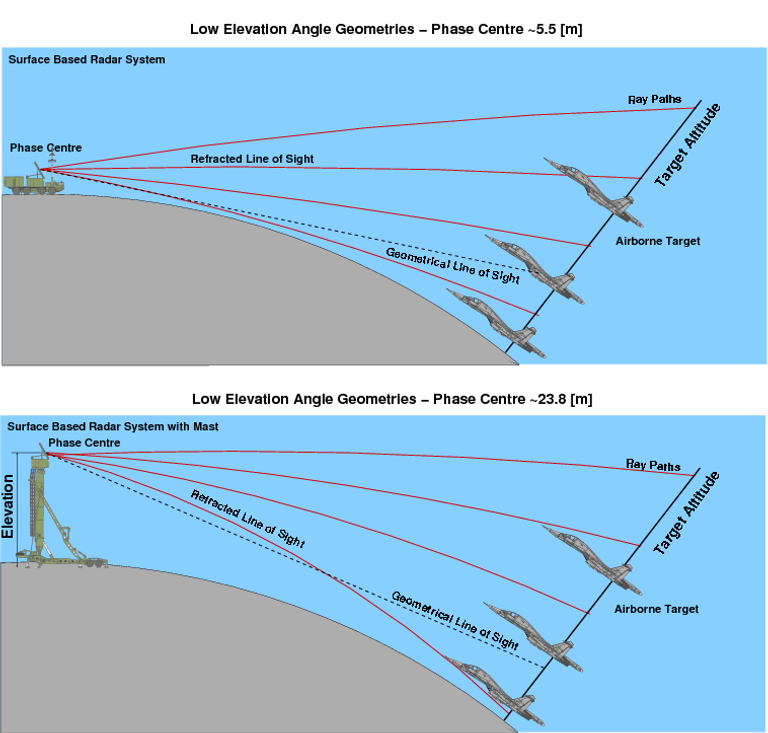
Physics mostly do not favour
low altitude radar propagation. The curvature of the earth is a primary
consideration, as it limits geometrical line of sight to targets.
Refraction, the byproduct of decreasing atmospheric density with
increasing altitude, favours propagation by "bending" the ray path over
horizon, but this effect only becomes significant at tens of nautical
miles of range to a target, or greater.
Elevating a radar antenna by using a mast will directly increase the
useful range against a low altitude target. It also aids in detection
of high flying targets at much longer ranges, by reducing the necessary
depression angle of the antenna boresight required to see such targets.
Development of 40V6 family of masts started during the 1970s, with the
design entering production around 1980. The design and manufacture was
performed by the NKMZ (Novokramatorsky Mashinostroitelny Zavod -
http://www.nkmz.com/) in the Ukraine, best known for the design and
manufacture of space launch vehicle gantries and associated support
equipment. Key design personnel were given in 1985 Soviet government
awards for their technical achievement on the 40V6 project.
A key design imperative was stability of the design under high wind
loading and near miss nuclear attacks. Ukrainian sources claim that a
simulated nuclear blast overpressure wave failed to topple the 40V6M,
only causing one of the outriggers to lift off the ground, with the
mast
returning to its stable position.
No summary figures for the total number of 40V6M/MD systems built have
ever been disclosed, but a number in the hundreds is supportable, as
one or more masts were deployed with each S-300PT battery, and the mast
was also supplied with standalone Tin Shield and Clam Shell
installations.
In 2004, following the breakdown in relations between Russia and the
Ukraine, NKMZ ceased manufacturing products for the Russian
military-industrial complex. As the 40V6M/MD remains on offer as part
of Russian supplied radar and SAM system packages, including new build
S-300PMU2 Favorit and S-400 systems, it is likely that warehoused units
and/or
refurbished former Russian stocks are being supplied, although
production of new hardware in Russia cannot be ruled out. Recent
Russian publications on military tow tractors cite two more variants of
the design, the 40V6M-R and 40V6M-R0, but no open source details of
these designs have been published as yet.
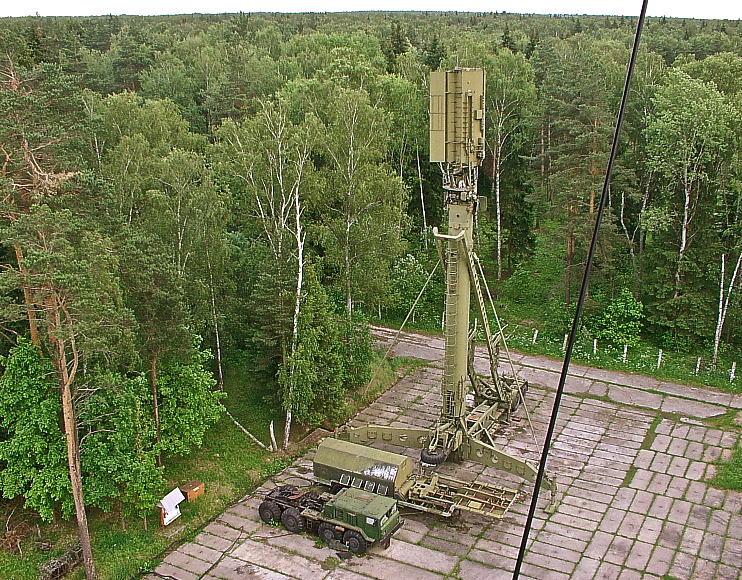
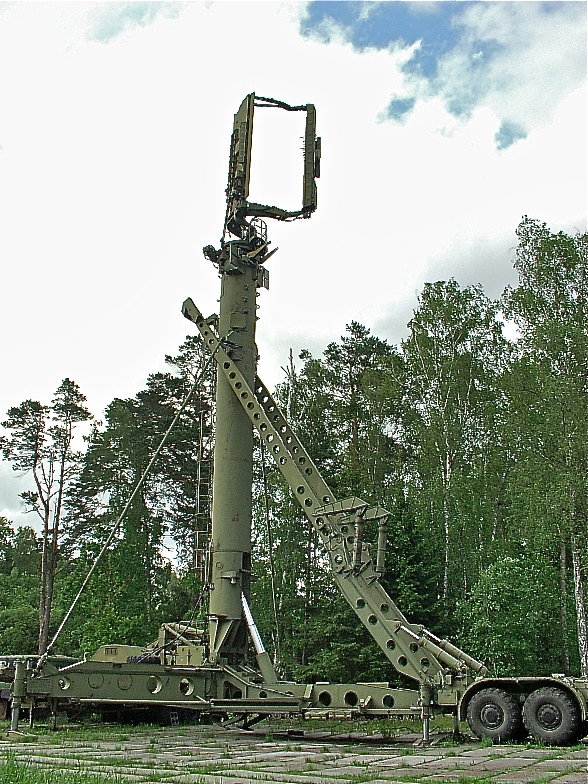
An excellent study of the 5N66M Clam Shell B antenna system by Said
Aminov, produced at Togliati in Russia (© 2009, Said Aminov).
|
40V6M/MD
Universal Mobile Mast Design
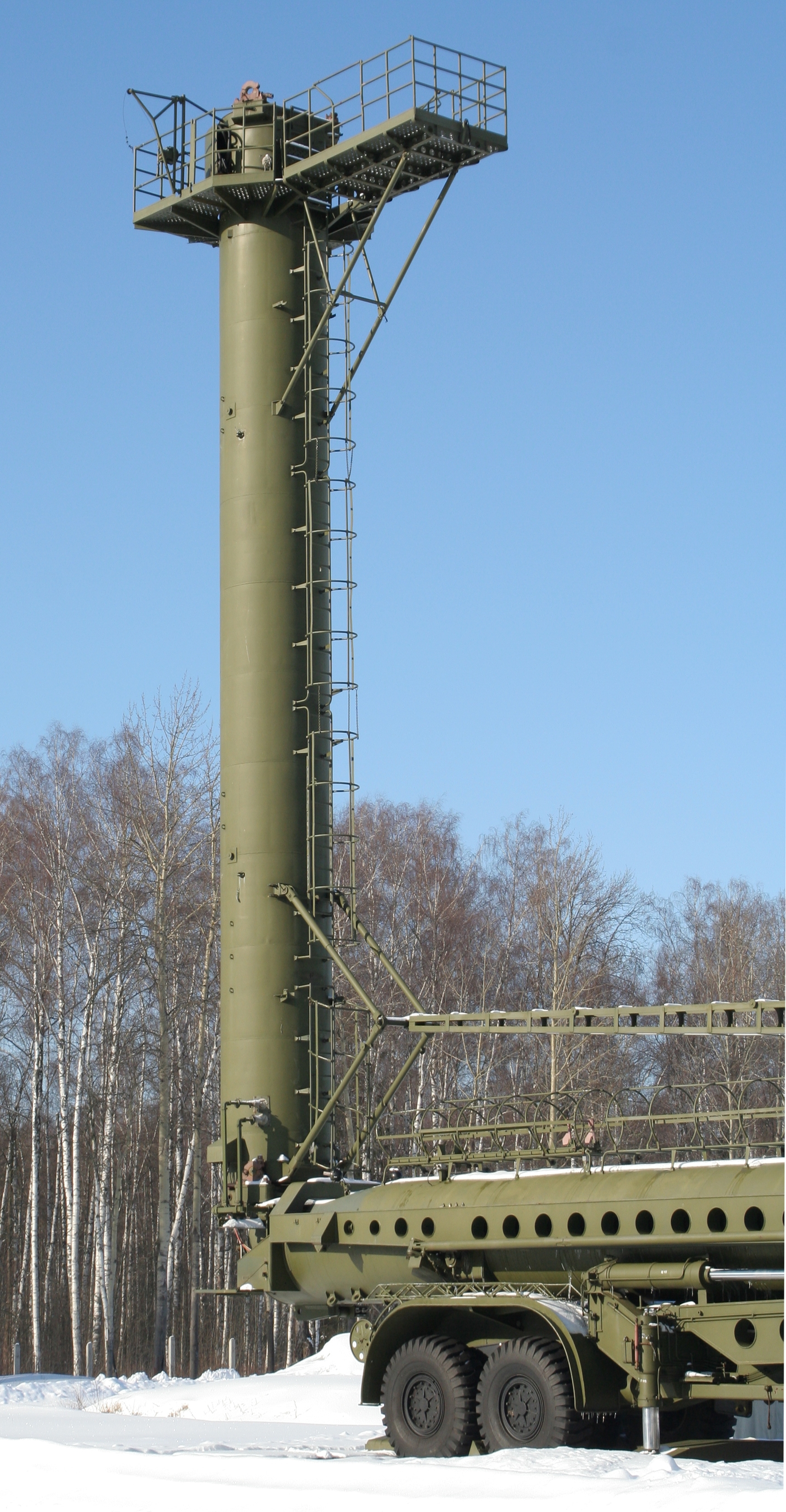
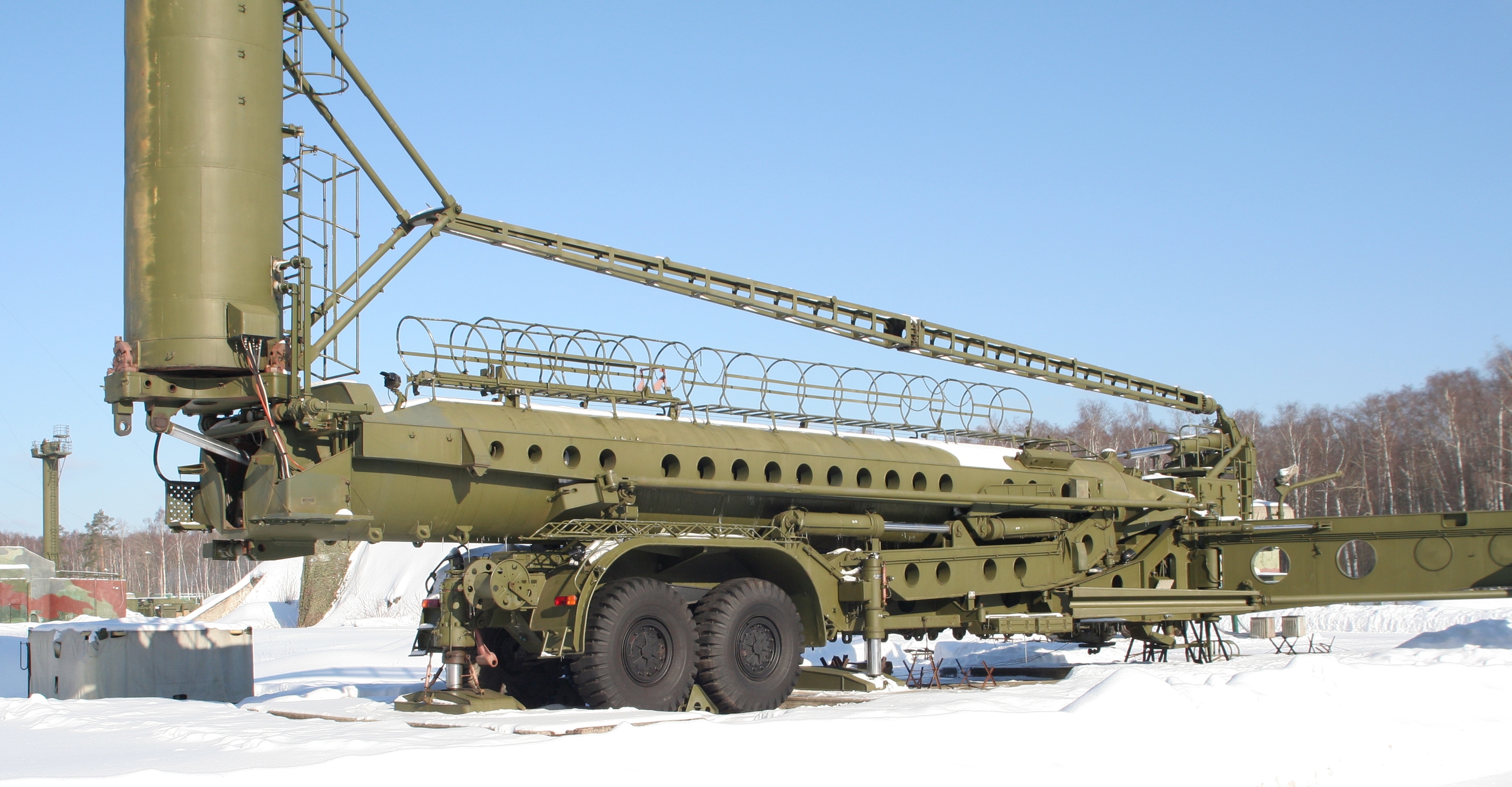
The 40V6M/MD is a large item of
equipment, by any measure, this being a consequence of the need to
elevate radar antenna head subsytems often massing 10 tonnes or more,
and withstand wind speeds of ~60 knots [30 m/s] during operation, and
~100 knots [50 m/s] when erected but not operating the radar.
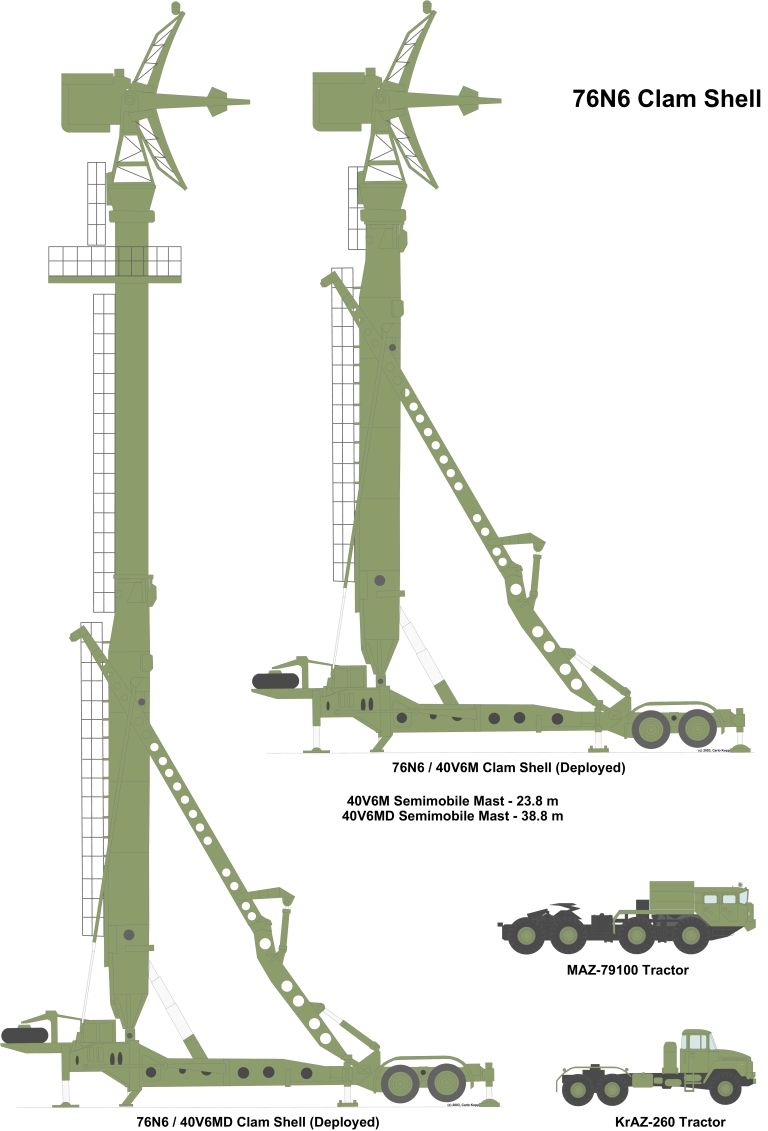
Two configurations are most commonly used, these being the shorter 78
ft 40V6M and taller 127 ft 40V6MD. The cited mast heights in Russian
literature are 24 metres and 40 metres, respectively, and actually
refer to the elevation of the antenna phase centre when mounted on the
mast, rather than the physical height of the antenna.
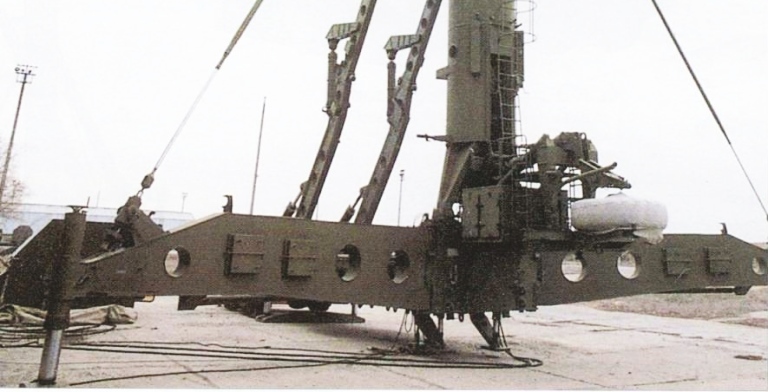
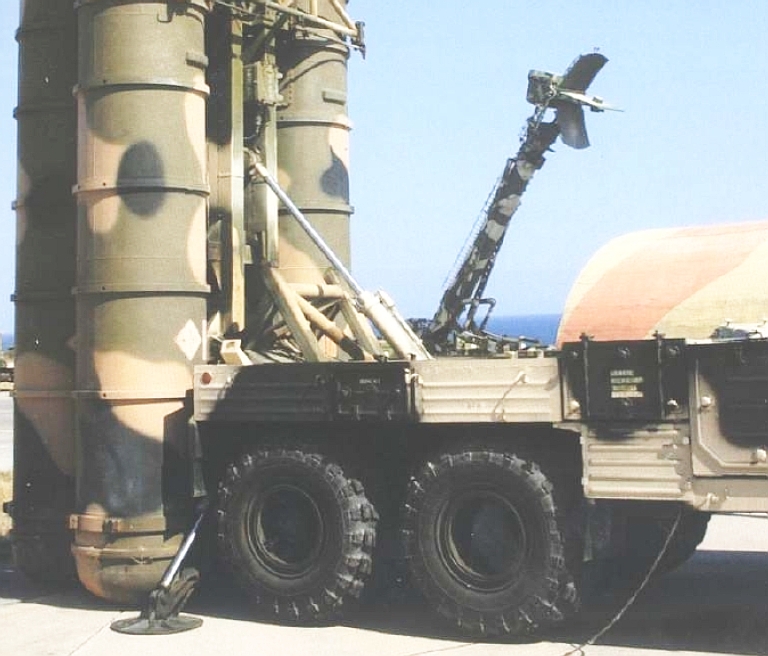
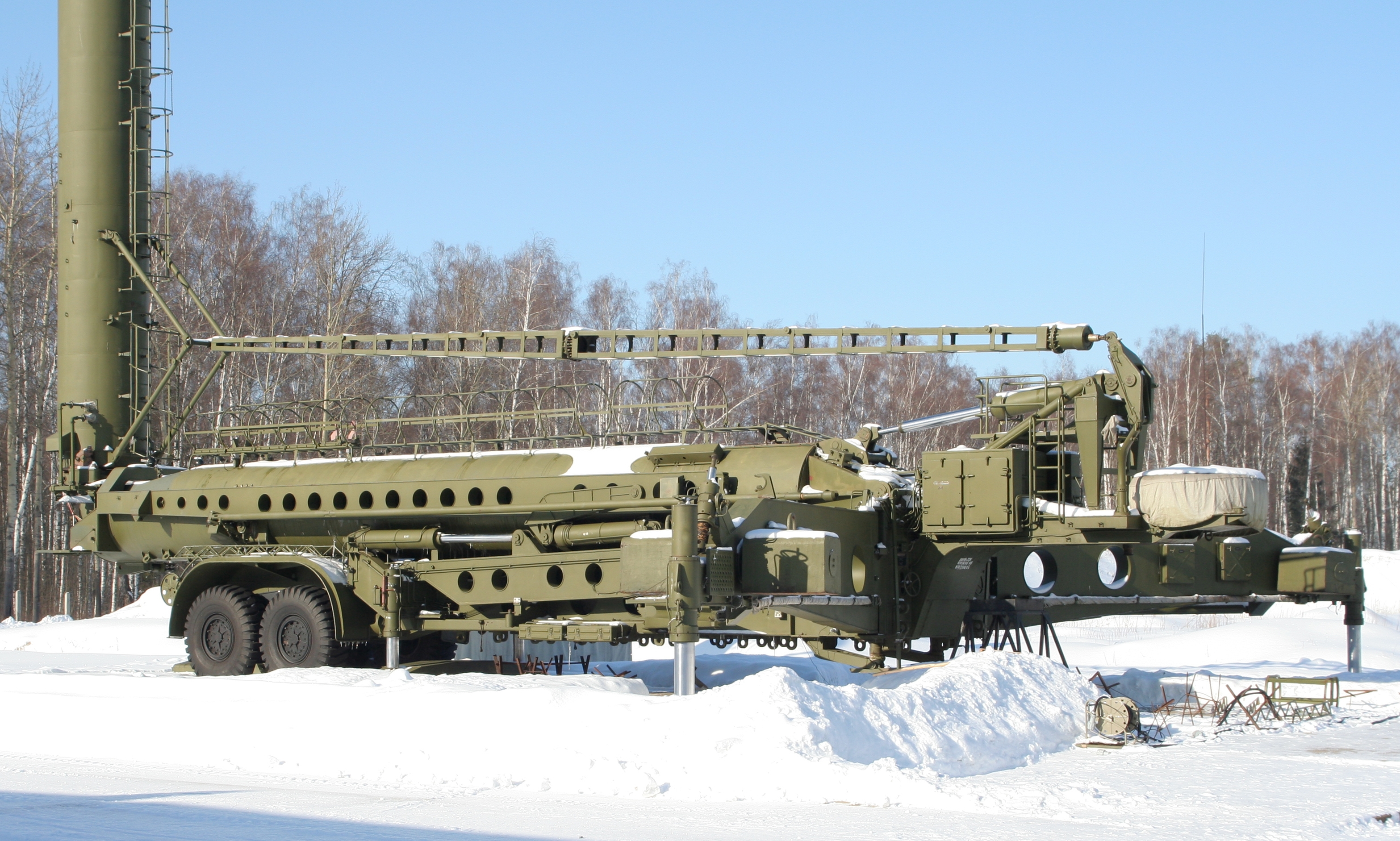
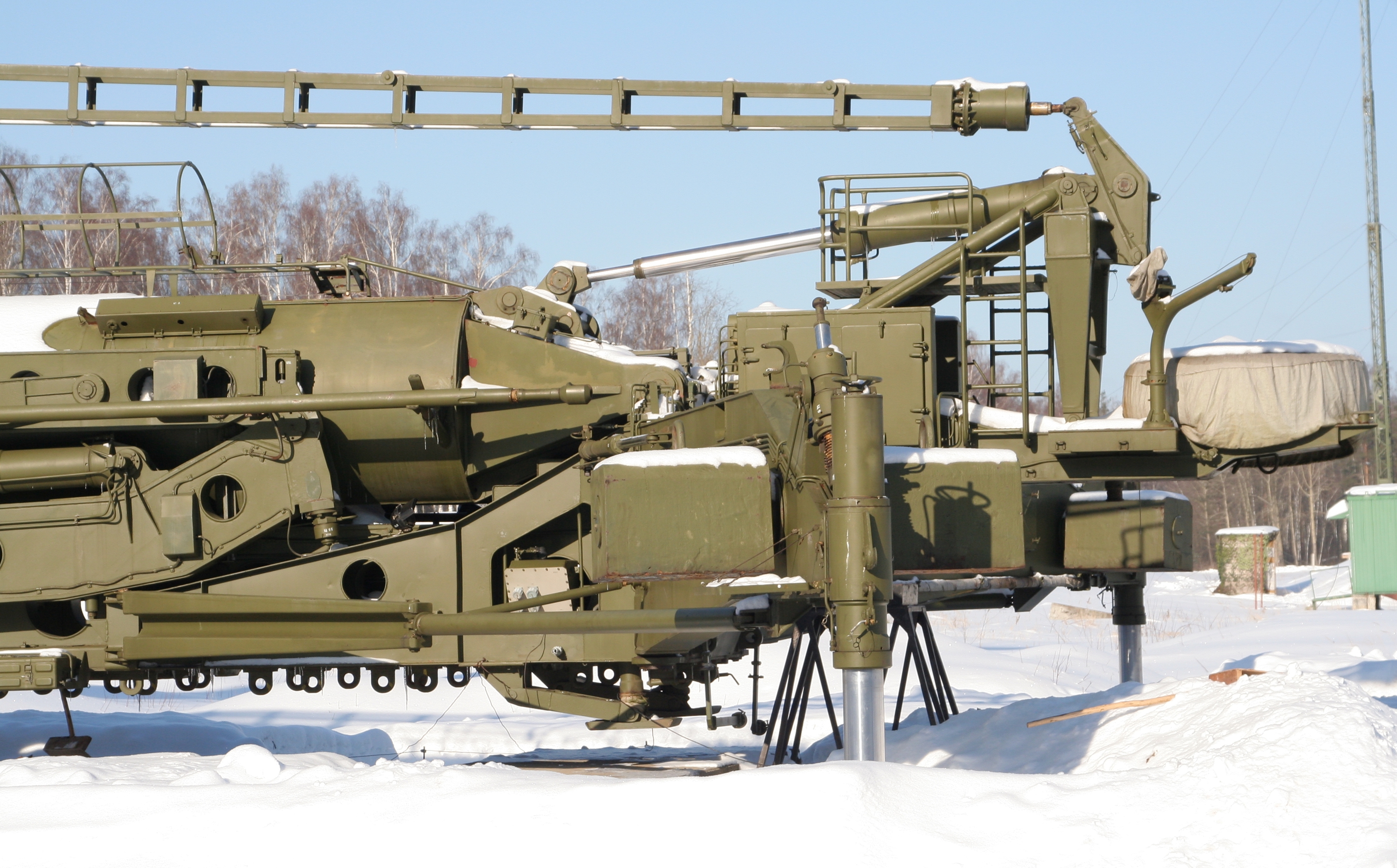
Above:
Detail
of
the
base
of
the
40V6M
mast
system,
showing
the
splayed out
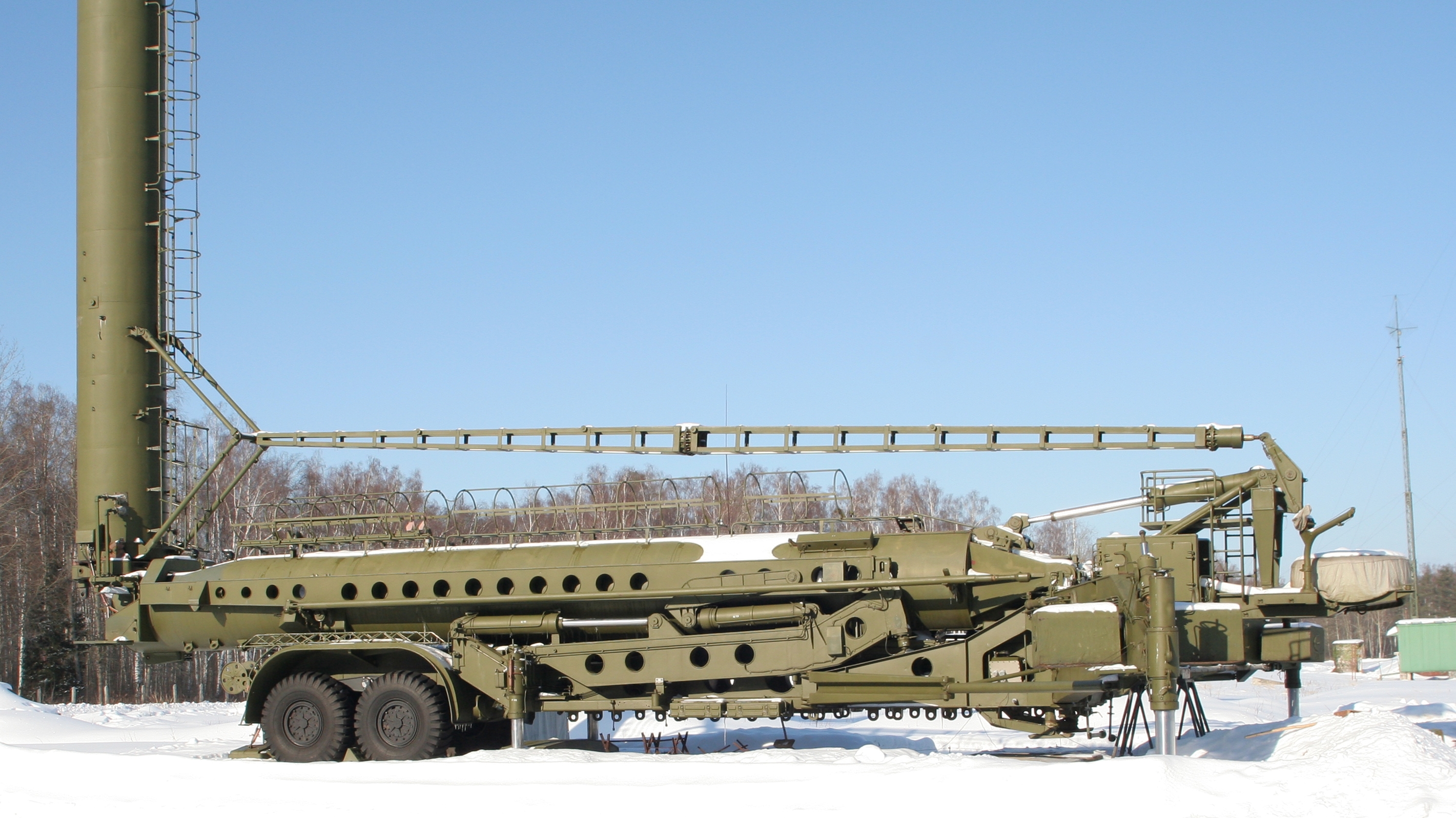
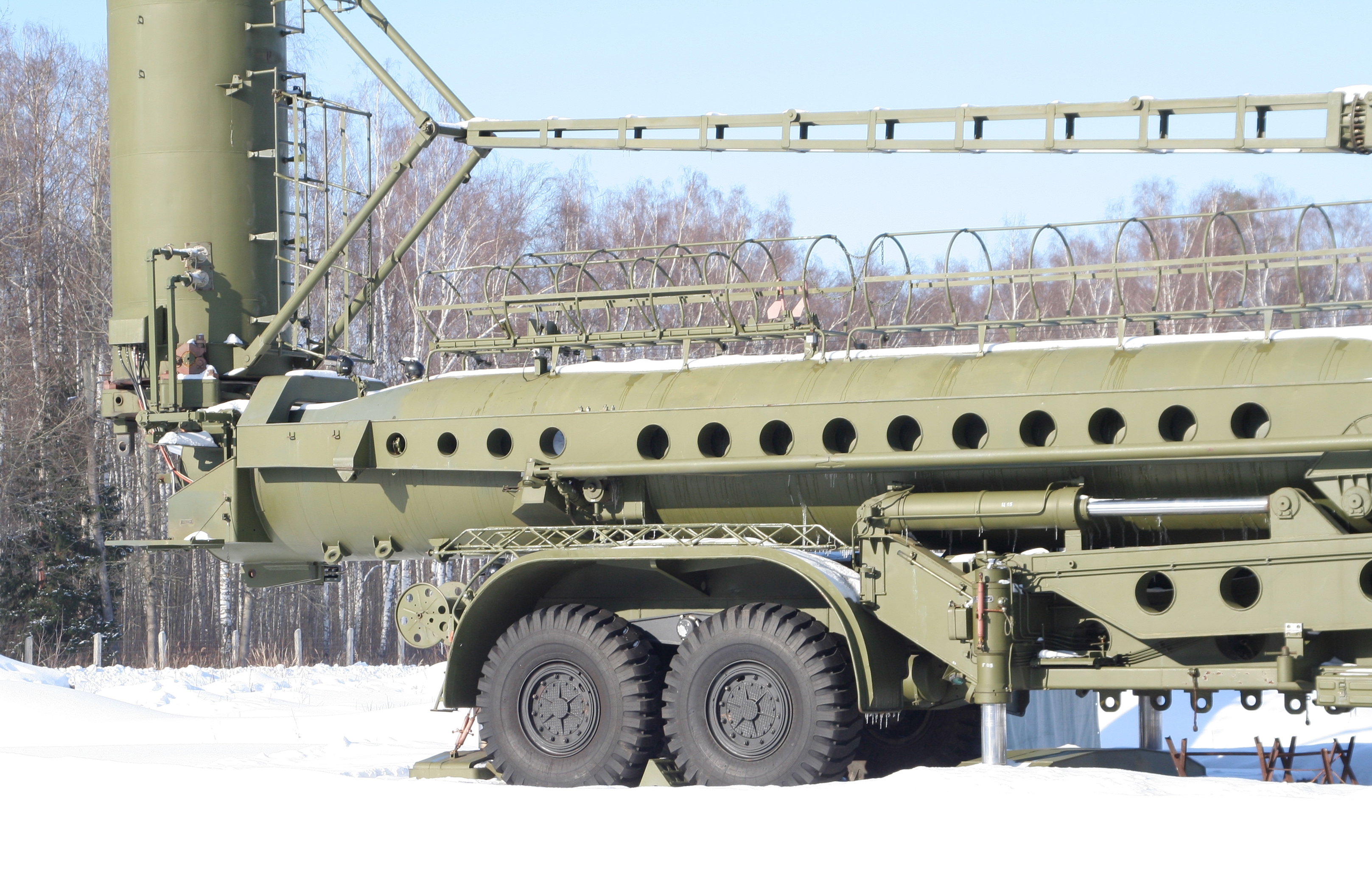
outriggers. Below: detail of 40V6M at Elektrostal', with the mast in
stowed position, but outriggers deployed (© 2010, Leonid Varlamov).
Both the 40V6M and 40V6MD use a rigid base support frame built as a
semi-trailer, which mounts the elevating mast. The system is deployed
by first positioning the trailer, decoupling the tractor, swinging out
the outriggers and locking them into position, then attaching the radar
head, and then finally elevating the mast and locking it into position.
The cited deployment time is usually ~1 hr for this configuration.
The 40V6MD is more complicated in deployment, as the upper
segment with the radar head has
to be positioned and mounted by a separate crane before the radar head
can be
attached. The cited deployment time is usually ~2 hr for this
configuration. This is shown in Annex B.
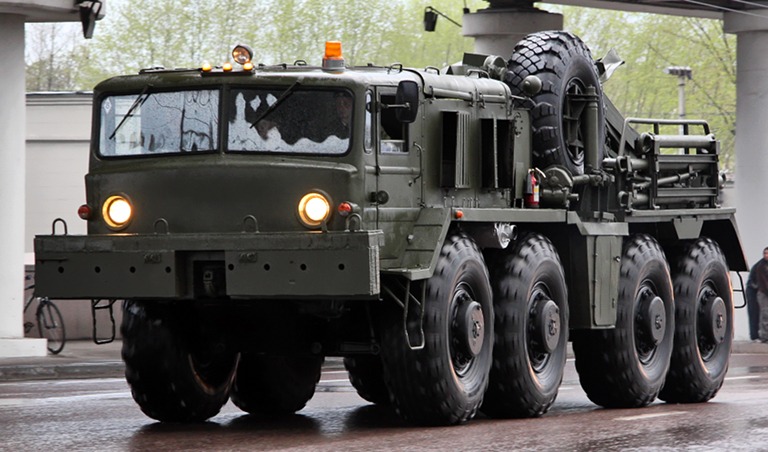
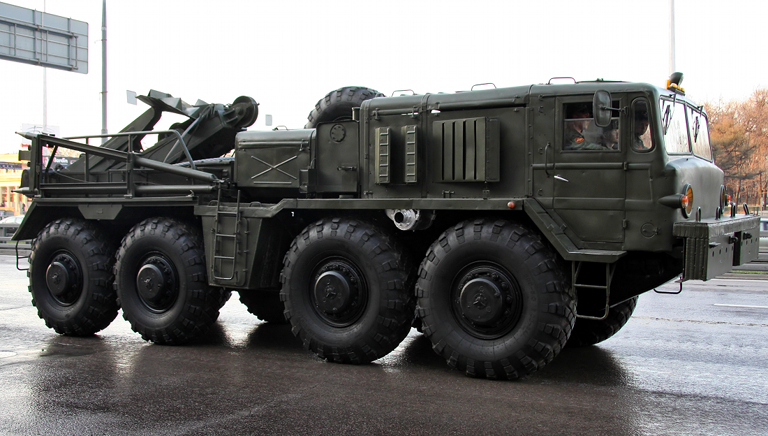
In Russian service the 40V6M base mast system semi-trailer is usually
towed by the legacy MAZ-537 65 tonne payload 8 x 8 tow tractor,
developed during the 1960s as a tank transporter and artillery tractor,
but also widely used for transporting ballistic missiles. Any 65-70
tonne class tank transporter tow tractor with a compatible coupling
could be used.
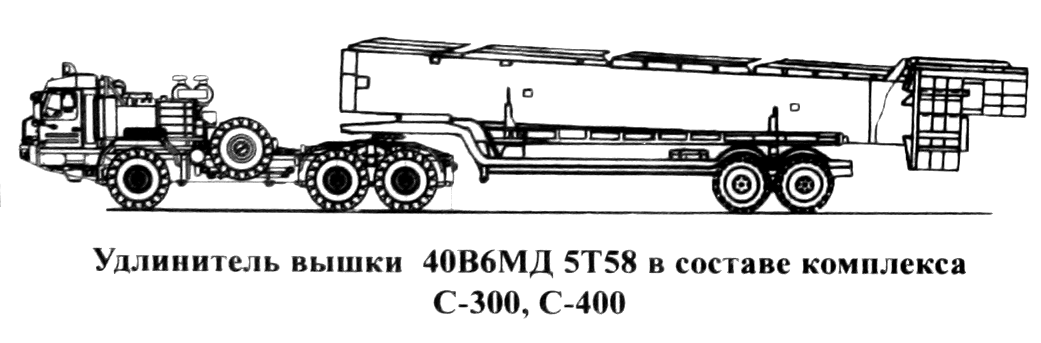
40V6MD upper segment carried on
5T58-2 transporter, towed by BAZ-6402-015 tractor (BZKT).
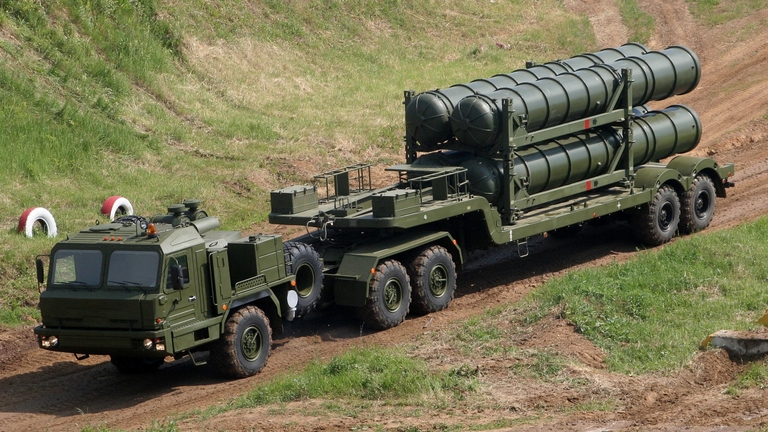
The 40V6MD upper segment is carried by a modified 5T58
missile transporter semi-trailer, also built by NKMZ, and usually towed
by a 6 x 6 KrAZ-260 tractor. The latter is often used to transport
antenna heads (e.g. 76N6 Clam Shell) and other associated equipment. In
late production S-300PMU2 and S-400 systems the 5T58-2 is towed by a
new 6 x 6 BAZ-6402-015 tractor.
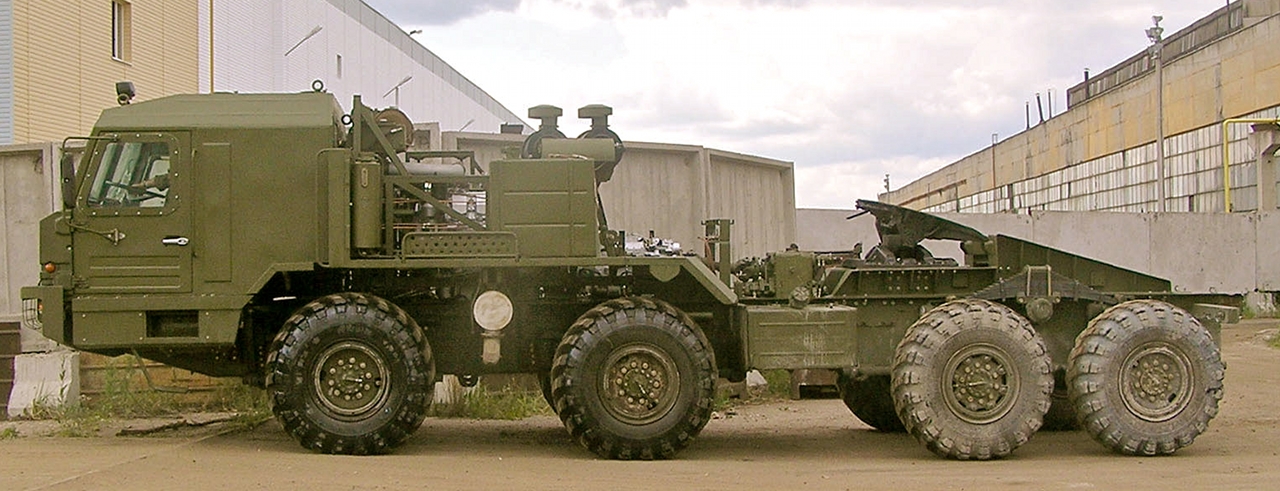
While the MAZ-537 remains in use, recent publications indicate that it
is to be replaced as the 40V6M/MD tow tractor by the new BZKT
BAZ-6403.01 Voshchina.
In mobility terms, the 40V6M/MD system cannot compete with the now
defacto standard 5 minute shoot-and-scoot SAM system configurations,
but this must
be weighed against the increased coverage the mast system provides. The
ability to relocate a mast equipped radar in 1-2 hours provides
sufficient mobility to defeat the targeting cycle of most cruise
missiles. Given the new doctrine of actively defending sites using
SPAAGs and point defence SAMs, a 1-2 hour redeployment cycle may well
be sufficient to achieve good survivability in combat.
For the forseeable future the 40V6M/MD will provide a unique advantage
to users of Russian radar and SAM systems.
40V6
Universal
Mobile
Mast
Variants and Derivatives
There are a number of different subtypes and variants of the basic mast
design, not all of which are described in Russian lietrature.
40V6 Universal
Mobile Mast Variants
|
40V6
40V6-R-01
40V6M
40V6M-R
40V6M-R-01
40V6M1
40V6M2
40V6MD
40V6MT
40V6MT-R
|
40В6 - универсальная передвижная вышка
40В6-Р-01 - универсальная передвижная вышка
40В6М - универсальная передвижная вышка (удлиненная)
40В6М-Р - универсальная передвижная вышка (удлиненная)
40В6М-Р-01 - универсальная передвижная вышка (удлиненная)
40В6М1 - универсальная передвижная вышка
40В6М2 - универсальная передвижная вышка
40В6МД - универсальная передвижная вышка (с надставкой)
40В6МТ - универсальная передвижная вышка
40В6МТ-Р - универсальная передвижная вышка |
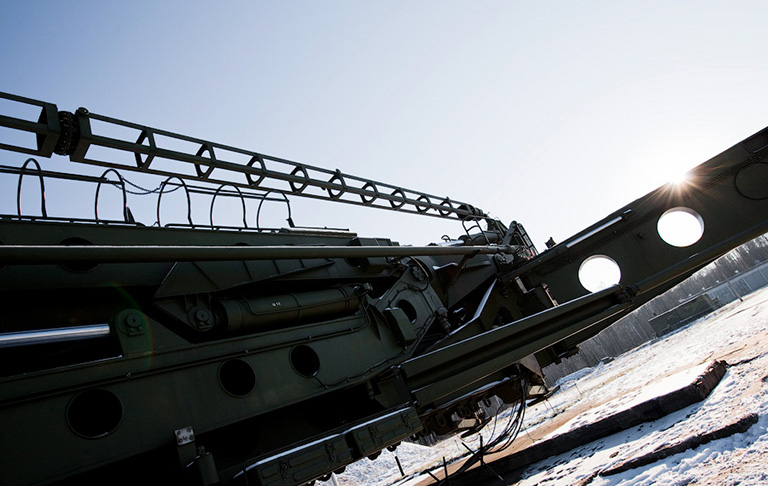
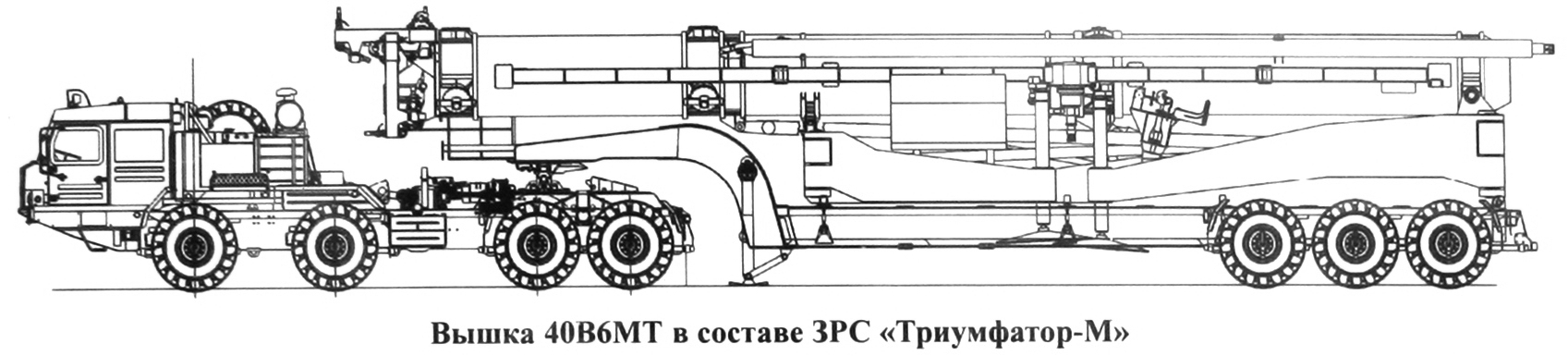
In 2011 the Russian MoD disclosed the configuration of the 40V6MT, a
revised mast design intended for the late production S-400 Triumf /
SA-21 and new S-500 Triumfator M SAM systems.
40V6MT
Universal Mobile Mast System
The new 40V6MT replaces the legacy 40V6M/MD series. It appears to be an
entirely new
design with a different outrigger arrangement, and revised elevating
mechanism.
It is towed by a BAZ-6403.01 tractor.
Annex A
40V6M/MD Tow Tractors and Deployment
40V6M/MD
Tow
Tractors
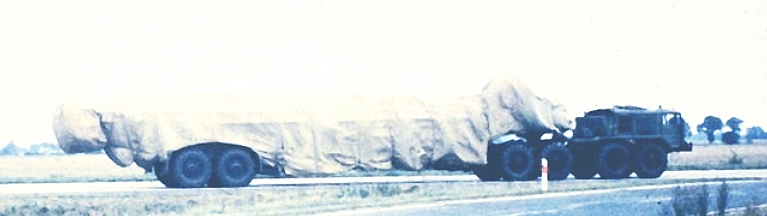
40V6M mast system stowed during road
transit, towed by the legacy MAZ-537 tractor. The design has excellent
road mobility but the 1-2 hr deployment and stow time does not qualify
it
as a 'shoot and scoot' system. Below the MAZ-537, which despite its age
still remains widely used. It was designed as a heavy artillery tow
tractor but later used to tow ballistic missile transporters and other
large payloads.
KET-T heavy recovery vehicle based
on the 1960s MAZ-537 artillery and missile tow tractor., the latter
well known as a tow vehicle for larger ballistic missiles. Despite the
age of this vehicle it continues to be used to tow the NKMZ 40V6M/MD
mobile radar masts (© 2011, Vitaliy Kuzmin).
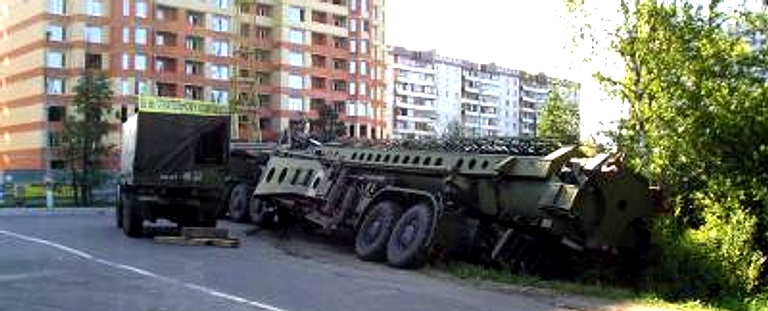
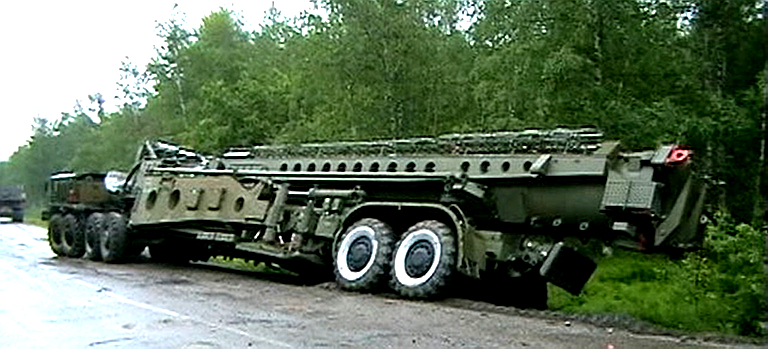
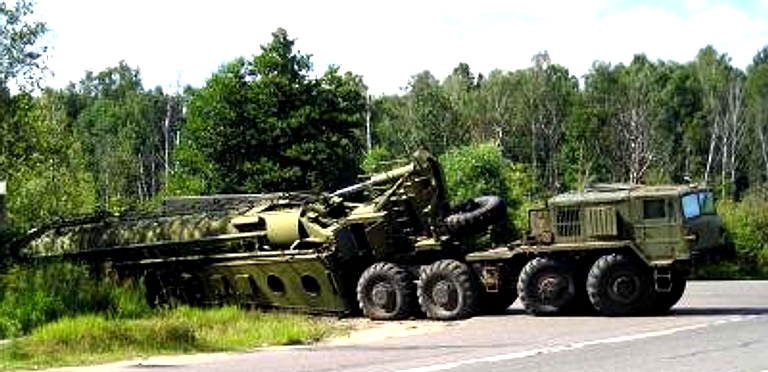
Above/below: a 40V6M
mast towed
by a MAZ-537, in difficulty. These images show the antenna head
mounting, and the main pivots for the mast and outriggers (Vestnik PVO).
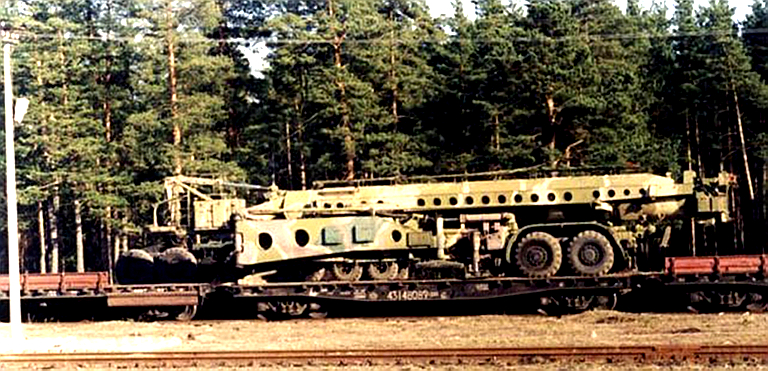 A 40V6M mast system being transported by flatbed rail car
(Russian
internet image).
A 40V6M mast system being transported by flatbed rail car
(Russian
internet image).
The new BZKT BAZ-6403.01 is a dedicated tractor for
semi-trailer payloads, such
as
tank transporters and fuel tankers. It is also intended to tow the 91N6
Big Bird radar and 40V6M series mobile mast systems (Russian Internet).
Late
model
5T58-2
S-400
transporter
towed
by
BAZ-6402-015
tractor.
The
upper
mast segment of the 40V6MD is carried on a 5T58-2 in late
build S-300PMU2 and S-400 systems (image © 2011 Michael
Jerdev).
40V6M
Mast
Deployment
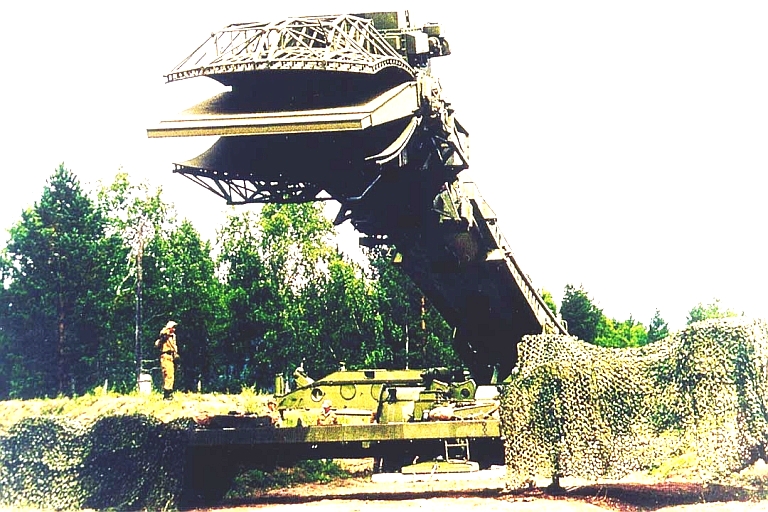
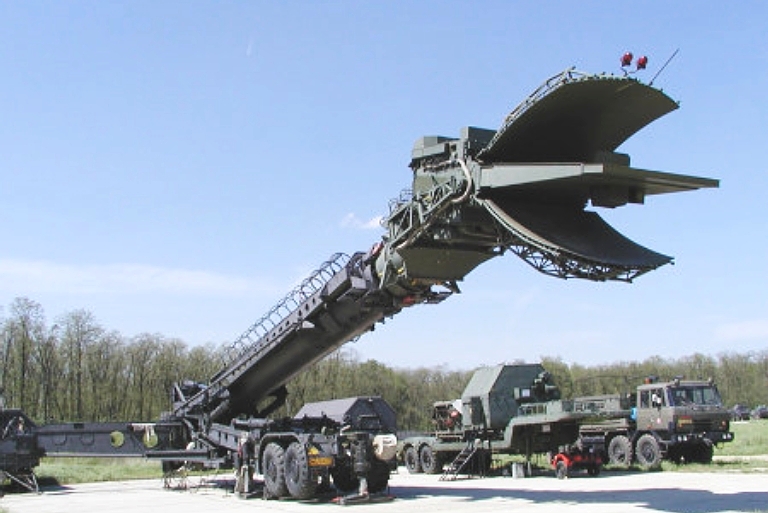
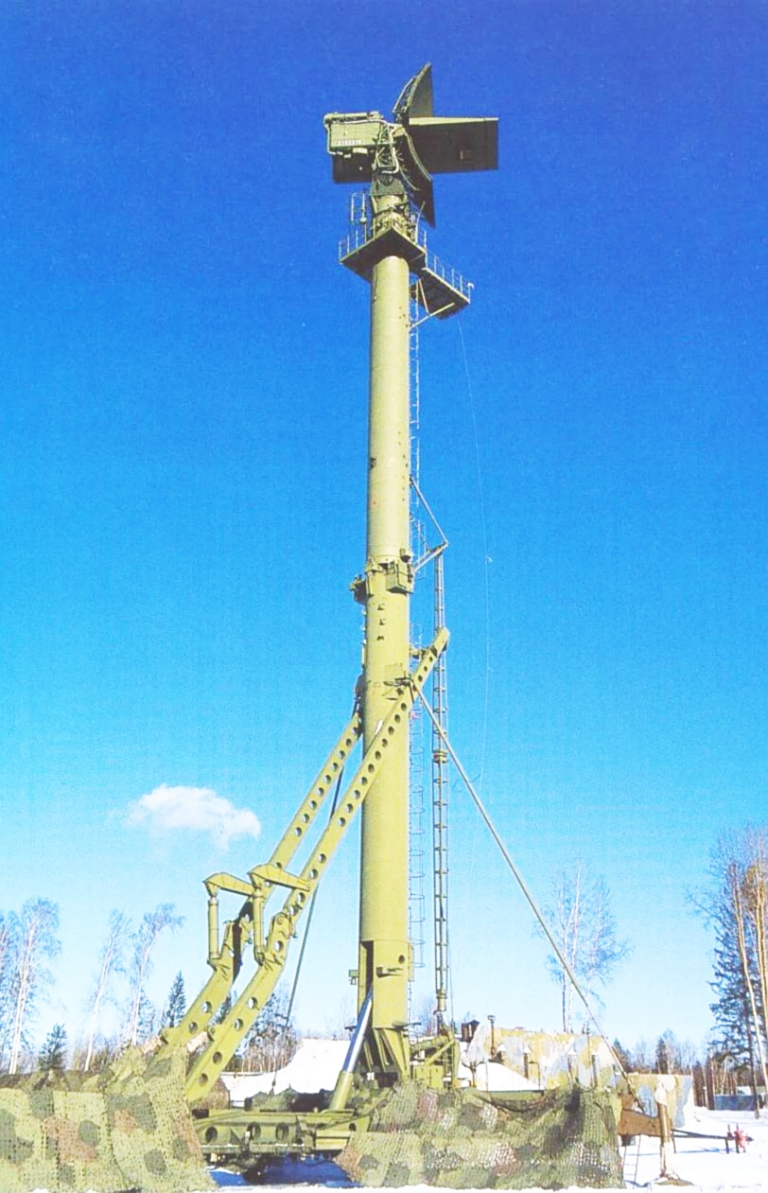
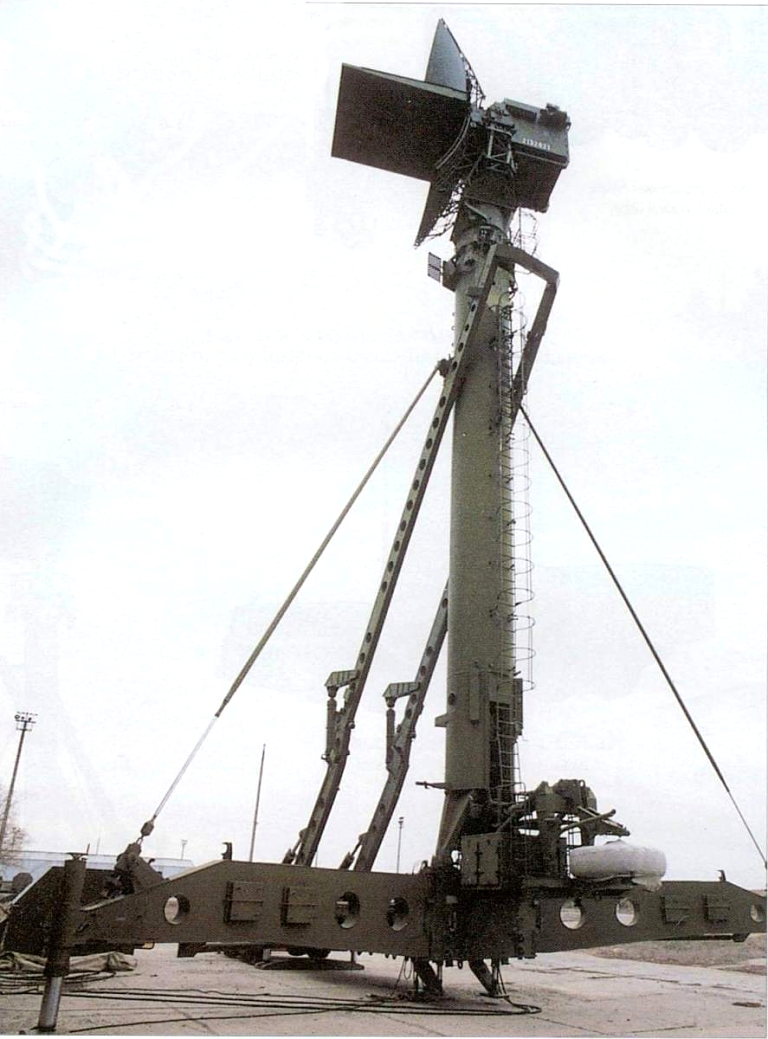
The deployment of the 76N6 Clam
Shell requires that the splayed outriggers be deployed before the mast
is
hydraulically elevated. This image gives a good measure of the size of
this radar (upper). Slovakian Army S-300PMU battery elevating a 76N6
Clam Shell. Note the progressive tilt of the antenna assembly during
elevation (lower - Slovakian MoD image).
Background
- a 76N6 Clam Shell on the 40V6M mast almost fully elevated. The
foreground image is a 5P85TE1 TEL.
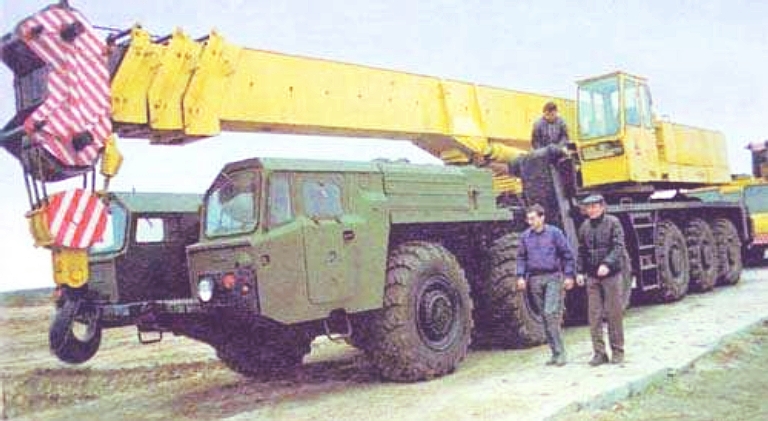
Erecting the
extended height 40V6MD
mast
arrangement requires the use of an 80 tonne crane, the KT-80 on a
MAZ-7916 is most often used for this purpose - the vehicle is based on
the RSD-10/SS-20 IRBM TEL. The 40V6MD requires three
semitrailers for movement.
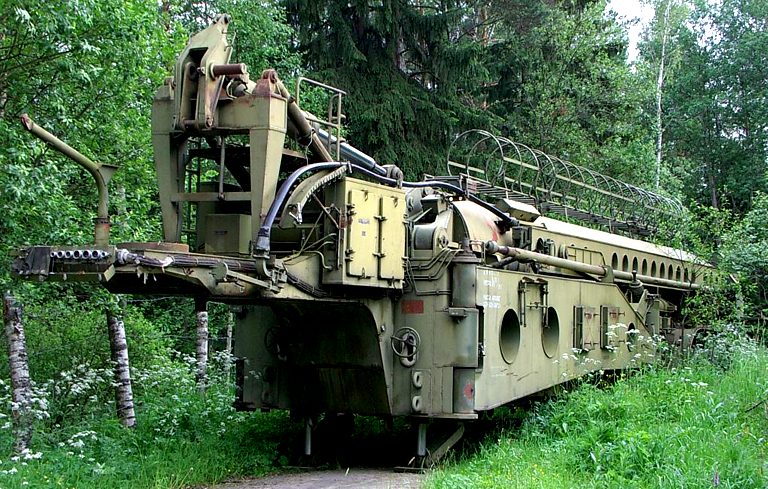
A derelict 40V6M mast system in stowed configuration,
above tow tractor
end, below antenna head end. Note the cable ducting leading up the mast
to the antenna head (Russian internet images).
|
Annex B
40V6MD Extended Height Mobile Mast
In February, 2010, Michael Jerdev visited
the Elektrostal' base outside Moscow, home to the 3rd Surface to Air
Missile Battalion of PVO Unit 61996, equipped with early variants
of the S-400 SAM system. At least two examples of the 40V6MD are hosted
at this base, and detailed imagery of one partially deployed 40V6MD
mast system, the example in excellent condition, was collected.
All images ©
2010, Michael Jerdev
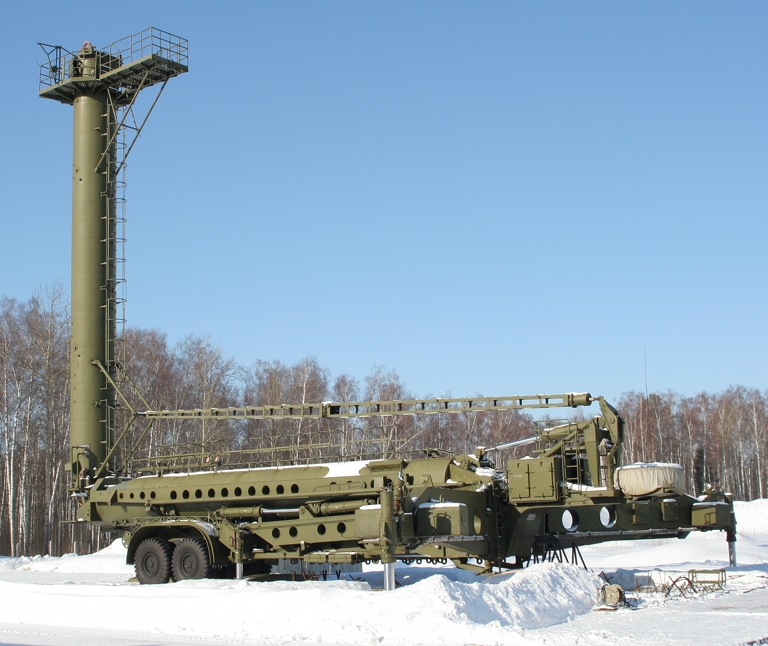
Partially deployed 40V6MD.
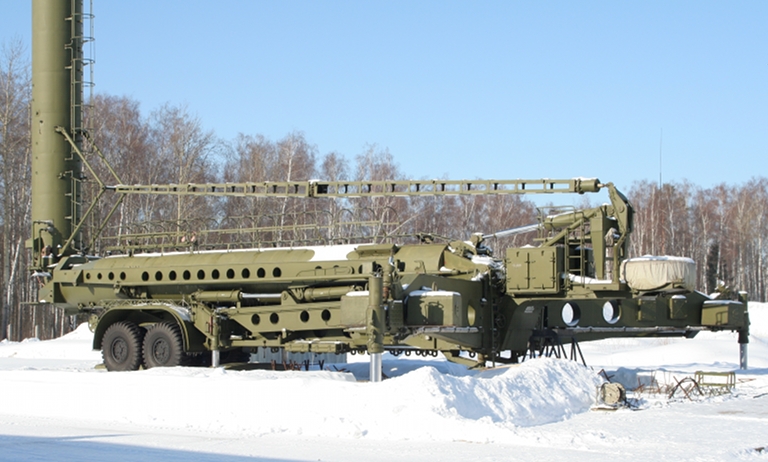
Detail of partially deployed 40V6MD.
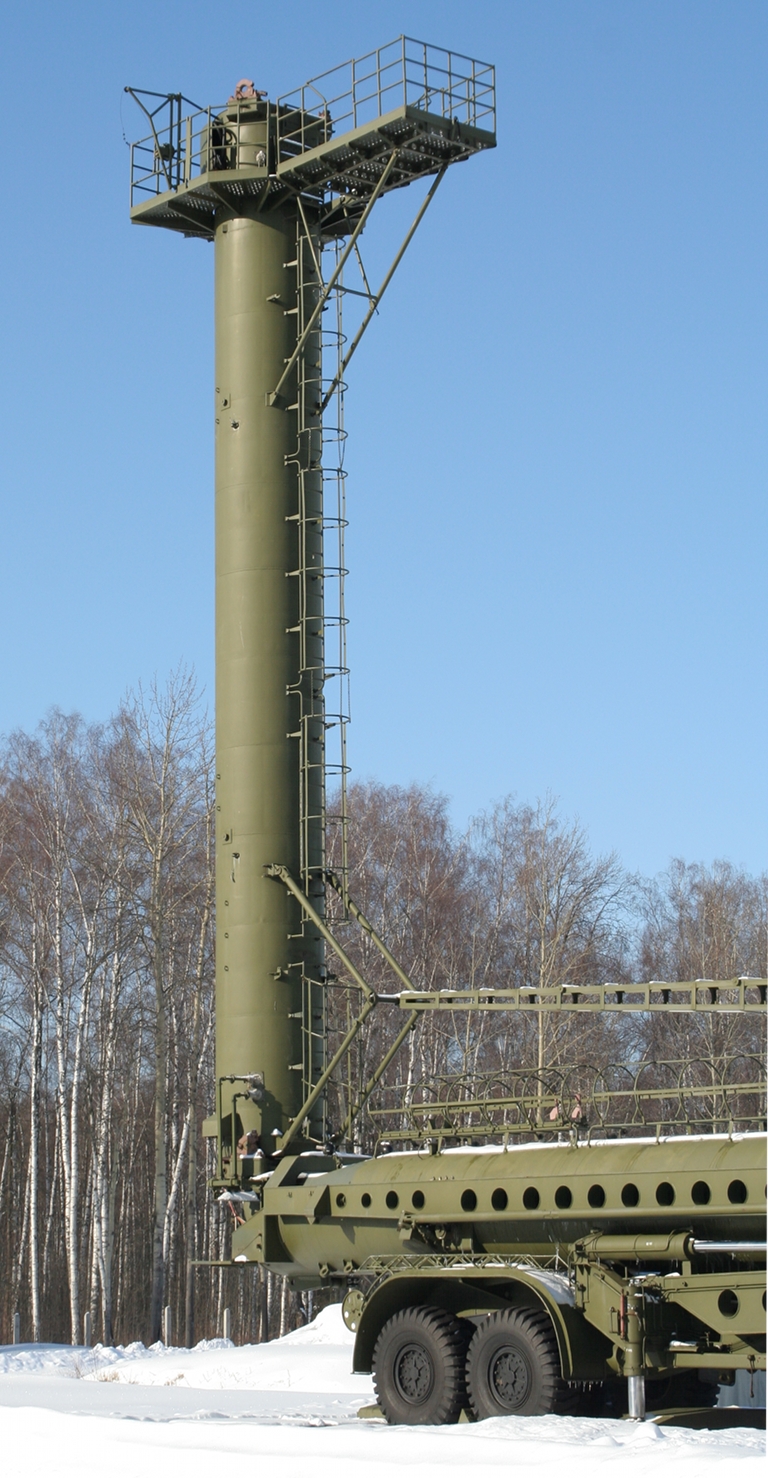
Detail of upper mast segment of
partially deployed 40V6MD.
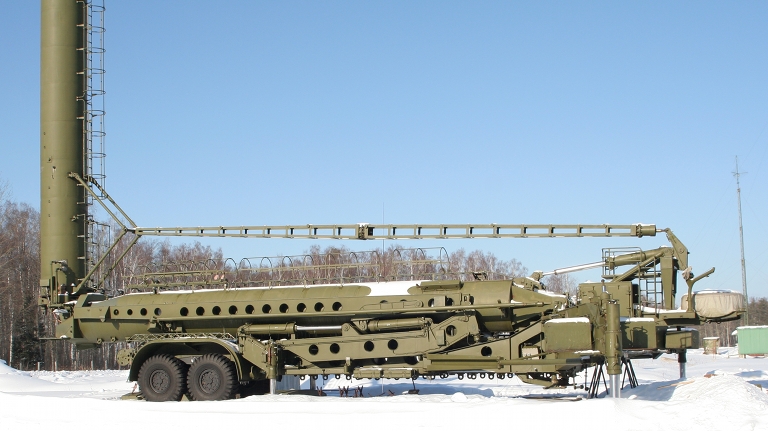
Detail of stowed lower mast segment
of partially deployed 40V6MD.
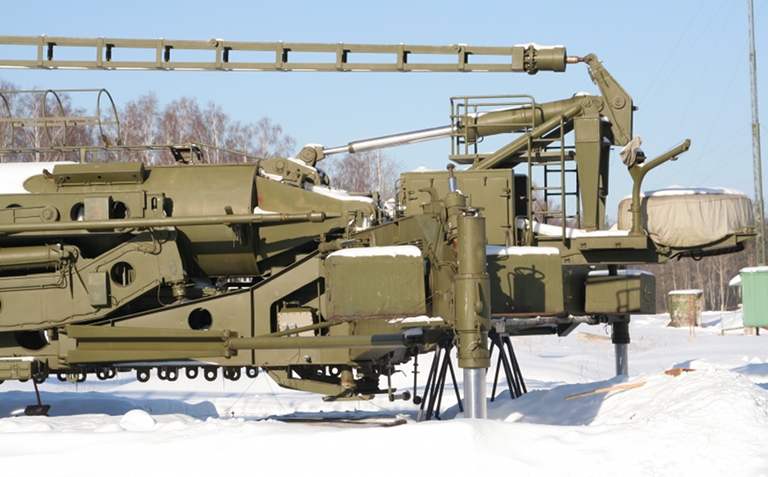
Detail of stowed lower mast segment
hydraulic actuators.
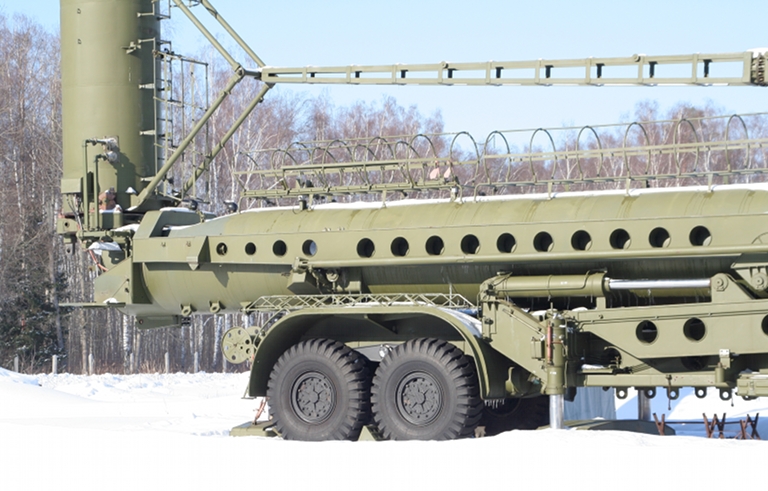
Above, below: detail of segment
join hinge and rigid A-frame. The latter is used to maintain alignment
of the upper segment, and the lower segment is lifted from horizontal
to vertical position.
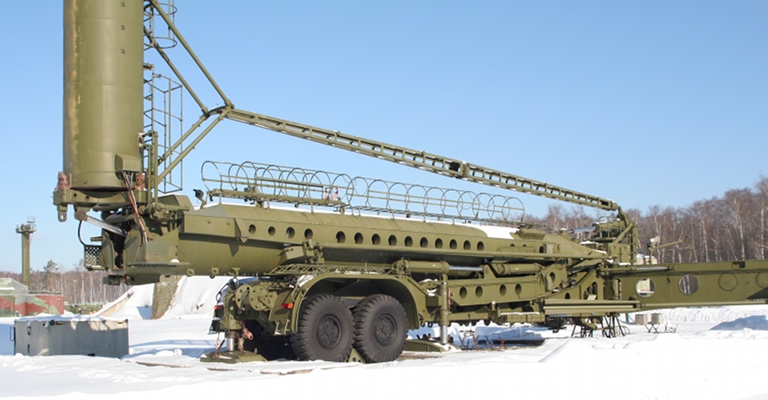
40V6MD Fully Deployed
The LEMZ 5N66
Clam Shell 2D FMCW acquisition radar
deployed on the 127 ft 40V6MD extended height elevating mast (Russian Internet).
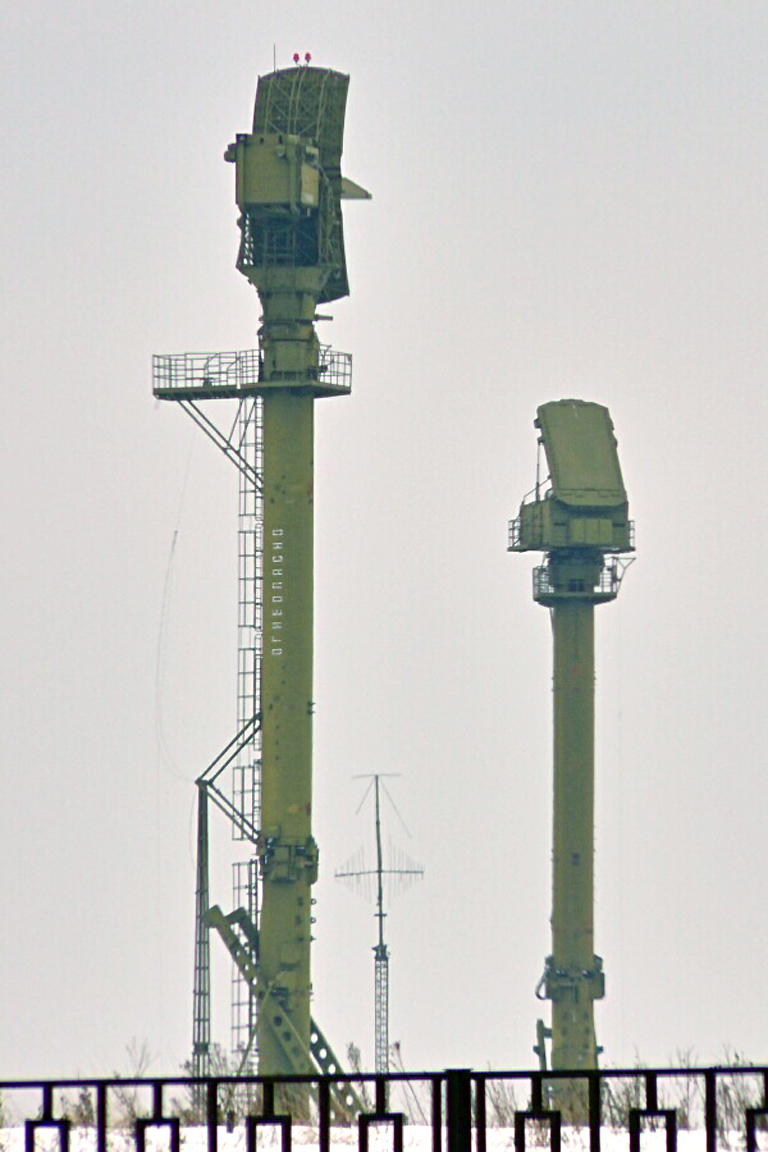
A pair of colocated 127 ft 40V6MD
extended height elevating masts at an unspecified Russian site,
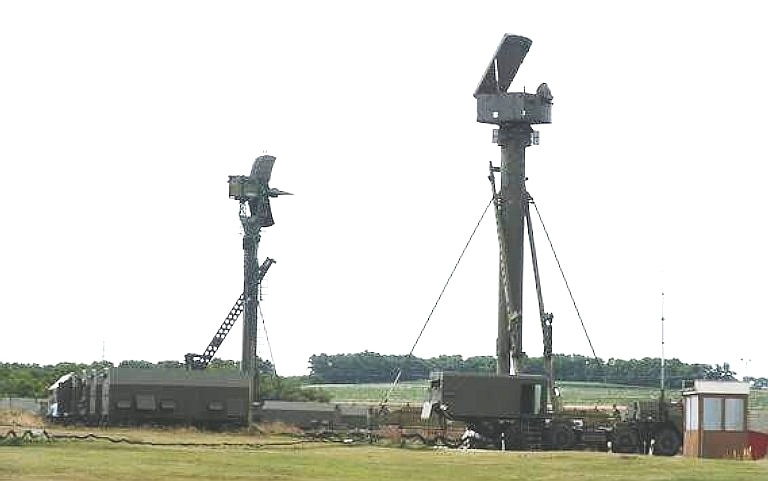
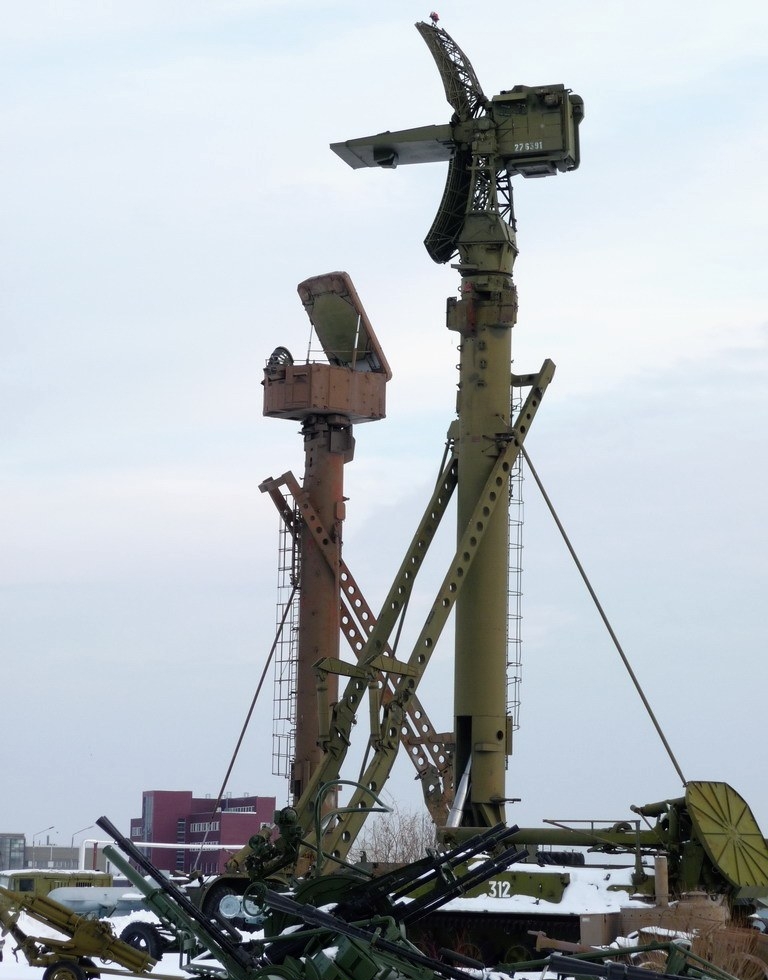
mounting a 5N63 Flap Lid and 5N66 Clam Shell (Russian Internet).
|
|
Annex C
Systems Employing the 40V6M/MD Mobile Mast
System
|
|
LEMZ
5N66/5N66M/76N6E Clam
Shell
FMCW Acquisition Radar
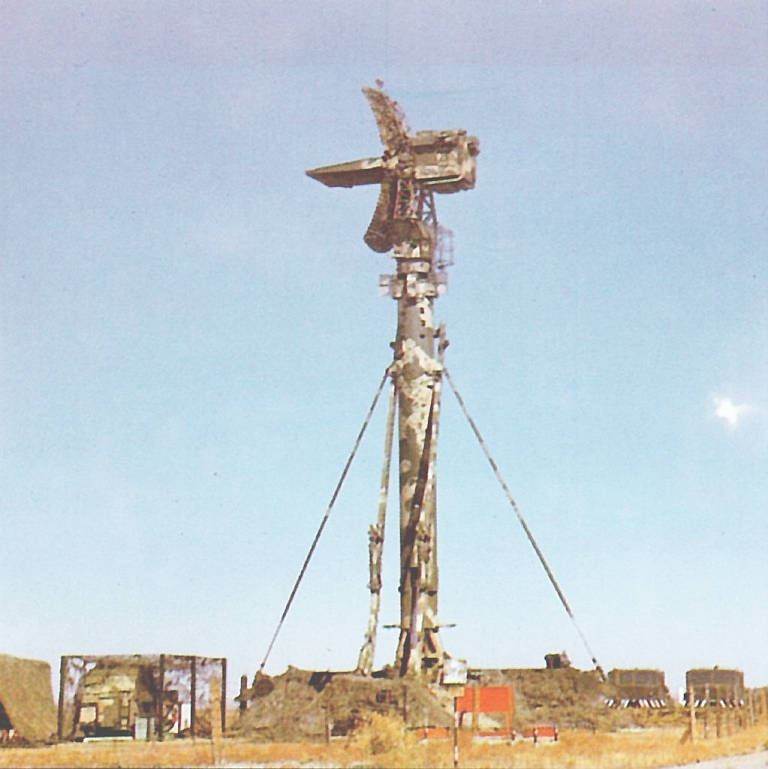
Above/below: 76N6 Clam Shell with 78 ft 40V6M
mast for improved low altitude coverage.
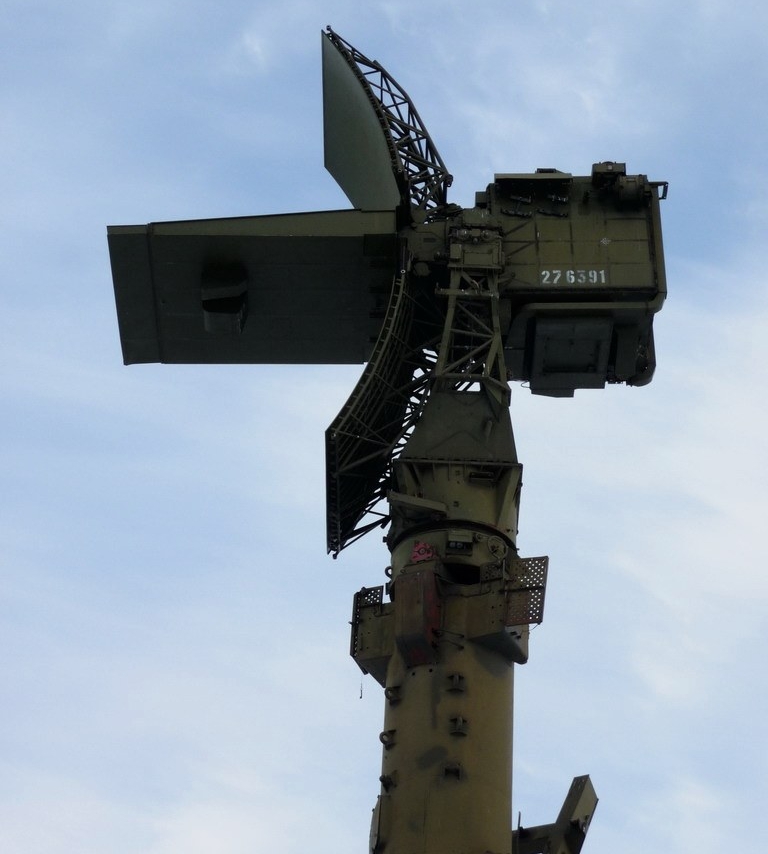
An
excellent study of the 5N66M Clam Shell B antenna system by Said
Aminov, produced at Togliati in Russia (© 2009, Said Aminov).
Greek Cypriot S-300PMU1 battery. In
the
foreground the stowed 30N6E1 Tomb Stone (Flap Lid), in the background
the deployed 76N6 Clam Shell with 40V6M mast.
|
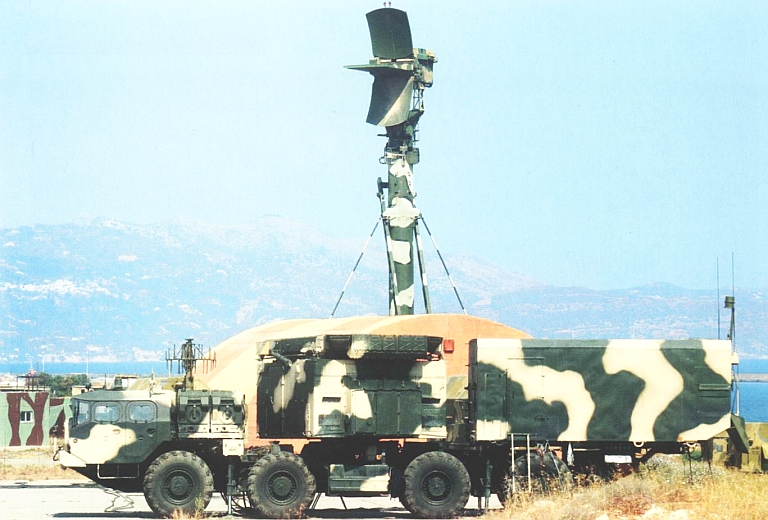
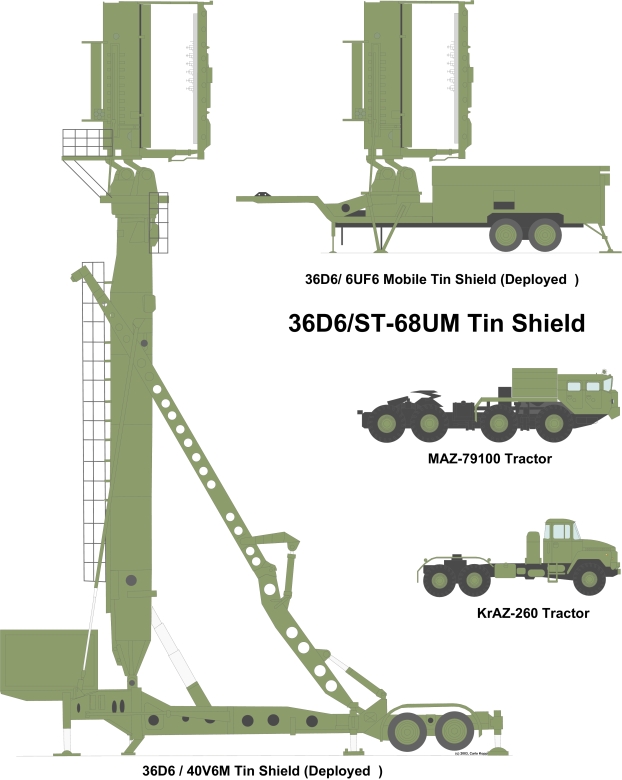
5N59/36D6/ST-68U/UM Tin Shield Acquisition Radar
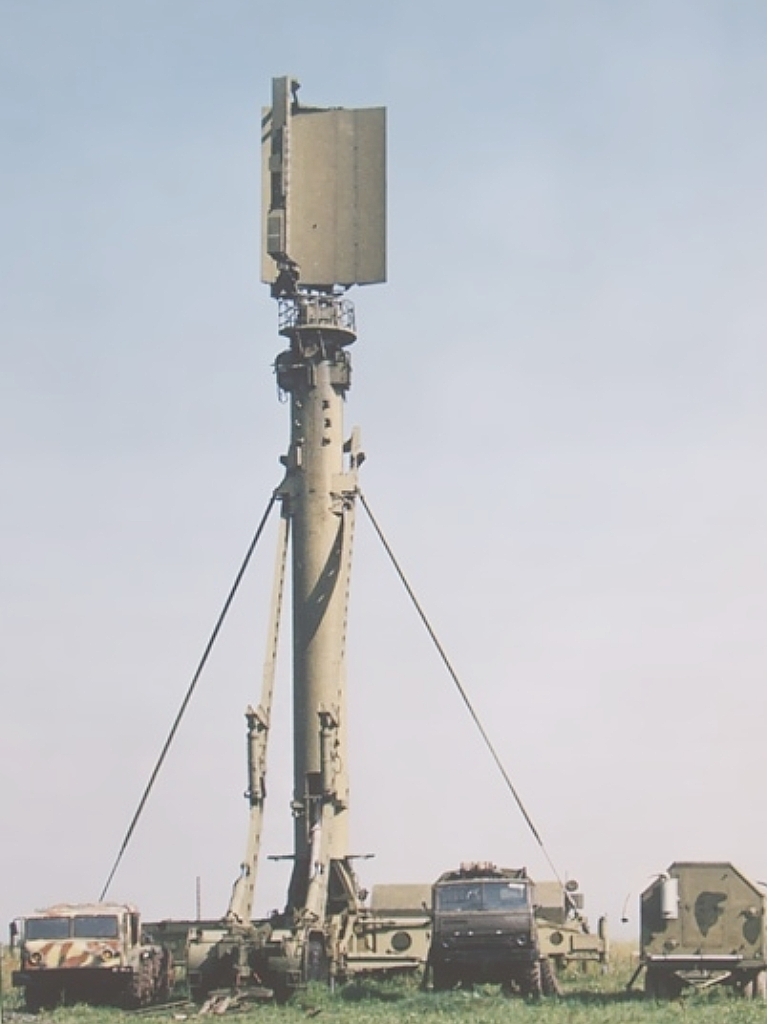
The
36D6/ST-68U
Tin Shield is the most common medium/high altitude acquistion radar
employed with older S-300PT/PS/PM/PMU batteries. It is sometimes
deployed on
the 40V6M mast.
|
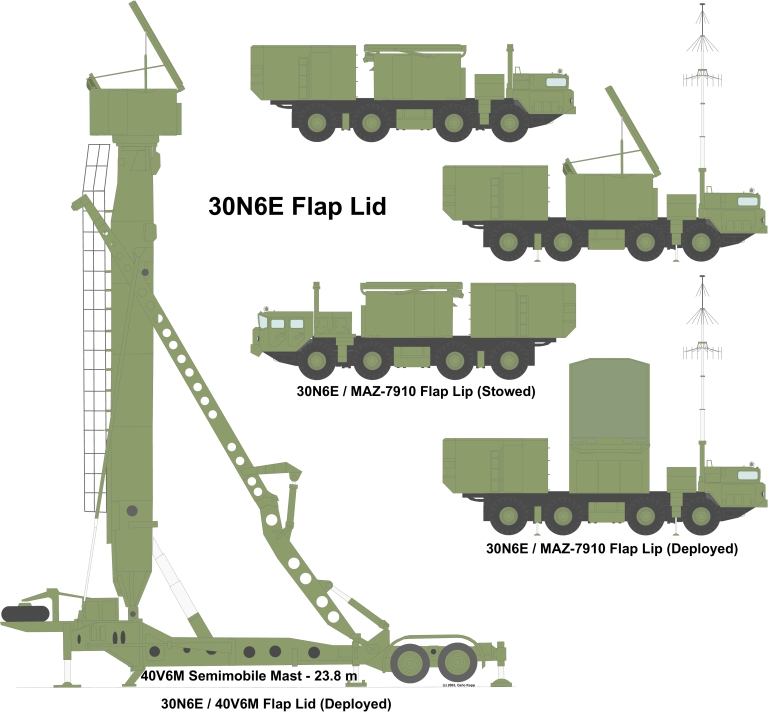
Almaz 5N63/30N6/30N6E/E1/E2 Flap Lid / Tomb Stone Engagement
Radars
30N6
/ 40V6M Flap Lid A - the 40V6M and 40V6MD masts are most frequently
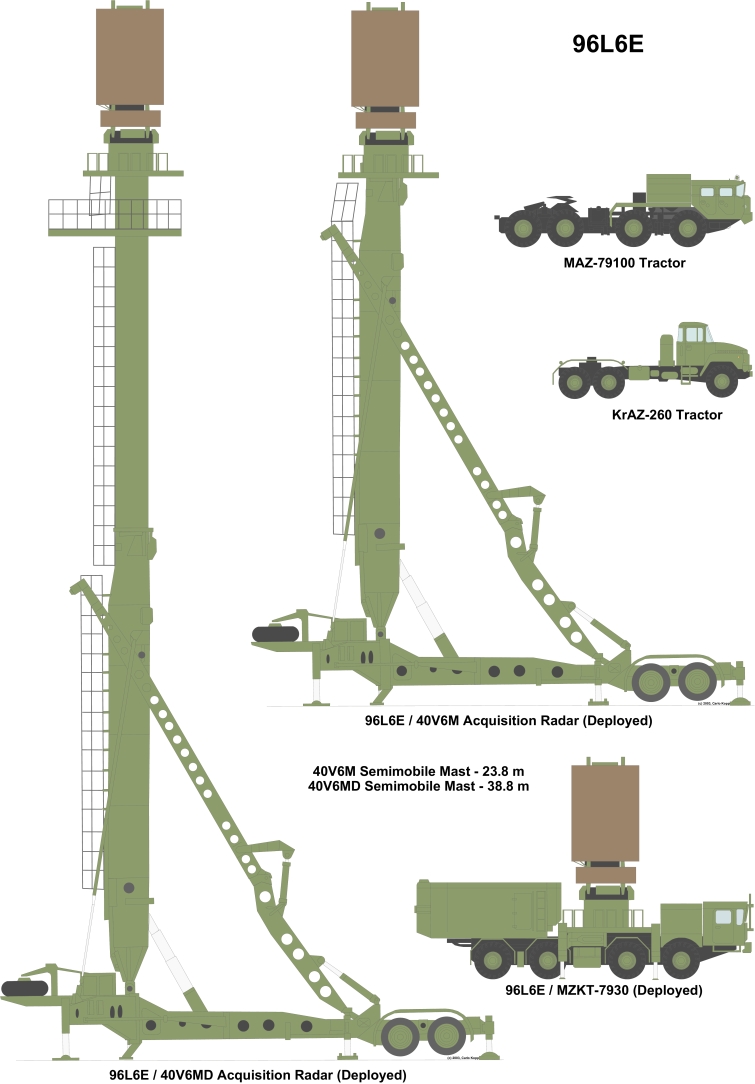
used with the 76N6 and 30N6 series radars, usually paired with equal
height masts. The 40V6M and 40V6MD masts remain a cited option for the
S-400 system's 92N2E Grave Stone and 96L6 Cheese Board radars (© 2009, Said Aminov).
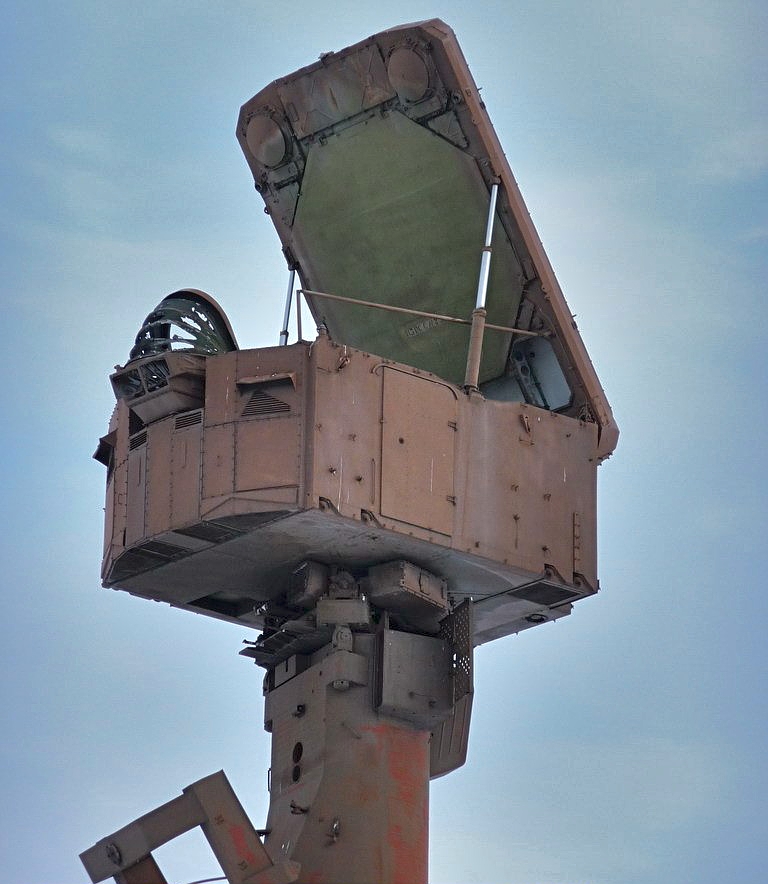
Detail of the 5N63
Flap Lid
A F1 radar head module deployed on 40V6M semi-mobile mast system,
by Said Aminov, produced at
the Togliati Museum in Russia. The dual plane monopulse circular
polarised primary feed has been stripped and the concertina shroud has
deteriorated. The operator consoles are in the F2 module, typically
located on a truck. Later self-propelled 5N63S Flap Lid B variants
retained the capability to deploy the F1S module on the 40V6M/MD mast,
with the F2S module remaining attached to the MAZ-7910 8x8 vehicle
chassis
(©
2009,
Said
Aminov).
|
LEMZ 96L6E Cheese
Board Acquisition Radar
|
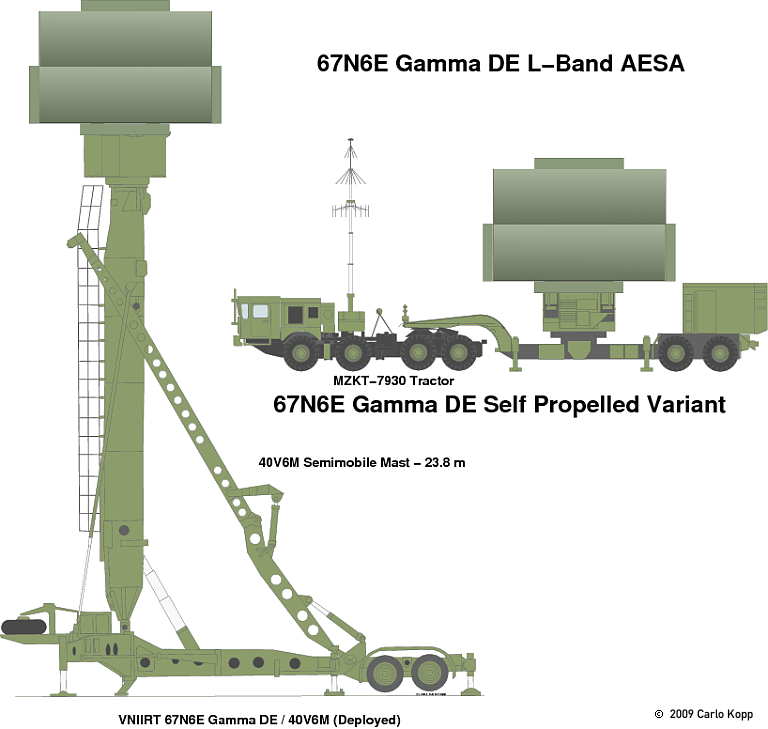
VNIIRT 67N6E Gamma DE AESA
Acquisition Radar
|
Annex D
Soviet
Radar Deployment Platforms
The 40V6M/MD appears to be the most widely deployed system for
elevating radar heads employed by the Soviets, and also widely exported
with the S-300P weapon system. It has one clear limitation, which is
that a common adaptor for the upper mast turntable must be integrated
on the base of the radar head. Equipment without such an adaptor, or
too heavy for the 40V6M/MD, cannot be deployed using these masts.
During the Cold War an alternate scheme was also used, which involved
large elevating or ramped platforms. Sufficient imagery exists to
identify the use of these with a number of Soviet radar types,
including the ST-68U/UM/36D6 Tin Shield, the P-35/37 Bar Lock series,
and the 5N62 Square Pair engagement radar for the SA-5 Gammon long
range SAM system.
At least two types of elevating platform are identifiable. In both
designs, a platform can be lowered to ground level to permit equipment
to be driven or towed on to the platform. The platform is then raised
to operating height using a system of pulleys and cables, and once in
situ, is locked into position. Unfortunately all currently available
imagery does not show the detail of the platform design, pulley
mechanisms, and locking restraints.
The former Czechoslovak SA-5 Gammon SAM sites employed very large
prefabricated concrete platforms, with long ramps permitting the
equipment to be towed directly to the platform. This design is static,
unlike the steel construction Soviet platforms which could be
disassembled and relocated to new sites if required. Movement of the
Soviet platforms would still be a major effort and very time consuming
given the size of the components.
Detailed data of the these designs has not appeared in the open source
domain, and imagery appears mostly to be produced using amatuer
photographic equipment as the platforms present as interesting
landmarks.
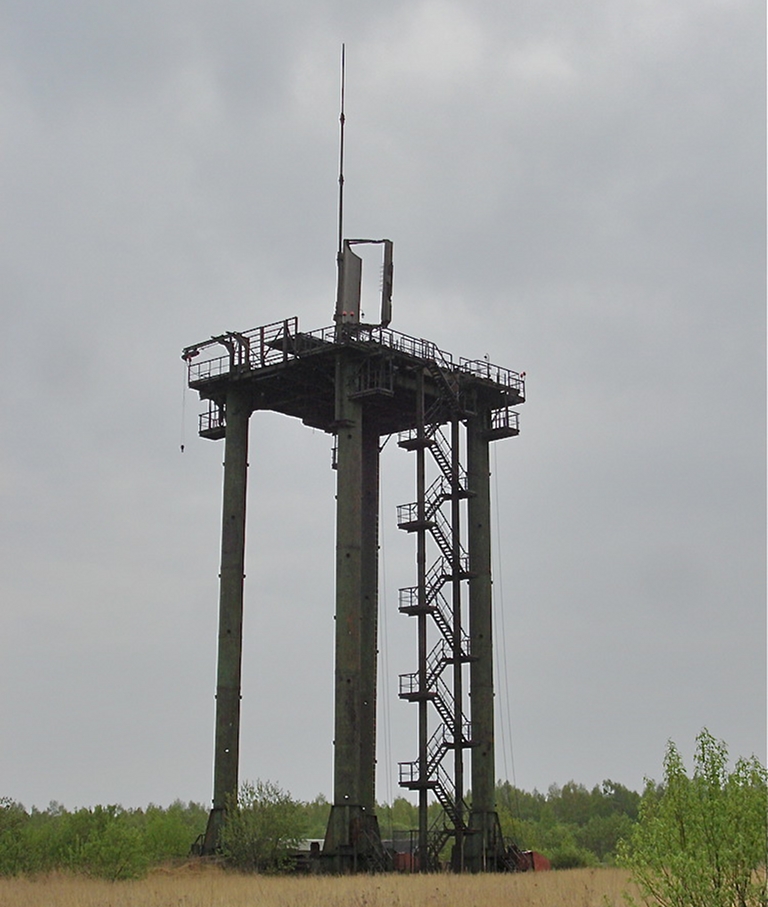
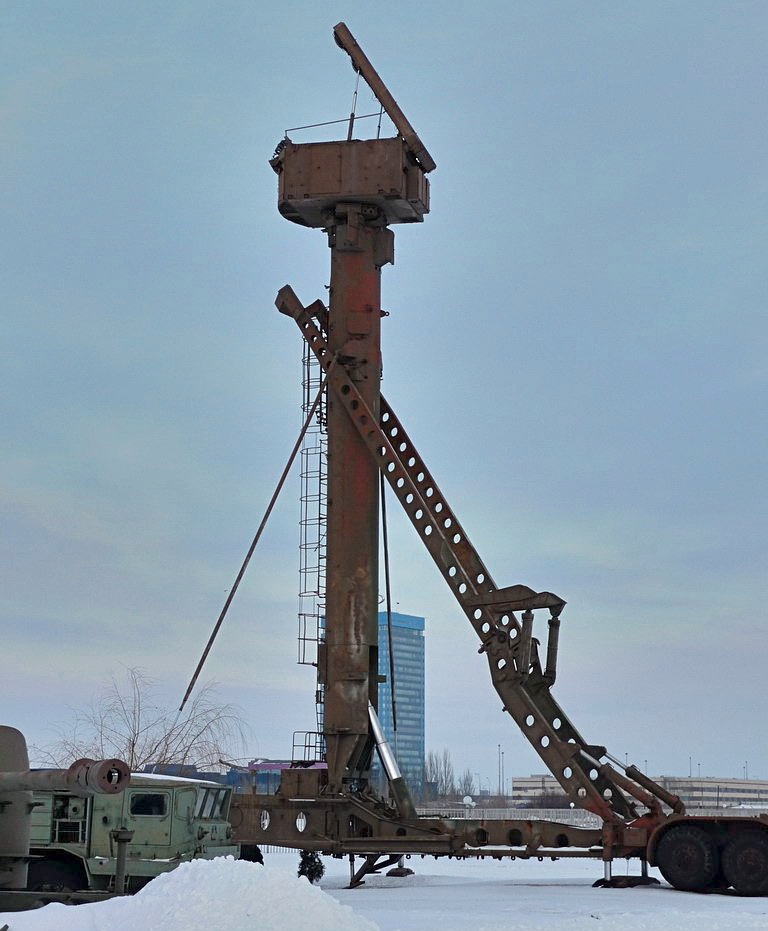
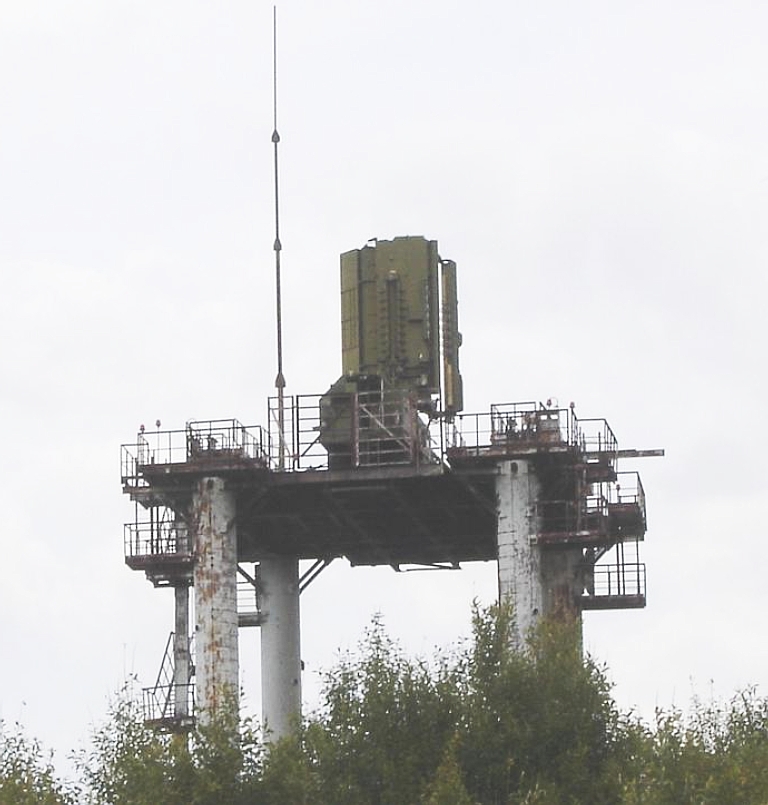
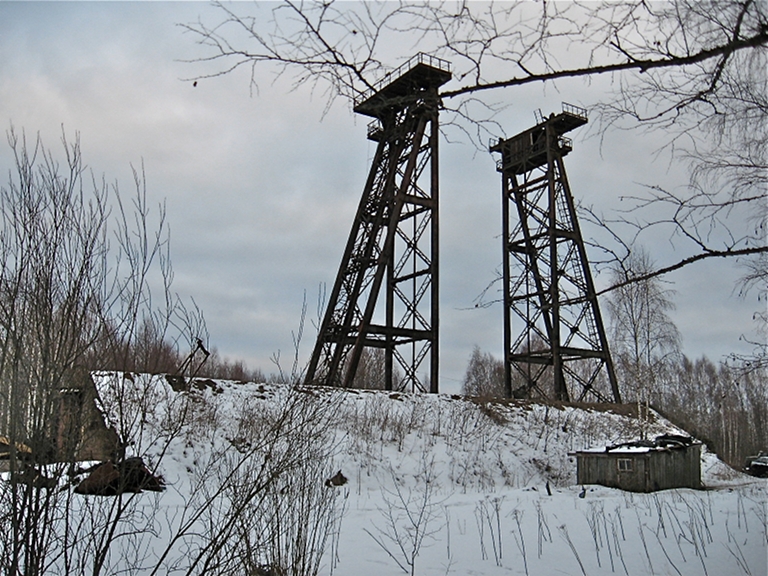
This image depicts an example of the tubular
construction elevating radar platform, hosting a Tin Shield acquisition
radar. The site is on flat terrain so the intent was to increase radar
low altitude coverage footprint (Russian Internet image).
A 19Zh6
Tin Shield operating from a fixed elevated platform, the whole
semi-trailer
being so emplaced. This installation is static, but affords stability,
access and elevation which cannot be achieved using a 40V6M/MD mast
(Czech Army).
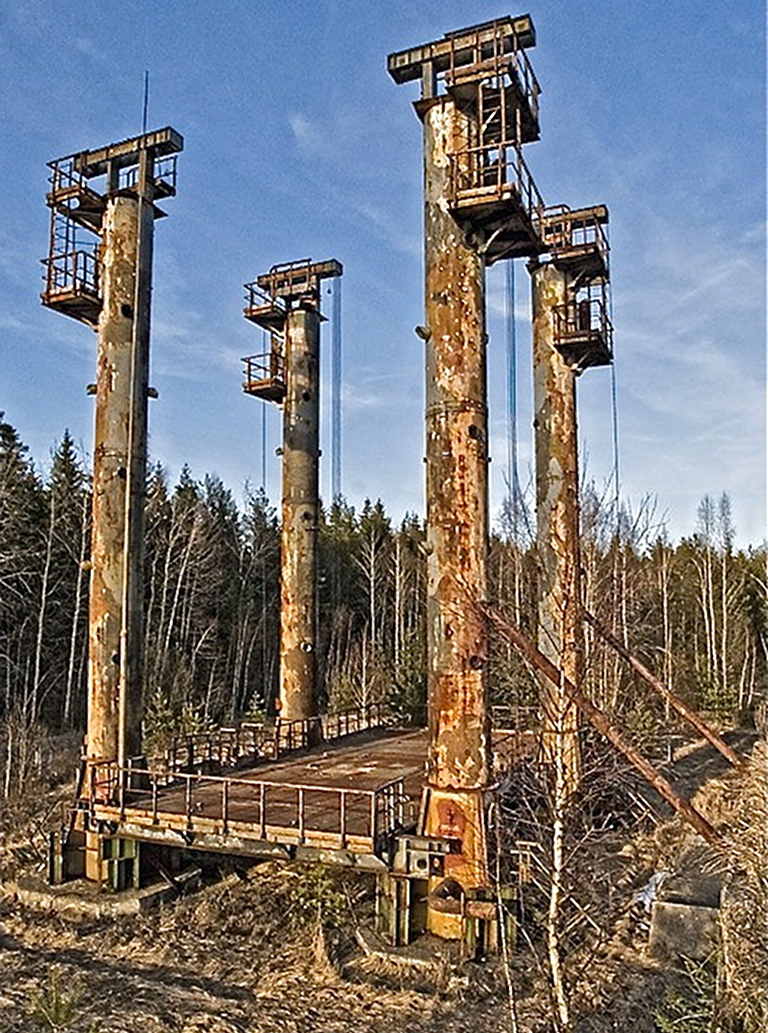
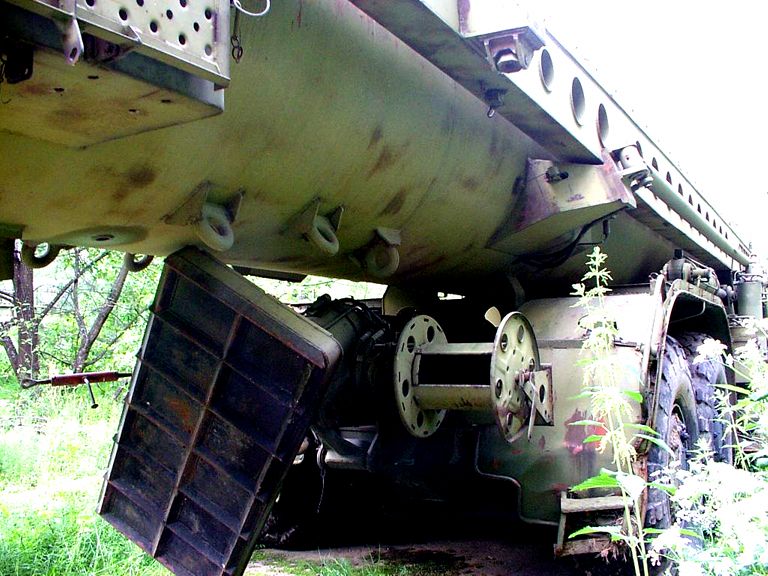
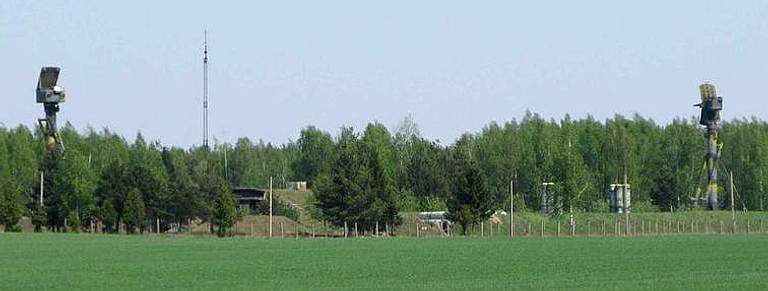
This image depicts a derelict example of the tubular
construction
elevating radar platform, with the platform lowered for equipment
deployment or removal. The design is modular in the sense that overall
height could be adapted by changing the number of tubular leg segments
during platform deployment. This example also shows the cable mechanism
used to lower or raise the platform, on the aft pair of legs. The
site is in forested terrain so the intent was to elevate the radar
above the foliage (Russian Internet image).
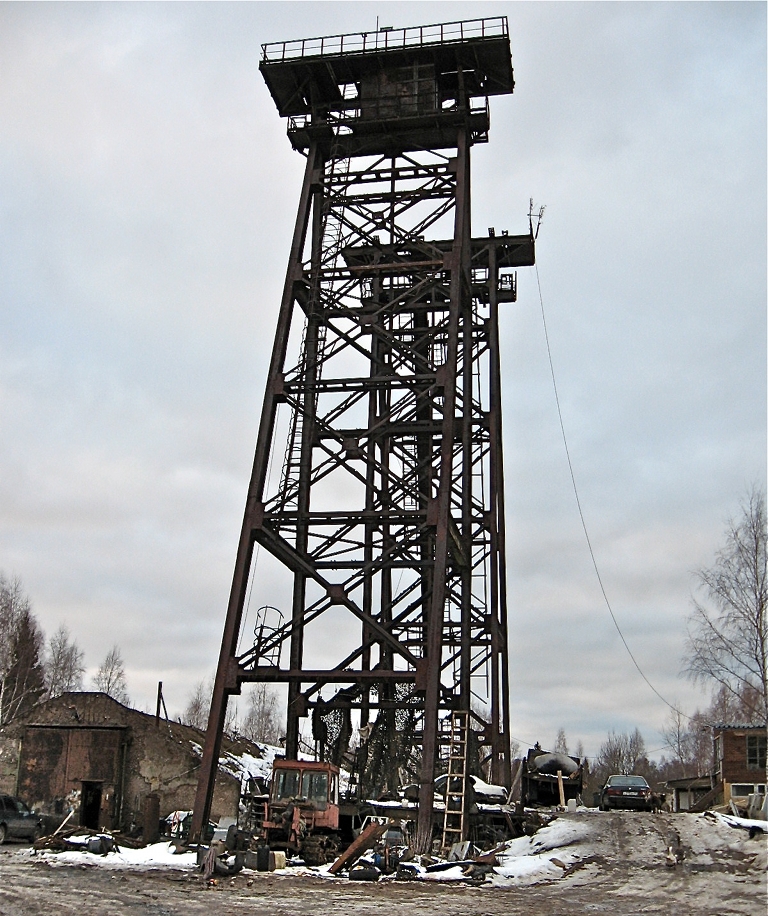
Above, below: images of derelict example of the Soviet
lattice construction radar platform. This design uses construction
techniques akin to those used for railway and road bridges and is
likely not intended for redeployment. To the left in the upper image,
and in the foreground of the lower image, is a bunker intended to
protect the radar vans and generator vans from both the elements, and
overpressure effects produced by conventional or nuclear munitions
(Russian Internet images).
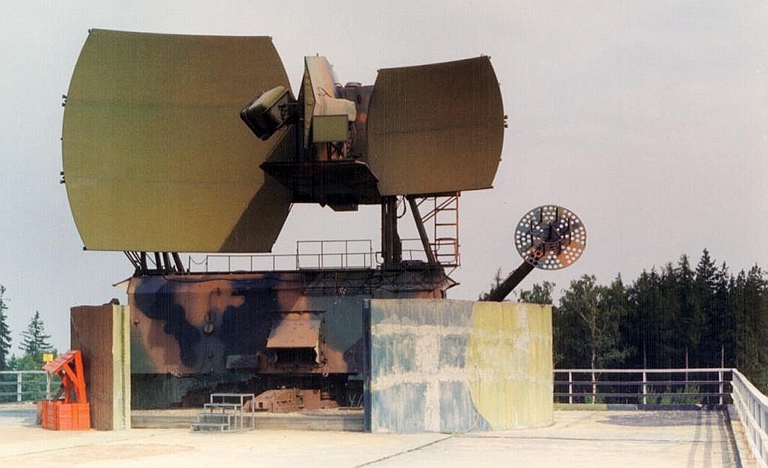
Former Czechoslovak
fixed platform at the Dobříš S-200VE / SA-5B Gammon SAM site. The 5N62V
Square Pair B K-1V radar head van
is located behind a protective screen (image Matej
Kopecky).
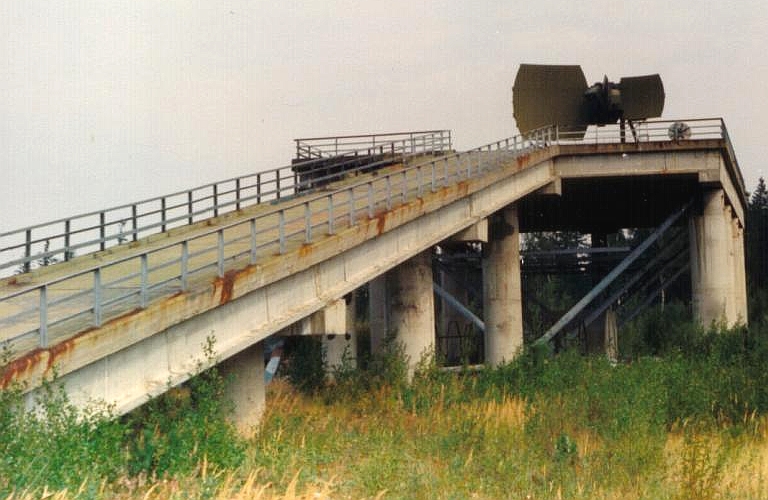
5N62V Square Pair B K-1V
radar head van on one of the Dobříš S-200VE / SA-5B Gammon SAM site
platform (image Matej Kopecky).
|
|
|
|
|
Technical Report APA-TR-2009-0504
|
|

![F-22A Raptor, FB-22, F-22E, F-22N and Variants Index Page [Click for more ...]](APA/f-fb-22.png "F-22A Raptor, FB-22, F-22E, F-22N and Variants Index Page [Click for more ...]")

![People's Liberation Army Air Power Index Page [Click for more ...]](APA/pla-air-pwr.png "People's Liberation Army Air Power Index Page [Click for more ...]")


![Military Ethics, Culture, Education and Training Index Page [Click for more ...]](APA/ethx-culture.png "Military Ethics, Culture, Education and Training Index Page [Click for more ...]")


![Russian / Soviet Weapon Systems Index Page [Click for more ...]](APA/rus-weps.png "Russian / Soviet Weapon Systems Index Page [Click for more ...]")