|
||||||||||||||||||||||
 |
||||||||||||||||||||||
![F-22A Raptor, FB-22, F-22E, F-22N and Variants Index Page [Click for more ...]](APA/f-fb-22.png "F-22A Raptor, FB-22, F-22E, F-22N and Variants Index Page [Click for more ...]") |
 |
![People's Liberation Army Air Power Index Page [Click for more ...]](APA/pla-air-pwr.png "People's Liberation Army Air Power Index Page [Click for more ...]") |
 |
 |
 |
 |
 |
 |
![Military Ethics, Culture, Education and Training Index Page [Click for more ...]](APA/ethx-culture.png "Military Ethics, Culture, Education and Training Index Page [Click for more ...]") |
 |
||||||||||||
 |
![Russian / Soviet Weapon Systems Index Page [Click for more ...]](APA/rus-weps.png "Russian / Soviet Weapon Systems Index Page [Click for more ...]") |
 |
 |
 |

|
 |
 |
 |
 |
 |
||||||||||||
 |
 |
 |
||||||||||||||||||||
| Last Updated: Mon Jan 27 11:18:09 UTC 2014 | ||||||||||||||||||||||
|
||||||||||||||||||||||
|
||||||||||||||||||||||
|
||||||||||||||||||||||
|
|
|
|
|
|
|
|
|
|
|
||||||||||||
|
|
|
|
|
|
|
|
|
|
|
||||||||||||
| |
|
|
||||||||||||||||||||
| Last Updated: Mon Jan 27 11:18:09 UTC 2014 | ||||||||||||||||||||||
|
||||||||||||||||||||||
|
Why F-22A Raptor instead of F-35A Joint Strike Fighter? |
||||||||
|
Air Power
Australia - Australia's Independent Defence Think Tank
|
||||||||
| Air Power Australia NOTAM 15th February, 2008 |
||||||||
Peter Goon, BEng (Mech), FTE (USNTPS), Head of Test and Evaluation, Air Power Australia |
||||||||
|
||||||||
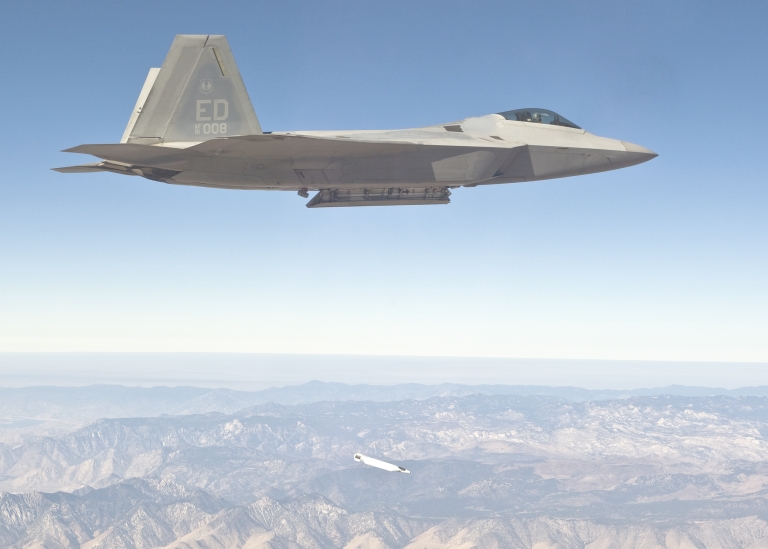 Raptor performs first drop of small
diameter bomb. An F-22 Raptor
drops a small diameter bomb from its weapons bay during a test mission
Sept. 5. The test marks the first airborne separation of a small
diameter bomb from the internal weapons bay of an F-22.
Testing of the SDB with the F-22 is part of the Increment 3.1 upgrade
to the aircraft.Maj. Jack Fischer, 411th Flight Test Squadron test
pilot noted that
"Targets we can't get with most weapons, we can get with the F-22
because we have stealth, with this weapon and aircraft,
there is no place we can't reach and no place for an enemy to hide." (Photo by Darin
Russell, Text by
95th Air Base Wing Public Affairs, US Air Force)
|
||||||||
Parametric and ordinal analysis was the principal basis for the recommendation made in 2001/02, that Australia should be considering the F-22A Raptor for the new air combat capability project (NACC/AIR6000) rather than the F-35A Joint Strike Fighter. Such analysis had the F-22A being two to four times more capable than that being marketed for the F-35A Joint Strike Fighter (JSF) and with both aircraft costing about the same over the 2011-2018 timeframe proposed for the Australian procurement of about up to 100 F-35A JSFs. Cardinal Analysis now shows the results from the Parametric and Ordinal Analysis were certainly well within the ball park since: 1) F-22A carries twice as many Air-to-Air missiles as the F-35A [1] 2) In combat, the F-22A is flown at almost twice the altitude and twice the speed of the F-35A. This increases the range of the F-22A's Air-to-Air missiles by almost 40 percent, increasing lethality, while it doubles the range of guided bombs like the JDAM [2]. 3) The higher speed of the F-22A vs the F-35A allows it to control twice the area, when targets are mobile and time sensitive. In such situations, a single F-22A can do the same work as two F-35As. 4) F-22A is much more lethal than the F-35A. It is also much more survivable than the F-35A [3]. 5) F-22A provides around three times more capability than the F-35A, yet costs only around 23% more per unit. 6) F-22 is currently in production, yet the planned Initial Operational Capability for the F-35A is 2013 and this is at the Block 3 configuration level, with the prospect of further schedule slippages with commensurate increases in cost. The above points on operational capability agree almost exactly with the results from the cardinal analysis and modelling done in the USA, as well as results from actual testing and training exercises (i.e. FOT&E, Weapon Clearance Trials, Red Flag, etc.) carried out on the F-22A Raptor. Cost comparisons are based upon current estimates from US DoD program budgets; the difficulty, of course, being that the F-22A is in full rate production yet it is early days with commensurate risks for the F-35A Program, being about half way into the first of its seven stage low rate initial production (LRIP) program and still very much developmental and unproven. Therefore and rightly, the approach that has been taken is somewhat conservative, intentionally favouring the F-35A Program by some degree – a best case, if you will, for the Joint Strike Fighter. Simply put, the cost comparison ratio of 1.23 is the result of comparing the estimated average unit procurement cost of the currently planned buy of 1,763 x F-35As (USD$97.413 million per unit [4]) with the average unit procurement cost of the first 100 x F-22A delivered after the currently capped production run of 191 units. Note that this comparison is based upon estimates of what will have to be paid and not some esoteric part cost figure like ‘average unit recurring fly away cost’ cited in 2002 dollars that is clearly intended to mislead and confuse. Even just on the basis of a cost comparison ratio of 1.23 and a capability ratio of 2.8, the question that cries out to be asked is, “Why the JSF?”. However, given the Australian Department of Defence intention to procure the F-35A Joint Strike Fighter over the period 2011 to 2018 when the cost comparison ratio will be 1:1, if not somewhat less than unity, the question must surely be asked if it makes any sense what so ever to buy so early in the JSF Program, if at all? 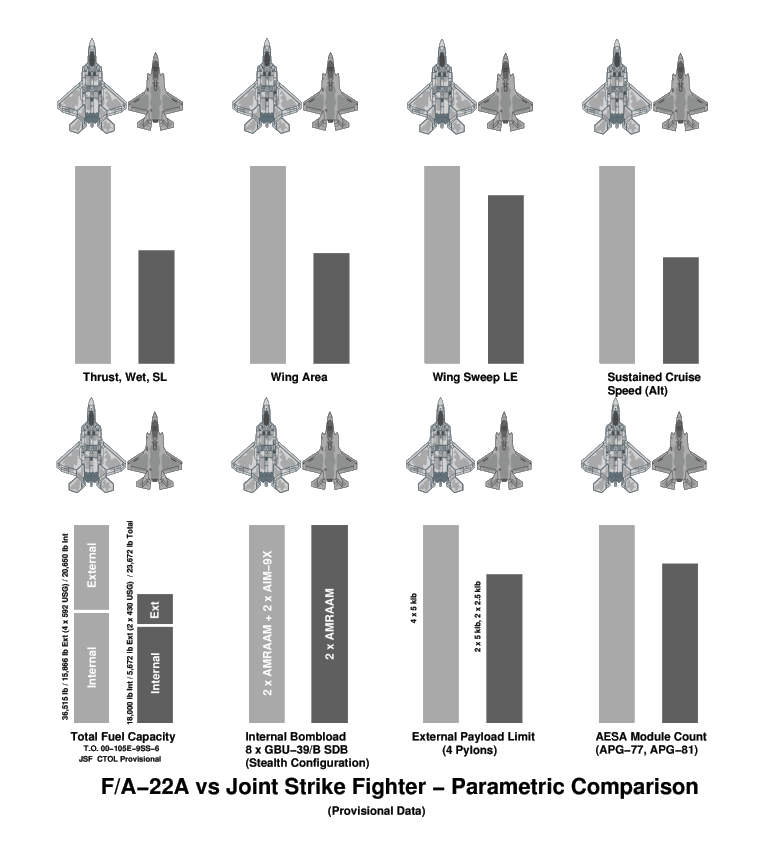 Endnotes: [1] The F-22 internal payload is six AIM-120 AMRAAM and two AIM-9 for Air to Air operations or two AIM-120 and two AIM-9 plus two JDAM or eight Small Diameter Bomb for Strike operations. The F-35A in Air to Air operations carries only four AIM-120 AMRAAM, and in Strike operations, only two, for an identical number of JDAM or Small Diameter Bomb rounds . Refer APA-JSF-Analysis.html and APA-Raptor.html. Autonomous targeting of bombs using the APG-77(V)1 radar has now been validated, refer Northrop Grumman Completes Successful Demonstration of New Synthetic Aperture Radar Capability for F-22 Fighter. [2] Drops of actual JDAMs prove this. [3] The much better stealth capability and supersonic cruise capability, and more powerful radar, are the reasons why the F-22A is so much more lethal and survivable. [4] Refer US DoD - USAF 2009 Budget Papers |
||||||||
| Air
Power Australia Website - http://www.ausairpower.net/ Air Power Australia Research and Analysis - http://www.ausairpower.net/research.html |
||||||||
 |
||||||||
| |
||||||||
|
|||||||||||||
|
|
|
|
|
|
|
|
|
|
|
|||
|
|
|
|
|
|
|
|
|
|
|
|||
| |
|
|
|||||||||||
| Artwork, graphic design, layout and text © 2004 - 2014 Carlo Kopp; Text © 2004 - 2014 Peter Goon; All rights reserved. Recommended browsers. Contact webmaster. Site navigation hints. Current hot topics. | |||||||||||||
|
Site Update
Status:
$Revision: 1.753 $
Site History: Notices
and
Updates / NLA Pandora Archive
|
|||||||||||||
|
|
Tweet | Follow @APA_Updates | |||||||||||
|
|
|||||||||||||
|
|
|||||||||||||






