|
||||||||||||||||||||||
 |
||||||||||||||||||||||
![F-22A Raptor, FB-22, F-22E, F-22N and Variants Index Page [Click for more ...]](APA/f-fb-22.png "F-22A Raptor, FB-22, F-22E, F-22N and Variants Index Page [Click for more ...]") |
 |
![People's Liberation Army Air Power Index Page [Click for more ...]](APA/pla-air-pwr.png "People's Liberation Army Air Power Index Page [Click for more ...]") |
 |
 |
 |
 |
 |
 |
![Military Ethics, Culture, Education and Training Index Page [Click for more ...]](APA/ethx-culture.png "Military Ethics, Culture, Education and Training Index Page [Click for more ...]") |
 |
||||||||||||
 |
![Russian / Soviet Weapon Systems Index Page [Click for more ...]](APA/rus-weps.png "Russian / Soviet Weapon Systems Index Page [Click for more ...]") |
 |
 |
 |

|
 |
 |
 |
 |
 |
||||||||||||
 |
 |
 |
||||||||||||||||||||
| Last Updated: Mon Jan 27 11:18:09 UTC 2014 | ||||||||||||||||||||||
|
||||||||||||||||||||||
|
||||||||||||||||||||||
|
||||||||||||||||||||||
|
|
|
|
|
|
|
|
|
|
|
||||||||||||
|
|
|
|
|
|
|
|
|
|
|
||||||||||||
| |
|
|
||||||||||||||||||||
| Last Updated: Mon Jan 27 11:18:09 UTC 2014 | ||||||||||||||||||||||
|
||||||||||||||||||||||
AUSTRALIA'S FUTURE:
|
||||||||
|
Air Power
Australia - Australia's Independent Defence Think Tank
|
||||||||
| Air Power Australia NOTAM 20th November, 2007 |
||||||||
|
||||||||
|
||||||||
| These are words from the Coalition's Plan for Defence dated October 2007: Military
forces in the Asia-Pacific region are becoming increasingly
sophisticated and Australia must work harder to ensure that our forces
retain leading-edge military capability. To give our forces the
capacity to meet new and emerging challenges, the Coalition has
committed to a 3 per cent real increase in annual defence spending out
to 2016. This will ensure Australia has ... an Air Force capability
second to none in our region.
The Coalition has committed to building: ... a top flight Air Force .... designed to give the RAAF unprecedented capabilities, reach and operational flexibility. These are words from Labor's Plan for Defence dated November 2007: Much
has happened in the world since the
last Defence White Paper was released in 2000, and it is time for a
full and detailed reassessment of Australia’s strategic circumstances.
Without superior air combat capabilities, the ADF’s ability to control the air and sea approaches to our nation and implement a maritime strategy is compromised. Labor will ensure that there is no air combat capability gap. What is common to the political argument on both sides is a stated interest in maintaining competitive capabilities with those in the Region. What is different is that a Coalition government, if elected, will be saddled with the baggage of bad decisions, breaches of capability development procedures and a failure to correctly assess the rapid development of military capabilities - especially air power - in Australia's Region. Conversely, if elected, a Labour government would not be burdened by these political encumbrances. Any new government will have an unhindered opportunity to secure Australia's future by taking the initiative on the lessons learned from the blundering of the past seven years and developing Australia’s air combat capabilities from the perspective of a “clean, unsullied” White Paper. After all, the Defence 2000 White Paper was the most widely publicly consulted Defence strategic guidance document of all time. Just because Defence, the Ministers and the Government of the day failed to follow it does not mean the people’s wishes should not be heeded. Looking out some 15-20 years, we know what adversary capabilities the RAAF will face. The Sukhoi Su-30 is already in the Region in several variants - the MKK, MK2, MKI and the MKM. The MiG-29 has been in the region for several years, and the derivative MiG-35 is a strong future contender for a large regional fighter purchase. At the Moscow Air Show this year, Sukhoi released the Su-35BM/Su-35-1, to be fitted with the 20 kiloWatt IRBIS-E ESA radar and competent electronic warfare equipment; this aircraft is expected to be operational in 2012, or earlier, and is therefore likely to be inducted into existing fleets of Sukhoi aircraft. The IRBIS-E is a natural upgrade for the Su-30 series, as it is a growth variant of the NIIP BARS carried by Indian and Malaysian Flankers. Next to arrive will be the PAK-FA / T-50 “JSF-ski” which will use a low observable, twin engine design which will confer a substantial “shielded” weapons bay and extended range. The expected operational date is circa 2015 - which will likely be well before the F-35 JSF is operational, and “combat coded”. 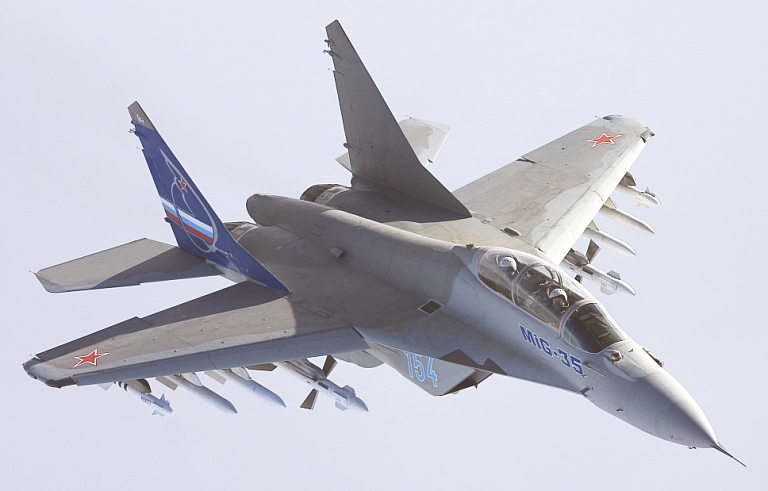 The new MiG-35 Fulcrum (above) is the first Russian flighter to employ an active phased array AESA multimode radar (below), developed by Phazotron. It is like its Western counterparts, a fully digital fighter (MiG bureau). 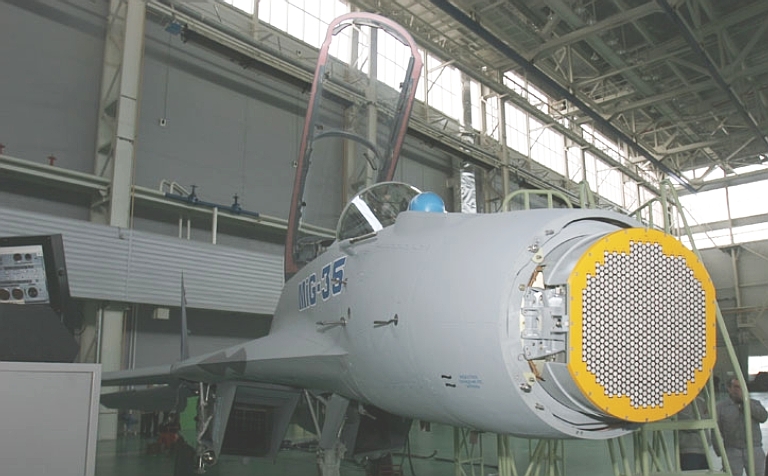 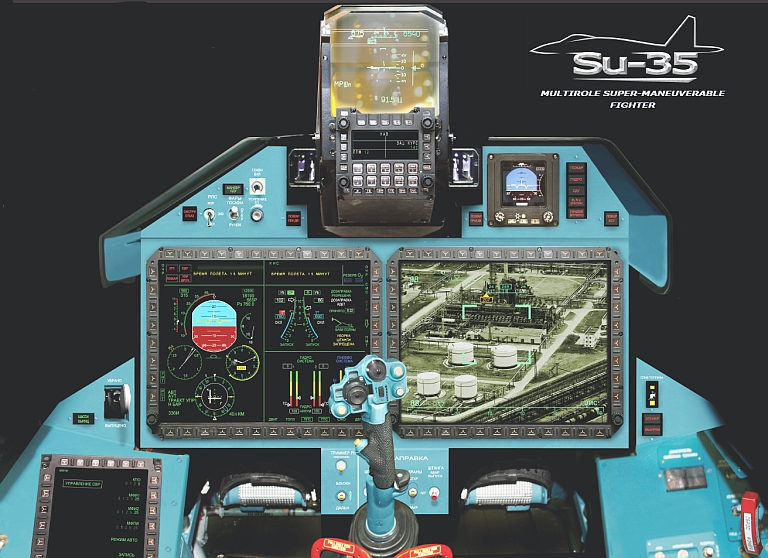 The new Su-35-1/Su-35BM is the most lethal variant of the Flanker developed to date. The digital cockpit emulates the JSF style of "large screen" layout using mature low risk AMLCD technology (Sukhoi/KnAAPO). 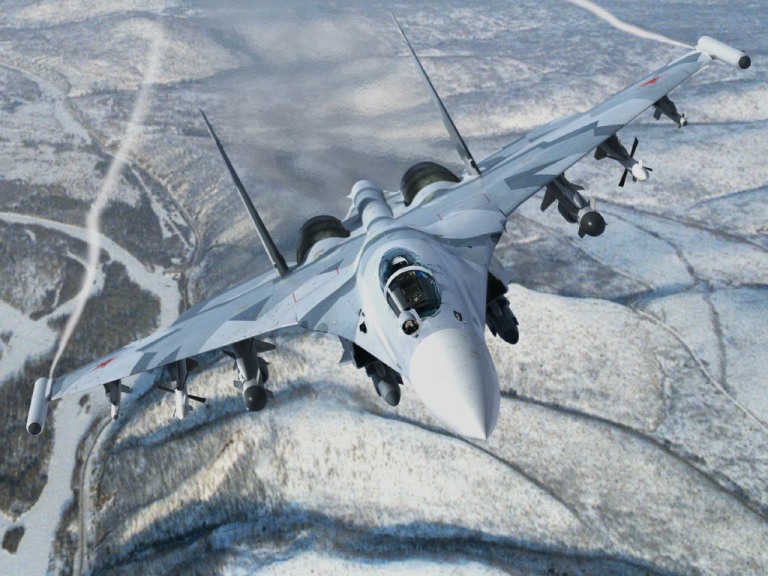 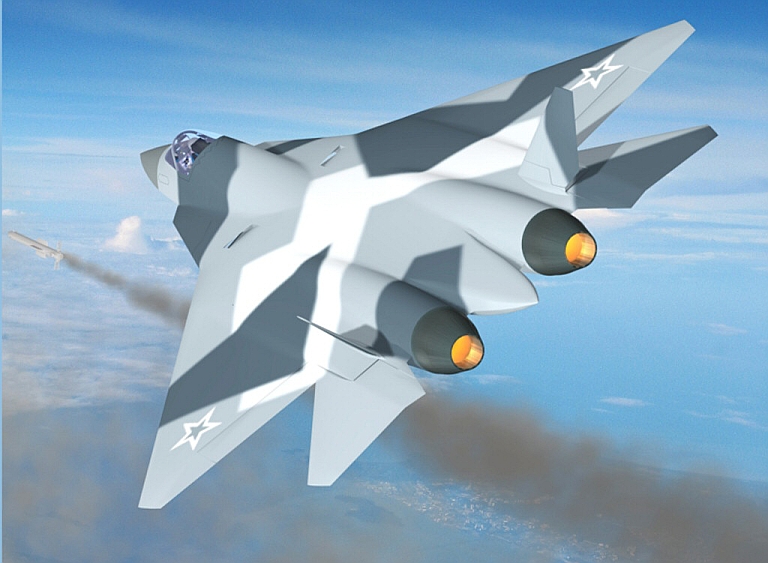 PAK-FA (Перспективный авиационный комплекс
фронтовой авиации
- Future aviation system for tactical aviation)
rendering by NPO
Saturn. Unlike the JSF, the PAK-FA is being designed with air
superiority performance and high agility as the primary consideration.
These aircraft are widely regarded as presenting a formidable air combat capability, and with high power radars, large aperture antennas, multi-spectral sensors, modern ergonomically efficient cockpits, and long-range weapons, are generally assessed as being substantially superior to both the F/A-18F and the F-35 JSF. Australia must therefore reassess its air power strategy or it will lose future air combat engagements. The F-22A Raptor is the most capable “Western” aircraft available and is considered superior to the Su-30 and Su-35 series. Australia can and must procure the F-22A. The USAF defined “anti-tamper” modifications to secure the advanced capabilties of the Raptor in anticipation of a sales request from Australia. If asked, they may be prepared to release the next 25 to 50 F-22As from their production line, which would make the aircraft available as soon as the Australian staff are trained to support the type and in time to avoid any air combat capability gap. This arrangement may well suit the USAF if, as predicted and now expected, the F-35 JSF's operational readiness slips further to the right in time. The F-22A production line would remain in full production for a further 15 months, so if the USAF operations require a different aircraft mix, or the F-35 fails to meet its capability requirements as expected, more F-22As can be built from an open production line. Should massed coalition air operations be required, the RAAF could supplement the USAF's air dominance and survivable deep strike capabilities provided by the F-22A fleet. With a competent air dominance fighter in the inventory, the RAAF can continue to operate its existing Hornet and F-111 fleets while the future air combat fleet options are properly considered. This observation was made by the Chief of the Air Force at a recent Senate Estimates hearing. Should there be a need for strike missions to be conducted in hostile airspace, the F-22A can escort and protect the F/A-18A/Bs or the F-111Cs. 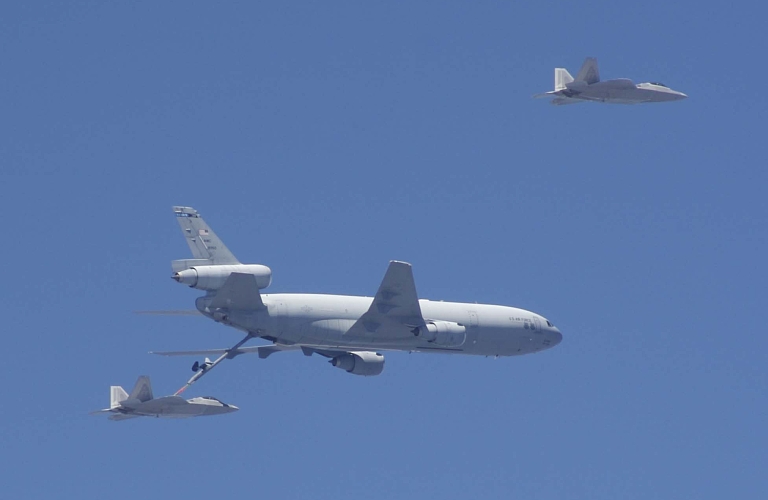 In June, 2006, twelve F-22As of the 27th FW deployed from Langley AFB to Elmendorf AFB for the Northern Edge 2006 exercise. During this exercise the F-22As scored 144:0 in air combat engagements against opposing fighters (US Air Force). The lead-in F-22A acquisition has an immediate payoff. The F/A-18Fs are no longer relevant to Australia's air combat requirements and can be released back to the USN production line. Expensive and risky fleet maintenance programs such as the Hornet centre-barrel replacement can be scrapped. A worst case unit “fly-away” cost of the 25 x F-22As at (say) $AUD150 million would be $AUD3.75B, so there would be abundant change from the announced $AUD6.6B F/A-18F cost for F-22A spares, training, weapons, support equipment and support arrangements; easily several times the capability for the same cost. Nor would the high-risk F-35 JSF be our only air combat aircraft option. Australia needs to acquire the F-22A, not on the specious grounds that it is 'easy and available', but because it is NECESSARY to counter the advanced air combat capabilities of aircraft that will enter our region in the next 15 years. Next, Australia needs to consider its broader air power capability requirements. In anticipation of the revisions to the Defence White Paper, these considerations should and must include:
So does the F-111 - and options exist beyond the F/RF-111C and F-111G we currently have in inventory. The USA's Aerospace Maintenance and Regeneration Centre (AMARC) has ~70 low-flight-time F-111Fs and ~30 EF-111A Ravens. Refer AMARC link: http://www.amarcexperience.com/Default.asp [1] Before the EF-111A Raven was mothballed, still a controverial issue in the US, the USAF developed an engineering plan to upgrade it to provide modern electronic warfare capabilities, via an ALQ-99E tactical jamming system block upgrade similar to the late ICAP-II and early ICAP-III in the EA-6B Prowler. Both the F-111F and EF-111A could be 'regenerated' at the Amberley F-111 maintenance centre by Australian Industry, and in progressive block upgrades fitted with a modern AESA radar (preferably with a derivative of the AN/APG-77 as fitted to the F-22A for commonality), plus more recent avionics required for air combat - radar warning receiver, internal self protection jammer, towed decoys, Link-16 networking (already demonstrated on the F-111C testbed), multi-function displays etc [2]. In addition, longer term, the F-111's diverse capabilities could be greatly enhanced by incorporation of a more advanced engine. During the early 1990s the USAF planned such an engine retrofit, and initial engineering work was performed by GE, using the F110. When the USN replaced the F-14D TF-30 (the same engine as Australia's F-111s) with the F110-GE-400, range improved by 60% on some missions. There are later versions of the F100-PW and the F110-GE that fit the F-111, and surplus F110s from mothballed F-14Ds. The expected range and endurance improvement would be in excess of 20%, with the additional advantage of a valuable supersonic cruise capability. 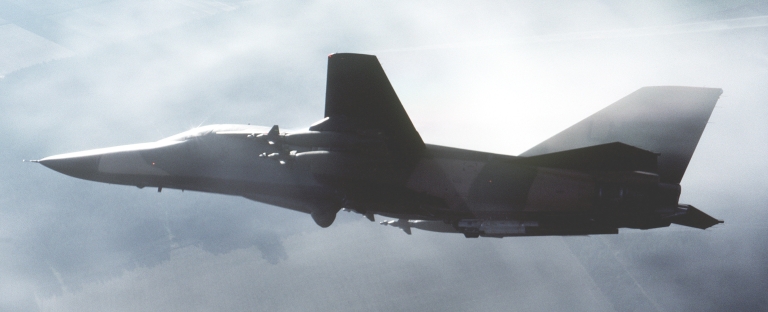 F-111F (above) and EF-111A Raven (below).
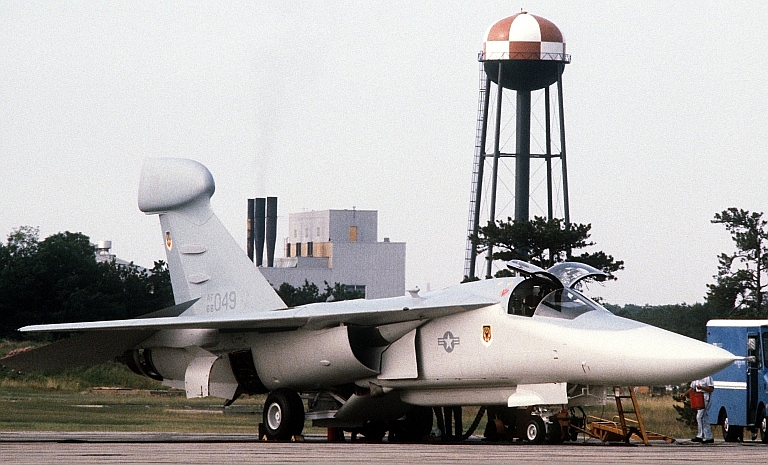 The re-engining of the F-111 increases total static sea level thrust from about 40,000 lbs to over 58,000 lbs. The F-111 is already very slick, aerodynamically, and can reach Mach 2.5 with its current 40,000 lbs of static sea level thrust. The increased power and economy would provide additional takeoff, payload, climb, cruise, endurance, manoeuvre and dash performance. There is no pretense that the F-111 is a “stealthy” aircraft, but with links to other sensors and its own AESA radar and warning receiver, it can at least avoid a fight by using its superior speed - unlike the F/A-18F and the F-35 JSF which are barely able to go supersonic in useful air combat configurations. If the F-111C/F was fitted with the MBDA Meteor and/or the AIM-120D, it could give a good account of itself in an air combat engagement, and provide a highly valuable cruise missile intercept capability in the developing regional environment. Both the F-111C/F and the EF-111A would have the potential for a narrowband electronic attack capability using an AESA radar. Escort by the F-22A would enhance the survivabilty of the F-111C/F and EF-111A with the Raptor clearing the way, the F-111C/F delivering strike weapons and the EF-111A attacking an adversary's sensors systems - all at standoff range. Development of these air combat capabilies is vital to Australia's future security. What is urgent and important at the moment is to regain an air dominance capability as called for in the existing White Paper and foreshadowed by the Labor Defence Plan. The incapable and very expensive F/A-18F does not meet Australia's immediate or future defence needs, and the acquisition should be terminated forthwith. Gaining access to the F-22A now - with the assistance of our ally the USA / USAF - would buy much needed time to consider the long term future of our air combat fleet - whether it is all F-22As, or a mix with a regenerated F-111 fleet. It would also put any consideration of the F-35 JSF into the right perspective - a “fly-before-you-buy” perspective which, after all, makes eminent sense. Cost is always the bottom line. The AMARC F-111s hulls are available now and virtually free, but allowing a generous $AUD30M per for the upgrade of (say) 50 F-111C/Fs costs $AUD1.5B and $AUD50M for (say) 25 EF-111As costs $AUD1.25B. Adding in the $AUD3.75B lead-in batch of F-22A cost gives a total cost of $AUD6.6B. Support, training, infrastructure and spares costs need to be added in, but there is still a gap as wide as a country mile to the projected cost of $AUD23B for the F/A-18F, the HUG centre-barrel et al, and the F-35 JSF. The latter come with all the incumbent risks and “newness/de-risking” challenges inherent in these far less capable “solutions”, particularly in the areas of support, training and infrastructure, as well as the decimating effect current Defence plans are having on Australian Industry. Action on building a competent air combat fleet for the RAAF is both urgent and important, and such activity should be conducted in parallel with the development of the next Defence White Paper. The all important question to the past, current and all future Chiefs of the Air Force is this: 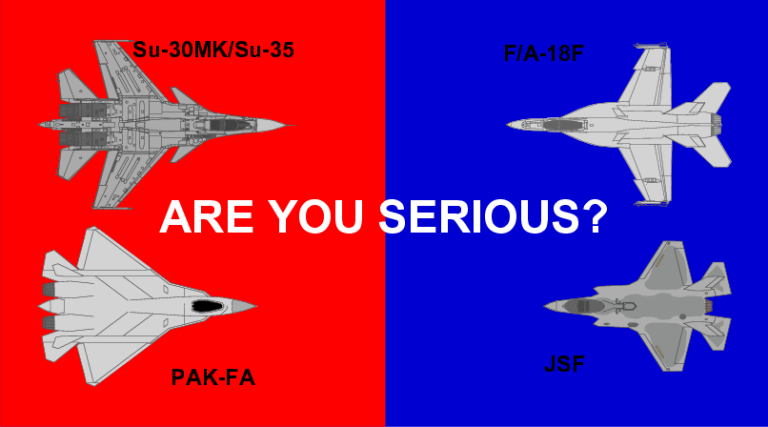 To meet the Defence White Paper imperatives, the RAAF must have an air combat fleet that will provide regional air dominance, not for the next few months, but at all times for the foreseeable future. |
||||||||
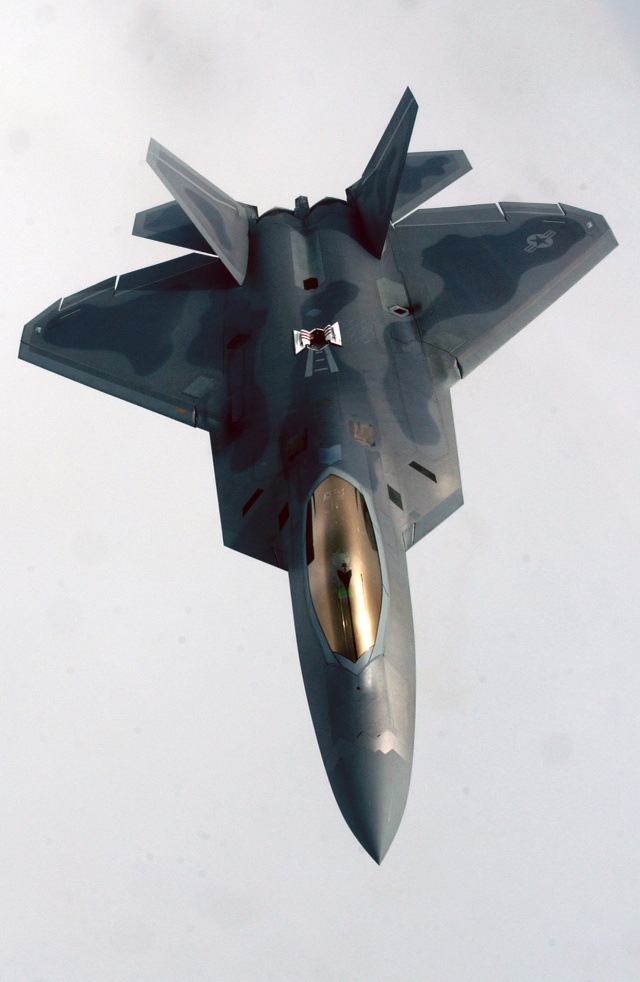 F-22A Raptor (US DoD) |
||||||||
| Endnotes: [1] A
large portion of the F-111F fleet mothballed at AMARC were upgraded to
Pacer Strike configuration (similar to the RAAF AUP) shortly before
being placed into storage, after deep overhauls at McClellan AFB depot
in Sacramento (SALC). Since then the RAAF removed the wings off many of
the mothballed F-111Fs to provide a stockpile for the F-111C/G
fleet. The EF-111A Raven fleet was wholly mothballed in 1999,
although most were previously subjected to the Avionics Modernisation
Program (AMP) which shares many components with the AUP. The legacy
ALQ-99E systems were partly removed to support the EA-6B Prowler fleet
with transmitter and receiver module spares.
[2] A more detailed and earlier study of F-111 block upgrade options is available here - http://www.ausairpower.net/TE-F-111-Supercruise-2001.html; The most recent analysis of the status of the F-111 fleet is available at - http://www.ausairpower.net/PDF-A/F-111-Defender-Summer-2006-07.pdf |
||||||||
| Air
Power Australia Website - http://www.ausairpower.net/ Air Power Australia Research and Analysis - http://www.ausairpower.net/research.html |
||||||||
 |
||||||||
| |
||||||||
|
|||||||||||||
|
|
|
|
|
|
|
|
|
|
|
|||
|
|
|
|
|
|
|
|
|
|
|
|||
| |
|
|
|||||||||||
| Artwork, graphic design, layout and text © 2004 - 2014 Carlo Kopp; Text © 2004 - 2014 Peter Goon; All rights reserved. Recommended browsers. Contact webmaster. Site navigation hints. Current hot topics. | |||||||||||||
|
Site Update
Status:
$Revision: 1.753 $
Site History: Notices
and
Updates / NLA Pandora Archive
|
|||||||||||||
|
|
Tweet | Follow @APA_Updates | |||||||||||
|
|
|||||||||||||
|
|
|||||||||||||