|
||||||||||||||||||||||
 |
||||||||||||||||||||||
![F-22A Raptor, FB-22, F-22E, F-22N and Variants Index Page [Click for more ...]](APA/f-fb-22.png "F-22A Raptor, FB-22, F-22E, F-22N and Variants Index Page [Click for more ...]") |
 |
![People's Liberation Army Air Power Index Page [Click for more ...]](APA/pla-air-pwr.png "People's Liberation Army Air Power Index Page [Click for more ...]") |
 |
 |
 |
 |
 |
 |
![Military Ethics, Culture, Education and Training Index Page [Click for more ...]](APA/ethx-culture.png "Military Ethics, Culture, Education and Training Index Page [Click for more ...]") |
 |
||||||||||||
 |
![Russian / Soviet Weapon Systems Index Page [Click for more ...]](APA/rus-weps.png "Russian / Soviet Weapon Systems Index Page [Click for more ...]") |
 |
 |
 |

|
 |
 |
 |
 |
 |
||||||||||||
 |
 |
|||||||||||||||||||||
| Last Updated: Mon Jan 27 11:18:09 UTC 2014 | ||||||||||||||||||||||
|
||||||||||||||||||||||







S-300P/S-400/S-500 Air Defence System VehiclesTechnical Report APA-TR-2008-0601-A |
|||||||||||||||||||||||||||||||||||||||||||||||||||||||||||||||||||||||||||||||||||||||||||||||||||||||||||||||||||||||||||||||||||||||||||||||||||||||||||||||||||||||||||||||||||||||||||||||||||||||||||||||||||||||
by Dr Carlo Kopp, AFAIAA, SMIEEE, PEng June 2008 Updated February, 2010 Updated May, June, 2011 Updated April, 2012 Text © 2008-2012 Carlo Kopp |
|||||||||||||||||||||||||||||||||||||||||||||||||||||||||||||||||||||||||||||||||||||||||||||||||||||||||||||||||||||||||||||||||||||||||||||||||||||||||||||||||||||||||||||||||||||||||||||||||||||||||||||||||||||||
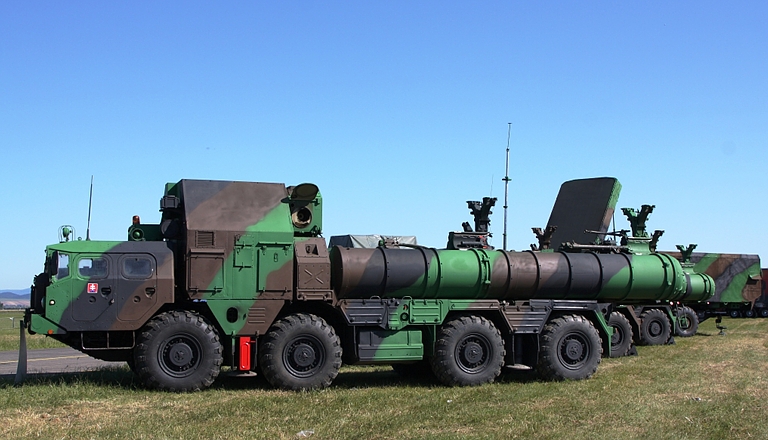
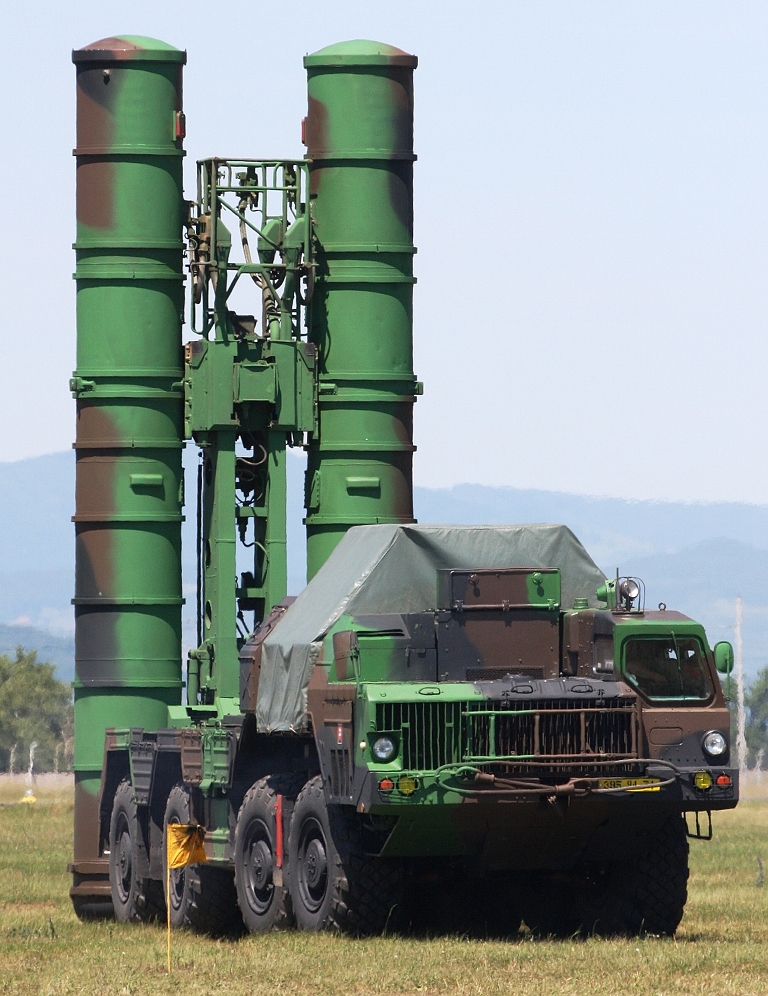
 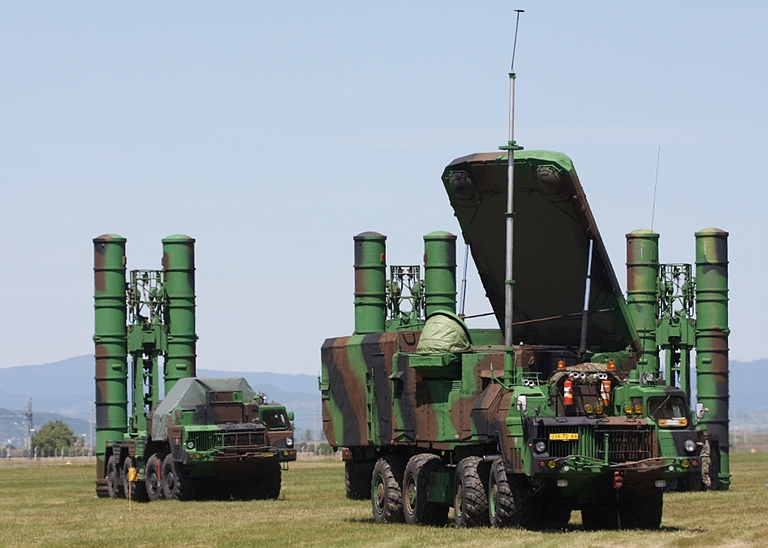 Slovakian Air Force S-300PMU / SA-10B
30N6-1 Flap Lid B and 83P6 Fire Unit comprising one 5P85SE TEL and a
pair of 5P85DE TELs at Piestany in 2009 (© 2009 Miroslav
Gyűrösi).
|
|||||||||||||||||||||||||||||||||||||||||||||||||||||||||||||||||||||||||||||||||||||||||||||||||||||||||||||||||||||||||||||||||||||||||||||||||||||||||||||||||||||||||||||||||||||||||||||||||||||||||||||||||||||||
|
|||||||||||||||||||||||||||||||||||||||||||||||||||||||||||||||||||||||||||||||||||||||||||||||||||||||||||||||||||||||||||||||||||||||||||||||||||||||||||||||||||||||||||||||||||||||||||||||||||||||||||||||||||||||
IntroductionSince its introduction over three decades ago the S-300P family of SAM systems has become one of the most widely used designs in its class, globally, and currently forms the backbone of both Russia's and China's extensive national IADS. Almost four decades of technological evolution has seen considerable diversity in variants deployed, reflected in a wide range of different radars, command posts, Transporter Erector Launchers, and other support vehicles employed. A range of different military truck chassis have been employed to host or tow S-300P battery components since the first S-300PT systems were built. The choices in these vehicles reflect repeatedly period priorities, be they in offroad mobility, procurement costs, production availability, or most recently, sources of supply with the breakdown in relations between Russia and the Ukraine. From a technical intelligence perspective, this diversity in vehicles is important. Some variants can only be visually differentiated by the vehicle types employed, whether the imagery is close-in or overhead. The different vehicles also provide differing levels of offroad mobility, contraining deployment choices in off-base hide, shoot and scoot operations. The earliest S-300PT systems were mobile, but did not qualify as hide, shoot, and scoot systems. Battery components were mounted on trailers or semi-trailers, towed by the Russian Ural 375 or Ukrainian KrAZ-255 6 x 6 trucks. Only the massive 40V6M/MD mast system was towed by the MAZ-537 series heavy tractor, widely used for ballistic missile and tank transporter towing. Significant changes arose with the introduction of the self-propelled S-300PS / SA-10B, and its export derivative, the very similar S-300PMU (often labelled an SA-10C). This variant introduced the MAZ-7910 chassis, based in the MAZ-543M Uragan which was widely used as a ballistic missile TEL. Often considered to provide similar offroad mobility to tracked armour, the MAZ vehicles were a very robust solution to the mobility problem. The 5N63S Flap Lid B engagement radar, the early 5N64 Big Bird battle management radar, and the 5P85D/S TELs all employed this vehicle. Variants of the MAZ-7910 chassis have remained on offer for all subtypes including the S-300PMU-2 Favorit / SA-20B. The next significant variant to deploy was the S-300PM, a deep upgrade of the radar, systems and missile round design. The S-300PM formed the basis of the S-300PMU1 and S-300PMU2 Favorit export variants. While the S-300PM was supplied with the MAZ-7910 based self-propelled TEL design, this variant also saw the introduction of a towed TEL, the 5P85T, and its export derivative 5P85TE/TE1/TE2 variants. Until recently, the 5P85T series TELs were supplied with Ukrainian built KrAZ-260B tow tractors, supplanted now by Russian built BAZ-69022 series tractors, also employed with early production S-400 Triumf / SA-21 systems. Russian sources have claimed that development is proceeding on the 5P90 series TEL, but no details have been disclosed to date. |
|||||||||||||||||||||||||||||||||||||||||||||||||||||||||||||||||||||||||||||||||||||||||||||||||||||||||||||||||||||||||||||||||||||||||||||||||||||||||||||||||||||||||||||||||||||||||||||||||||||||||||||||||||||||
Future
Voshchina
Series
S-400
Battery
Vehicles
|
|||||||||||||||||||||||||||||||||||||||||||||||||||||||||||||||||||||||||||||||||||||||||||||||||||||||||||||||||||||||||||||||||||||||||||||||||||||||||||||||||||||||||||||||||||||||||||||||||||||||||||||||||||||||
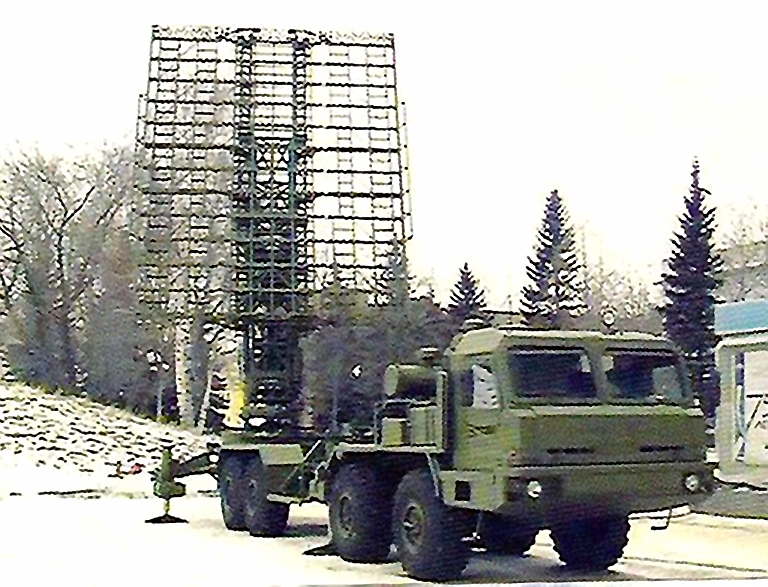
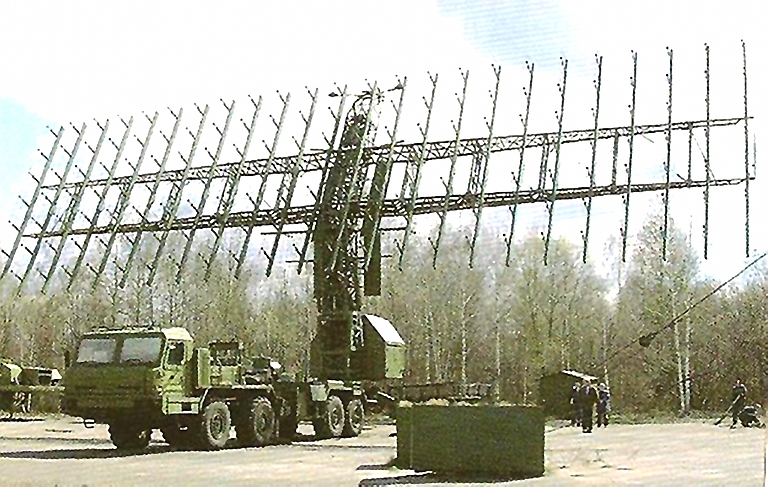
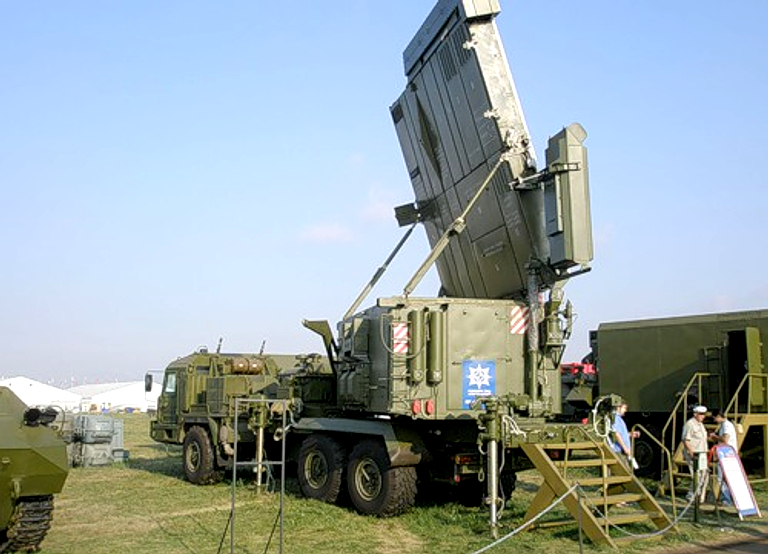
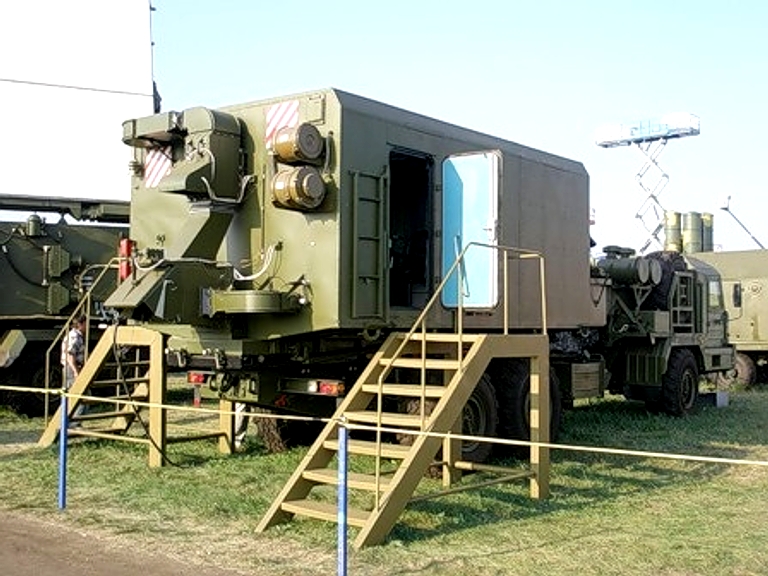
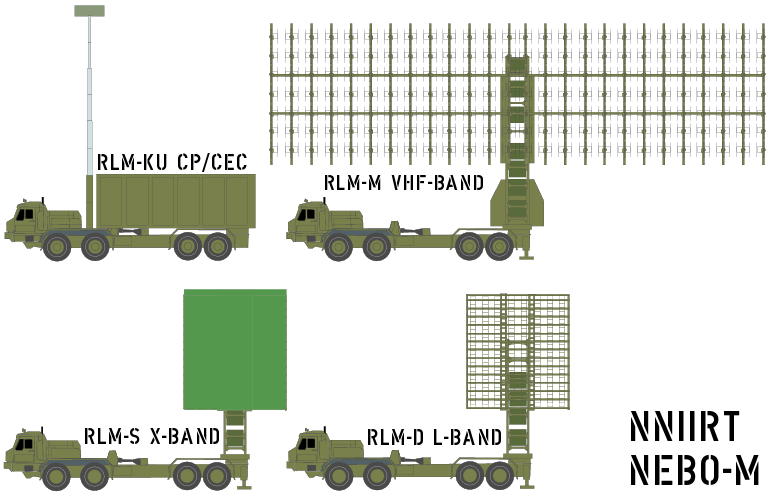
| NNIIRT Nebo M
System Components |
|
| KU |
Central
track
processing
and
fusion
system
with
multiple
operator
consoles. |
| RLM-M |
Self-propelled
AESA
radar
based
on
VHF
band
Nebo
SVU
design |
| RLM-D |
Self-propelled AESA radar based on L band Protivnik G design |
| RLM-S |
Self-propelled AESA radar based on S/X band Gamma S1 design |
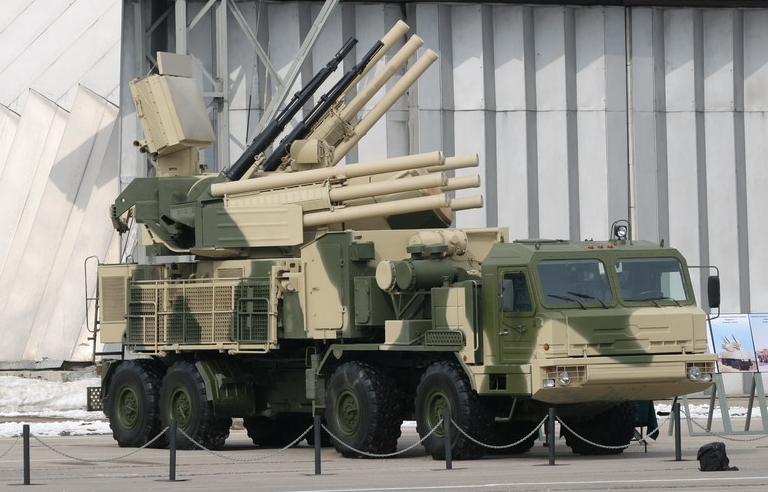

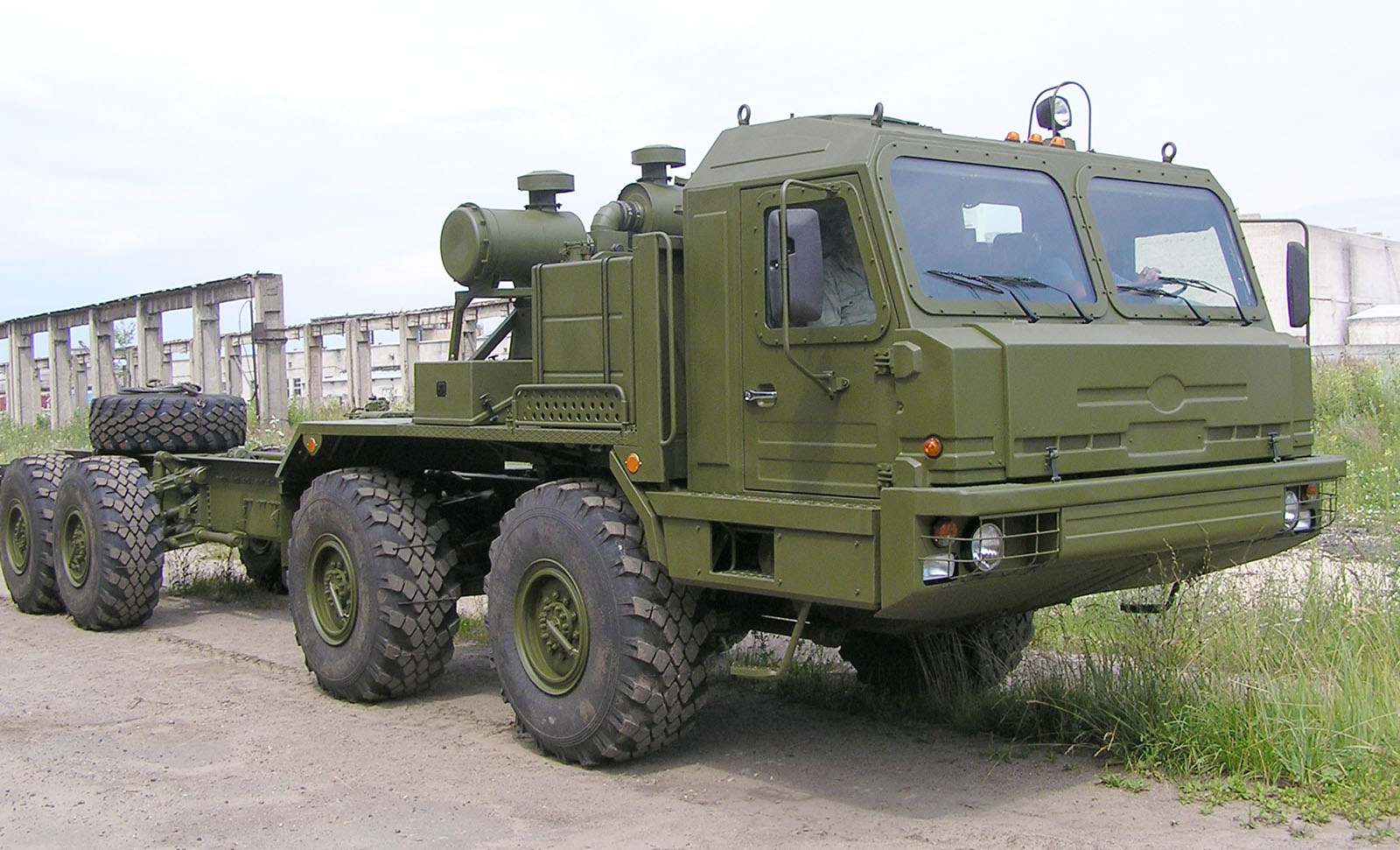

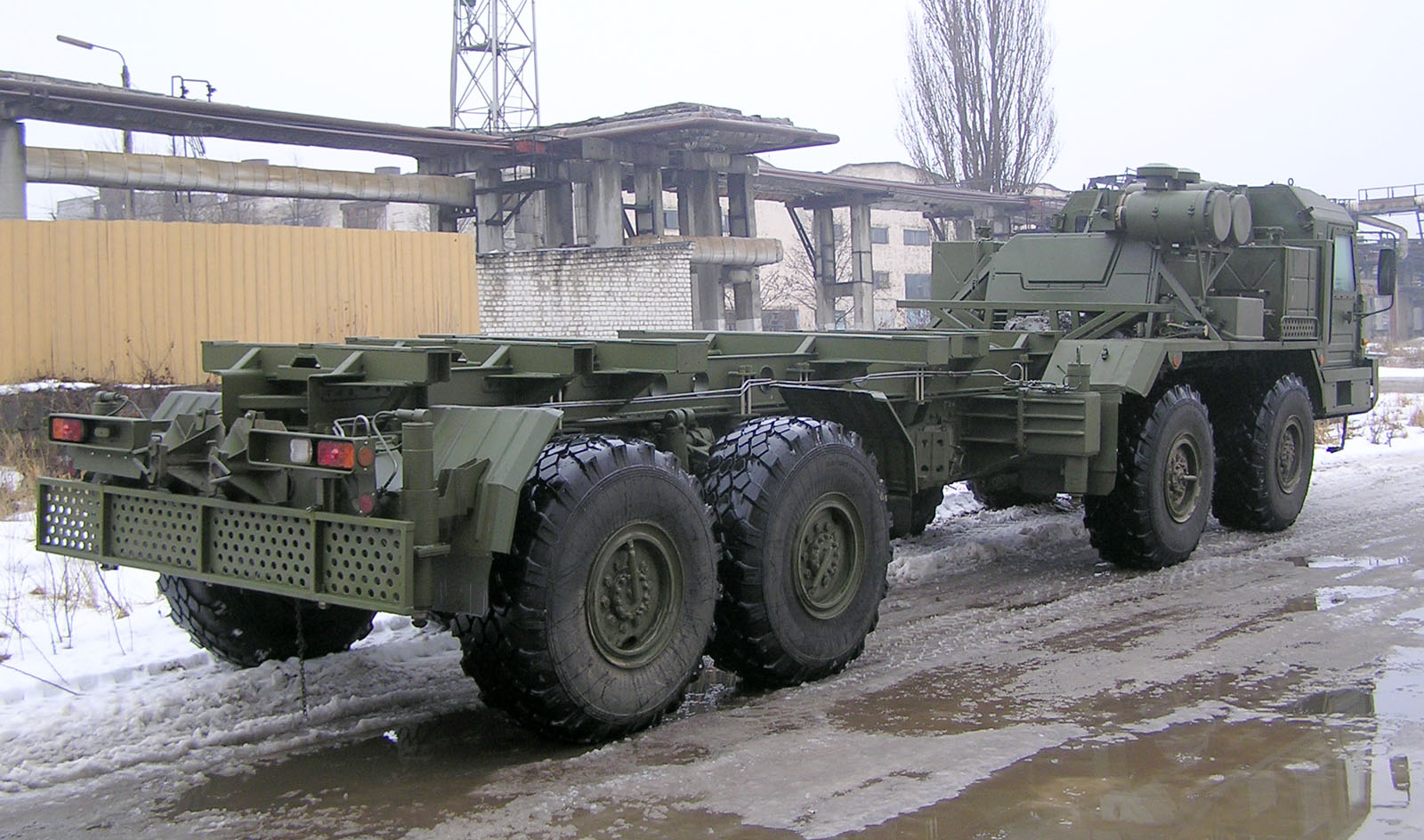
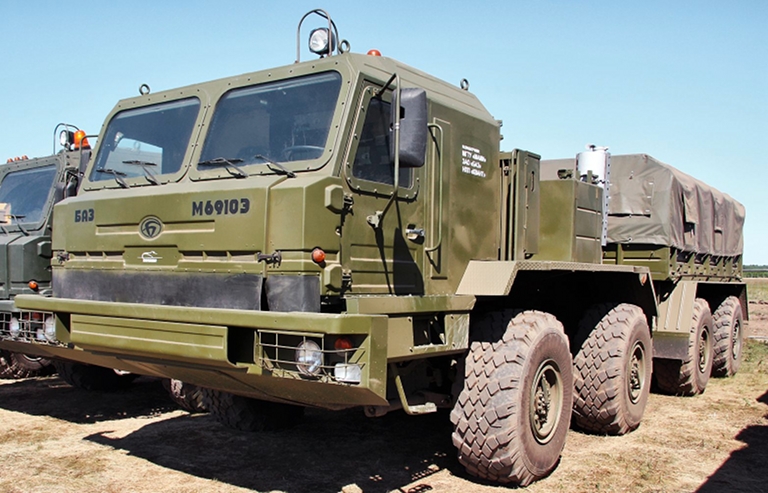
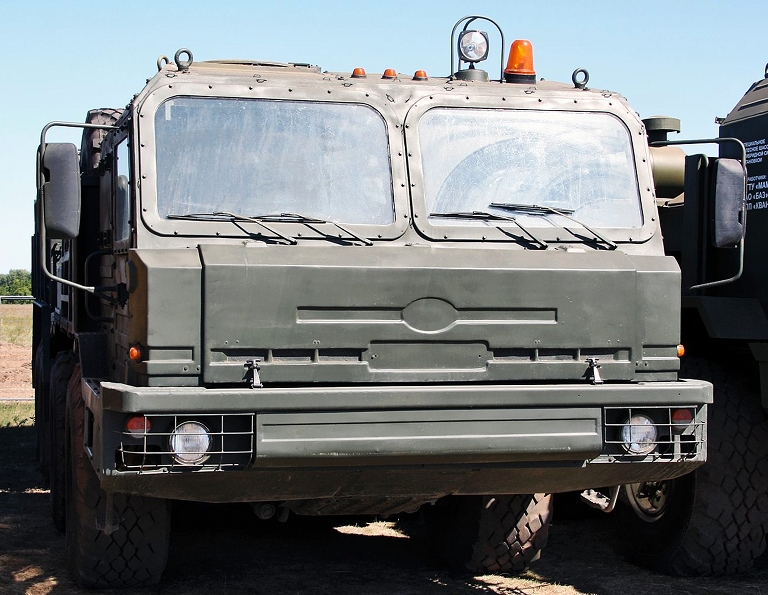
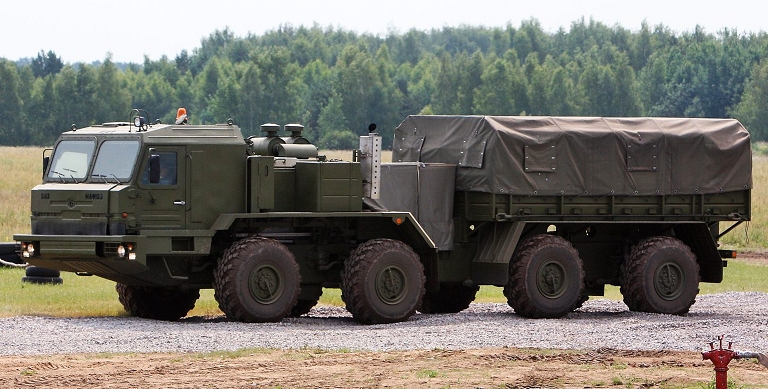
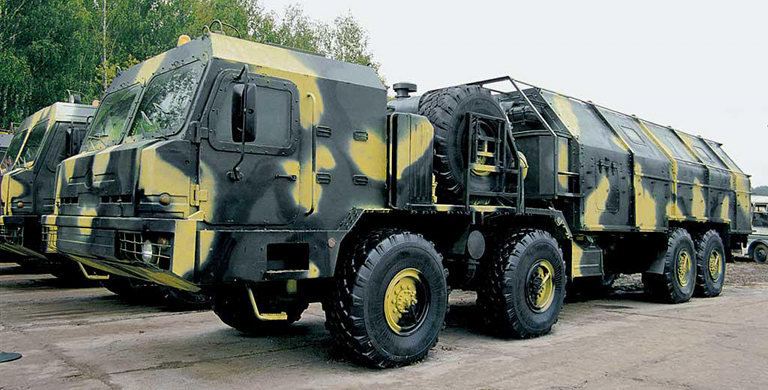
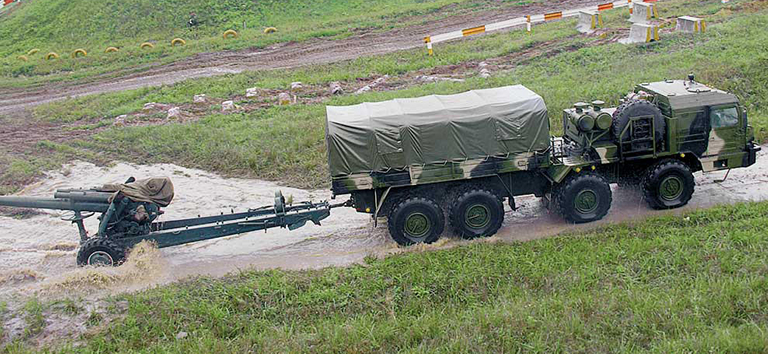
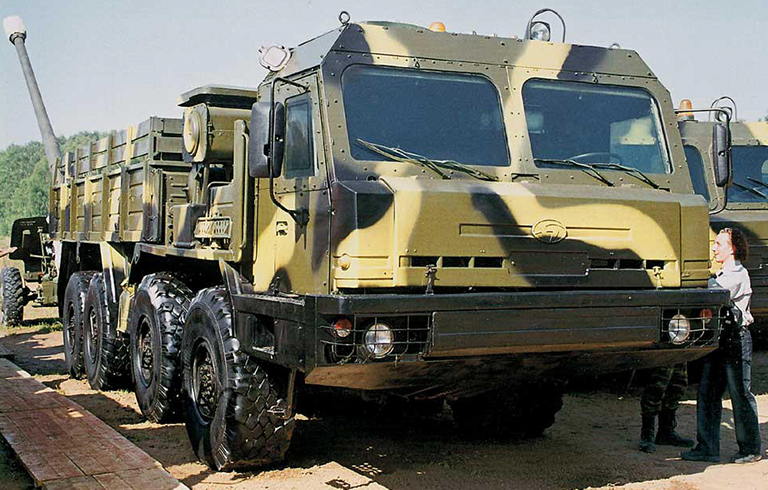
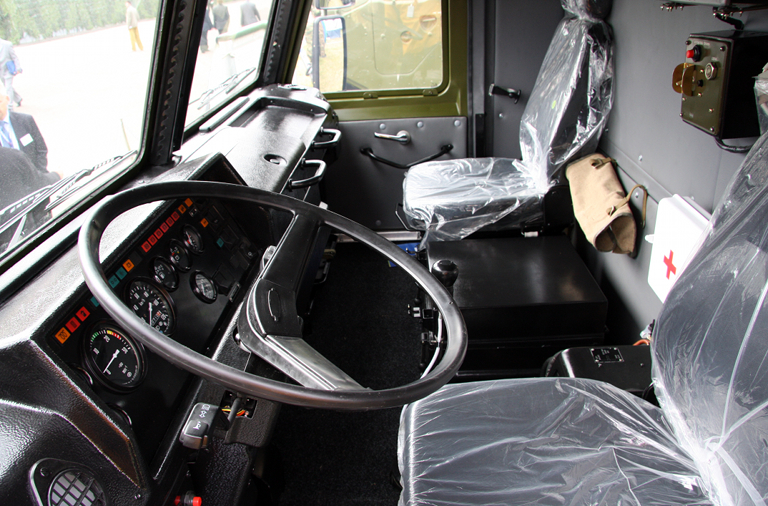
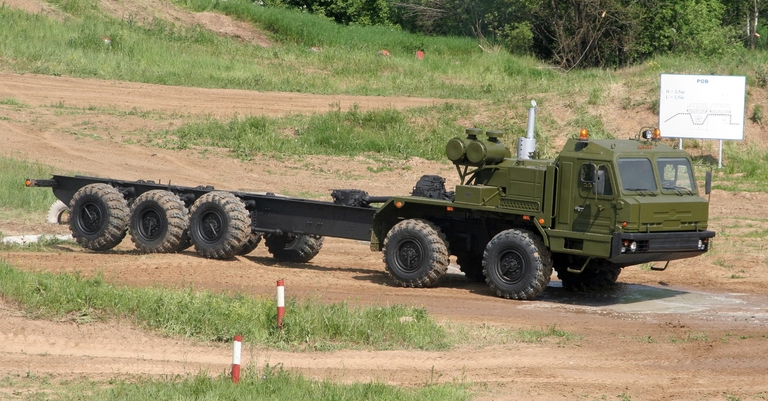
BAZ-6909-019 (BZKT Factory Image).
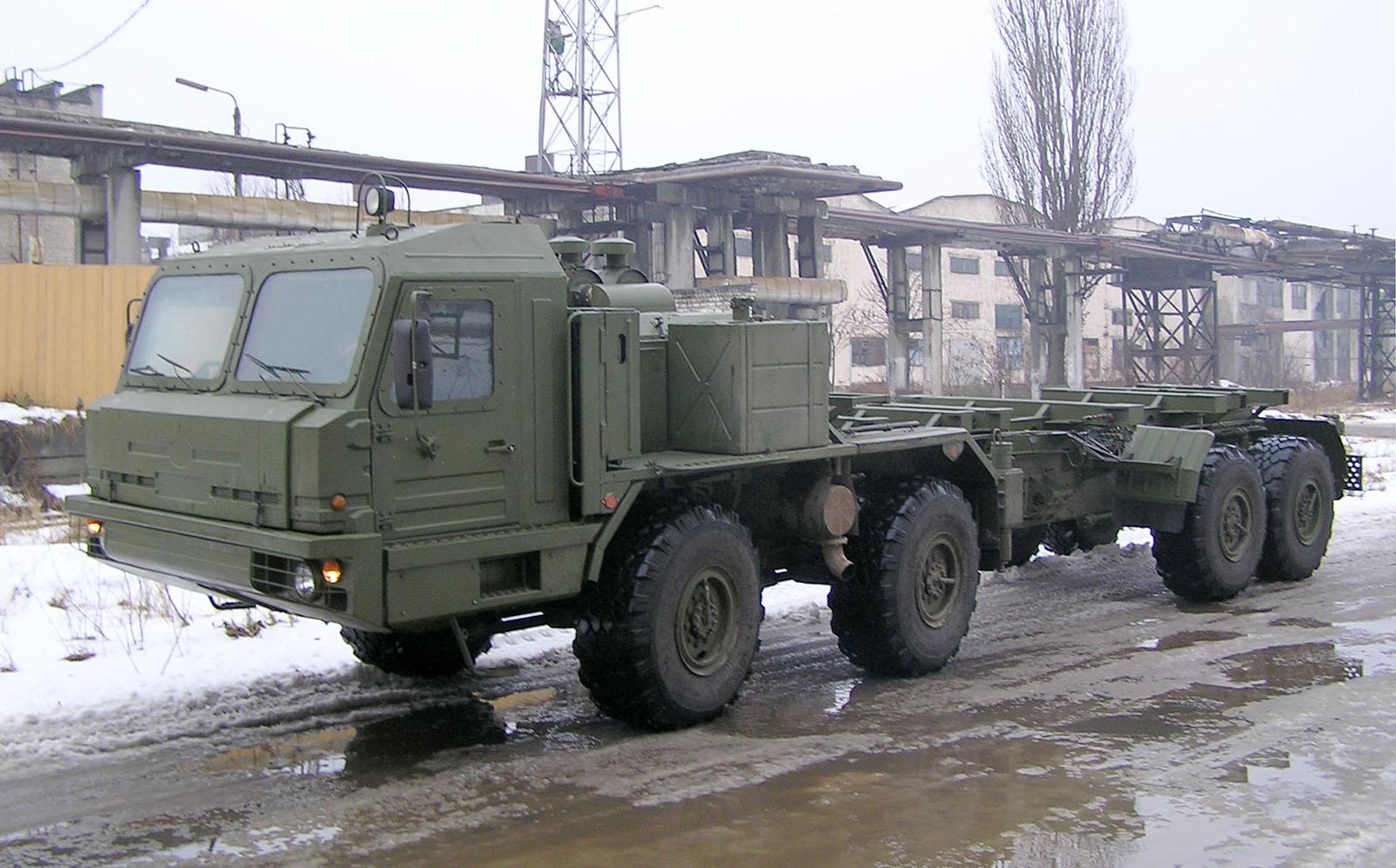
BAZ-6909-019 (BZKT Factory Image).
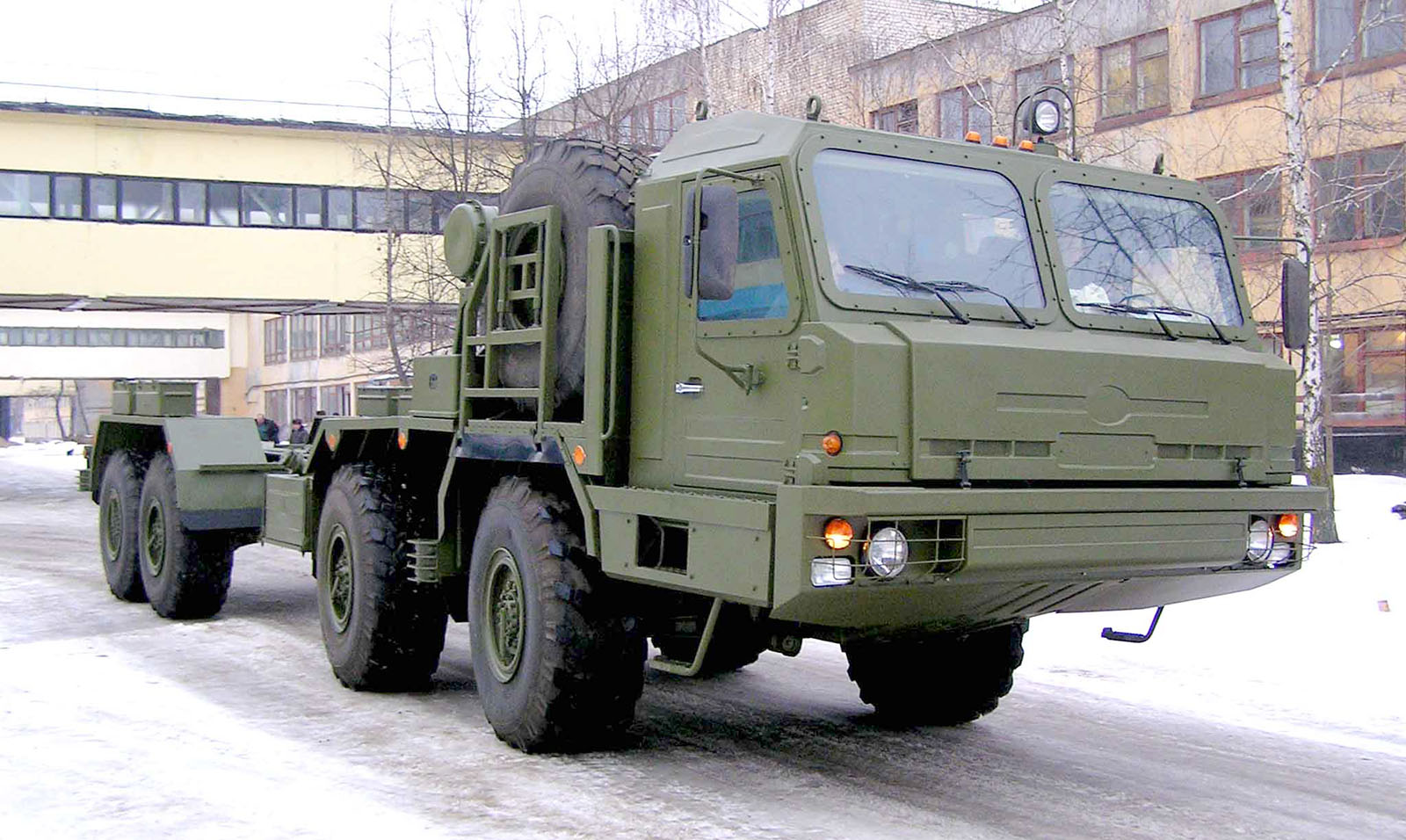
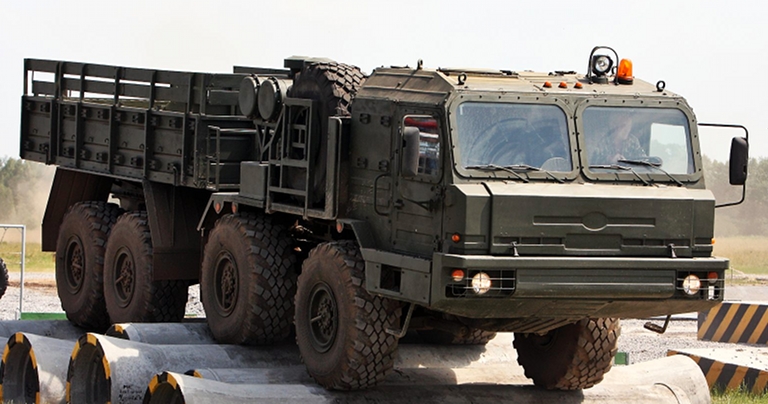
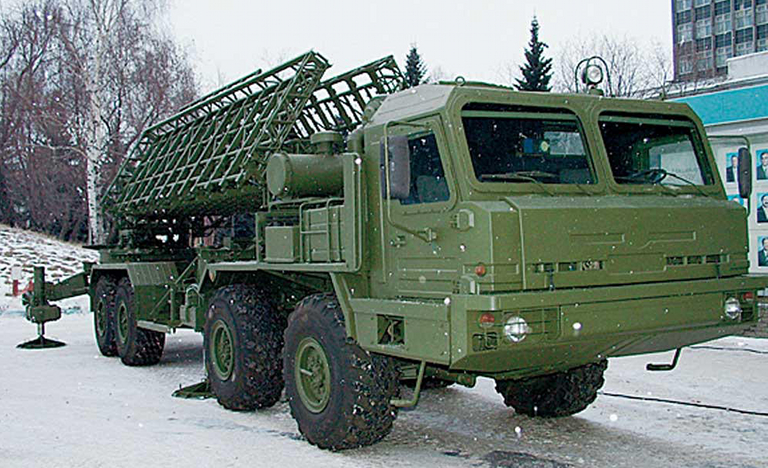
BAZ-6909-022 (BZKT Factory Image).
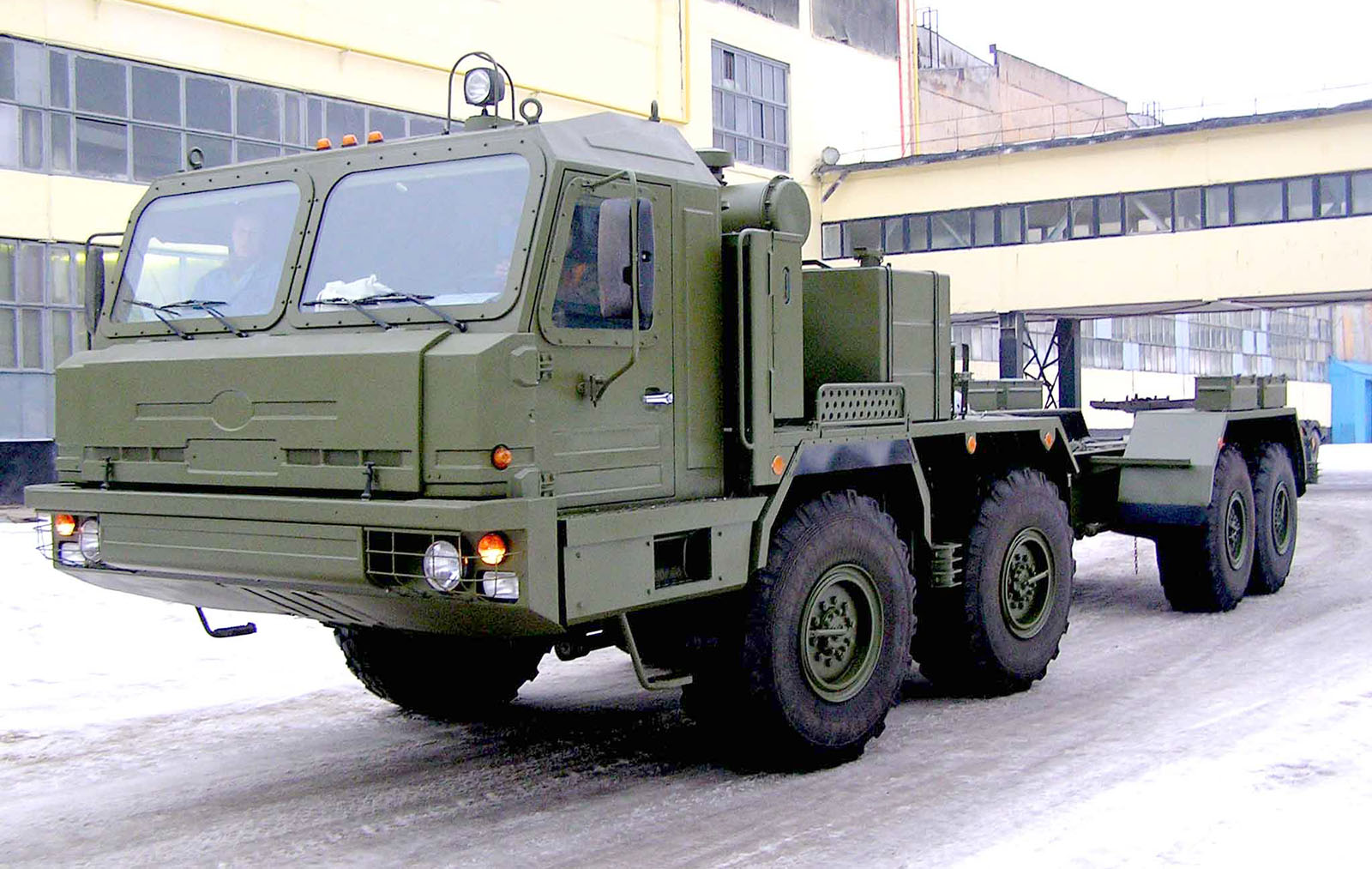
BAZ-6909-022 (BZKT Factory Image).
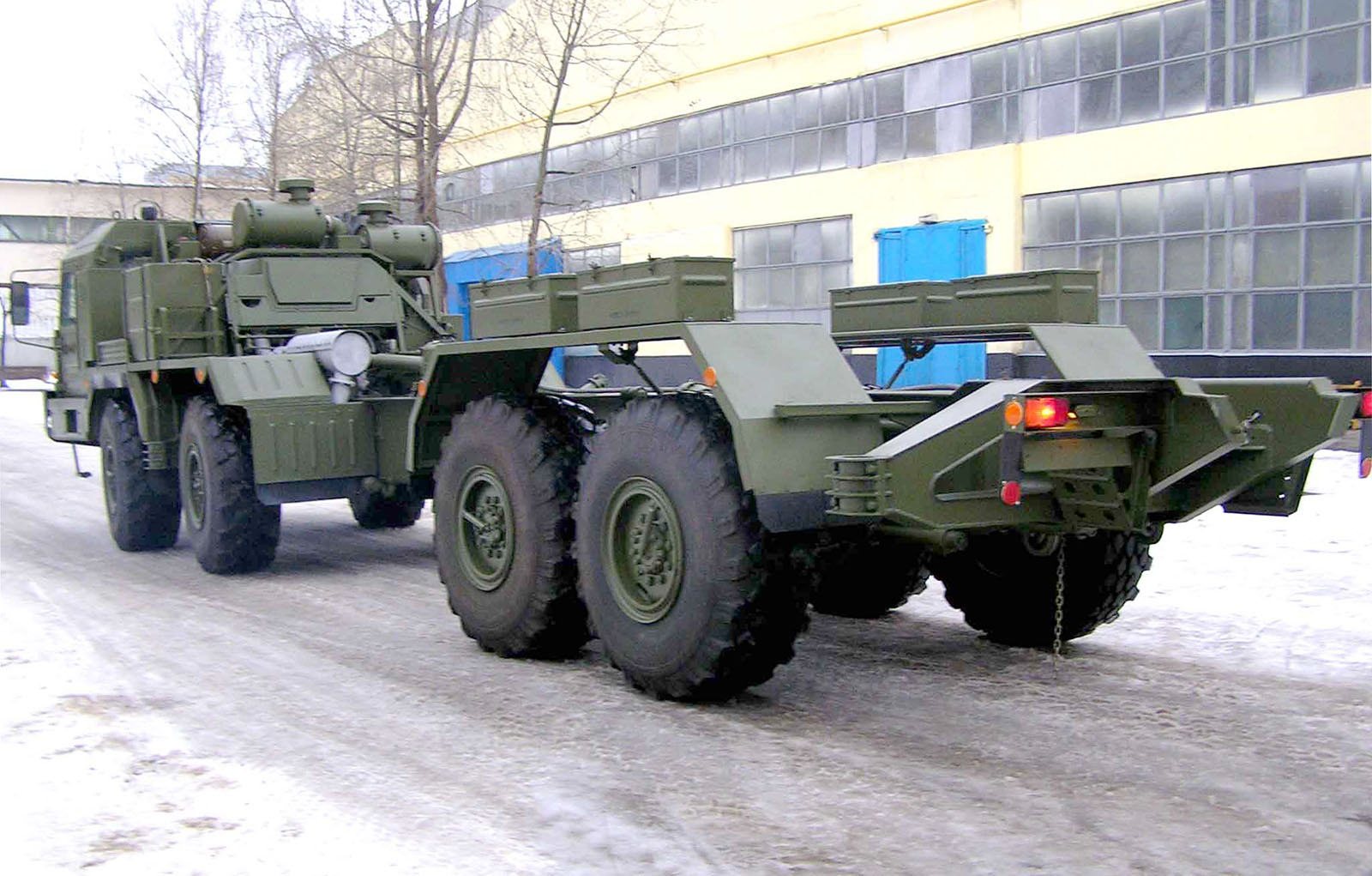
BAZ-6909-022 (BZKT Factory Image).
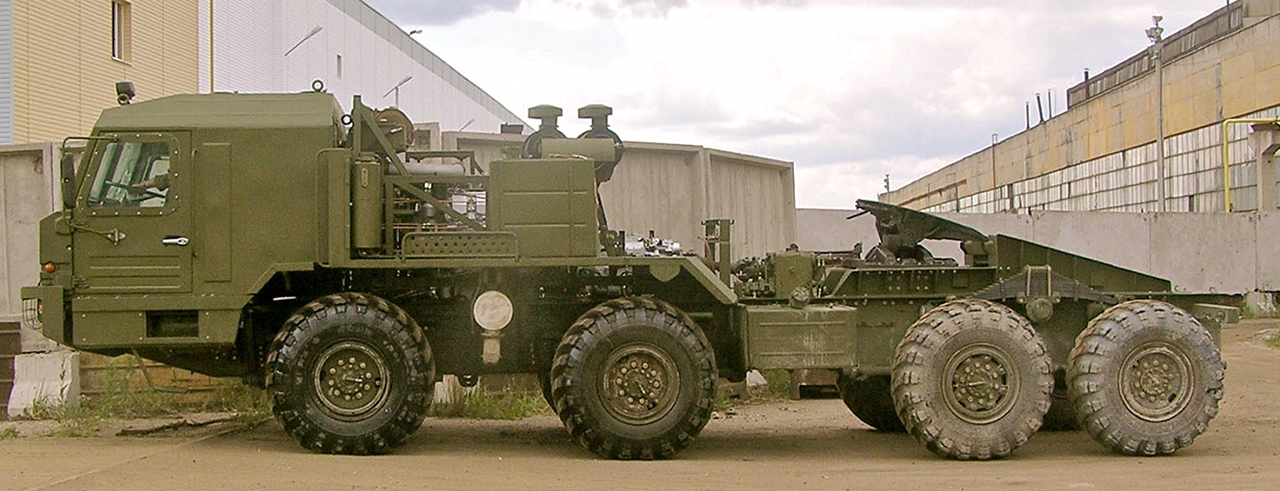
BAZ-6403 8x8 Tractor (BZKT Factory Image).

BAZ-6403 8x8 Tractor (BZKT Factory Image).
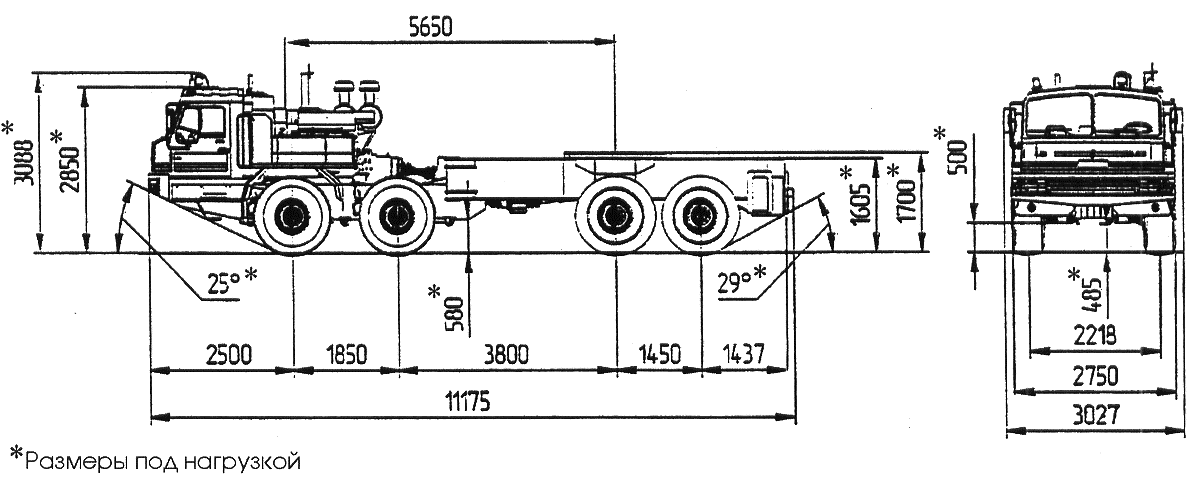
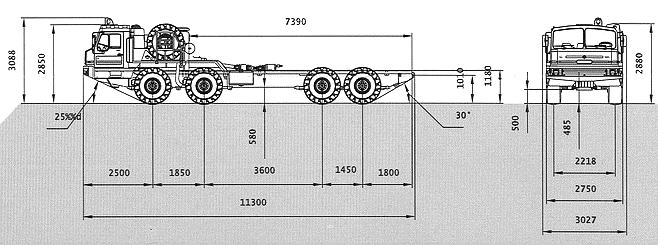
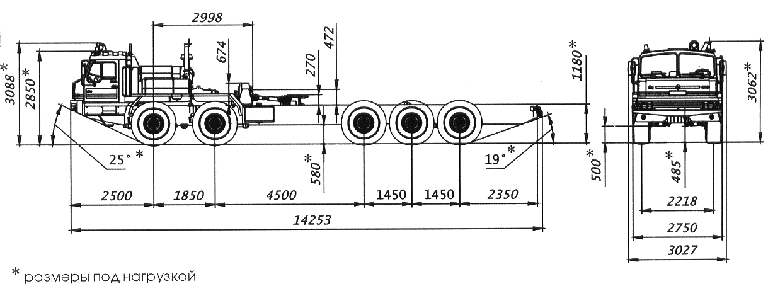
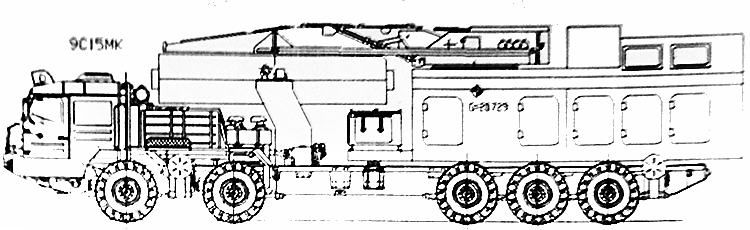
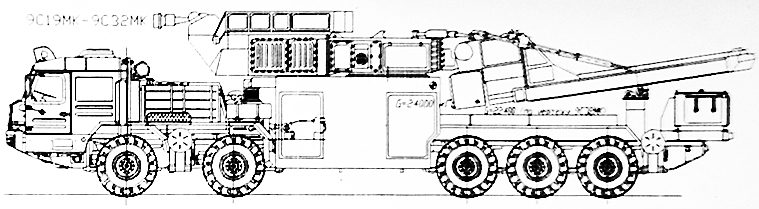
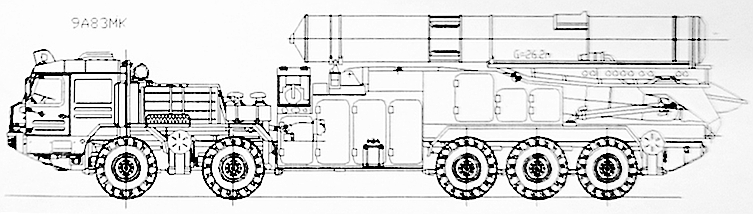
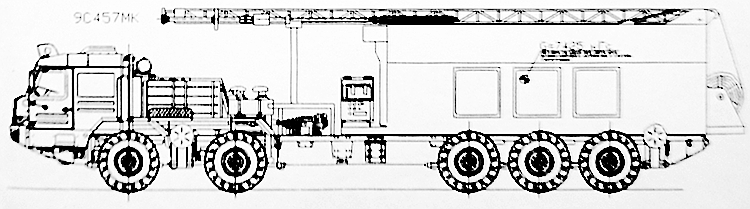

| Характеристики | БАЗ-6909 | БАЗ-69091 | БАЗ-69096 |
| Колёсная формула | 8×8 | 10×8 | |
| Количество мест в кабине | 4 | ||
| Длина, мм | 11300 | 12400 | 14250 |
| Ширина, мм | 2750 | ||
| Высота, мм | 3088 | ||
| Дорожный просвет, мм | 485 | ||
| Радиус поворота, м | 13,5 | 14,0 | 16,35 |
| Снаряженная масса, т | 18,2 | 17,5 | 19,9 |
| Грузоподъемность, т | 18,0 | 17,5 | 29,5 |
| Масса буксируемого прицепа/полуприцепа, т |
15,0 | - | |
| Двигатель (тип) | ЯМЗ-8424.10 (Д, V12) | ||
| Мощность двигателя, кВт/л.с. | 294/400 | ||
| Максимальная скорость, км/ч | 80 | 70 | |
| Преодолеваемый подъем, град | 30 | ||
| Преодолеваемый брод, м | 1,4 | ||
| Запас хода по контрольному расходу топлива, км | 1000 | 900 | |
| Source:
Russkaya Sila, URI: http://legion.wplus.net/guide/army/tr/baz6909.shtml |
|||
| БАЗ-6403 Параметры | |
| Наименование | Значения |
|
Колесная формула, |
8х8.1 |
|
Нагрузка на седельно-сцепное устройство, тс |
19,5 |
|
Снаряженная масса, т |
17,7 |
|
Полная масса автопоезда, т, не более |
65,0 |
|
Двигатель дизельный с турбонаддувом, |
ЯМЗ-8424.10 |
|
Мощность двигателя, л. с. |
425 |
|
Сцепление однодисковое диафрагменное, |
ЯМЗ-184.10 |
|
Коробка передач, 9 передач вперед, 1 назад, |
ЯМЗ-2393-03 |
|
Подвеска I и II осей, |
независимая двухторсионная с амортизаторами на каждом колесе |
|
Подвеска III и IV осей, |
комбинированная независимая одноторсионная для нижних рычагов и балансирная для верхних |
|
Шины с регулируемым давлением, радиальные (1350х550-533Р), |
ИД-370 |
|
Минимальный радиус поворота, м |
14,0 |
|
Максимальная скорость, км/ч |
60 |
|
Запас хода по контрольному расходу топлива, км |
1000 |
|
Габаритные размеры |
|
|
Длина, мм |
9595 |
|
Ширина, мм |
2750 |
|
Высота, мм |
2850 |
|
Двигатель |
|
|
Марка двигателя, |
ЯМЗ-8424.10 |
|
Мощность, л.с. |
425 |
| Source: BZKT
http://bzkt.ru/production.html?section=1&position=21 |
|
S-300P/S-400/S-500 Variant TEL Design
There are three generations of TEL design employed with variants of the S-300P system. Many share vehicle chassis, launcher hardware, and/or mission electronics.| DIA |
Soviet/Russian
Designation |
SP
TEL
Variants |
Towed
TEL
Variants |
Notes |
| SA-10A |
S-300PT | - |
5P85-1 |
Soviet |
| SA-10B |
S-300PS | 5P85S + 5P85D | - |
Soviet |
| SA-10B[C] |
S-300PMU | 5P85SU + 5P85DU | - |
Export
PS |
| SA-20A |
S-300PM | 5P85SM/SE | 5P85T | Soviet |
| SA-20A |
S-300PMU1 | 5P85SM/SE | 5P85TE | Export
PM |
| SA-20B |
S-300PMU2
Favorit |
5P85SM/SE | 5P85TE 5P85TE2 |
Export |
| SA-21 |
S-400
Triumf |
5P90S | 5P85T2/TE2 | Russian Export |
| SA-X-NN |
S-500 |
5P77 |
- |
Russian |
| Table
1
S-300P
Family
SAM
System
TEL
Configurations |
||||
The earliest towed 5P85/5P85-1 TELs were a stopgap design, produced to permit earliest possible deployment of the S-300PT system. This rather ungainly design, in which the tow booms were splayed out as supports, is easily distinguished visually, and carries the missile launch tubes oriented with the exhaust toward the tow tractor. It introduced the characteristic hydraulically elevated boom mounting the four missile launch tubes in a unique symmetrical trapezoidal arrangement.
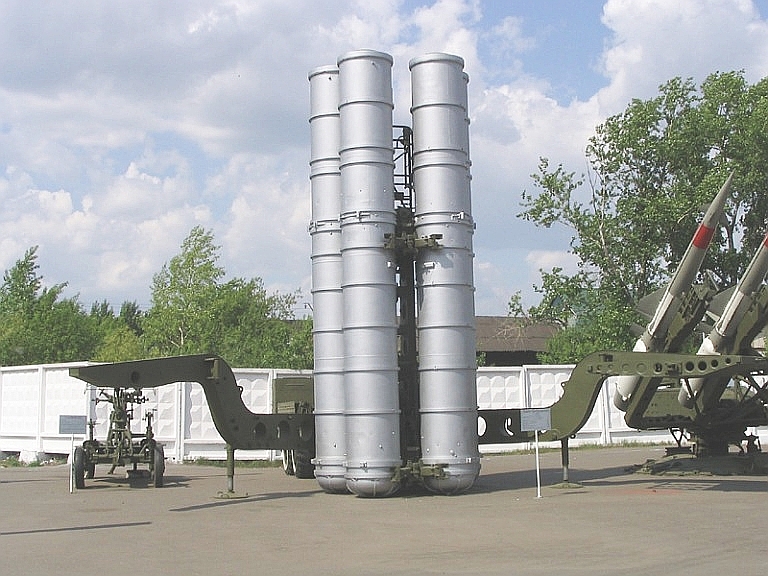
S-300PT
5P85-1
TEL
(Vestnik
PVO)
The TEL boom design comprises two main sections. The load bearing lower section is formed by a pair of rigid structural boxes with internal spacing members. It pivots at one end of the TEL chassis, and is elevated or stowed using a hydraulic boom. Two adaptors are mounted to it, providing a conformal load relief and attachment for the four launch tubes.
The top of the boom mounts a characteristic latticework frame which carries the four U-shaped missile control and status umbilical cables and connectors. When a launch tube is attached, the connectors are mated to the tube to permit the transfer of missile and tube diagnostic, status and control commands. This arrangement has been retained, with variations, in all S-300P variants, including the S-400.

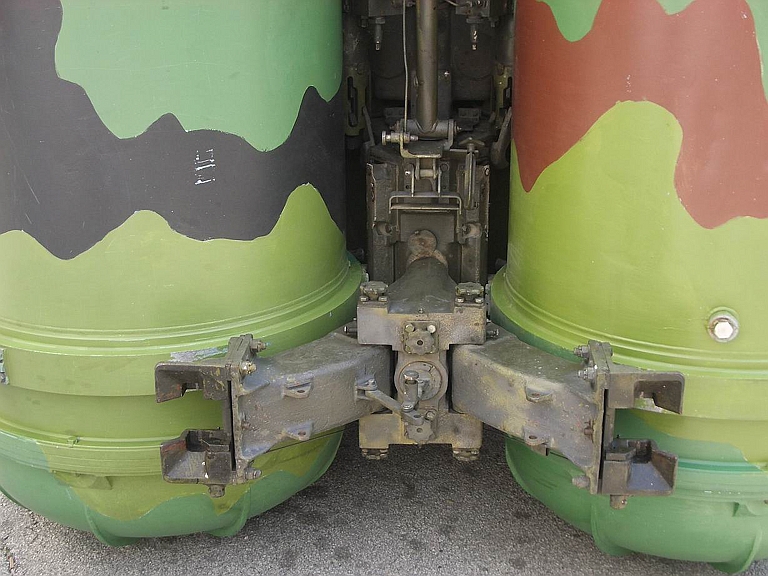
Conformal attachments for launch tubes (via valka.cz).
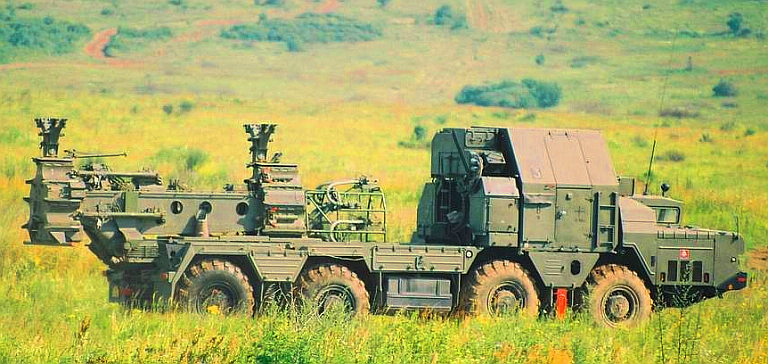
The self-propelled 5P85S/D TELs introduced first in the S-300PS provided a much more flexible deployment scheme, but not without limitations.
The 5P85S with the characteristic large F3S accessory cabin and the supplementary 5P85D TEL, were both equipped with 5S18/19 series autonomous gas turbine electrical power generators, to permit standalone operation without an external generator van.
A typical S-300PS/PMU battery 5P85SD TEL "komplex" would include one 5P85S/SU TEL, two 5P85D/DU TEL/Transloaders, all controlled by one self-propelled 5N63S Flap Lid B radar. The 5P85S was a "smart" TEL equipped with the control logic and datalink hardware for the whole 5P85SD TEL group, the 5P85D being a "dumb" TEL under the control of the 5P85S (the mnemonic is accidental).
The principal limitation of this scheme was that TEL arrangement forced pairing of two 5P85Ds with a single 5P85S which controlled the group. This limited deployment options and flexibility in hide, shoot and scoot operations. The dumb 5P85D/DU TELs needed to be sited several metres from the 5P85S/SU smart TEL, this being limited by cable length. The whole TEL group had to be sited within 100 metres of the 5N63S Flap Lid B engagement radar, due to the limited range of the radio datalink between the radar and smart TEL.
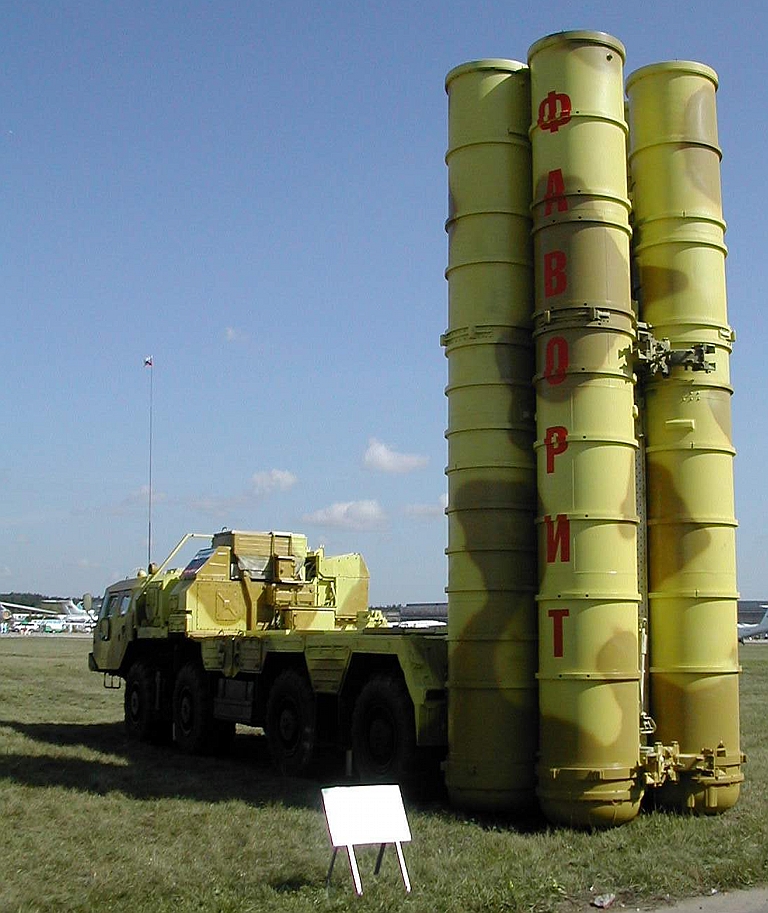
The S-300PM and S-300PMU1 export variant rectified this problem with the third generation of TELs, in which every TEL was smart and fully autonomous. Two distinct designs were introduced, sharing common hardware across different chassis. The 5P85SM and 5P85SE were smart self-propelled TELs on the MAZ chassis, with the distinctive bulky F3S cabin used with the 5P85S/SU replaced by much smaller electronics enclosures. This TEL has been offered, with electronics enhancements, for the S-300PMU2. The alternative was the cheaper road mobile 5P85T towed TEL, which has dominated deliveries in later variants. Both variants retain spools for umbilical cables, permitting cabled connections to the 30N6E series radar if desired. In additional, each TEL carries a main power converter and 60 metre power cable. All TEL functions, including elevating or stowing the launchers, are performed remotely over the radio datalink.
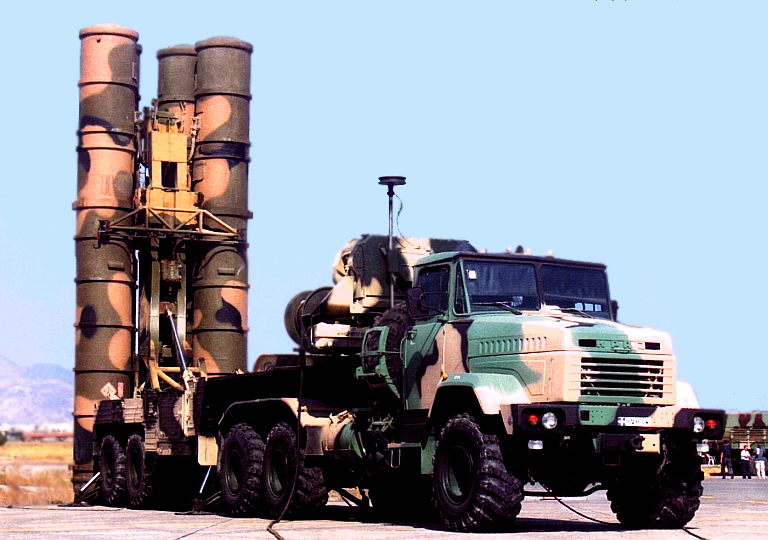 |
||||
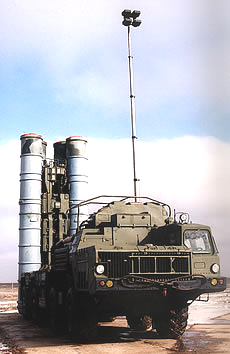 |
|
|||
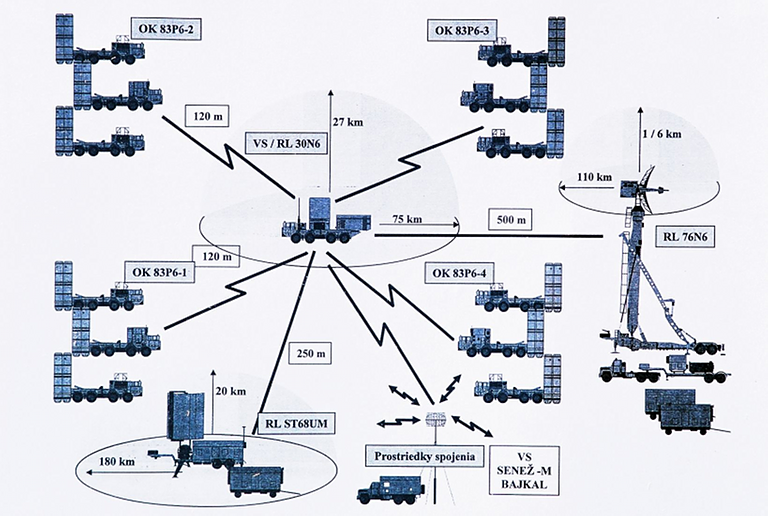 S-300PMU
/
SA-10B[C]
Grumble
battery
tie-in
chart.
Four
83P6
Fire
Units,
each
comprising
a
5P85SE
TEL,
and
two
5P85DE
TELs,
must
be
located
within
120
metres of the 30N6-1 Flap Lid B engagement radar, which contains
the battery command post. The ST-68UM Tin Shield and 76N6 Clam Shell
acquisition radars must be located within 250 metres and 500 metres,
respectively, of the Flap Lid. Connectivity to a 5S99-M Senezh-M or
5N37/73N6 Baikal ADCP is via landlines or a mobile microwave
relay link, such as the telescopic mast equipped FL-95 microwave relay
link on a ZiL-131 chassis (Slovakian AF vs Miroslav
Gyűrösi).
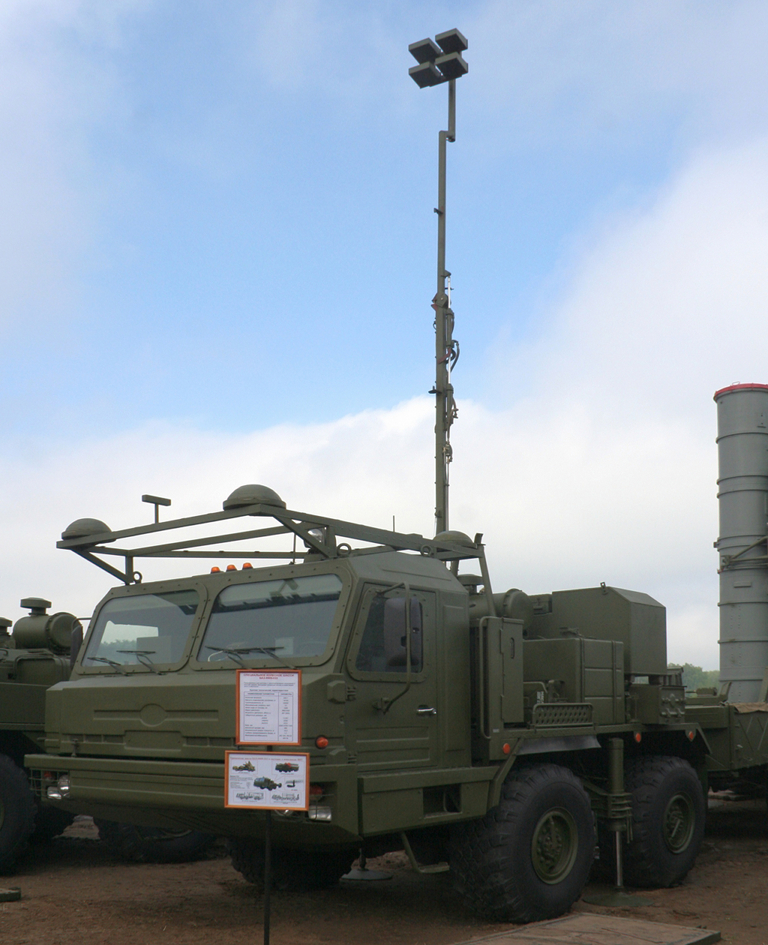 Deployed
5P90S
TEL
with
elevated
long
range
datalink
mast
(image
©
2011 Michael Jerdev).
|
||||
Late model S-300P system TELs are highly automated, and will level automatically on hydraulic supports once initiated by the crew. This decouples the system stow/deploy time from operating crew proficiency, the task of the crew being simply to drive the TEL to an intended location, deploy it, and then stow it and relocate once required. The TEL is fully remotely controlled by the engagement radar over the radio datalink channel, and missiles are launched remotely.
Future developments in this TEL family are likely to involve not only newer vehicles, but also improvements in datalink/network technology, and progressively, the introduction of precision positioning capability in TEL, not unlike the Orientir system developed for the 30N6E2 Tomb Stone.
S-300P/S-400/S-500 Transporter Erector Launcher Vehicles
77P6 Self Propelled Transporter Erector Launcher
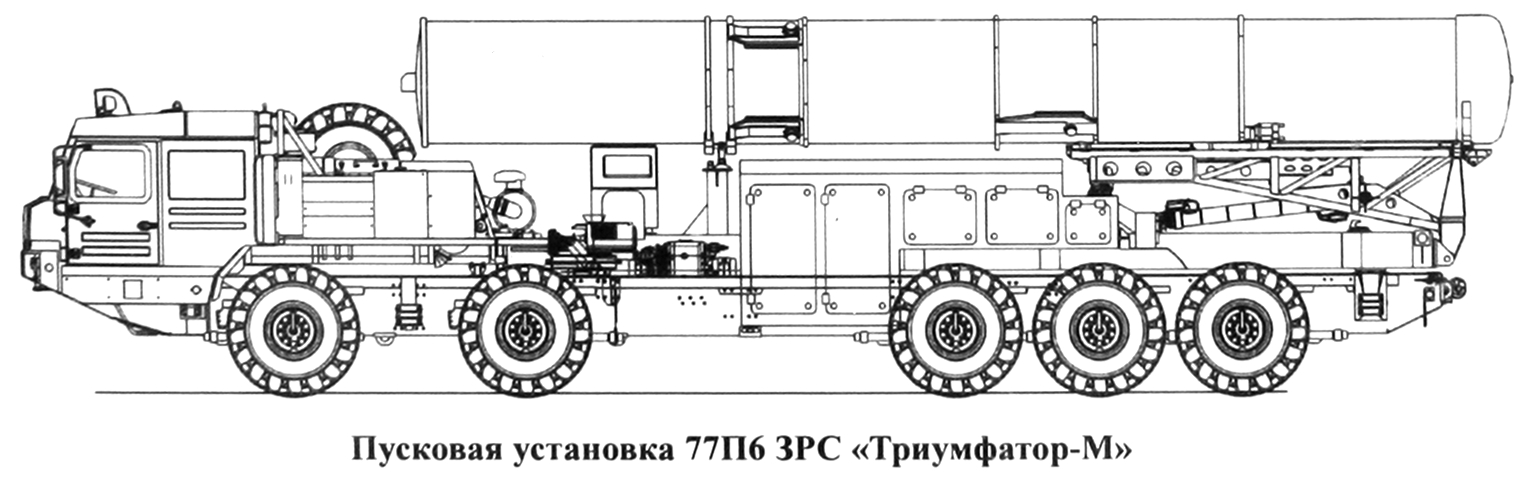



5P90S/SE Self Propelled Transporter Erector Launcher
5P90TMU Towed
Transporter Erector Launcher
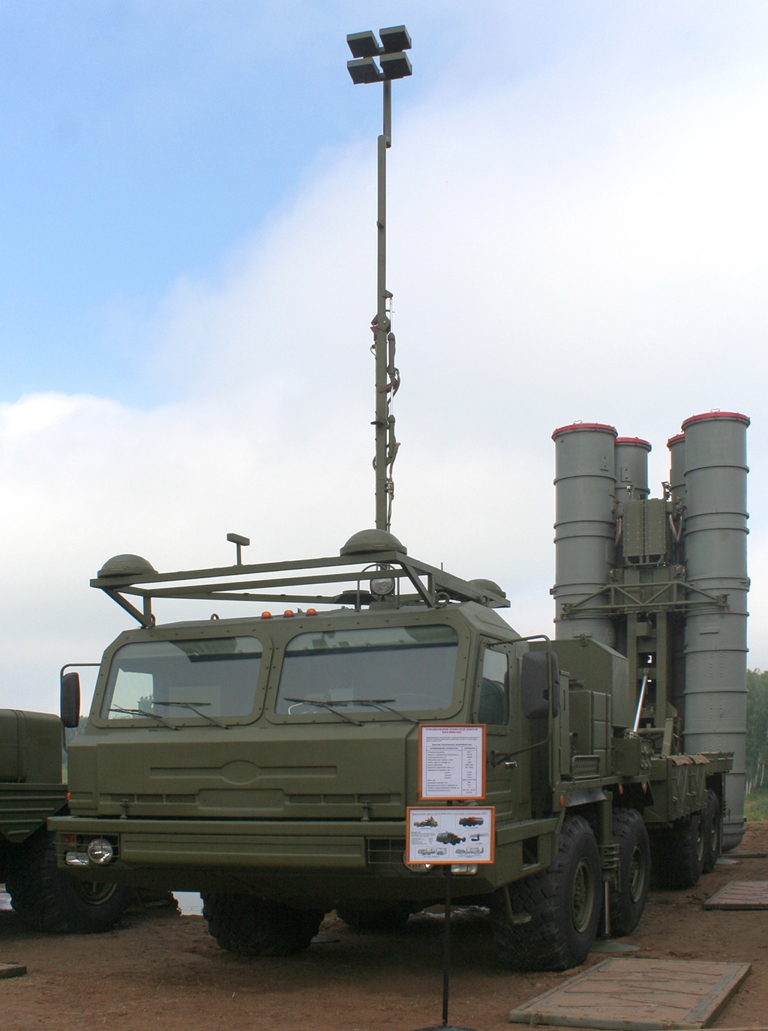
Systems: S-400
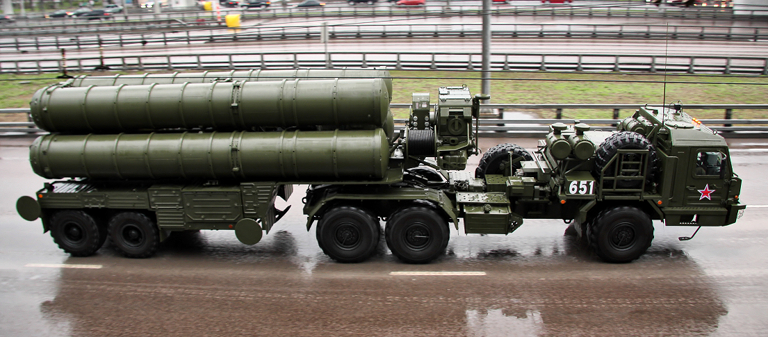
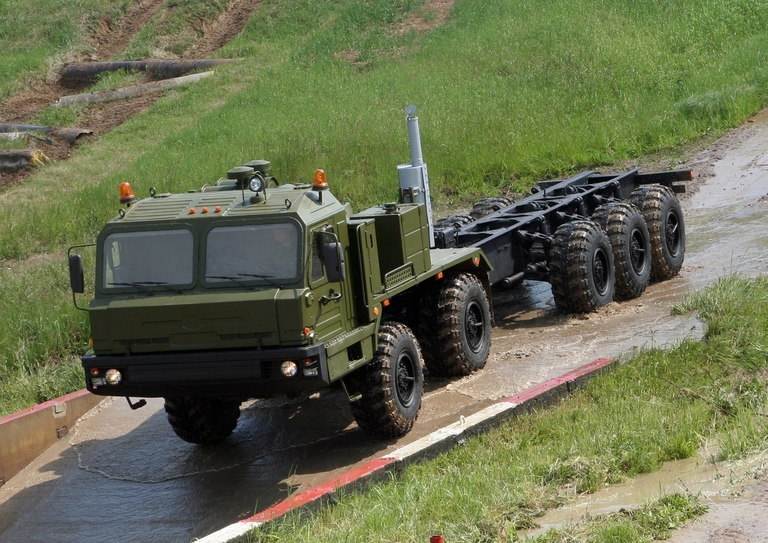
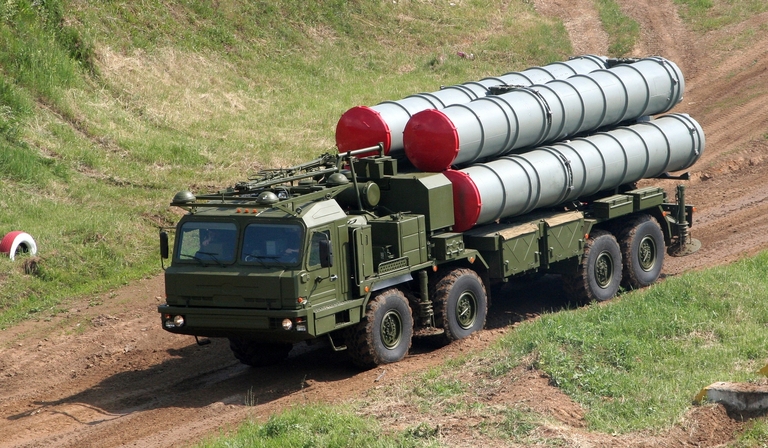
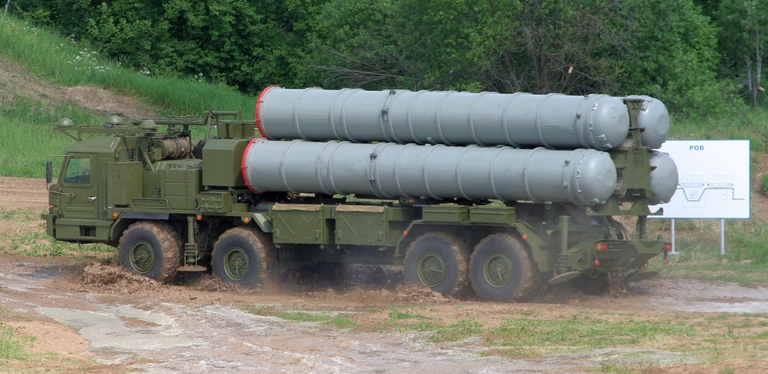
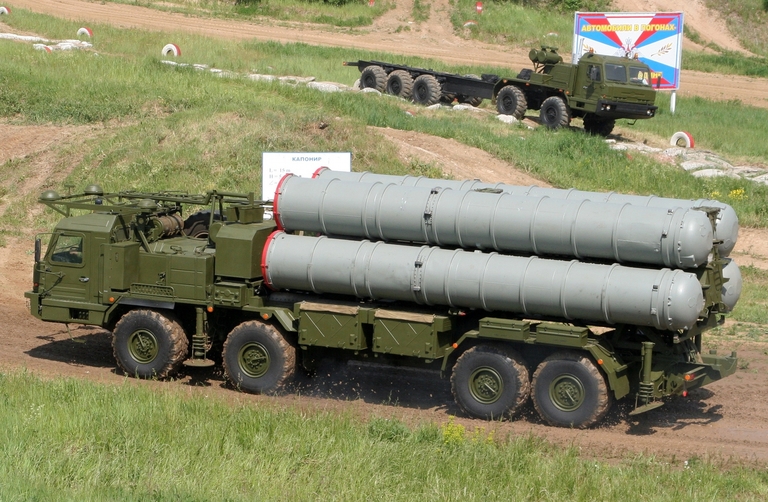
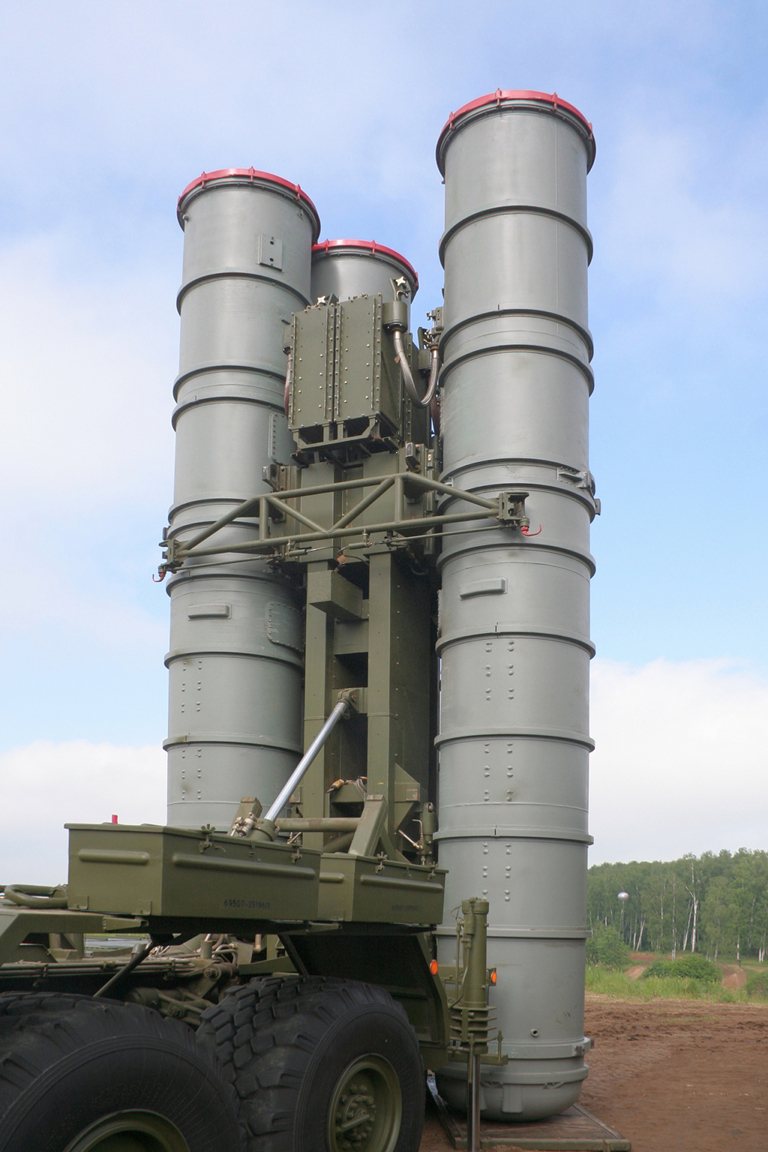
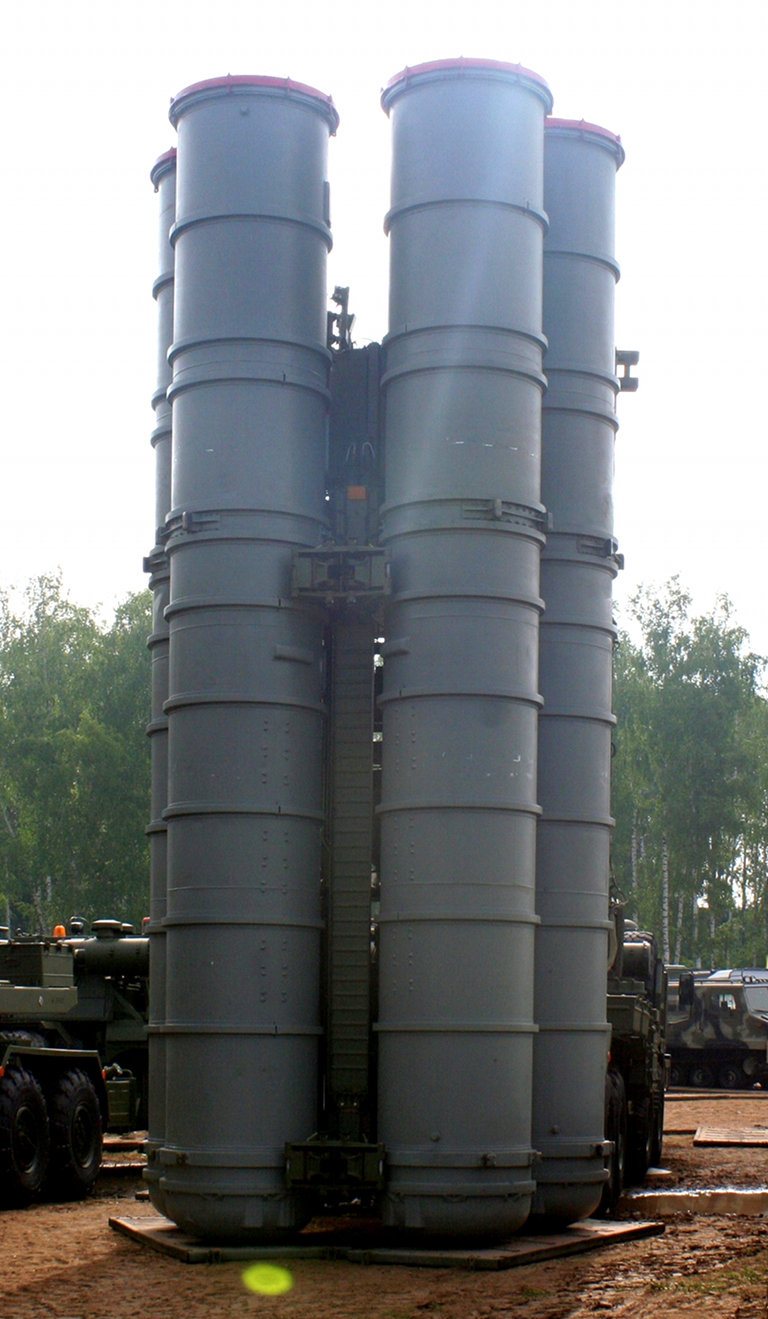
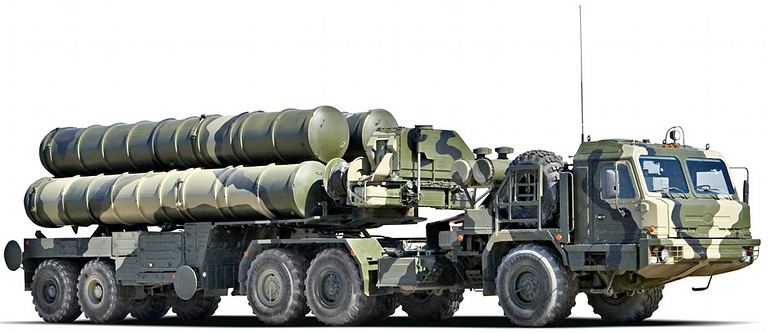
The 5P90 series are the new TEL designs for the S-400 Triumf / SA-21 SAM system. The improved 5P90S self-propelled TEL is hosted on the BAZ-6909-022 and intended to carry a heavier missile payload than the legacy MAZ-79100 series TELs.
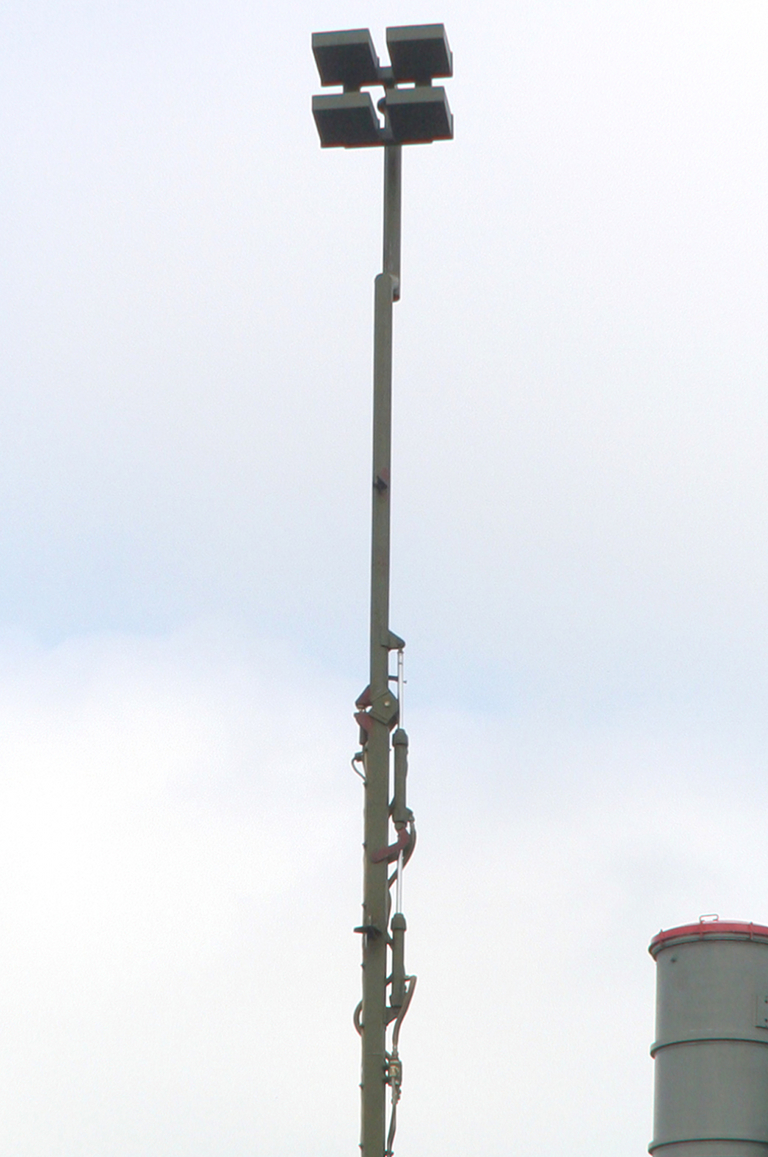
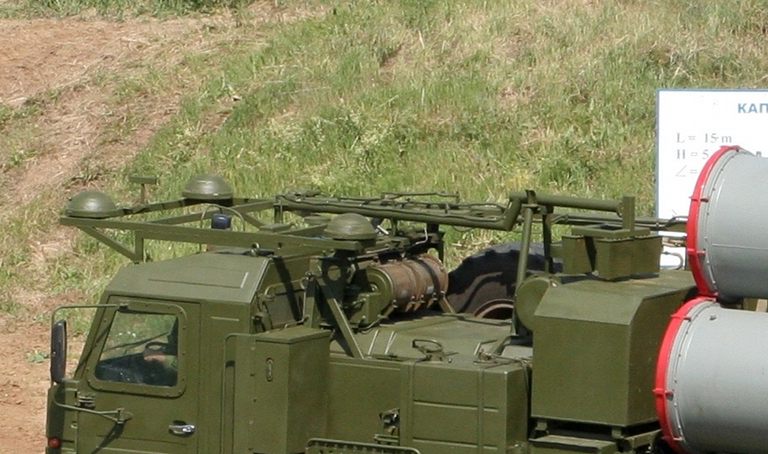
Imagery of the 5P90S self-propelled TEL shows a new gantry design, a new elevating folding mast with a directional antenna, and a state-of-the-art NK Orientir precision navigation system, with an increased baseline for the satnav antennas, compared to the installation on the S-300PMU2 vehicles.
The new mast and datalink antenna has important implications, as this will permit TELs to operate at considerably greater distances from the engagement radar, compared to earlier S-300P family SAM systems. The directional antenna system will significantly reduce the susceptibility of the TELs to interception, and geolocation by passive RF sensors. This will make dispersed TELs stealthier, and thus more difficult to locate, jam and/or attack with lethal weapons.
The evolved NK Orientir navigation system will permit TELs to accurately geolocate, relative to the engagement radars, and facilitates the use of a narrow beam directional datalink.
The significance of the revised gantry design remains unstated, but may reflect increased launch weight in later missile variants.
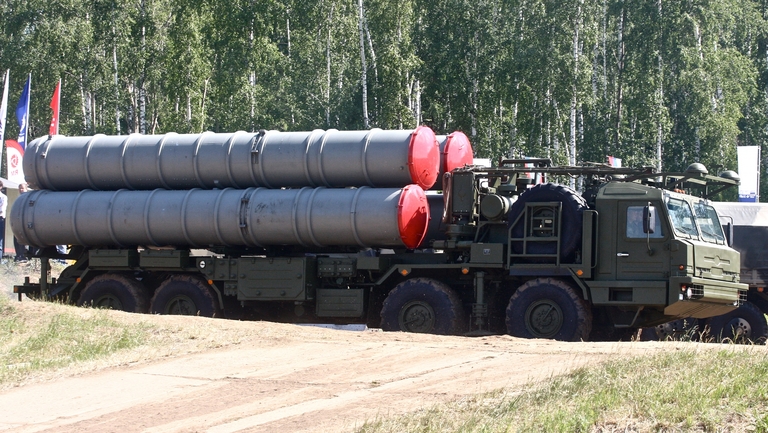
(© 2011 Vitaliy V. Kuzmin)
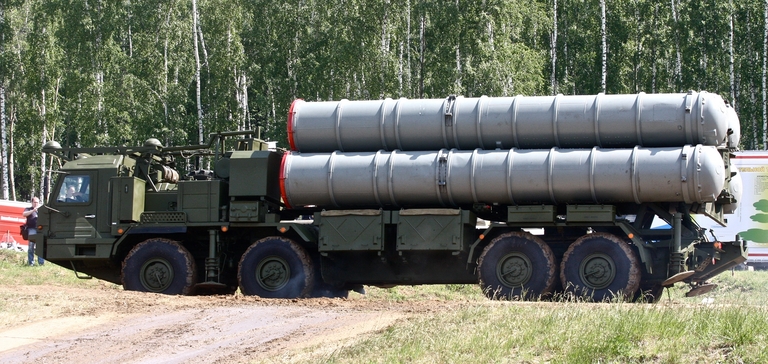
(© 2011 Vitaliy V. Kuzmin)
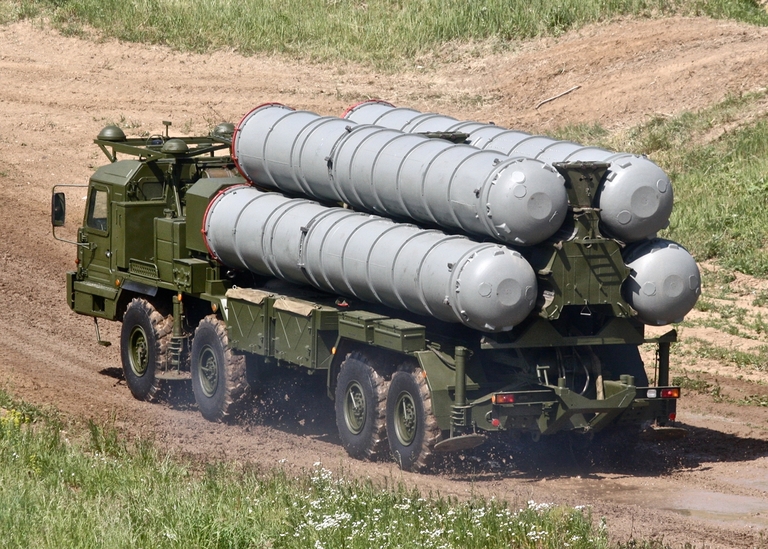
(© 2011 Vitaliy V. Kuzmin)
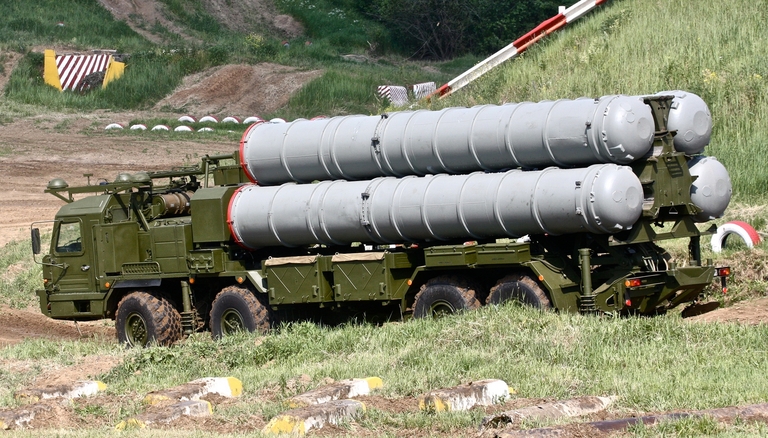
(© 2011 Vitaliy V. Kuzmin)
5P90S/SE
Self
Propelled
Transporter
Erector
Launcher
Deploy/Stow
Sequence
Once the TEL is positioned, the APU is started, and the outriggers deployed to stabilise the chassis. Levelling is performed by differential outrigger settings. Once stable and levelled, the gantry is hydraulically elevated into the vertical position. The datalink antenna mast can then be deployed. Following missile BIT the TEL can go online and accept launch commands from the Grave Stone engagement radar.
Following missile launch, or a directive to redeploy, the datalink antenna mast and gantry can be hydraulically stowed, and the outriggers retracted. At that point the TEL can redeploy to evade attack. It is likely that actual stow times are shorter than deploy times, as there is no need to perform TEL levelling.
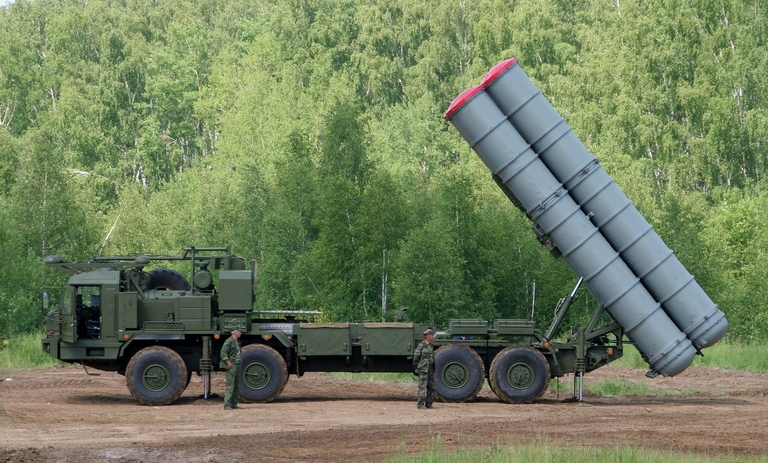
Once levelling is completed, the gantry is hydraulically elevated to vertical position (© 2011 Michael Jerdev).
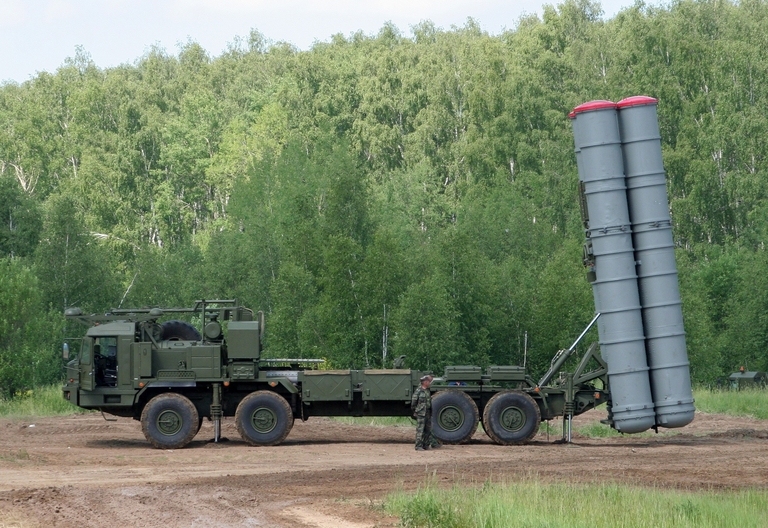
(© 2011 Michael Jerdev)
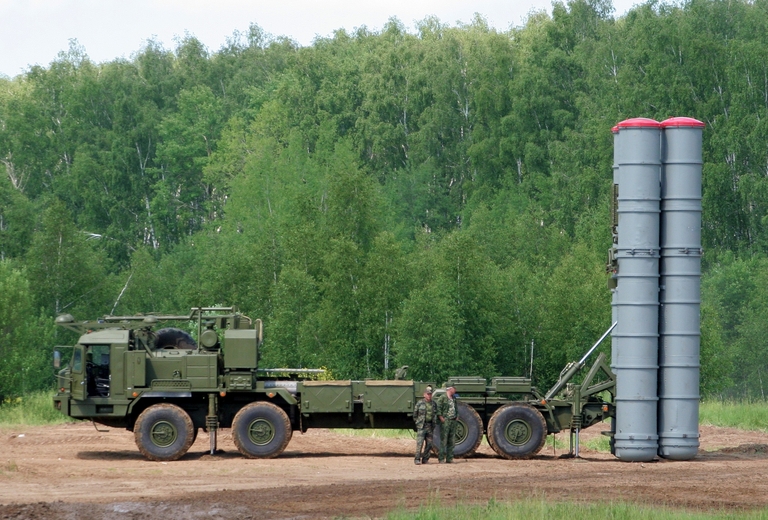
(© 2011 Michael Jerdev)
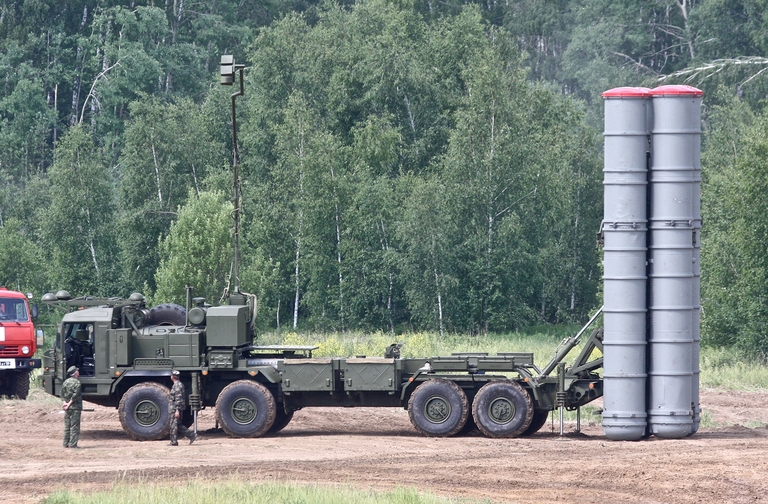
5P90S TEL deploying antenna (© 2011 Vitaliy V. Kuzmin).
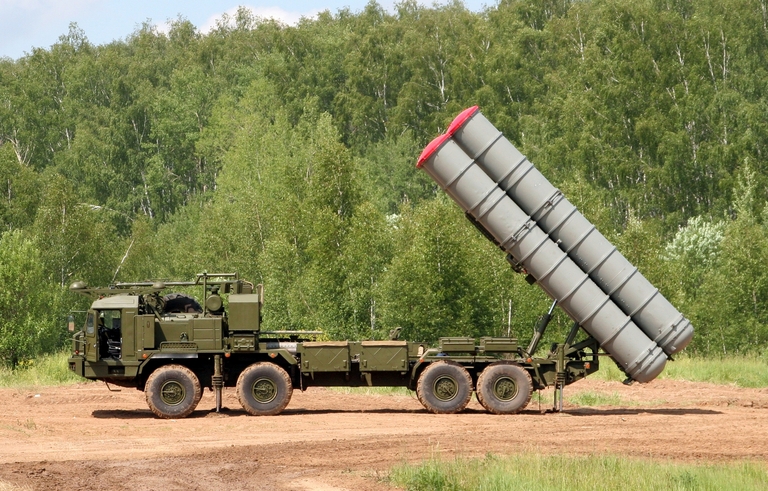
(© 2011 Michael Jerdev)
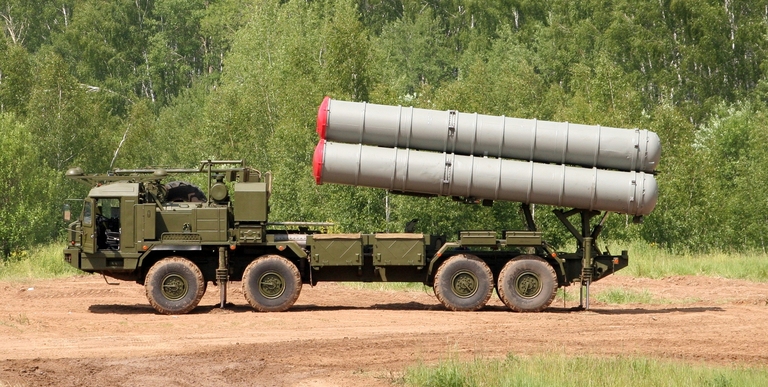
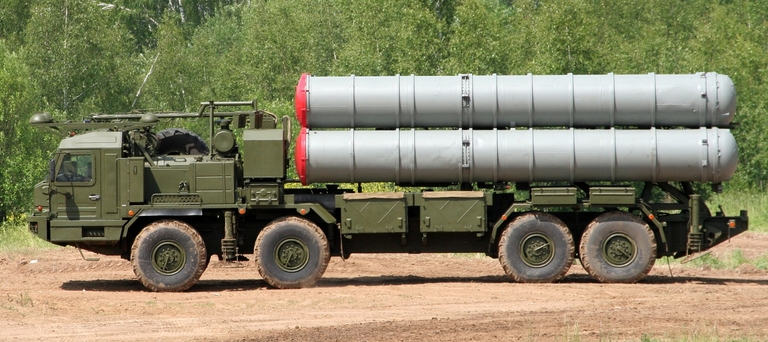
With the gantry and mast stowed, the outriggers can be retracted and the TEL can redeploy (© 2011 Michael Jerdev).
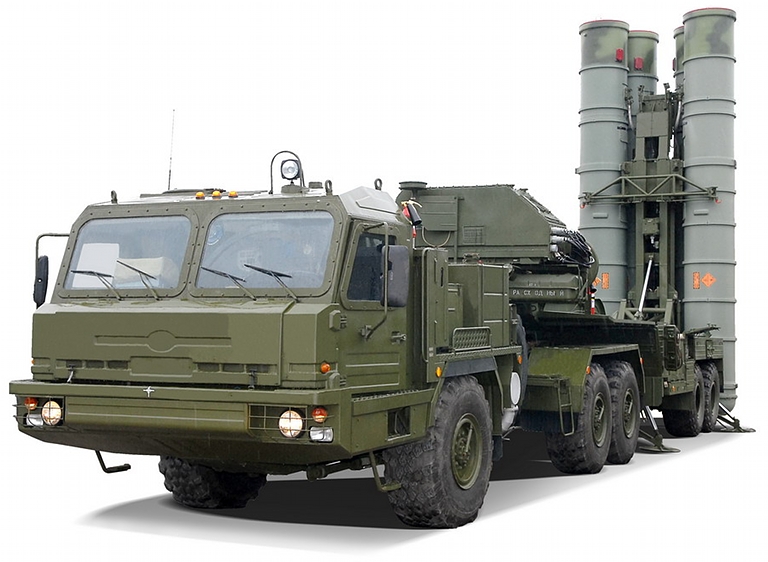
Systems: S-400; Late Production S-300PMU2
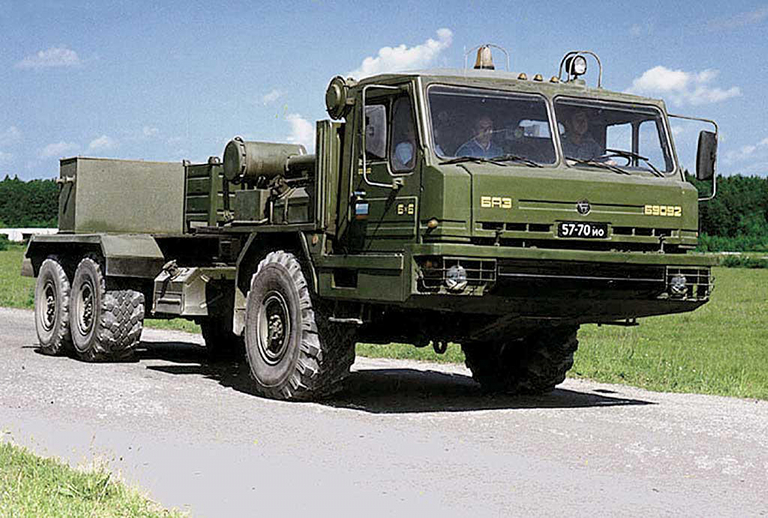
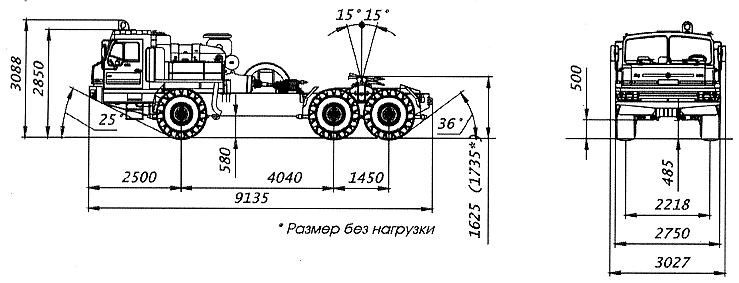
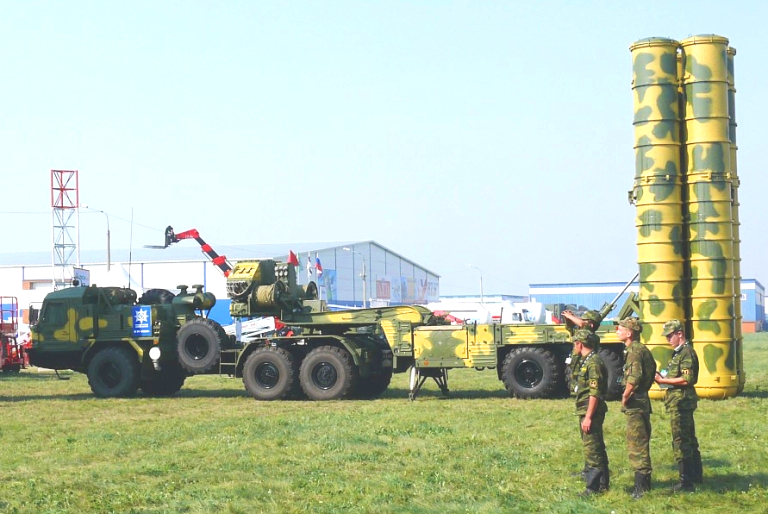
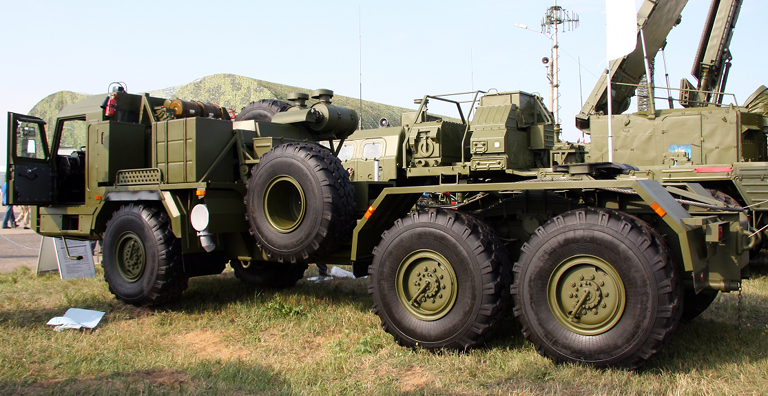
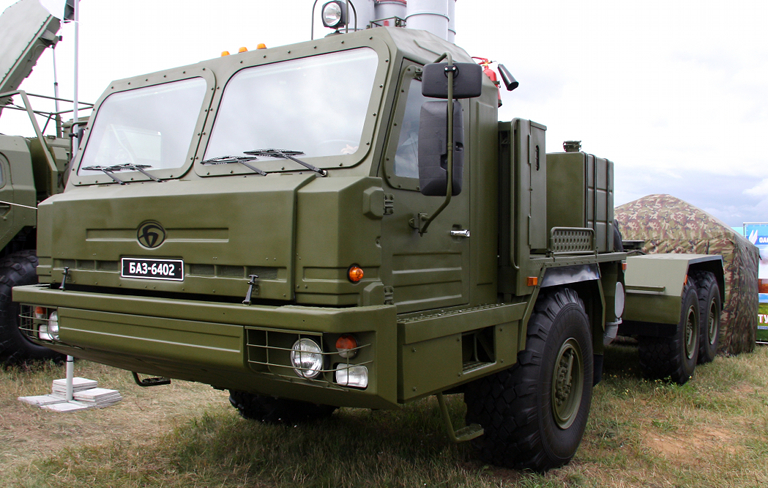
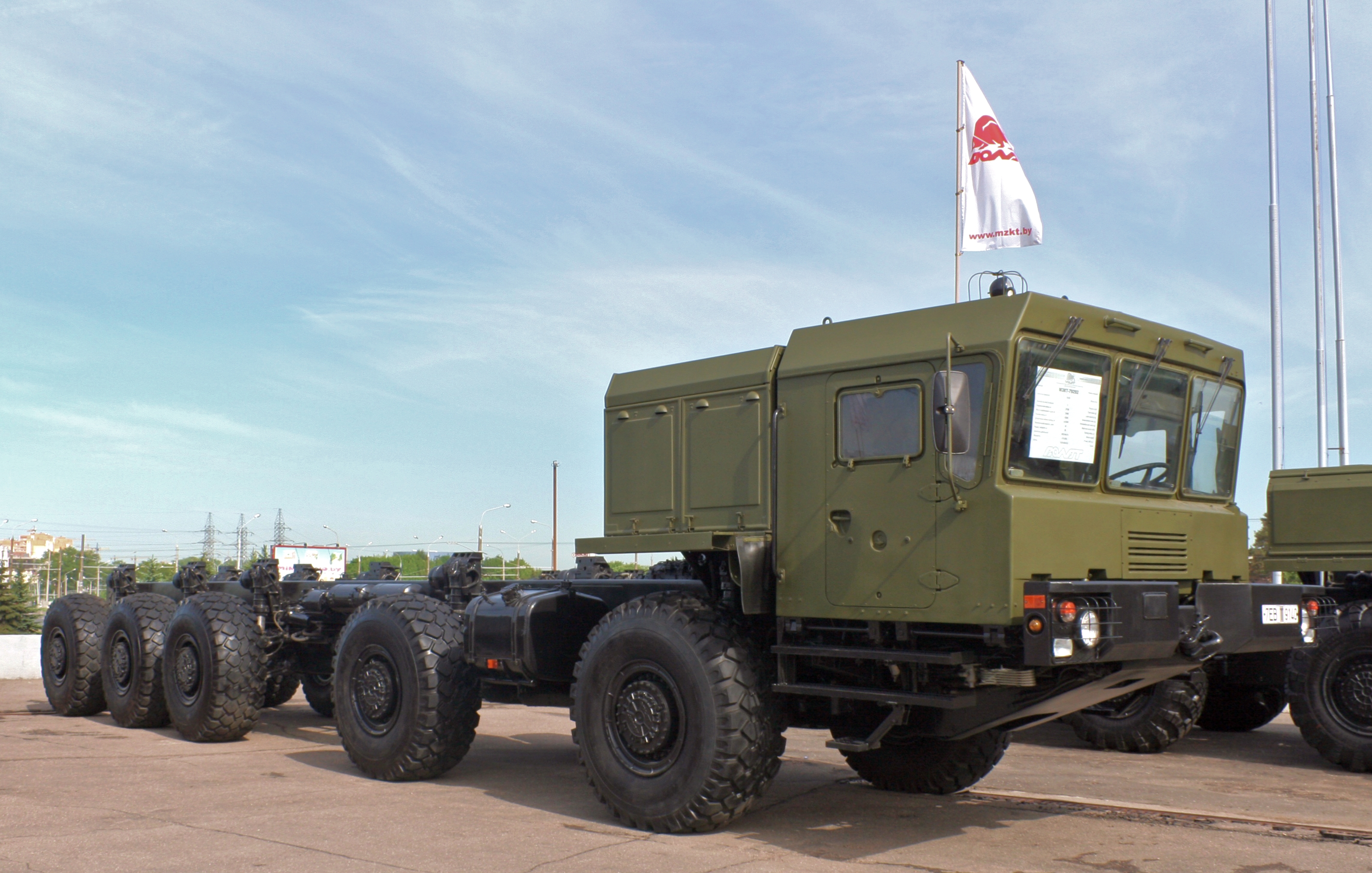
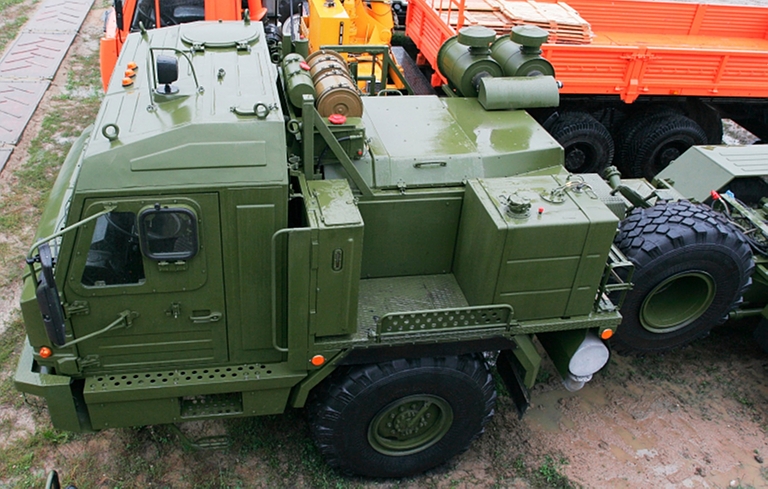
The new 5P85TM/T2/TE2 series TEL combines a variant of the legacy 5P85TE1 TEL semi-trailer with a new 6 x 6 BAZ-64022 tow tractor, the latter based on the Bryanskiy Avtomobilnyy Zavod (Брянский автомобильный завод) BAZ-69092 "Voshchina 1" series of military trucks. The BAZ-64022 is based on the BAZ-6402 artillery tractor.
| BAZ-6402 Specifications |
|
| Наименование | Значения |
|
Колесная формула, |
6х6.1 |
|
Нагрузка на седельно-сцепное устройство, тс |
11,5 |
|
Снаряженная масса, т |
16,0 |
|
Полная масса автопоезда, т, не более |
45,8 |
|
Двигатель дизельный с турбонаддувом, |
ЯМЗ-8424.10 |
|
Мощность двигателя, л. с. |
470 |
|
Сцепление однодисковое диафрагменное, |
ЯМЗ-184.10 |
|
Коробка передач, 9 передач вперед, 1 назад, |
ЯМЗ-2394 |
|
Подвеска I оси, |
независимая двухторсионная с амортизаторами на каждом колесе |
|
Подвеска II и III осей, |
комбинированная независимая одноторсионная для нижних рычагов и балансирная рессорная для верхних |
|
Шины с регулируемым давлением, радиальные (1350х550-533Р), |
ИД-370 |
|
Минимальный радиус поворота, м |
13,0 |
|
Максимальная скорость, км/ч |
70 |
|
Запас хода по контрольному расходу топлива, км |
1000 |
|
Габаритные размеры |
|
|
Длина, мм |
9180 |
|
Ширина, мм |
2750 |
|
Высота, мм |
2850 |
|
Двигатель |
|
|
Марка двигателя, |
ЯМЗ-8424.10 |
|
Мощность, л.с. |
470 |
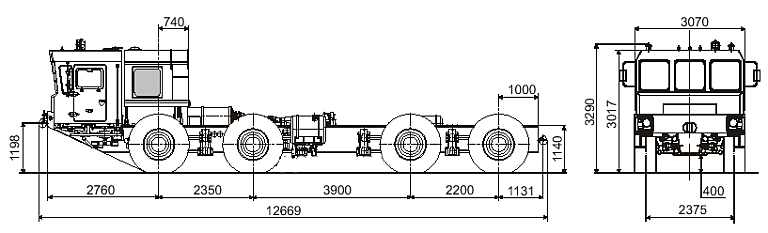
MZKT-7930 Self Propelled Transporter Erector Launcher
An option listed at one stage by Almaz-Antey for the S-400 is an 8 x 8 TEL based on the MZKT-7930 chassis, almost certainly involving a transplant of the hydraulically elevated erector/launcher equipment from the S-400 5P85SE demonstrator TEL on to the newer chassis design. To date no images of this design have appeared. It would deliver similar cross country performance to the legacy 5P85SE TELs.
5P85T/TE Towed Transporter Erector Launcher
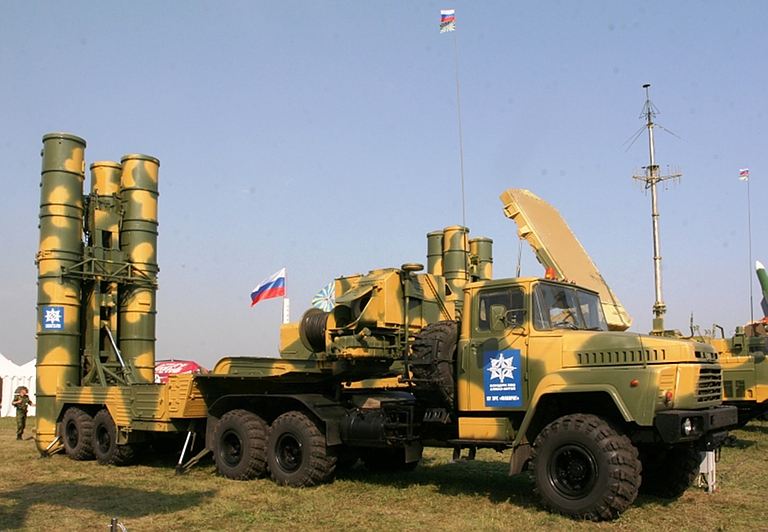
S-300PMU2 Favorit 5P85TE TEL Deployed (© Miroslav Gyűrösi).
Systems: S-300PMU1/PMU2
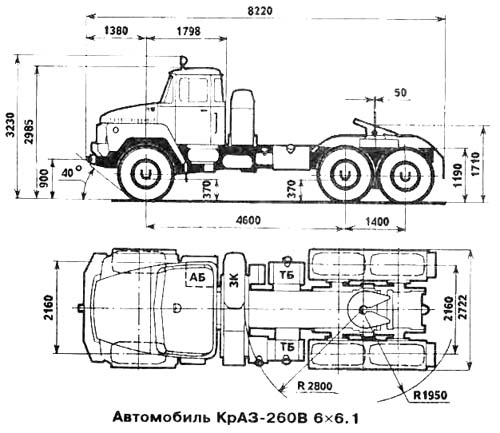
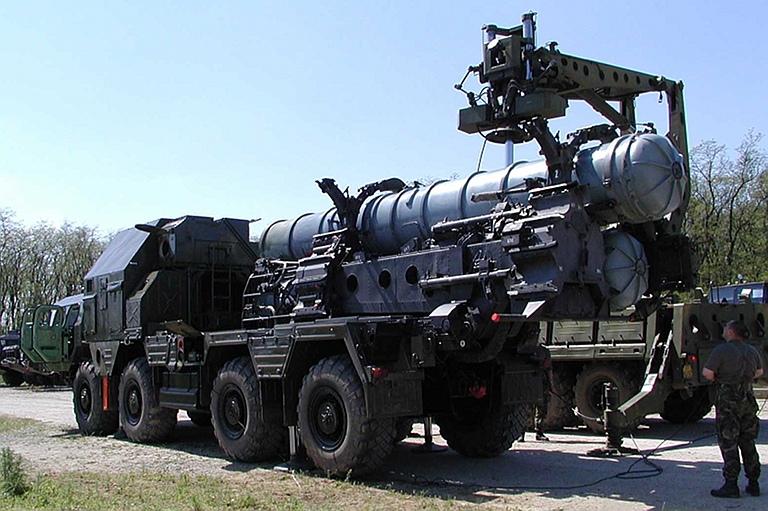
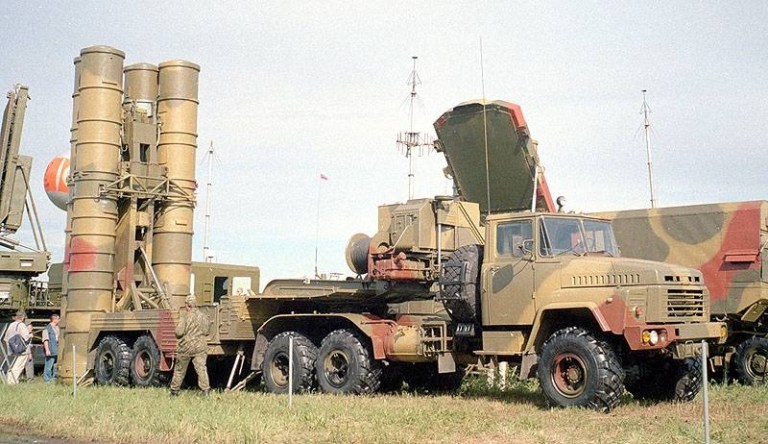
The production 5P85TE TEL combines a variant of the 5P85TE TEL semi-trailer with the Ukrainian Kremenchugskiy AvtoZavod 6 x 6 KrAZ-260 tow tractor. The KrAZ-260 entered production in 1979 as an artillery tow tractor, with variants built for a range of military and civil applications. Typical variants are rated in the 9.5 to 10 tonne class. It was introduced to provide a much cheaper TEL compared to the MAZ-543 derived 5P85D/S series, sacrificing offroad mobility in the process, but improving road speed.
| Грузоподъемность,
(без
лебедки) 9500 кг. Снаряженная масса (без лебедки и дополнительного снаряжения) 11750 кг. В том числе: на переднюю ось 5740 кг. на тележку 6010 кг. Полная масса 21475 кг. В том числе: на переднюю ось 6320 кг. на тележку 15155 кг. Допустимая полная масса прицепа: по всем видам дорог и местности 10000 кг. по дорогам с твердым покрытием 30000 кг. Макс. скорость автомобиля 80 км/ч. То же, с прицепом полной массой 10000 кг 80 км/ч. |
Время разгона атомобиля до
60
км/ч 40 с. Выбег автомобиля с 50 км/ч 650 м. Макс. преодолеваемый подъем автомобилем 58 % То же, с прицепом полной массой 10000 кг 32 % Тормозной путь автомобиля с 40 км/ 17,2 м. То же, автопоезда 18,4 м. Контрольный расход топлива автомобиля, л/100 км, при скорости 60 км/ч 38,5 л. Глубина преодолеваемого брода с твердым дном при номинальном давлении воздуха в шинах 1,2 м. Радиус поворота: по внешнему колесу 13,0 м. габаритный 13,5 м. |
| Двигатель.
Мод. ЯМЗ-238Л. дизель с турбонаддувом V-образный 8-цил., 130x140. 14,86 л, степень сжатия 1 5 , 2 , порядок работы 1-5-4-2-6-3-7-8, мощность 220 кВт (300 л.с.) при 2100 об/мин, крутящий момент 1079 Н-м (110 кгс-м) при 1500 об/мин. ТНДВ - 8-секционный, |
|
5P85S/SM/SE/SE1/SE2 Self Propelled Transporter Erector Launcher
5P85S/SU and 5P85D/DU Self Propelled Transporter Erector Launcher
Systems: S-300PS (D/DU/S/SU); S-300PM/PMU1/PMU2 (SM/SE)
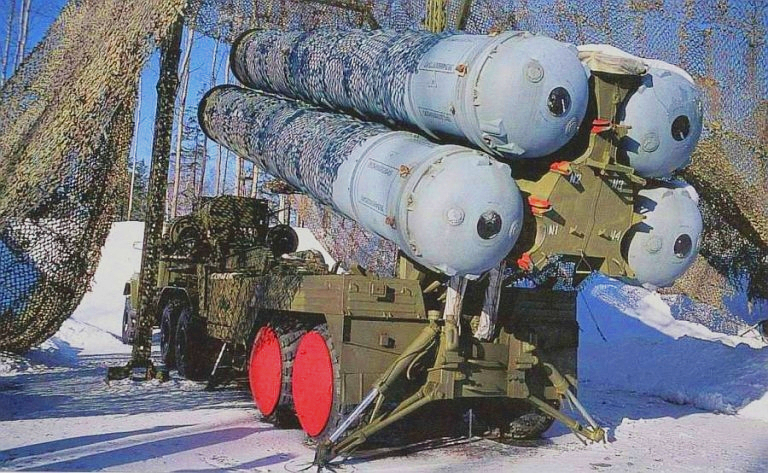
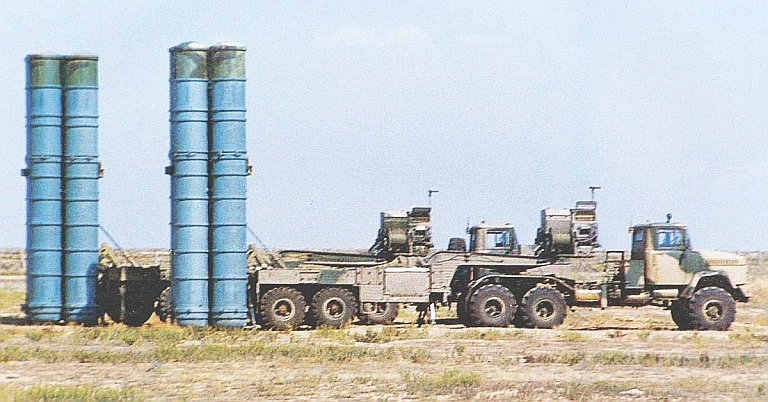
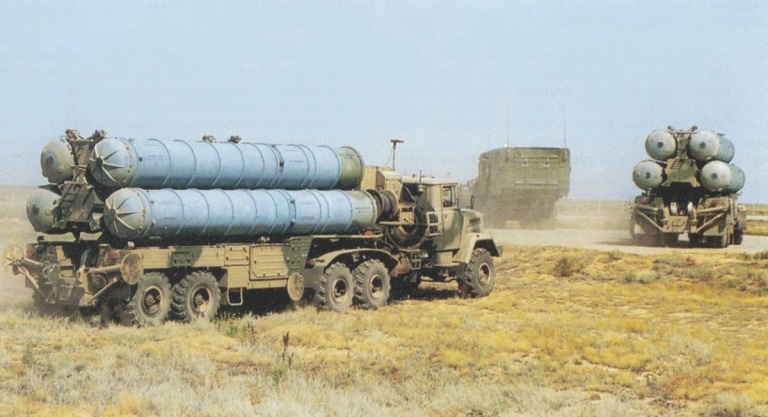
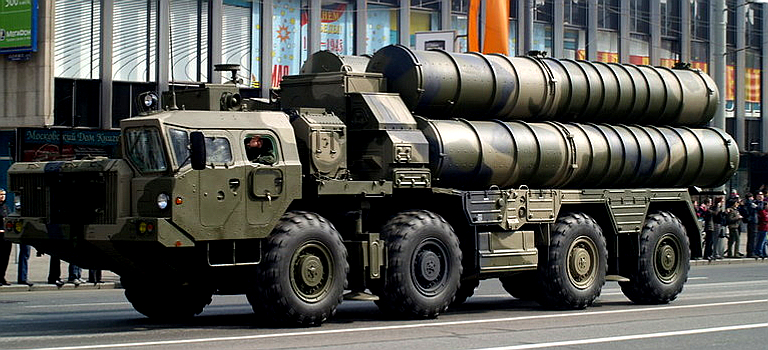
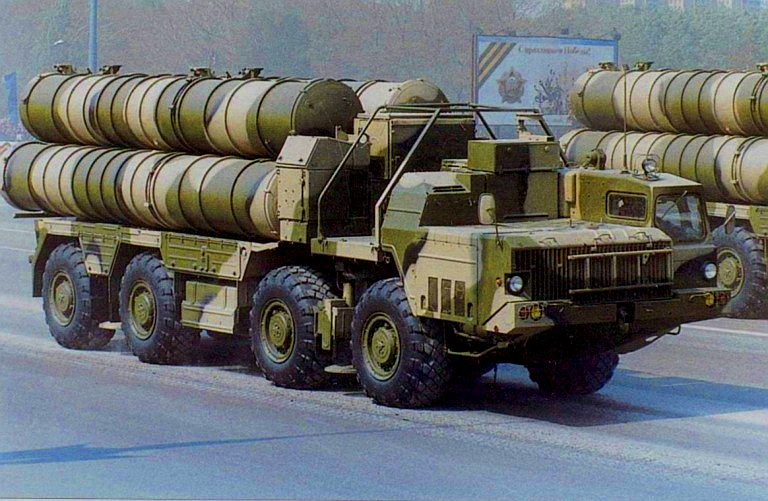
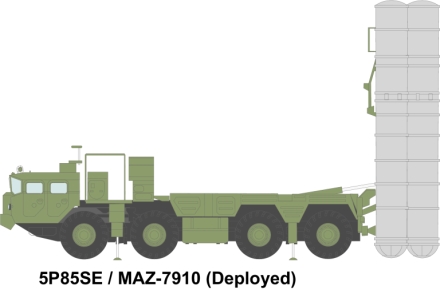
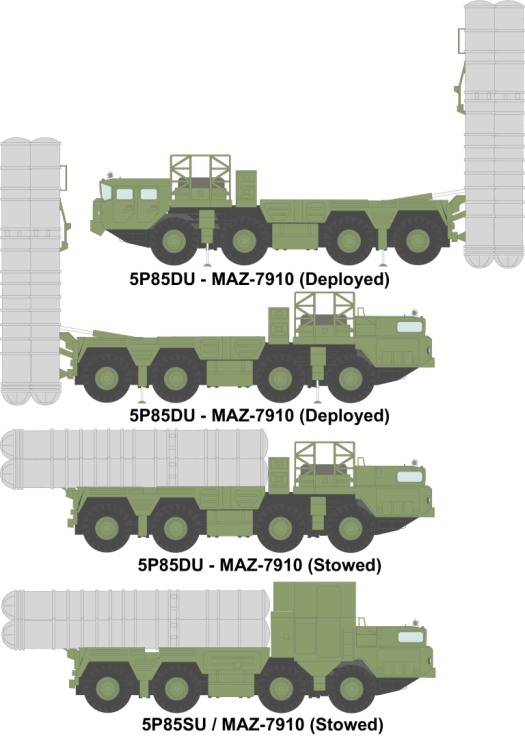
The 5P85SE variants delivered with early production examples of the S-300PMU2 Favorit / SA-20B SAM systems are the last production variants of the family of 8 x 8 self-propelled TELs introduced with the S-300PS system during the 1980s. These are all based on variants of the MAZ-7910 chassis, itself a derivative of the ByeloRussian MAZ-543/543M Uragan chassis series developed as the self propelled 9P117 TEL for the R-17/R-300 Elbrus / SS-1 Scud TBM. The MAZ-543 was soon dubbed Kashalot (Sperm Whale) by its crews due to its sheer size compared to earlier Soviet wheeled vehicles. This vehicle has remained in production in various forms since the early 1960s, and has been adapted for the Smerch MRLS, a range of radar systems, and formed the basis for larger 12 x 12 ballistic missile TELs, cranes, oilfield trucks, artillery tow tractors, and semitrailer two tractors.
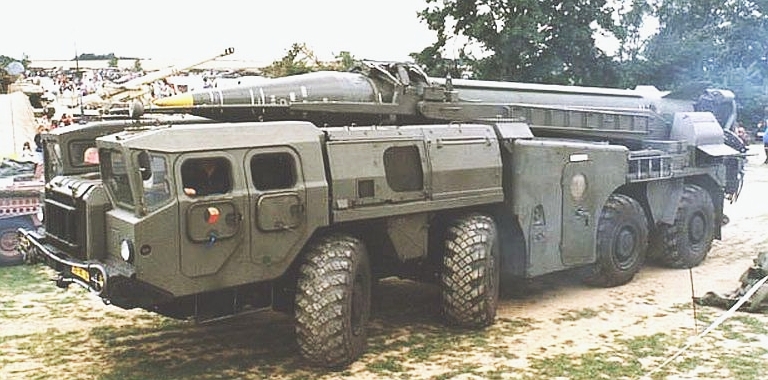
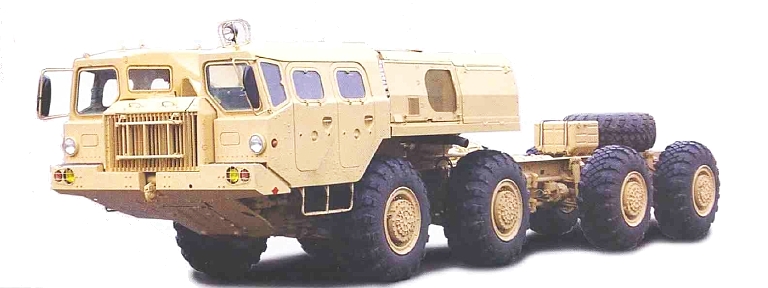
The MAZ-7910 chassis first appeared with the S-300PS / SA-10B Grumble, the S standing for Samokhodniy (Self Propelled). The vehicle was used initially for the 5P85DU and 5P85SU TELs, the 30N6 Flap Lid series of engagement radars, and the 54K6 and 73N6 Baikal command posts. The base vehicle was later adapted as the MAZ-74106 tow tractor for the 64N6 Big Bird acquisition radar. In one or another form the MAZ-7910 forms the basis for most highly mobile S-300P variant systems.
The first generation S-300PS TEL variants differed. The 5P85S was a fully autonomous or 'master' TEL, the 5P85D a 'slave' TEL, usually deployed in pairs with a single 5P85S. Later TEL variants such as the 5P85SE, 5P85SE1 and 5P85SE2 were all derived from the autonomous 5P85S series. The enclosed cabin used in the 5P85S/SU vanished in later variants of the 5P85SE.
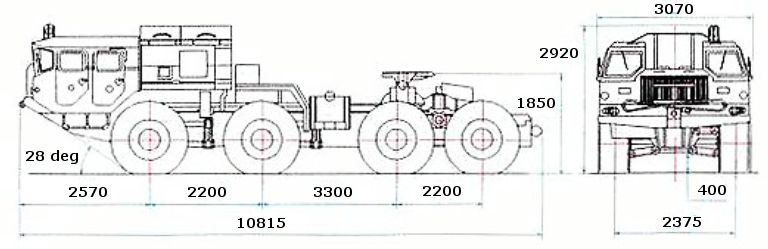
| MAZ-543
Uragan
General
Specifications |
||
| Parameter |
Metric
Magnitude
[unit] |
Imperial Magnitude [unit] |
| Length |
11,245 [mm] | |
| Width |
3,050 [mm] | |
| Height |
2,945 [mm] | |
| Wheelbase |
7,700 [mm] | |
| Turn
Radius |
13.5 [m] |
|
| Ground clearance | 400 [mm] | |
| Empty weight | 21,000 [kg] | |
| Payload
-
road |
19,000 [kg] | |
| Payload
-
offroad |
19,000 [kg] | |
| Gross Weight - road | 40,000 [kg] | |
| Gross Weight- offroad | 40,000 [kg] | |
| Towed
Weight,
Max |
25,000
[kg] |
|
| Gradient |
65
[%] |
|
| Fording
depth |
1300
[mm] |
|
| Obstacle
height,
max |
800
[mm] |
|
| Ditch
depth,
max |
1,400
[mm] |
|
| Surface
loading |
1,6 [kp/cm²] | |
| Tyre
Pressure |
1,0 - 3,5 [kp/cm²] | |
| Tyres |
1500 x 600 - 635 | |
| Maximum
Speed |
60
[km/h] |
|
| Cruise
Speed |
45 [km/h] | |
| Range
on
internal
fuel |
1525/450
[km] |
|
| MAZ-543 Uragan Powerplant/Systems Specifications | ||
| Parameter | Type/Metric Magnitude [unit] | Type/Imperial Magnitude [unit] |
| Powerplant |
D12A-525,
V12,
liquid
cooled
diesel |
|
| Max
Power |
386
/
2100
[kW/RPM] 525 / 2100 [SHP/RPM] |
|
| Max
Torque |
220
/
1400
[kpm/RPM |
|
| Displacement |
38 800 [cm³] | |
| Tyre |
1,0 - 3,5 [kp/cm²] | |
| Electrical
System |
24
[V] |
|
| Batteries |
24
[V]
4
x
70
[Ah] |
|
| Alternator |
3
[kW] |
|
| Starter
Motor |
11.0/15.0
[kW/SHP] |
|
| Fuel
Tanks |
2
x
260.0
[litre] |
|
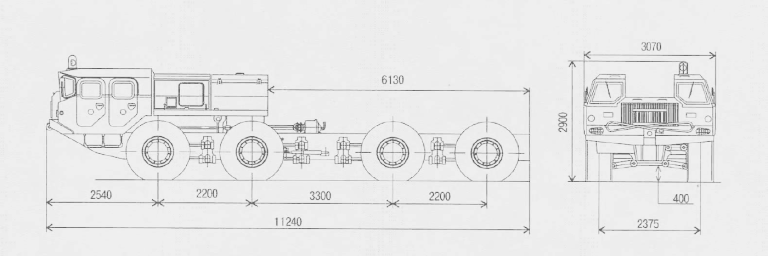
MAZ-543M/7910 chassis dimensions and layout.
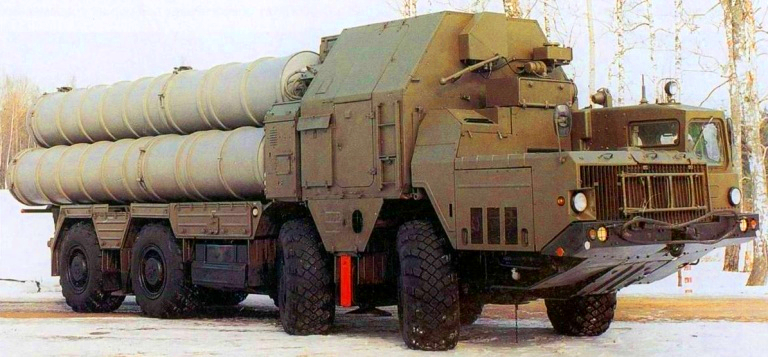
S-300PS
5P85S
TEL
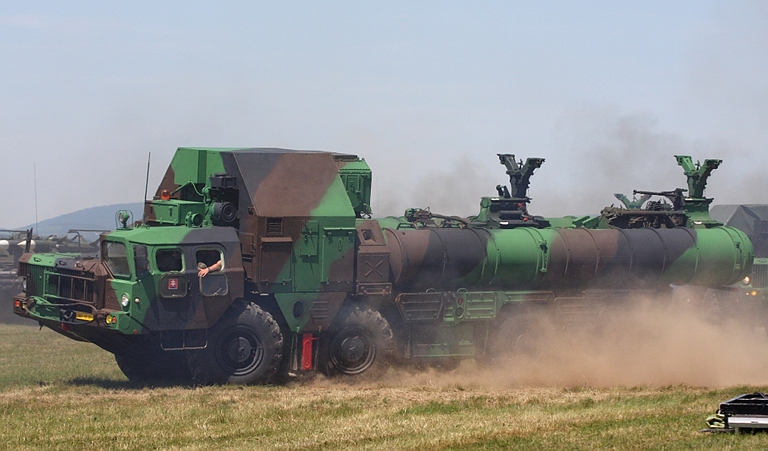
5P85SE TEL (©
Miroslav
Gyűrösi).
Transporters, Transloaders, Support Vehicles
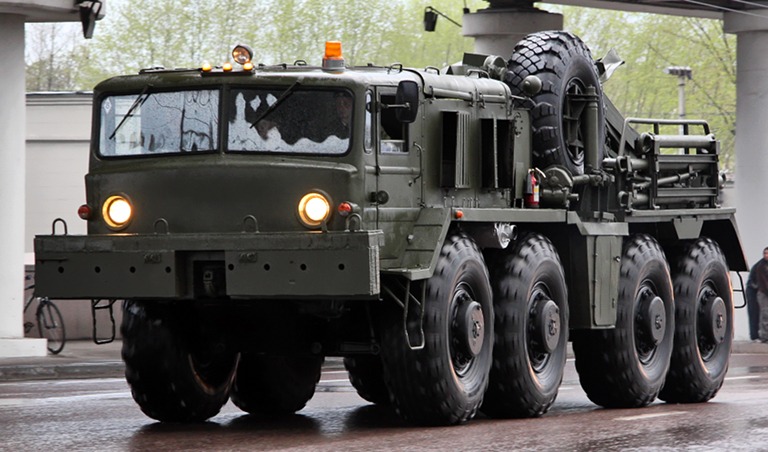
MAZ-537 Heavy
Tow Tractor
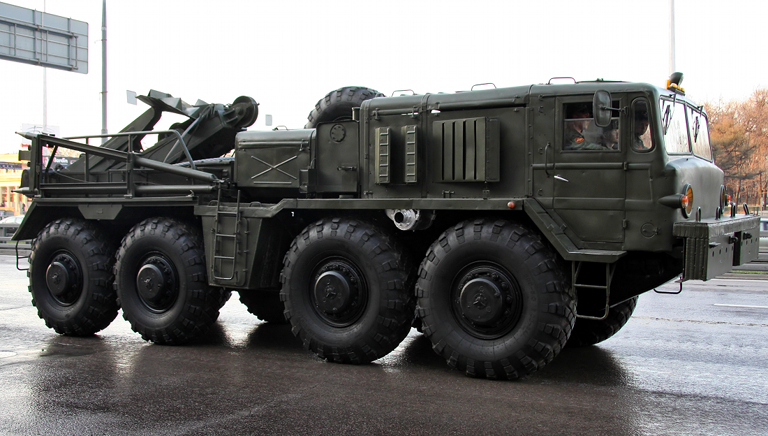
| Характеристики | МАЗ-537 | МАЗ-537А | КЗКТ-537Л |
| Колесная формула | 8x8 | ||
| Число мест в кабине | 4 | ||
| Грузоподъемность, кг | - | 15000 | 16000* |
| Снаряженная масса, кг | 21600 | 22500 | н/д |
| Полная масса, кг | - | 37500 | 40000** |
| Масса буксируемого прицепа/ полуприцепа, кг |
65000*** | 75000*** | 200000 |
| Длина, мм | 9130 | 9291 | |
| Ширина, мм | 2885 | 3100 | |
| Высота, мм | 2880 | ||
| Колесная база, мм | 1700+2650+1700 | ||
| Колея колес, мм | 2200 | ||
| Дорожный просвет, мм | 500 | ||
| Габаритный радиус поворота, м | 16,5 | ||
| Двигатель (тип) | Д12А-525 (Д, V12) | ЯМЗ-240НМ-1Б (Д, V12) | |
| Рабочий обьем, см3 | 38880 | 22300 | |
| Мощность двигателя, л.с. (об/мин) | 525 (2100) | 500 (н/д) | |
| Крутящий момент, кГм (об/мин) | 220 (1200..1400) | н/д | |
| Расход топлива на 100 км, л | 125 | 100 | |
| Запас хода, км | 1525 | н/д | |
| Запас топлива, л | 2 x 420 | ||
| Максимальная скорость, км/ч | 55,0 | 60,0 | 55,0 |
| Преодолеваемые препятствия: - глубина брода - подъем |
1,3 м 15° |
1,3 м 23° |
1,3 м н/д |
| н/д —
нет данных * масса штатного балласта ** со штатным металлическим балластом *** на грунте — 30000 кг |
|||
| Source:
Russkaya Sila, URI:http://legion.wplus.net/guide/army/tr/maz537.shtml |
|||
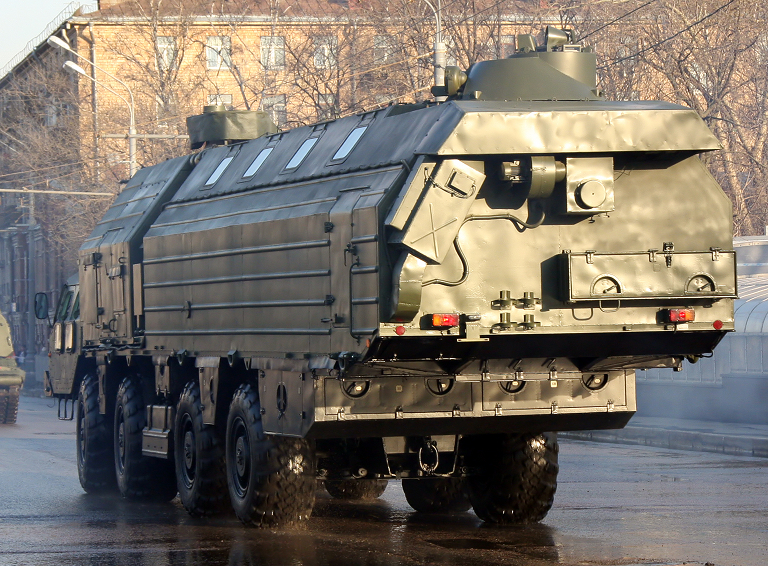
MAZ-543M MOBD Accommodation and Generator Vehicle
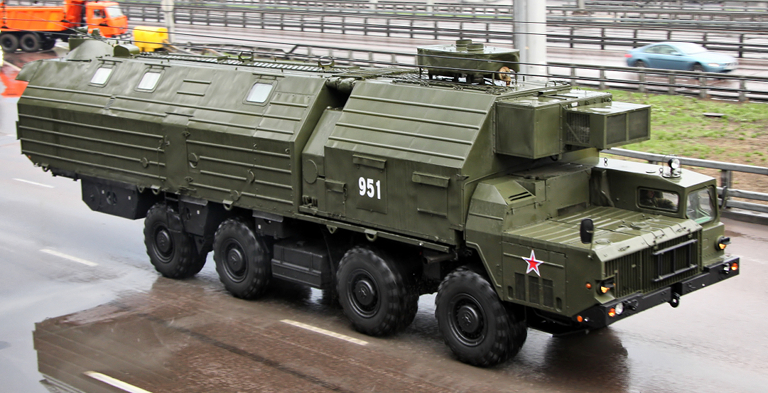
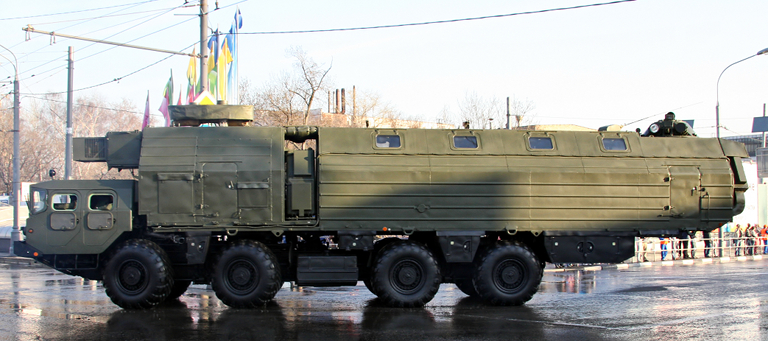
Above, below: side and aft views (© 2011, Vitaliy Kuzmin).
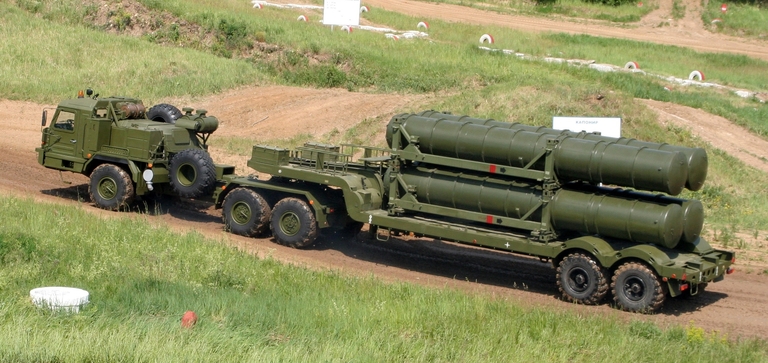
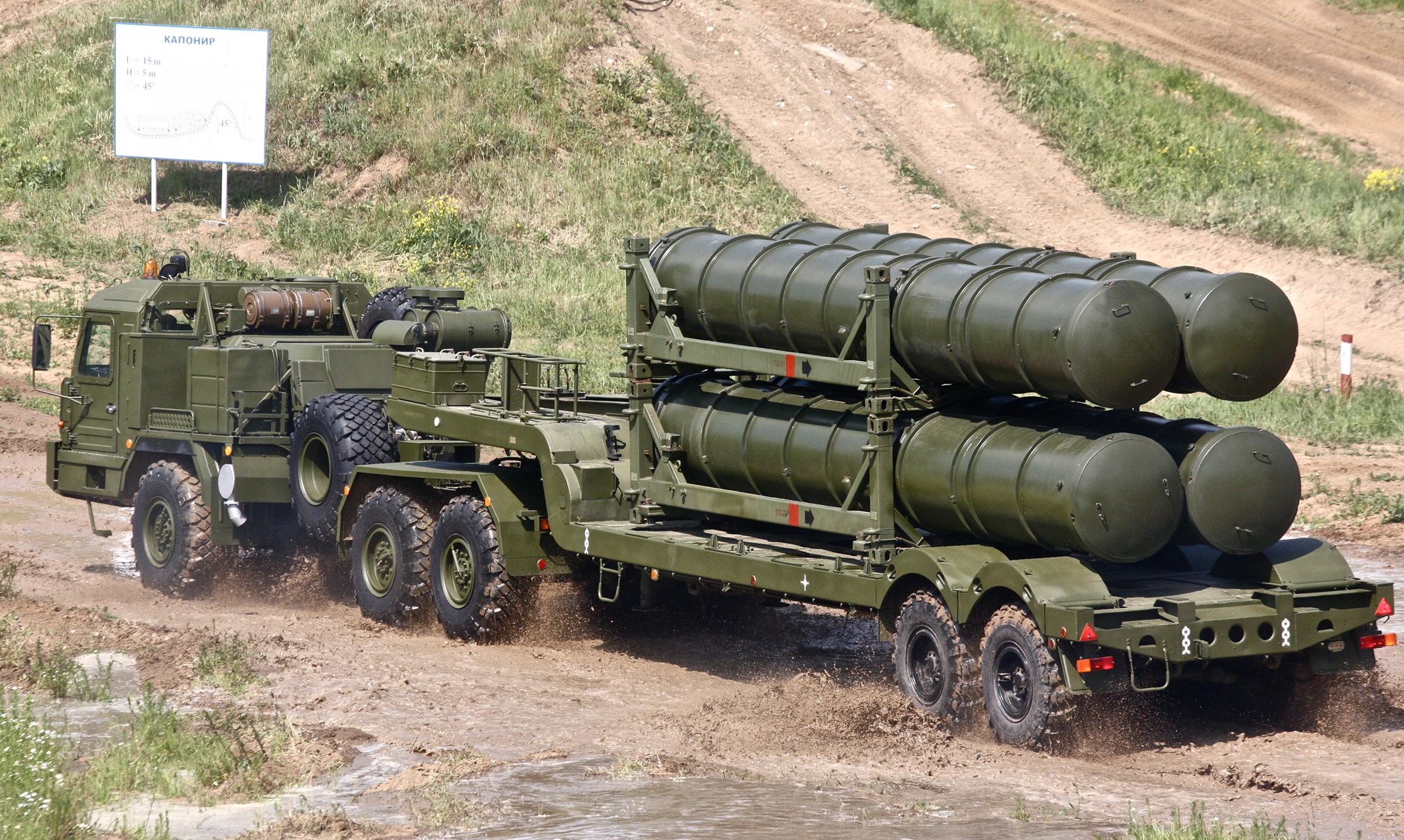
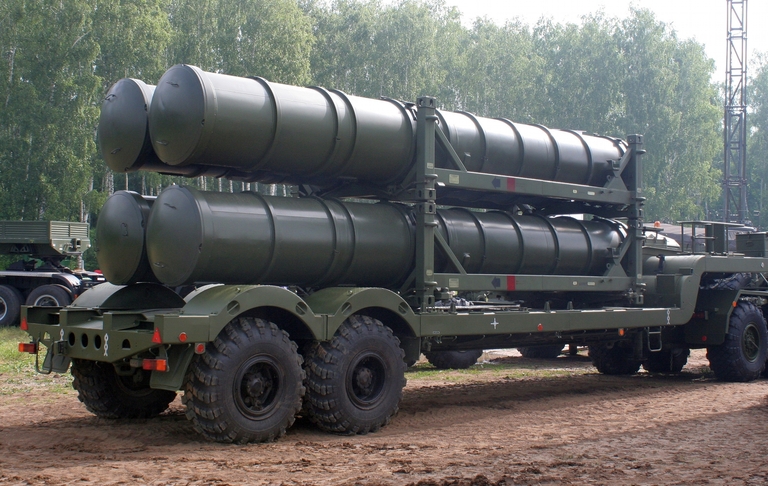
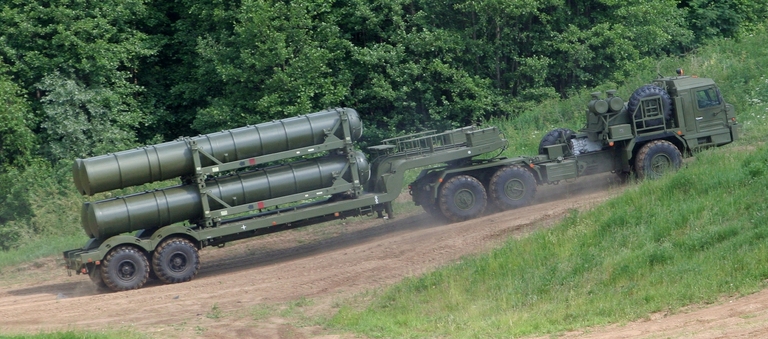
5T58 Missile
Transporter / KrAZ-260B
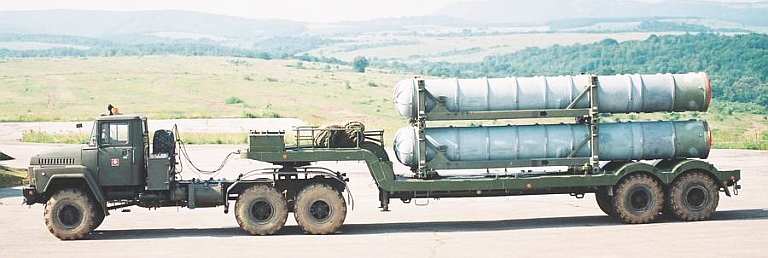
5T58-2 Missile
Transporter / BAZ-6402-015
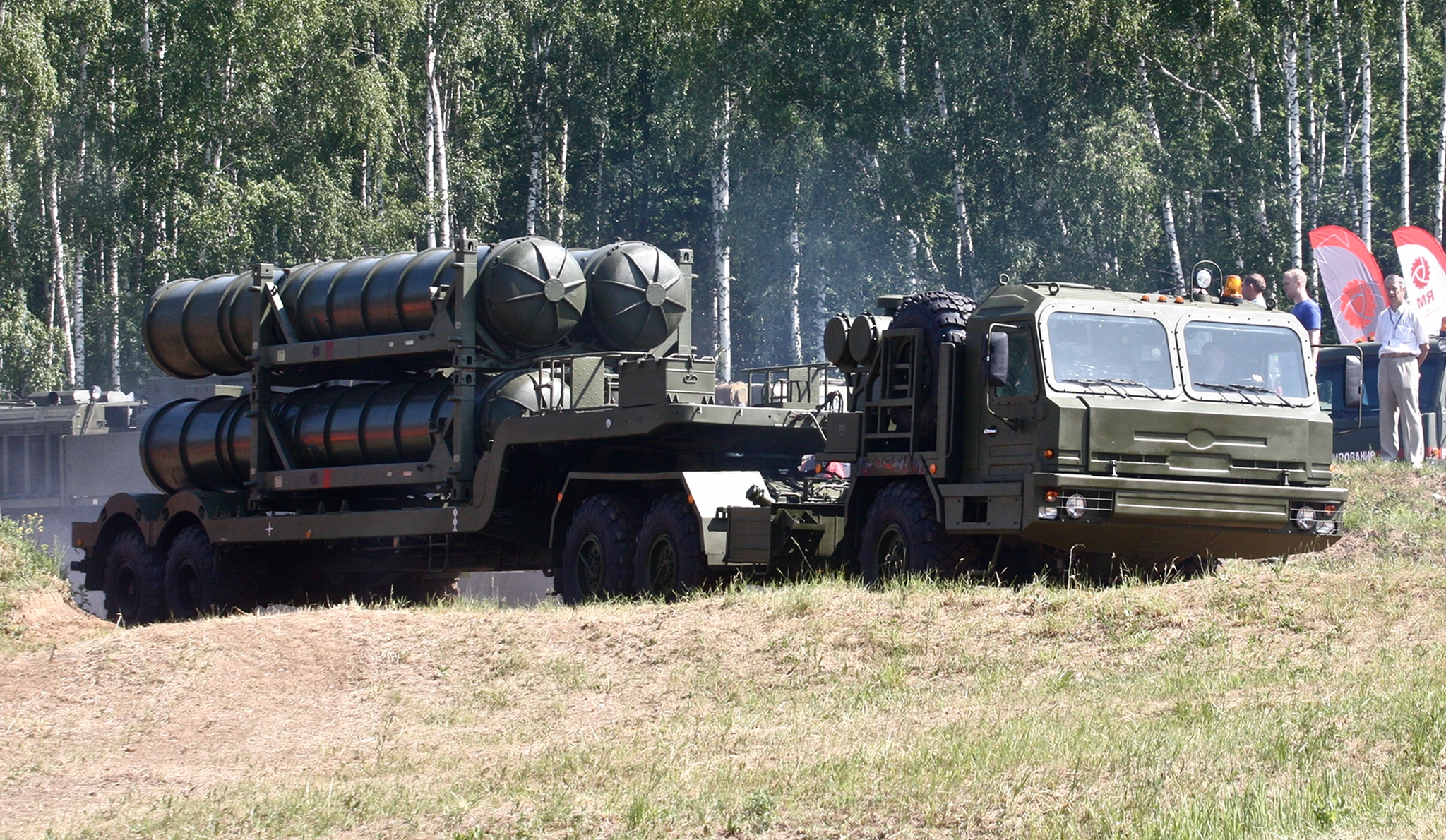
Late model 5T58-2 S-400 transporter towed by BAZ-6402-015 tractor (© 2011 Vitaliy V. Kuzmin).
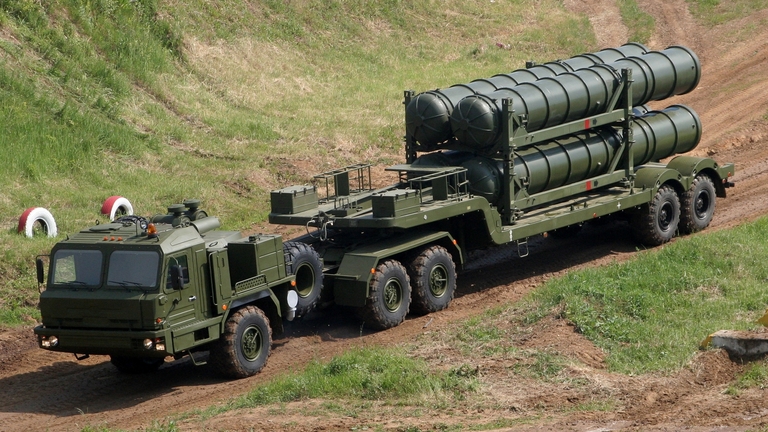
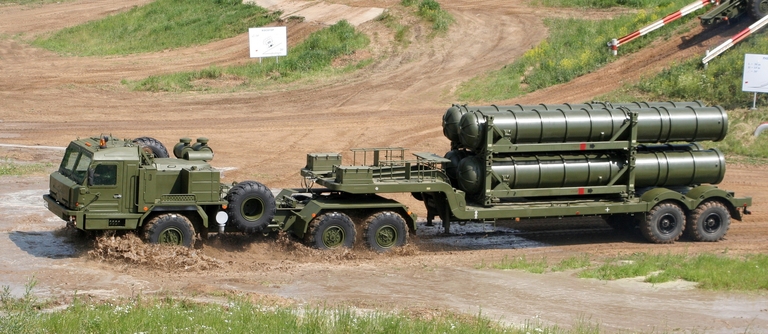
(image © 2011 Michael Jerdev)
(image © 2011 Michael Jerdev)
(© 2011 Vitaliy V. Kuzmin)
Detail of 5T58-2 (image © 2011 Michael Jerdev)
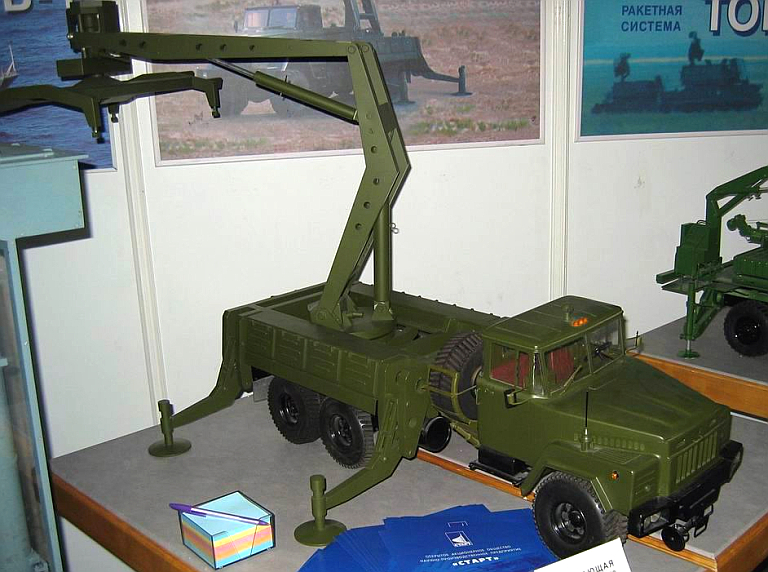
NPP Start 22T6/22T6E2 Transloader


KrAZ-260 Tractor
| Specifications |
||
| Грузоподъемность, (без лебедки) 9500 кг. Снаряженная масса (без лебедки и дополнительного снаряжения) 11750 кг. В том числе: на переднюю ось 5740 кг. на тележку 6010 кг. Полная масса 21475 кг. В том числе: на переднюю ось 6320 кг. на тележку 15155 кг. Допустимая полная масса прицепа: по всем видам дорог и местности 10000 кг. по дорогам с твердым покрытием 30000 кг. Макс. скорость автомобиля 80 км/ч. То же, с прицепом полной массой 10000 кг 80 км/ч. Время разгона атомобиля до 60 км/ч 40 с. Выбег автомобиля с 50 км/ч 650 м. Макс. преодолеваемый подъем автомобилем 58 % То же, с прицепом полной массой 10000 кг 32 % Тормозной путь автомобиля с 40 км/ 17,2 м. То же, автопоезда 18,4 м. Контрольный расход топлива автомобиля, л/100 км, при скорости 60 км/ч 38,5 л. Глубина преодолеваемого брода с твердым дном при номинальном давлении воздуха в шинах 1,2 м. Радиус поворота: по внешнему колесу 13,0 м. габаритный 13,5 м. |
||
| Двигатель. Мод. ЯМЗ-238Л.
дизель с турбонаддувом V-образный 8-цил., 130x140. 14,86 л, степень
сжатия 1 5 , 2 , порядок работы 1-5-4-2-6-3-7-8,
мощность 220 кВт (300 л.с.) при 2100 об/мин, крутящий момент 1079 Н-м
(110 кгс-м) при 1500 об/мин. ТНДВ - 8-секционный, золотникового
типа, с т°пливоподкачивающим насосом низкого давления, муфтой
опережения впрыска топлива и всережимным регулятором частоты вращения.
Форсунки - закрытого типа. Воздушный фильтр - сухой, со сменным
фильтрующим элементом и индикатором засоренности. Двигатель оснащен
электрофакельным устройством (ЭФУ) и предпусковым подогревателем
ПЖД-44МБУ.
|
||
| Source: autosoft.ru | ||
Ural 375 Tractor
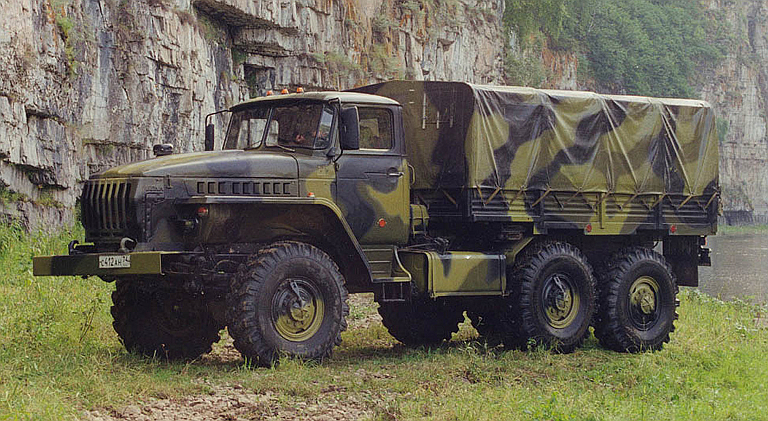
| Параметры | Урал-375 | Урал-375Д | Урал-375A | Урал-375С | |
| Грузоподъемность, т | 5,0/4,5* | 5,8 | 5,5** | ||
| Вес буксируемого прицепа или полуприцепа с грузом, т | 10,0/5,0*** | 12,0 | |||
| Масса снаряженного автомобиля, кг | 8000/8400* | 7100 | 7700 | ||
| Полный вес автомобиля, кг**** | 13200/13300* | 19700***** | |||
| Габаритные
размеры,
мм: - длина - ширина - высота по кабине - высота по тенту кузова |
7350 2690 2680 2980 |
8000 2500 2680 - |
6990 2500 2680 - |
||
| База, мм | 4200 | ||||
| Колея всех колес, мм | 2000 | ||||
| Клиренс,
мм - под передним мостом - под задними мостами |
400 400 |
||||
| Наименьший радиус поворота по колее переднего колеса, м | 10,5 | ||||
| Углы
въезда,
съезда,
град: - передний - задний |
44 40 |
44 65 |
|||
| Максимальная скорость, км/ч | 75 | 65 | |||
| Путь торможения со скорости 40 км/ч, м | 15 | 13 | |||
| Контрольный расход топлива, л/100 км | 48 | 63 | |||
| Запас хода по контрольному расходу топлива, км | 750 | 625 | 650 | ||
| Запас
топлива,
л - основной бак - дополнительный |
300 60 |
300 - |
300 110 |
||
| Двигатель | V-образный, 8-цилиндровый, четырехтактный, карбюраторный, верхнеклапанный | ||||
| ЗиЛ-375 | |||||
| Рабочий объем, л | 6,959 | ||||
| Степень сжатия | 6,5 | ||||
| Максимальная мощность л.с. (об/мин) | 180 (3200) | ||||
| Макс. крутящий момент, кгм (об/мин) | 47,5 (1800) | ||||
| Электрооборудование | батарейное 12 В | ||||
| Сцепление | сухое, двухдисковое с периферийными пружинами, привод рычажный от педали | ||||
| Коробка передач | ЯМЗ-204У, механическая, трехходовая, с пятью передачами для движения вперед и одной назад, с синхронизаторами на второй, третьей, четвертой и пятой передачах | ||||
| Передаточные числа КПП | 6,17; 3,40; 1,79; 1,0; 0,78; задний ход - 6,69 | ||||
| Главная передача | Двойная, пара конических шестерен со спиральным зубом и пара косозубых цилиндрических шестерен | ||||
| Передаточное отношение | 8,9:1 | ||||
| Раздаточная коробка | Механическая, двухступенчатая с цилиндрическим блокируемым межосевым дифференциалом, распределяющим крутящий момент между передним мостом и тележкой задних мостов в отношении 1:2 | ||||
| Передаточное
отношение - высшая передача - низшая передача |
1,30:1 2,15 |
||||
| Карданная передача | Открытая, четырьмя валами с шарнирами на игольчатых подшипниках | ||||
| Колеса | Специальные, с разъемными ободами, коническими полками и распорным кольцом | ||||
| Шины, размер | ОИ-25, 14.00—20 | ||||
| Тормоза | Открытого типа, колодочные на всех колесах | ||||
| Рабочий привод | Пнеммогидравлический: для переднего и среднего мостов - совместный, для заднего моста - отдельный | ||||
| Ручной тормоз | Установлен на выходном валу раздаточной коробки, барабанного типа с внутренними колодками; привод сблокирован с тормозным краном ножных тормозов для затормаживания прицепа на стоянке | ||||
| Рулевой механизм, тип | Левого расположения, с гидравлическим усилителем, двухзаходный червяк и зубчатый сектор | ||||
| Передаточное отношение | 21,5:1 | ||||
| Кабина | Трехместная, металлическая с мягким верхом, с откидными рамками ветрового и дверных окон | Трехместная, цельнометаллическая с глухим ветровым окном, опускными стеклами и поворотными форточками дверей | |||
| Платформа | Металлическая с задним откидным бортом, оборудована откидными скамейками и съемным тентом с дугами; боковые и передний борта надставные решетчатые | - | |||
| Внутренние
размеры
платформы,
мм - длина - ширина - высота борта |
3900 2430 872 |
- | |||
| *
Без лебедки/с установленной лебедкой. ** Максимальная нагрузка на седельное устройство. *** При движении по дорогам с твердым покрытием/по грунтовым дорогам и бездорожью. **** В т.ч. вес трех человек в кабине (300 кг). ***** Общий вес автопоезда. |
|||||
| Source: Russkaya Sila |
|||||
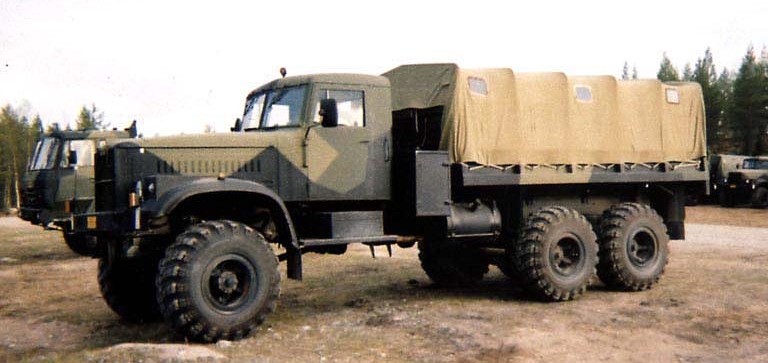
KrAZ-255 Tractor
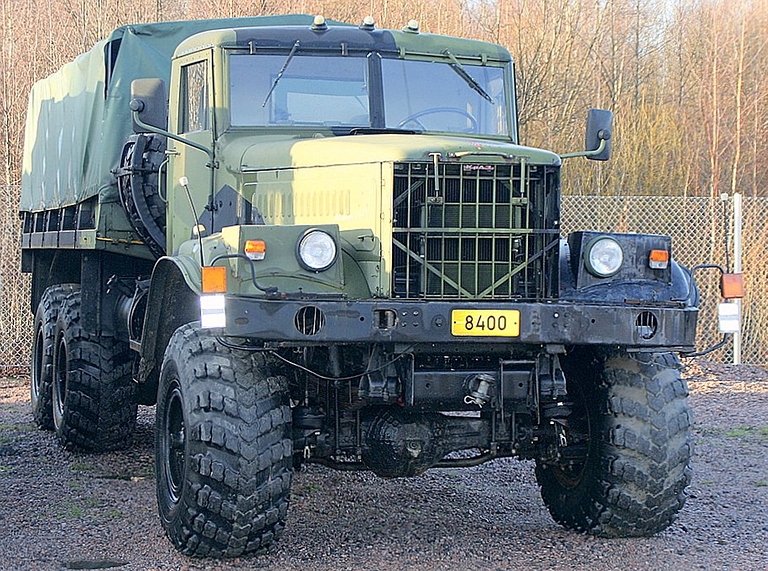
The Ukrainian KrAZ-255 series 6 x 6 tractor was widely used to tow S-300PT battery components. Typical configuration is fitted with a 240 SHP diesel engine. Variants remained in use for towing trailer mounted components of later S-300P variants, but were mostly supplanted by the newer KrAZ-260 series.
| Specifications |
|
| Грузоподъемность (без лебедки) |
8020 кг. |
| Снаряженная
масса
(с
дополнительным
снаряжением) В том числе: на переднюю ось 4920 кг. на тележку 6250 кг. |
11170 кг. |
| Полная
масса В том числе: на переднюю ось 5190 кг. на тележку 14225 кг. |
19415 кг. |
| Глубина преодолеваемого брода с твердым дном при номинальном давлении воздуха в шинах | 1,0 м |
| Радиус
поворота: по внешнему колесу габаритный |
13,5 м. 14,2 м. |
| Грузоподъемность (без лебедки) | 8020 кг. |
| Снаряженная
масса
(с
дополнительным
снаряжением) В том числе: на переднюю ось 4920 кг. на тележку 6250 кг. |
11170 кг. |
| Полная
масса В том числе: на переднюю ось 5190 кг. на тележку 14225 кг. |
19415 кг. |
| Допустимая полная масса прицепа по всем видам дорог и местности | 10000 кг |
| Допустимая полная масса прицепа по дорогам с твердым усовершенствованным покрытием | 30000 кг |
| Макс.скорость
автомобиля |
71 км/ч |
| То же, автопоезда с прицепом полной массой 10 т | 71 км/ч |
| Время разгона автомобиля до 60 км/ч | 40 с |
| Выбег автомобиля с 50 км/ч | 650 м |
| Макс.преодолеваемый подъем автомобилем | 58 % |
| То же, автопоездом с прицепом полной массой 10000кг | 32 % |
| Тормозной
путь
автомобиля
с
40
км/ч: |
автомобиля
17,2
м автопоезда 18,4 м |
| Контрольный расход топлива автомобиля, л/100 км, при скорости 60 км/ч | 35,3 л |
| Глубина преодолеваемого брода с твердым дном при номинальном давлении воздуха в шинах | 1,0 м |
| Радиус поворота по внешнему колесу | 13,5 м |
| Радиус поворота габаритный | 14,2 м |
| Двигатель:
Мод.
ЯМЗ-238М2,
дизель,
V-o6p.
(90°),
8-цил.,
130x140
мм,
14,86
л,
степень
сжатия
16,5,
порядок
работы
1-5-4-2-6-3-7-8,
мощность
176
кВт
(240
л.с.)
при
2100
об/мин,
крутящий
момент
883
Н-м
(90
кгс-м)
при
1450-1600
об/мин; ТНВД - 8-секционный, золотникового типа, с
топливоподкачивающим насосом низкого давления, муфтой опережения
впрыска топлива и всережимным регулятором частоты вращения. Форсунки -
закрытого типа. Воздушный фильтр - сухой, со сменным фильтрующим
элементом и индикатором засоренности. Двигатель оснащен предпусковым
подогревателем ПЖД-44МБУ теплопроизводительностью 32000 ккал/ч. |
|
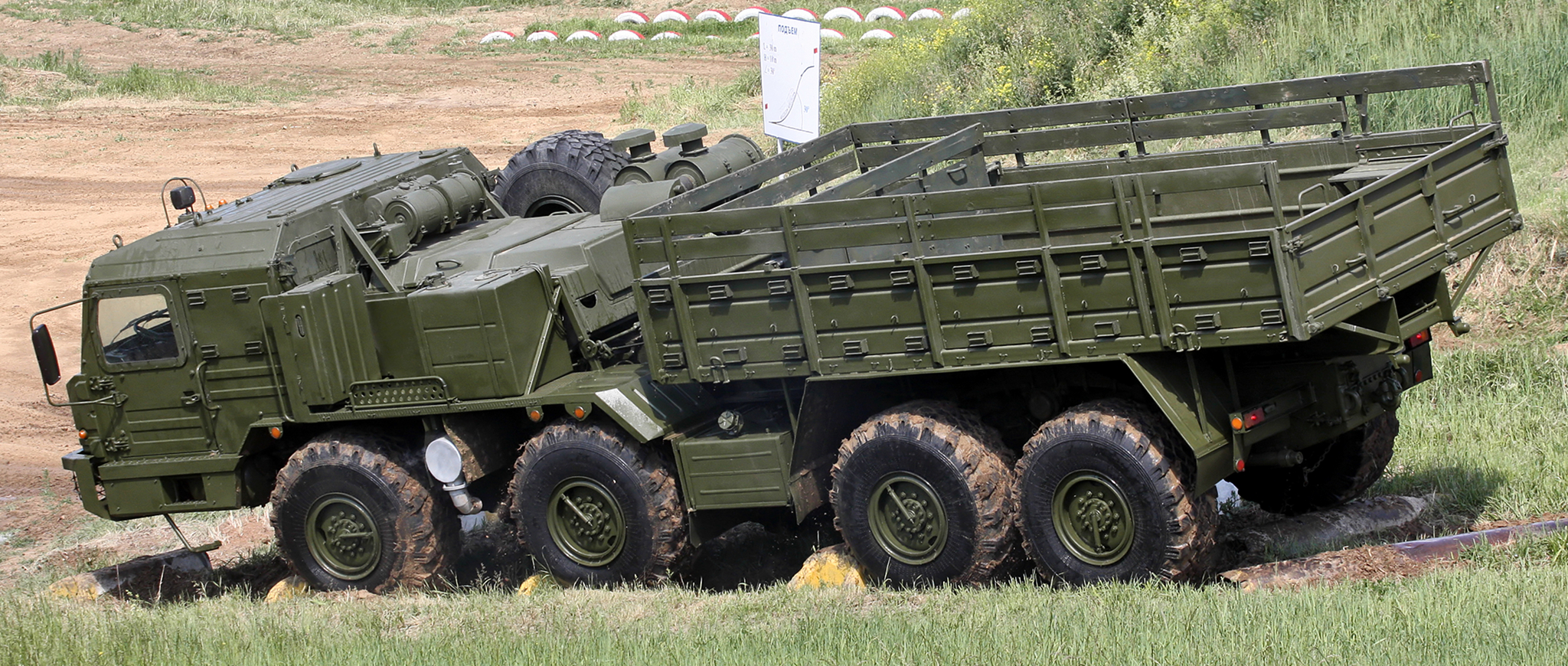
BZKT
BAZ-69092-021
| Наименование | Значения |
| Колесная формула, | 8х8.1 |
| Полная масса буксируемого полуприцепа, т | 15 (самолетов - 50) |
| Полная масса автопоезда, т, не более | 47,500/82,500 |
| Балласт, т | 11 |
| Сцепление однодисковое диафрагменное, | ЯМЗ-184.10 |
| Коробка передач, 9 передач вперед, 1 назад, | ЯМЗ-2393-03 |
| Подвеска I и II осей, | независимая, двухторсионная с амортизаторами на каждом колесе |
| Подвеска III и IV осей, | комбинированная, независимая одноторсионная для нижних рычагов и балансирная, рессорная для верхних |
| Шины с регулируемым давлением, радиальные (1350х550-533Р), | ИД-370 |
| Минимальный радиус поворота, м | 13 |
| Максимальная скорость, км/ч | 70 |
| Запас хода по контрольному расходу топлива, км | 1000 |
| - по бездорожью, | 15,0 |
| - по дорогам с твердым покрытием, | 50,0 |
| Габаритные размеры | |
| Длина, мм | 10401 |
| Ширина, мм | 2750 |
| Высота, мм | 3190 |
| Двигатель | |
| Марка двигателя, | ЯМЗ-8424.10 |
| Мощность, л.с. | 470 |
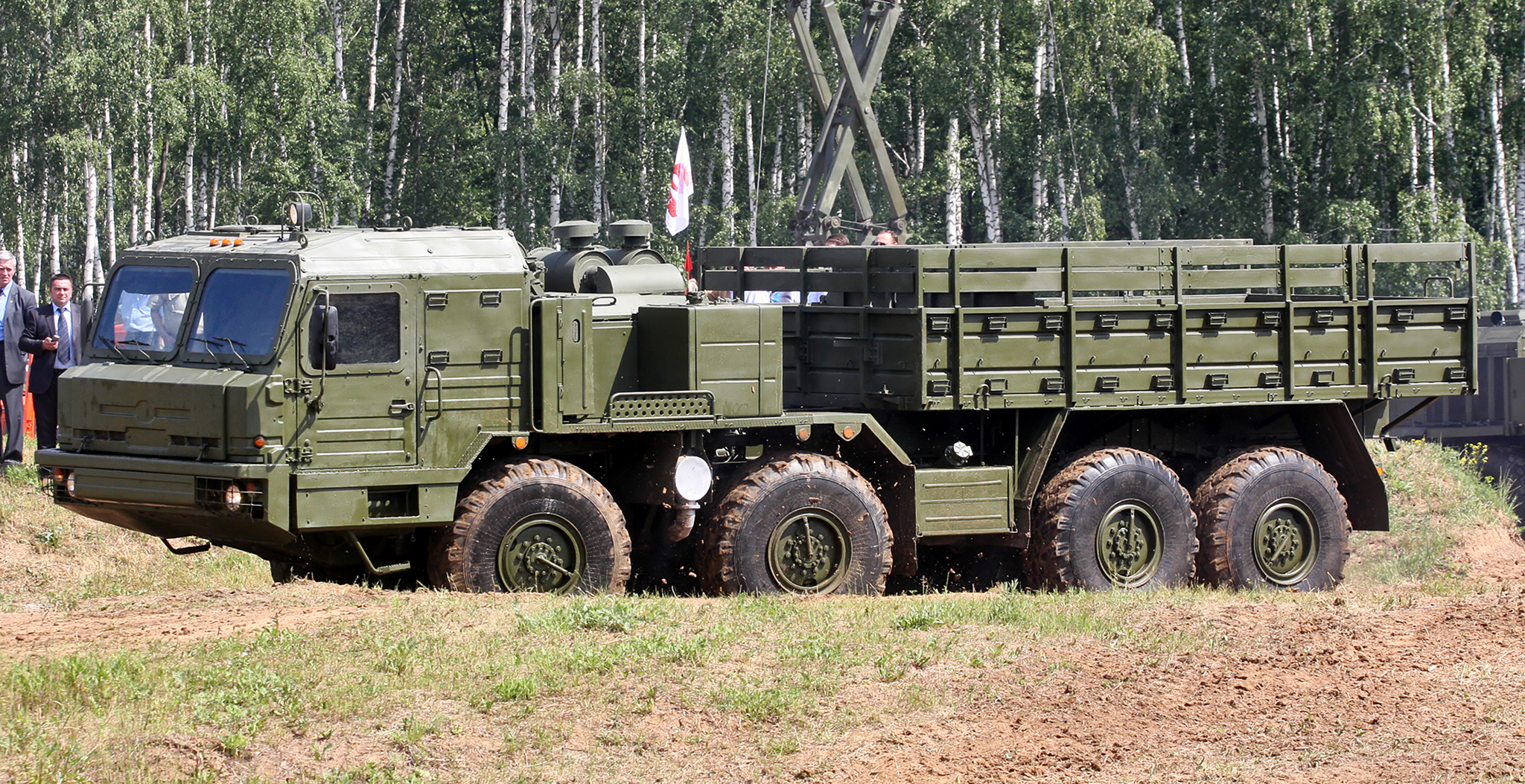
BAZ-69092-021 Flatbed (© 2011 Vitaliy V. Kuzmin).
5I57/5I57A Mobile Diesel Power Generator

63T6/63T6A Mobile Mains Grid Power Converter
Technical Report APA-TR-2008-0601-A
|
|||||||||||||
|
|
|
|
|
|
|
|
|
|
|
|||
|
|
|
|
|
|
|
|
|
|
|
|||
 |
|
|
|||||||||||
| Artwork, graphic design, layout and text © 2004 - 2014 Carlo Kopp; Text © 2004 - 2014 Peter Goon; All rights reserved. Recommended browsers. Contact webmaster. Site navigation hints. Current hot topics. | |||||||||||||
|
Site Update
Status:
$Revision: 1.753 $
Site History: Notices
and
Updates / NLA Pandora Archive
|
|||||||||||||
|
|
Tweet | Follow @APA_Updates | |||||||||||
|
|
|||||||||||||
|
|
|||||||||||||