|
||||||||||||||||||||||
 |
||||||||||||||||||||||
![F-22A Raptor, FB-22, F-22E, F-22N and Variants Index Page [Click for more ...]](APA/f-fb-22.png "F-22A Raptor, FB-22, F-22E, F-22N and Variants Index Page [Click for more ...]") |
 |
![People's Liberation Army Air Power Index Page [Click for more ...]](APA/pla-air-pwr.png "People's Liberation Army Air Power Index Page [Click for more ...]") |
 |
 |
 |
 |
 |
 |
![Military Ethics, Culture, Education and Training Index Page [Click for more ...]](APA/ethx-culture.png "Military Ethics, Culture, Education and Training Index Page [Click for more ...]") |
 |
||||||||||||
 |
![Russian / Soviet Weapon Systems Index Page [Click for more ...]](APA/rus-weps.png "Russian / Soviet Weapon Systems Index Page [Click for more ...]") |
 |
 |
 |

|
 |
 |
 |
 |
 |
||||||||||||
 |
 |
|||||||||||||||||||||
| Last Updated: Mon Jan 27 11:18:09 UTC 2014 | ||||||||||||||||||||||
|
||||||||||||||||||||||







|
Almaz-Antey 40R6 /
S-400
Triumf
Self Propelled Air Defence System / SA-21 Самоходный Зенитный Ракетный Комплекс 40Р6 / С-400 «Триумф» Technical Report APA-TR-2009-0503 |
|||||||||||||||||||||||||||||||||||||||||||||||||||||||||||||||||||||||||||||||||||||||
by Dr Carlo Kopp, AFAIAA, SMIEEE, PEng May 2009 Updated February 2010 Updated May, June 2011 Updated April, 2012 Text, Line Art © 2009 - 2012 Carlo Kopp   [Please embed this graphic and link on your website] |
|||||||||||||||||||||||||||||||||||||||||||||||||||||||||||||||||||||||||||||||||||||||
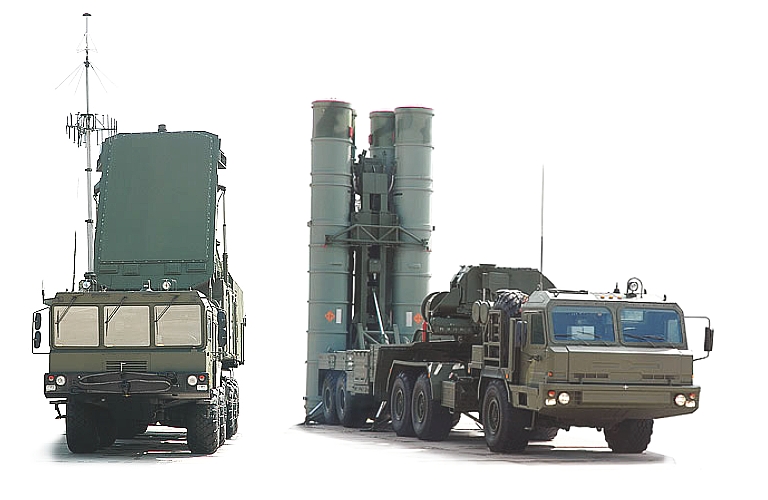 92N6E
Grave
Stone
and
5P85TE2
TEL
(Almaz-Antey)
|
|||||||||||||||||||||||||||||||||||||||||||||||||||||||||||||||||||||||||||||||||||||||
|
|||||||||||||||||||||||||||||||||||||||||||||||||||||||||||||||||||||||||||||||||||||||
IntroductionThe Almaz S-400 Triumf or SA-21 system is the most recent evolution of the S-300P family of SAM systems, initially trialled in 1999. The label S-400 is essentially marketing, since the system was previously reported under the speculative label of S-300PMU3. At least one report claims that funding for the development of the Triumf was provided in part by the PLA. The principal distinctions between the S-400 and its predecessor lie in further refinements to the radars and software, and the addition of four new missile types in addition to the legacy 48N6E/48N6E2 used in the S-300PMU2 Favorit. 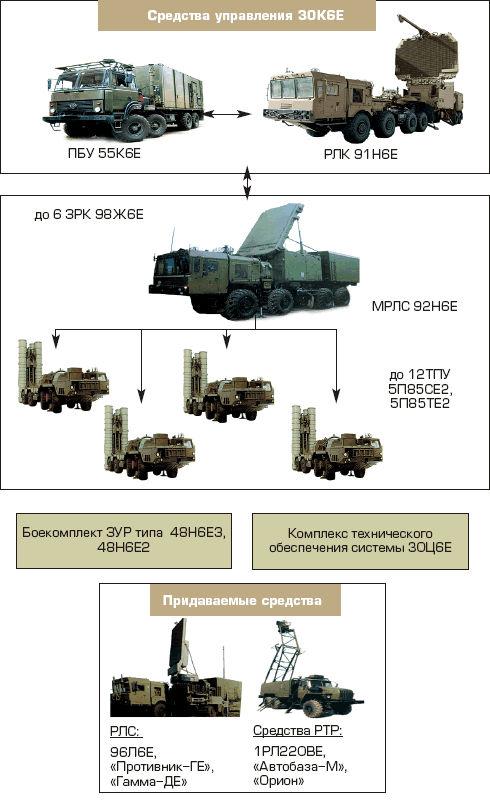 A 2008 diagram published by Almaz-Antey
showing the composition of an S-400 battery. Notable points include the
integration of external low band NNIIRT Protivnik GE and VNIIRT Gamma
DE L-band radars, and a range of passive emitter locating systems. All
have the angular accuracy to provide midcourse guidance updates for
missile shots.
As a result an S-400 battery could be armed with arbitrary mixes of these weapons to optimise its capability for a specific threat environment. The 30N6E2 further evolved into the more capable 92N6E Grave Stone, carried by a new 8 x 8 MZKT-7930 vehicle. The additional range required a significantly uprated transmitter tube to provide the higher power-aperture performance needed, in additional to an improved exciter and automatic frequency hopping capability. The 96L6 is offered as an 'all altitude' battery acquisition radar, also carried by a 8 x 8 MZKT-7930 vehicle. A new 3D phased array acquisition radar is employed, the 91N6E derived from the 64N6E2, and the 40V6M/MD mast is an available option. The 55K6E command post is employed, carried by an 8 x 8 Ural 532361 truck. Optional acquisition radars cited for the S-400 include the 59N6 Protivnik GE and 67N6 Gamma DE in the L-band, but also the 1L119 Nebo SVU in the VHF band, and the multiband Nebo M. The Nebo SVU/M have a claimed capability against stealth aircraft. In addition to further acquisition radar types, the S-400 has been trialled with the Topaz Kolchuga M, KRTP-91 Tamara / Trash Can, and 85V6 Orion / Vega emitter locating systems, the aim being to engage emitting targets without emitting from the acquisition radars, or if the acquisition radars have been jammed. In June, 2008, the manufacturer disclosed the integration of the 1RL220VE, 1L222 and 86V6 Orion emitter locating systems with the S-400. TEL options include the
baseline 5P85TE2
semitrailer, towed by a 6 x 6 BAZ-64022, the improved 5P90S
self-propelled TEL hosted on the BAZ-6909-022 and
intended to carry a heavier missile payload than the legacy MAZ-79100
series TELs, and a new heavyweight towed TEL to be designated the
5P90TMU.
Imagery of the 5P90S self-propelled TEL shows a new gantry design, a new elevating folding mast with a directional antenna, and a state-of-the-art NK Orientir precision navigation system, with an increased baseline for the satnav antennas, compared to the installation on the S-300PMU2 vehicles. Long term planning is to host all S-400 battery components on BAZ Voschina series vehicles, with the 92N6 Grave Stone and 96L6-1 carried on the 10 x 10 BAZ-69096 chassis, and a new BAZ-6403.01 8 x 8 tractor is to be used to tow the 91N6 Big Bird battle management radar, and 40V6M/T series mobile mast systems. The 55K6E battery command post will be hosted on the BAZ-69092-012 6 x 6 chassis, a flatbed variant of which will be used to tow the 63T6A power converter and 5I57A power generator. The 8 x 8 BAZ-69096 chassis is also intended for future use in the 96K6 Pantsir S1 / SA-22 SPAAGM. S-400 Design Philosophy and ImplementationThe most detailed technical paper to date covering the S-400 was produced by Dr Alexander Lemanskiy, Chief Engineer on the S-400, Igor Ashurbeili, General Director, and Nikolai Nenartovich, Chief Engineer, of Almaz-Antey, published in the Russian language Vozdushno-Kosmicheskaya Oborona journal, No.3 (40), 20081. Unfortunately it lacks the detail of later Almaz-Antey disclosures on the S-300PMU2 Favorit, but does provide a good discussion of the rationale behind the S-400 design design, and its key design features.Lemanskiy et al state that definition of the S-400 design was performed jointly by the designers and the Russian MoD, with specific capability foci in:
Export variants of the S-400 Triumf are intended to destroy opposing stand-off jammer aircraft, AWACS/AEW&C aircraft, reconnaissance and armed reconnaissance aircraft, cruise missile armed strategic bombers, cruise missiles, Tactical, Theatre and Intermediate Range Ballistic Missiles, and any other atmospheric threats, all in an intensive Electronic Counter Measures environment. Lemanskiy et al describe the system composition as four core components:
The design permits all equipment vans to be separated from the vehicle chassis for installation and operation in hardened shelters. S-400 System IntegrationThe communications and networking systems are designed with interfaces for operation over radio-frequency, and landline links, including analogue telephone cables. The 98Zh6E Fire Units can be located up to 100 km from the 55K6E Command Post. The 91N6E Grave Stone can be installed on the 40V6MR mobile mast system for operation in complex or heavily forested terrain.The 30K6E battle management system exploits much of the potential in a fully digital system, and can control:
55K6E Command Post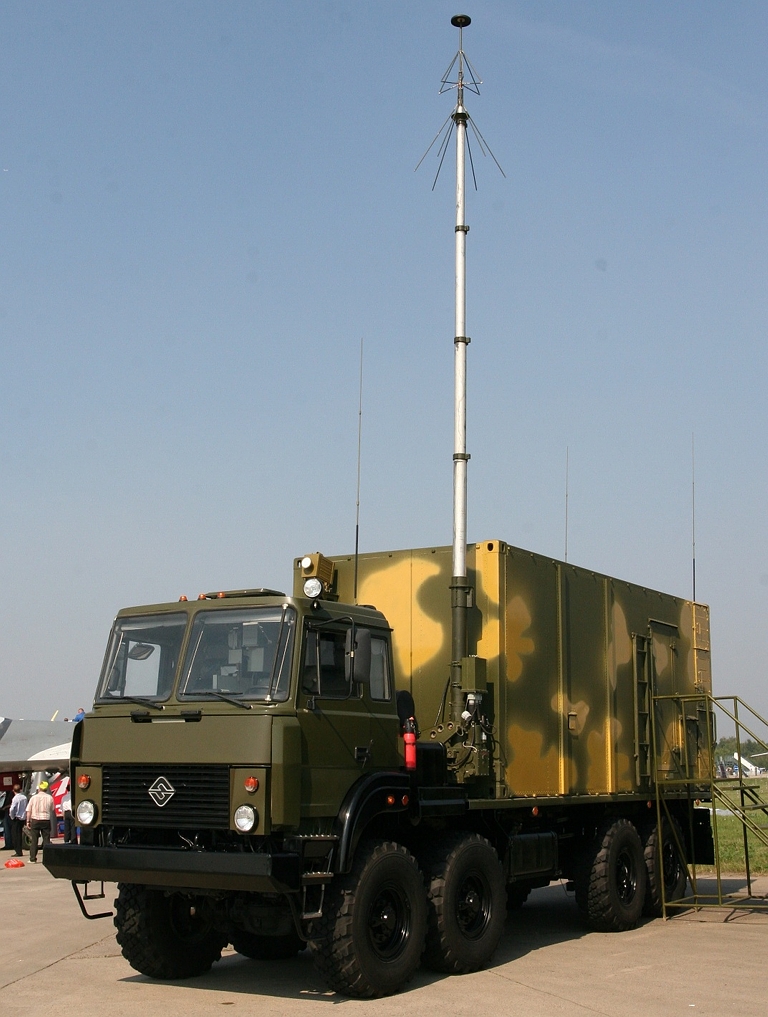 An S-400 55K6 Command Post with deployed antenna mast. This design is visually indistinguishable from the S-300PMU2 54K6E2 Command Post (image © Miroslav Gyűrösi). The 55K6E is employed to control all components in the group of batteries, and can collect and present status information from all components. It can also control the operating modes of the 91N6E Big Bird acquisition and battle management radar, including its IFF/SSR functions. A comprehensive C3 /datalink package is installed, and an Elbrus-90 mikro central processor is used to execute the dataprocessing and system management code. Sharing hardware with the S-300PMU2 54K6E 2 CP, the 55K6E uses 18 inch LCD panels for all crew stations. Five common consoles are installed, with unique software driven presentation for the five person crew of the CP, the latter comprising:
91N6E Big Bird Acquisition and Battle Management RadarThe design changes to the 91N6E were not detailed by Lemanskiy et al, other than to disclose its intended ABM acquisition role. The radar is tasked with acquiring and tracking aerial and ballistic targets, identifying targets, and performing angle measurements on standoff jamming aircraft.The 91N6E is a Janus-faced symmetrical transmissive space fed passive phased array, with a range of conventional circular scan modes, and a number of fixed sector scan modes, using electronic beam steering in elevation and azimuth. In the latter modes, the antenna boresight can be mechanically tilted upward to extend achievable electronic beamsteering elevation coverage. The radar is a pulse-to-pulse agile frequency hopper, to maximise countermeasures resistance. Unique high duty cycle transmit waveforms are available for fixed sector electronically beamsteered search modes. 98Zh6E Fire UnitThe individual fire units in the battery are designated the 98Zh6E, and comprise a single 92N6E Grave Stone multirole engagement radar and a group of subordinate TELs.92N6E Grave Stone Multimode Engagement Radar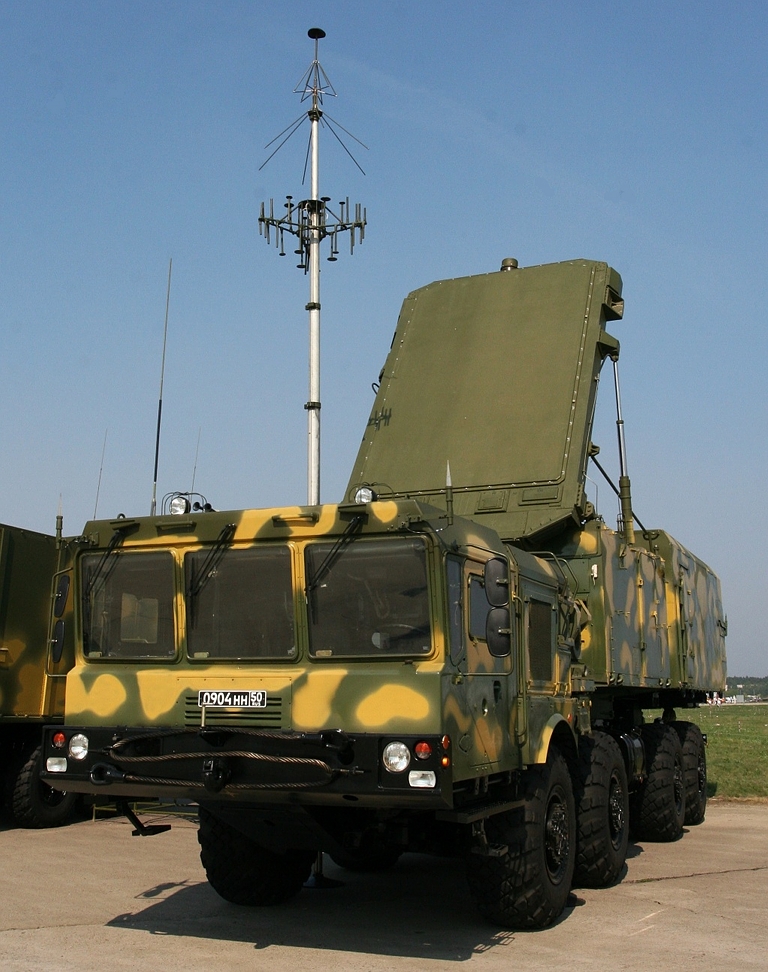 The 92N6 Grave Stone multimode engagement radar is a significant redesign of the Flap Lid / Tomb Stone series with fully digital processing and increased power-aperture performance (image © Miroslav Gyűrösi). The 92N6E departs from the specialised engagement and fire control functionality of earlier radars in the Flap Lid family, exploiting abundant computing power no differently than Western AESAs. It is intended to provide autonomous manual and automatic sector searchs, target acquisition and tracking, in adverse weather, Electronic Counter Measures, chaff and low altitude clutter environments. The radar is equipped with an IFF capability. The 92N6E Grave Stone will automatically prioritise targets, compute Launch Acceptable Regions for missile launches, launch missiles, capture missiles, and provide midcourse guidance commands to missiles while tracking the target and missile. Missile guidance modes include pure command link, semi-active homing, and Track via Missile (TVM) / Seeker Aided Ground Guidance (SAGG), where missile semi-active seeker outputs are downlinked to the Grave Stone to support the computation of missile uplink steering commands. The radar can track 100 targets in Track While Scan mode, and perform precision tracking of six targets concurrently for missile engagements. data exchanges between the 92N6E Grave Stone and 30K6E battle management system are fully automatic. The 92N6E Grave Stone data processing subsystem is designed around the Elbrus-90 mikro SPARC multiprocessor system, like the S-300PMU2 30N6E2 Tomb Stone variant. Computing power is exploited to support a diverse range of modes and waveforms. These including:
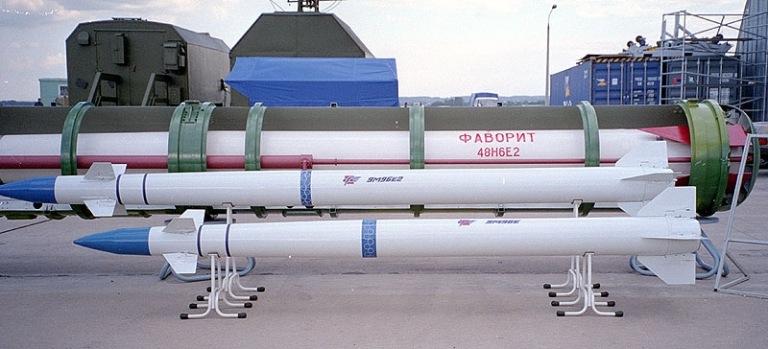
Lemanskiy et al described the 48N6E3 missile in some detail, but did not include any disclosures beyond what is already public knowledge. The authors did state that increased radar power-aperture product performance in both the 92N6E Grave Stone and 91N6E Big Bird increases the capability of the S-400 Triumf to engage low signature or stealth targets, but their cryptic claim of 50 percent of the engagement range remains difficult to interpret. What is evident is that the fully digital S-400 Triumf displays most if not all of the typical capability gains seen in the latest generation of fully digital systems of Western design. 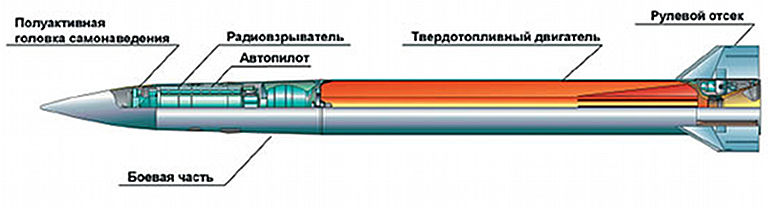 48N6E3
SAM
Cutaway.
Note
the
TVC
vanes
in
the
exhaust
nozzle.
The
seeker
is
labelled as 'semi-active
radar' (Almaz-Antey)
Fakel 48N6E3 and 40N6 Surface to Air MissilesThe first missile added to the
system is the 48N6E3/48N6DM (Dal'naya - long range), an incrementally
improved 48N6E2 variant with a range of 130 nautical miles. It is
deployed using the standard TEL, the 5P85TE2/SE2. The second
missile added to the S-400 is the new 40N6, a long range weapon with a
cited range of 215 nautical miles, equipped with an active and
semi-active homing seeker, intended to kill AWACS, JSTARS and
other high value assets, such as EA-6B/EA-18G support jammers. Further
details of this weapon remain to be
disclosed. The range improvement to around twice that of the 48N6E2
suggests a two stage weapon, or a much larger motor casing with a
larger propellant load. Russian media reports citing PVO senior
officers in 2010 indicated that 40N6 range may be a great as 240
nautical miles, and the missile completed State Trials (Russian OpEval)
in 2010, and was to enter production. To date no images of the 40N6
missile, launcher container or TEL have been made public. 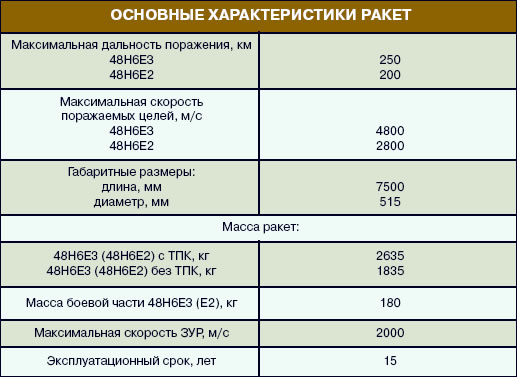 S-400 48N6E2/E3 SAM specifications.
Extended range missile shots
typically involve ballistic flight profiles with apogees in excess of
40 km. The protracted development of the 40N6 suggests that directional
control through the upper portions of the flight profile may have
presented difficulties. One advantage of such flight profiles is that
the missile converts potential energy into kinetic energy during the
terminal phase of its flight, accelerating as it dives on its target.
This provides higher endgame G capability in comparison with flatter
cruise profiles used in legacy designs.
9M96E
and
9M96E2 (Almaz-Antey).
Fakel 9M96E and 9M96E2 Surface to Air Missiles
The third and fourth missiles are in effect equivalents to the ERINT/PAC-3 interceptor missile recently introduced to supplement the MIM-104 in Patriot batteries, but designed to also engage low and medium altitude aerial targets. These are the 9M96E and 9M96E2, largely identical with the latter version fitted with a larger powerplant. Fakel claim the 96M6E has a range of 21.6 nautical miles, and the 9M96E2 64.8 nautical miles, with altitude capabilities from 15 ft AGL up to 66 kft and 100 kft respectively. The 9M96 missiles are “hittiles”
designed for direct impact, and use canards and thrusters to
achieve extremely high G and angular rate capability throughout the
engagement envelope. An
inertial package is used with a datalink from the 30N6E2/92N6E radar
for
midcourse guidance, with a radar homing seeker of an undisclosed type.
The small 53 lb (24 kg) blast fragmentation warhead is designed to
produce an controlled fragment pattern, using multiple initiators to
shape the detonation wave through the explosive. A smart radio fuse is
used to control the warhead timing and pattern. It is in effect a
steerable shaped charge.
Both missiles use nose mounted
canard control surfaces to effect a high turn rate at altitudes where
air density permits the generation of high control forces. Fakel
designers Bolotov and Mizrokhi cite 60G capability at sea level, and
20G at 30,000 metres, the latter using thruster control. This is
required to effect a “hit-to-kill” endgame against ballistic and high
speed aerial targets. While the larger 9M96E2 is an
almost direct equivalent in size and performance to the ERINT/PAC-3
round, its control arrangement is fundamentally different, both
aerodynamically and in thruster arrangement. The 9M96E/E2 radial
thruster package is located at the fuselage CoG, to generate a direct
force to turn the missile, rather than producing a pitch/yaw moment to
use body lift to turn, as is the case in the ERINT/PAC-3 design. The
sleeve mounted tail surfaces are mechanically decoupled from the
fuselage in roll, to minimise thruster induced rolling moments. The smaller size of these
weapons permits four to be loaded into the volume of a single
48N6E/5V55K/R launch tube container - a form fit four tube launcher
container is used. A single 5P85S/T TEL can thus deploy up to 16 of
these missiles, or mixes of 3 x 48N6 / 4 x 9M96E/E2, 2 x 48N6 / 8 x
9M96E/E2 or 1 x 48N6 / 12 x 9M96E/E2. The stated aim of this approach
was to permit repeated launches against saturation attacks with
precision guided munitions - in effect trading 9M96 rounds for incoming
guided weapons. Fakel claim a single shot kill probability of 70%
against a Harpoon class missile, and 90% against a manned aircraft.
The addition of the 9M96E/E2 missiles, which amount to a combined ABM and point defence weapon designs, is part of a broader Russian strategy of deploying air defence weapons capable of defeating PGM attacks, including the AGM-88 HARM family, and follow-on defence suppression weapons, the latter types intended to disable the S-400 battery acquisition and engagement radars. The advantage in using the 9M96E/E2 for this purpose is that it avoids the additional technical and operational complexity of directing other “counter-PGM” point defence weapons such as the Tor M1/M2, Tunguska M and Pantsir S/S1 series. Some sources have credited the
9M96E/9M96E2 missiles to the S-300PMU1
and S-300PMU2 Favorit, which appears to have been the demonstration
platform for prototypes of these missiles. Integration of these
missiles on either of these systems will not present any challenges,
due to backward compatibility in TELs and the use of a datalink
supported active radar terminal seeker. To
date there have been no disclosures on domestic production or export
sales of the 9M96 series. Russia media reports in 2010 indicated that
production may soon commence for use on S-400 systems, using a
new four chamber launcher/container design with an identical form
factor to the standard 48N6 design.
 S-400 5P85SE demonstrator TEL with quad 9M96E launch tubes. This design may be replaced in production with a four chamber design in the same form factor as the 48N6 launch tube (image © Miroslav Gyűrösi). 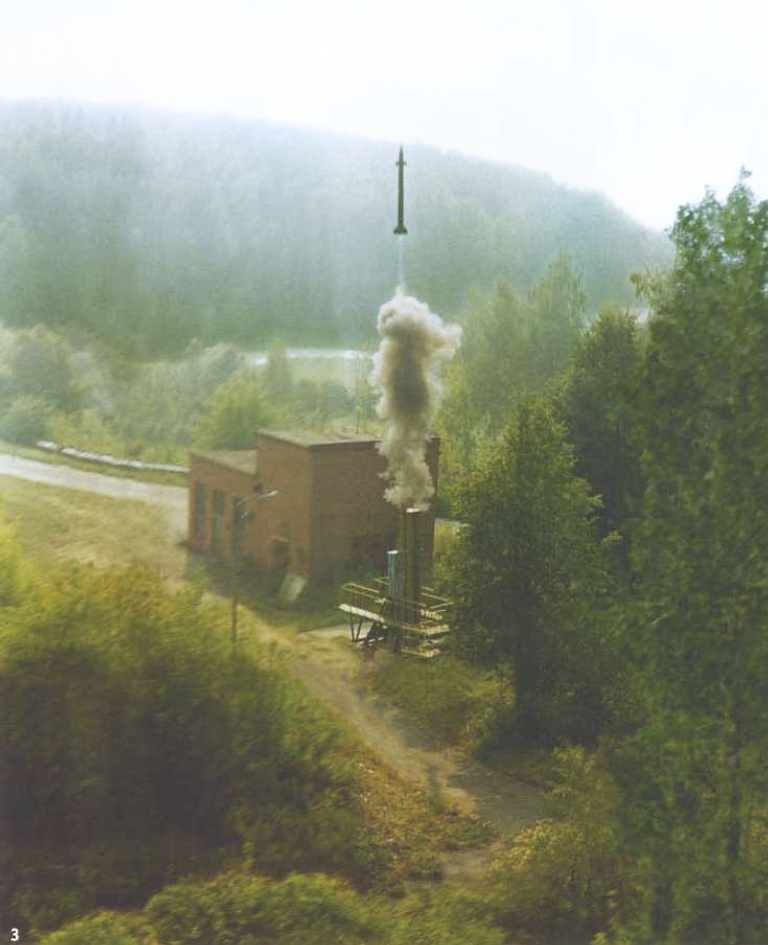 9M96E series missile test launch (Fakel).  9M96E missile at MAKS 2005 (© 2005, Said Aminov). S-400 and Legacy Surface to Air Missile System HybridisationSome sources also credit the S-400 with the capability first demonstrated in the S-300PMU2 Favorit, of controlling S-200/SA-5 Gammon batteries and directing the 5N62VE Square Pair FMCW guidance and illumination radar. Given that the Russian S-200 inventory and missile warstock has been decommissioned and exported, if this capability is retained, it is for export clientele.If software and datalink modems are supplied in production S-400 systems to support the S-200 / SA-5, this raises the question of potential hybridisation with other legacy SAM types. With most potential export clientele already operating legacy SAM systems such as the S-75M/SA-2 Guideline, S-125/SA-3 Goa and 3M9/9M9/SA-6 Gainful, this could prove to be an attractive marketing tool. The model claimed for the S-200/SA-5 would likely be applied, using the SNR-75 Fan Song, SNR-125 Low Blow or 1S91 Straight Flush to guide the missiles to an aimpoint produced by the 92N6E Grave Stone tracking the target, and in the latter instance, provide terminal phase illumination. The key issue of reconciling location errors between the various system components can be addressed by satellite navigation, with dual mode GPS/Glonass receivers already widely used in Russian equipment. The use of the NK Orientir precision geolocation and angular alignment system in the S-300PMU2 and S-400 presents a good example. The 2008 VKO paper by Lemanskiy et al of Almaz-Antey described the capability to control a range of S-300P variant batteries, and other contemporary IADS elements, but did not elaborate on legacy SAM system integration. Production and Exports, Further Development
The first S-400 battery achieved IOC status during the 2007-2008
period, and further batteries were being delivered to Russian PVO units
since. Russian media reports indicate delays in delivery against
initially planned schedules, which is not unusual for new designs. |
|||||||||||||||||||||||||||||||||||||||||||||||||||||||||||||||||||||||||||||||||||||||
S-400 Technical Data |
|||||||||||||||||||||||||||||||||||||||||||||||||||||||||||||||||||||||||||||||||||||||
|
|||||||||||||||||||||||||||||||||||||||||||||||||||||||||||||||||||||||||||||||||||||||
S-400 Battery Components |
|||||||||||||||||||||||||||||||||||||||||||||||||||||||||||||||||||||||||||||||||||||||
|
|||||||||||||||||||||||||||||||||||||||||||||||||||||||||||||||||||||||||||||||||||||||
Almaz-Antey 5P90S/SE Self Propelled Transporter Erector Launcher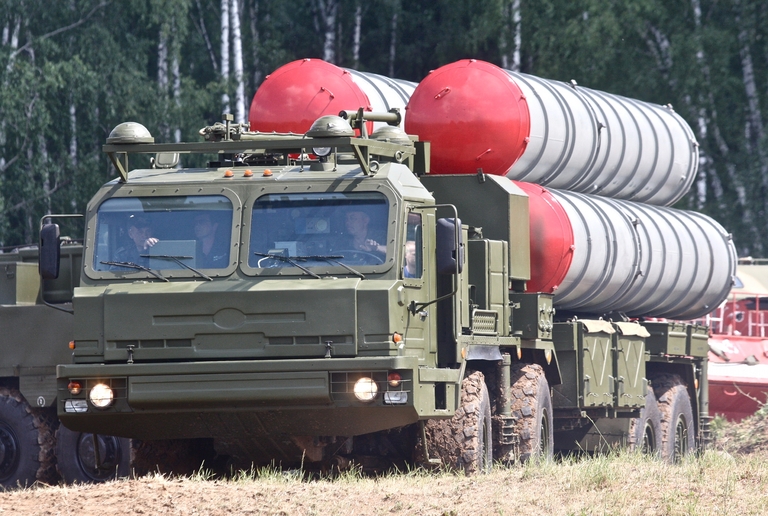 Stowed 5P90S TEL (© 2011 Vitaliy V. Kuzmin). 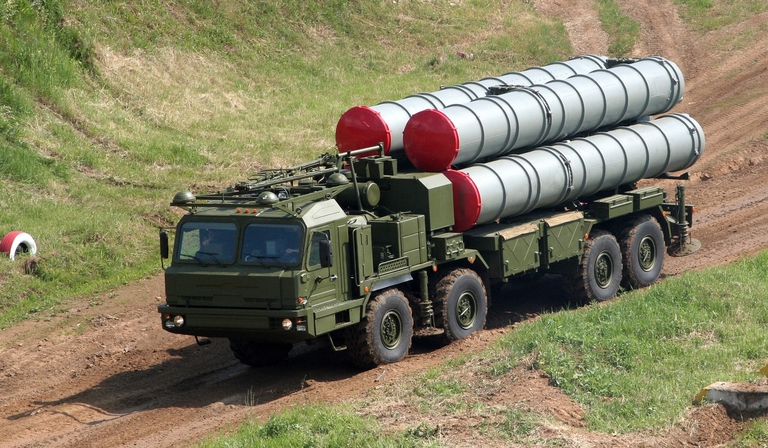 Above, below: Stowed 5P90S during demonstration trials (image © 2011 Michael Jerdev) 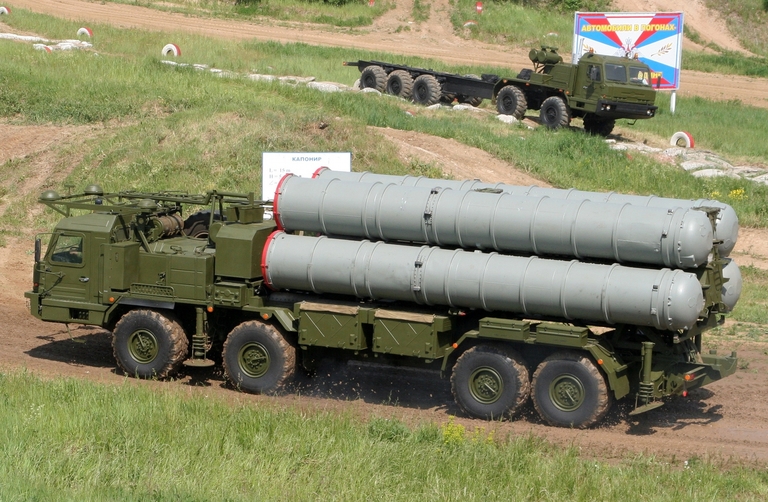 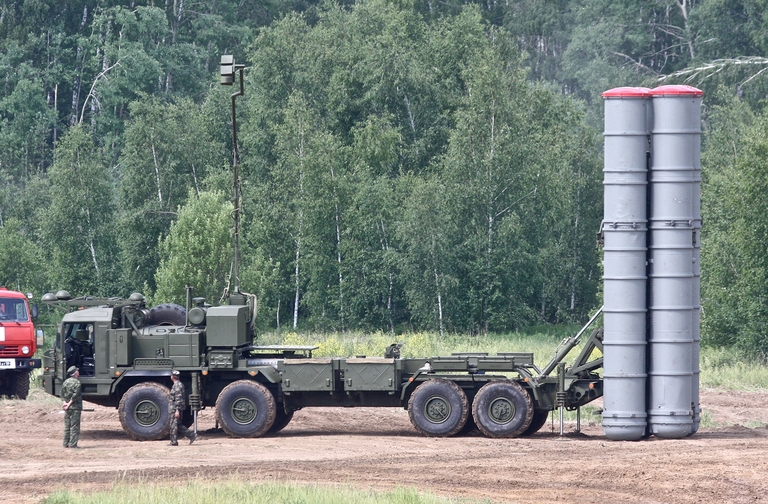 5P90S TEL deploying antenna (© 2011 Vitaliy V. Kuzmin). 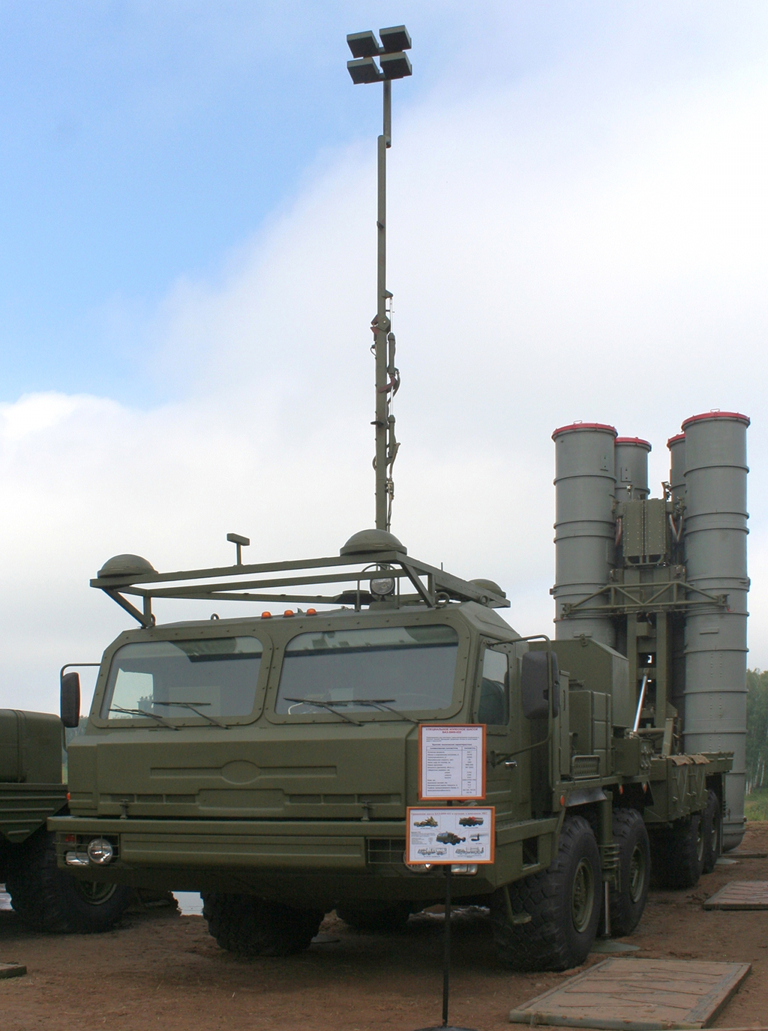 Above, below: Deployed 5P90S TEL (image © 2011 Michael Jerdev) 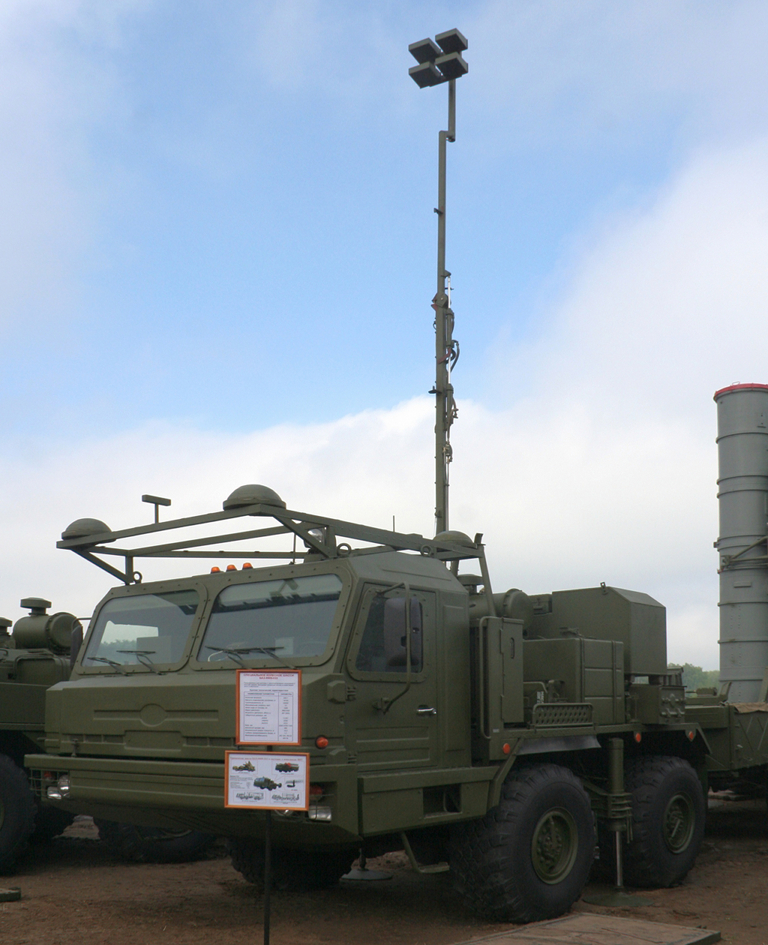 |
|||||||||||||||||||||||||||||||||||||||||||||||||||||||||||||||||||||||||||||||||||||||
Almaz 5P85SM/SE2 Self Propelled Transporter Erector LauncherOnly one set of images has been published to
date of a 5P85SM/SE2 Self Propelled TEL which was only ever a
development
prototype. This testbed S-400 TEL is based on the 5P85SE hosted on the
MAZ-7910 chassis. This variant is unusual in terms of using a large
telescoping mast and a four element directional datalink antenna array,
not currently a feature of the production 5P85TE2 TEL design used in
operational S-400 units, but introduced on the later 9P90S TEL. The
three to fourfold increased elevation of
the segmented mast and higher gain antenna system would permit this TEL
to operate at a much increased distance from the 92N6 Grave Stone
engagement radar, with a minimum of datalink waveform emissions in
directions other to that of the controlling Grave Stone. The antenna
element type is unclear but may be an
endfire variant. The mast
arrangement suggests an external coaxial cable on a spool, not visible
in the imagery. It is not known whether antenna boresight aiming is
manual or under servo control, or whether the antenna boresight is
fixed and the antenna mainlobe aimed by pointing the whole TEL.
|
|||||||||||||||||||||||||||||||||||||||||||||||||||||||||||||||||||||||||||||||||||||||
Almaz 5P90TMU Towed Transporter Erector LauncherNo Images Available. This TEL will use the
same systems and gantry design employed in the 5P90S/SE self-propelled
TEL. It will be towed by a 6 x 6 BAZ-64022 tractor as used with the
5P85TM.
|
|||||||||||||||||||||||||||||||||||||||||||||||||||||||||||||||||||||||||||||||||||||||
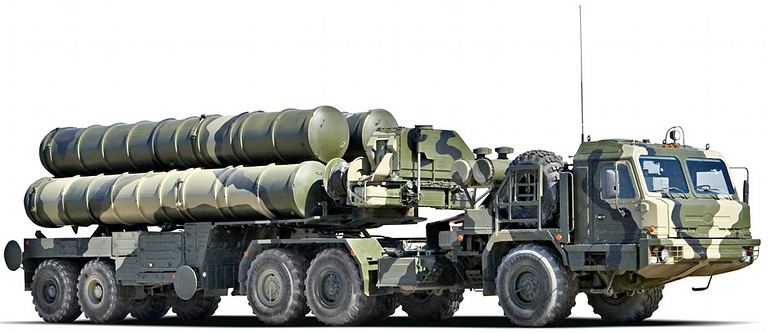
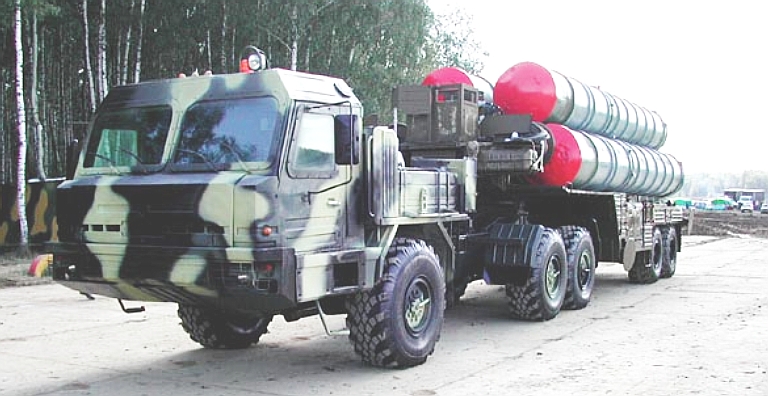
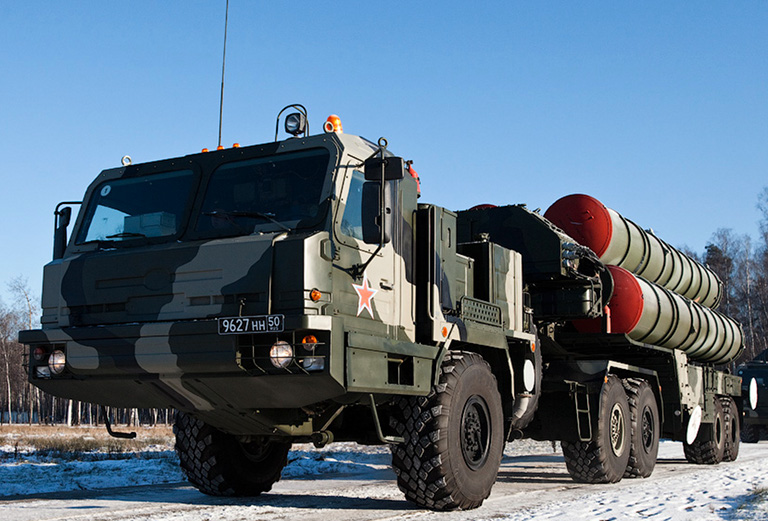
Almaz 5P85TM/TE2 Towed Transporter Erector Launcher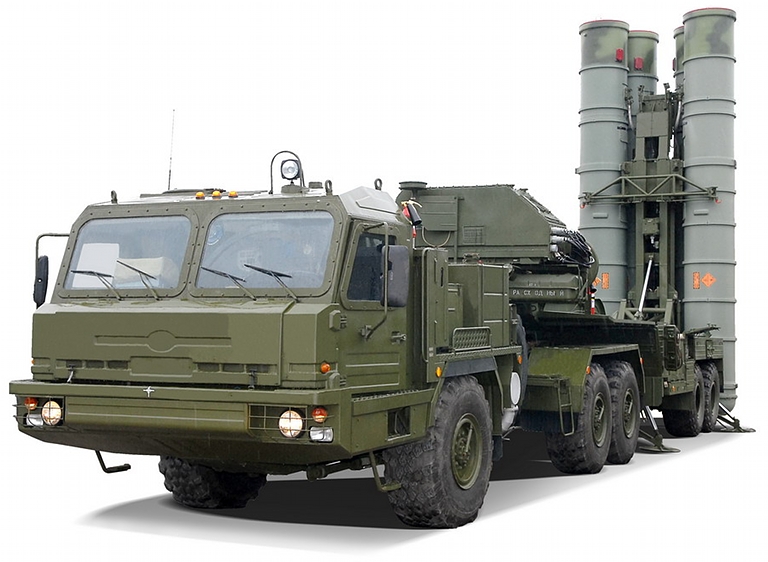 The 5P85TM/TE2 TEL towed by a 6 x
6 BAZ-64022 [1], [2] tractor is a distinctive
feature of the S-400, making it readily
identifiable in comparison with the KrAZ-260 towed 5P85TE variants used
with the SA-20 Gargoyle. Later S-300PMU2 systems exported to China use
the 5P85TE2
TEL and BAZ-64022 tractor (Almaz-Antey/Vestnik PVO).
   |
|||||||||||||||||||||||||||||||||||||||||||||||||||||||||||||||||||||||||||||||||||||||
Almaz 22T6-2/22T6E2 Transloader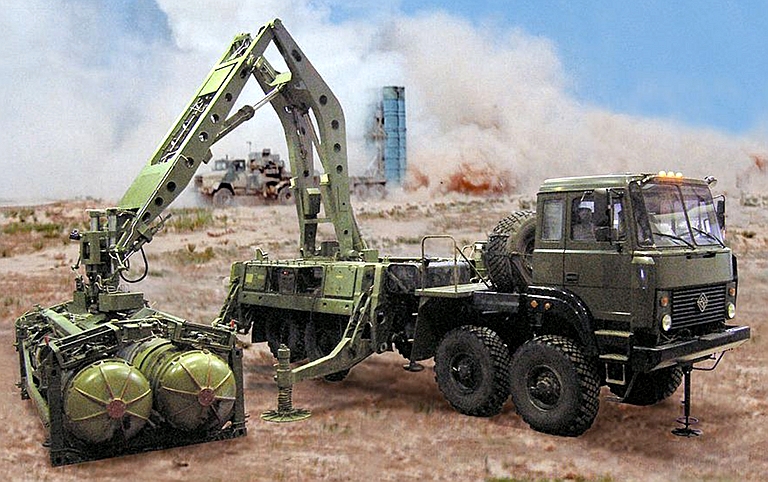 Common
S-300PMU2/S-400
22T6-2/22T6E2
transloader based on the 8 x 8 Ural
532361-1012
chassis (Ural).
|
|||||||||||||||||||||||||||||||||||||||||||||||||||||||||||||||||||||||||||||||||||||||
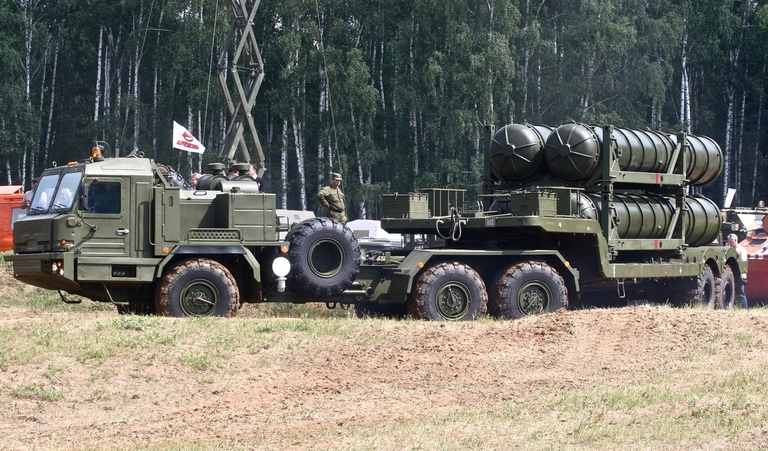 Late model 5T58-2 S-400 transporter towed by BAZ-6402-015 tractor (© 2011 Vitaliy V. Kuzmin). 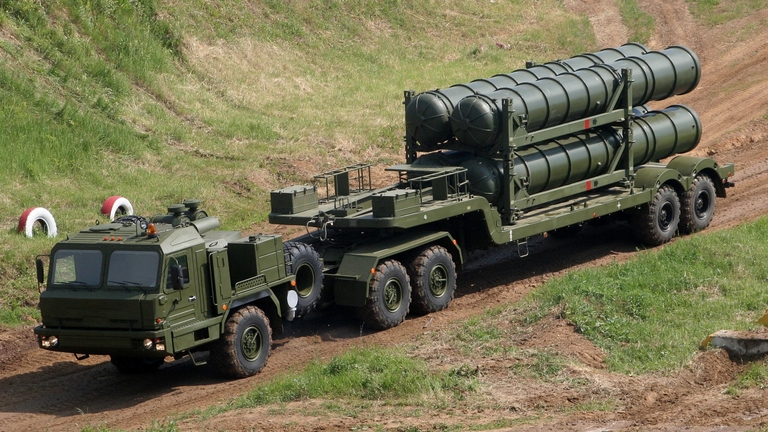 Late
model
5T58-2
S-400
transporter
towed
by BAZ-6402-015 tractor (image © 2011 Michael
Jerdev).
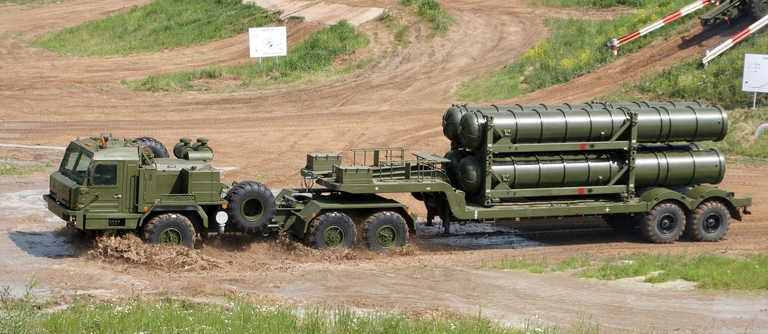 (image © 2011 Michael Jerdev) 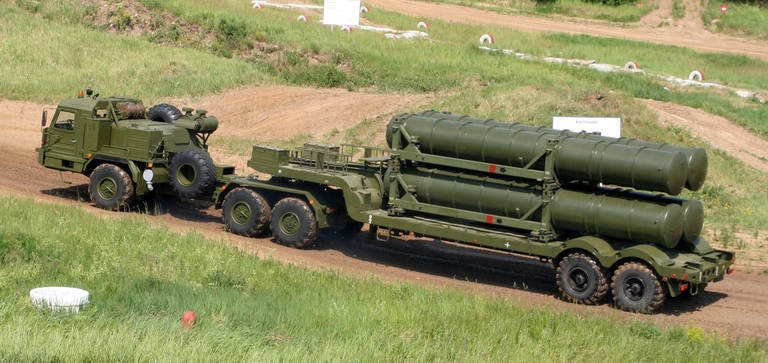 (image © 2011 Michael Jerdev) 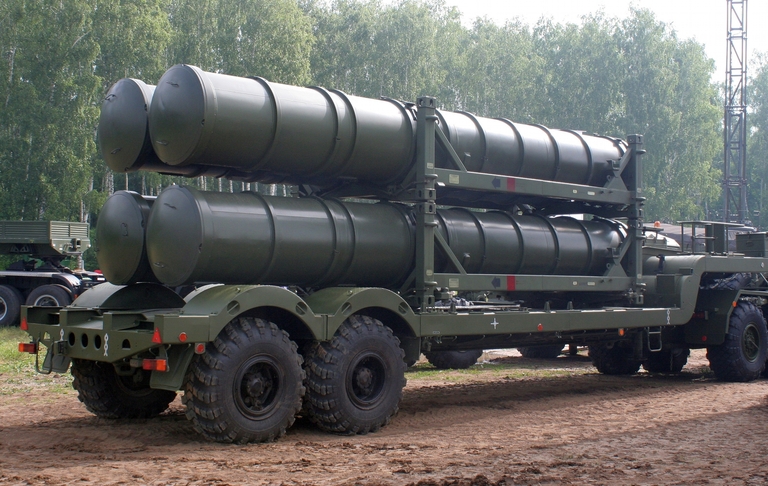 Detail of 5T58-2 (image © 2011 Michael Jerdev) 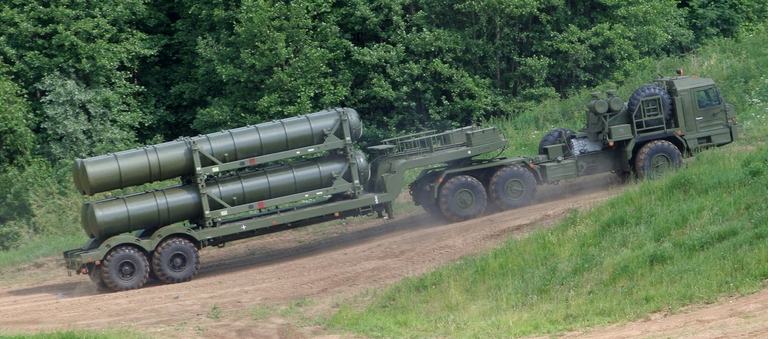 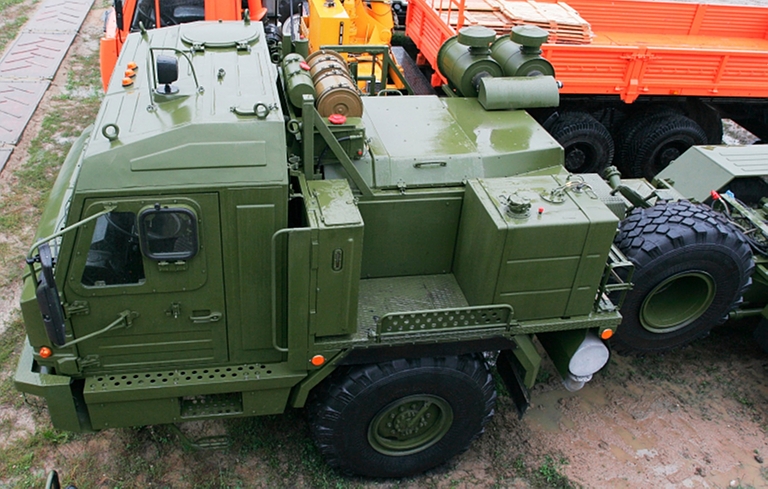 The
5T58-2 missile transporters used with
S-400 systems are towed by the BAZ-6402-015 tractor (image © Miroslav
Gyűrösi).
|
|||||||||||||||||||||||||||||||||||||||||||||||||||||||||||||||||||||||||||||||||||||||
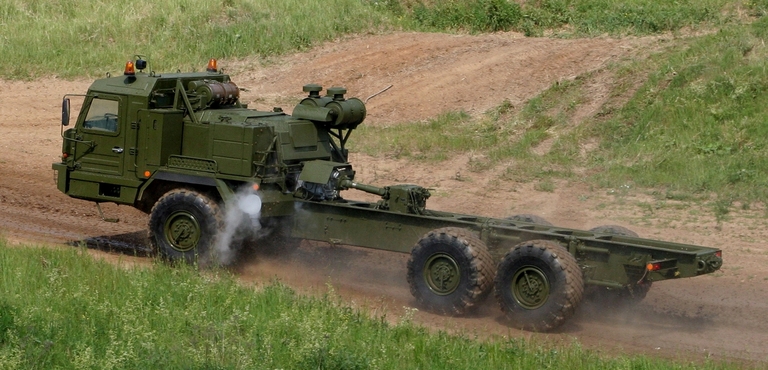
Almaz 55K6E Command Post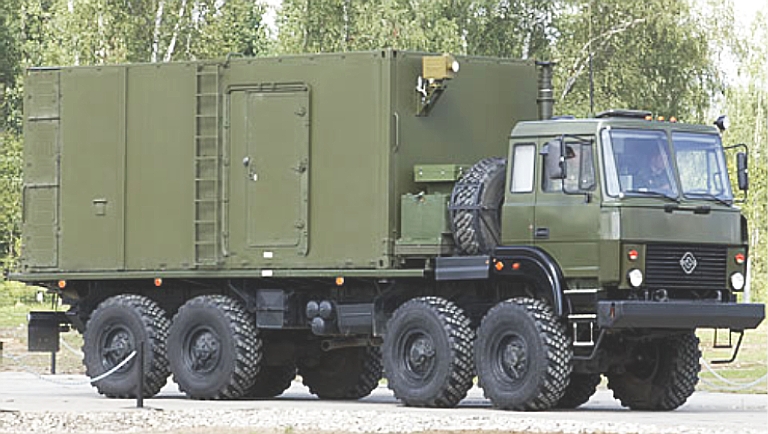 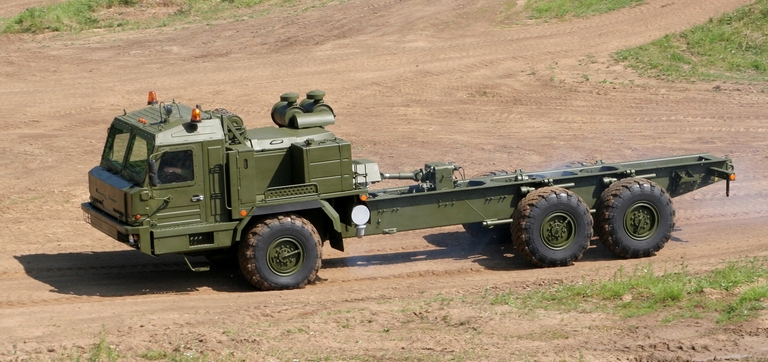 Above,
below:
Late production 55K6E command posts will be hosted on the 6 x 6
BAZ-69092-012 (image © 2011 Michael
Jerdev).
 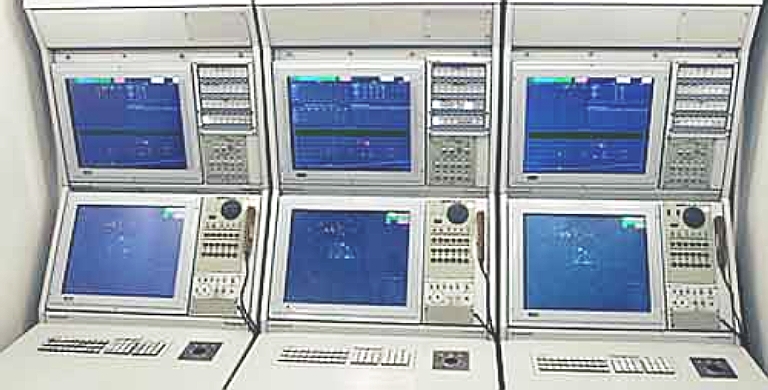 |
|||||||||||||||||||||||||||||||||||||||||||||||||||||||||||||||||||||||||||||||||||||||
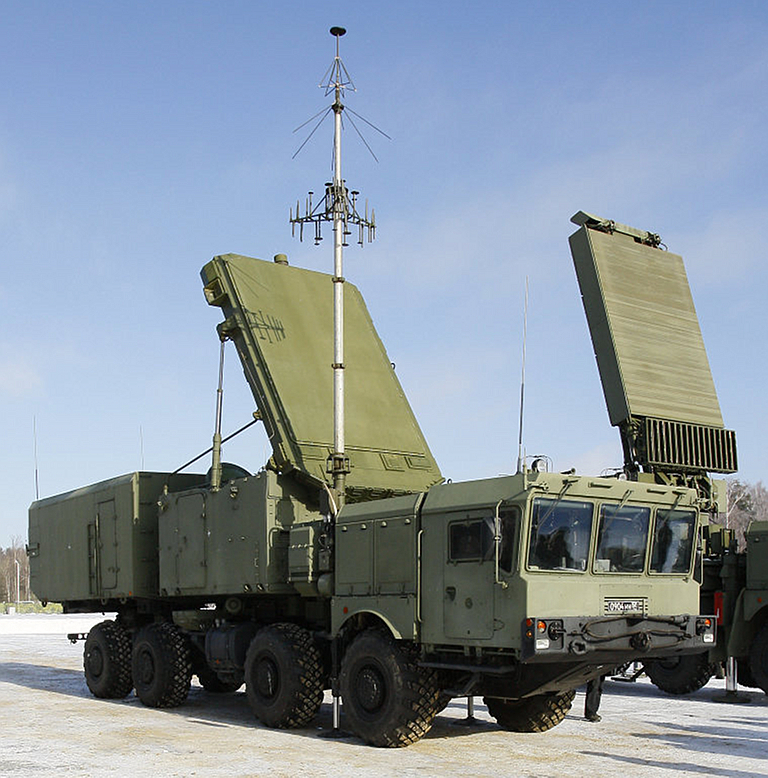 The 92N6E Grave
Stone is an evolution of the 30N6 Tomb Stone / Flap Lid series, and is
carried by an 8 x 8 MZKT-7930 vehicle (© 2010, Yevgeniy Yerokhin,
Missiles.ru).
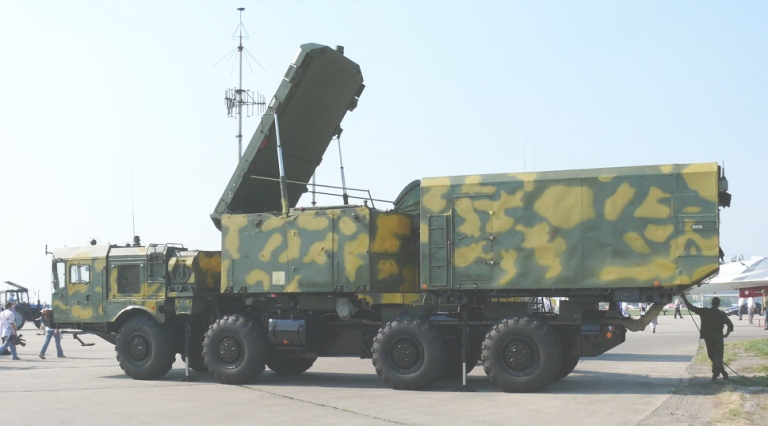 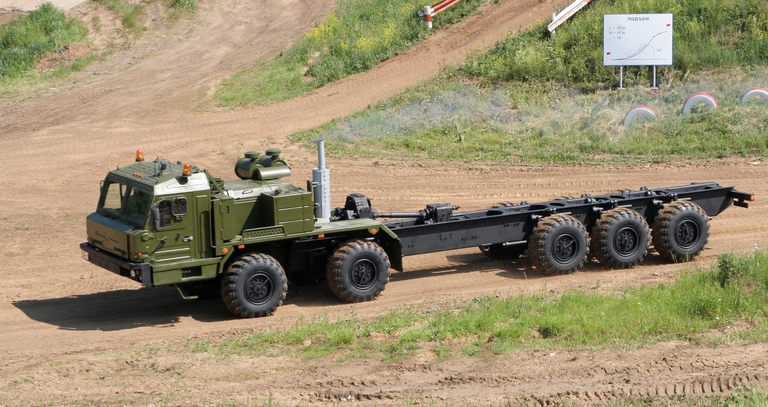 Late production 92N6E Grave Stone systems are to be hosted on a variant of the 10 x 10 BAZ-69096 (image © 2011 Michael Jerdev). |
|||||||||||||||||||||||||||||||||||||||||||||||||||||||||||||||||||||||||||||||||||||||
NIIIP 91N6E Big Bird Acquisition Radar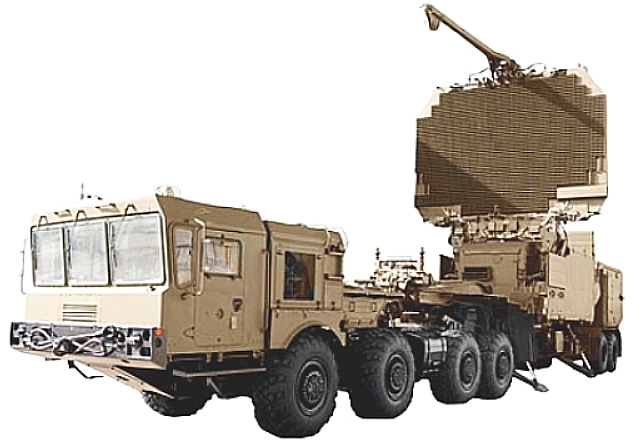 The new 91N6E is a derivative
of the 64N6E Big Bird series. It is readily identified against the
64N6E by the use of the new build MZKT-7930 tractor. It retains the
general configuration of its predecessors. Russian planning is to
replace the MZKT tractor with a new (Almaz-Antey).
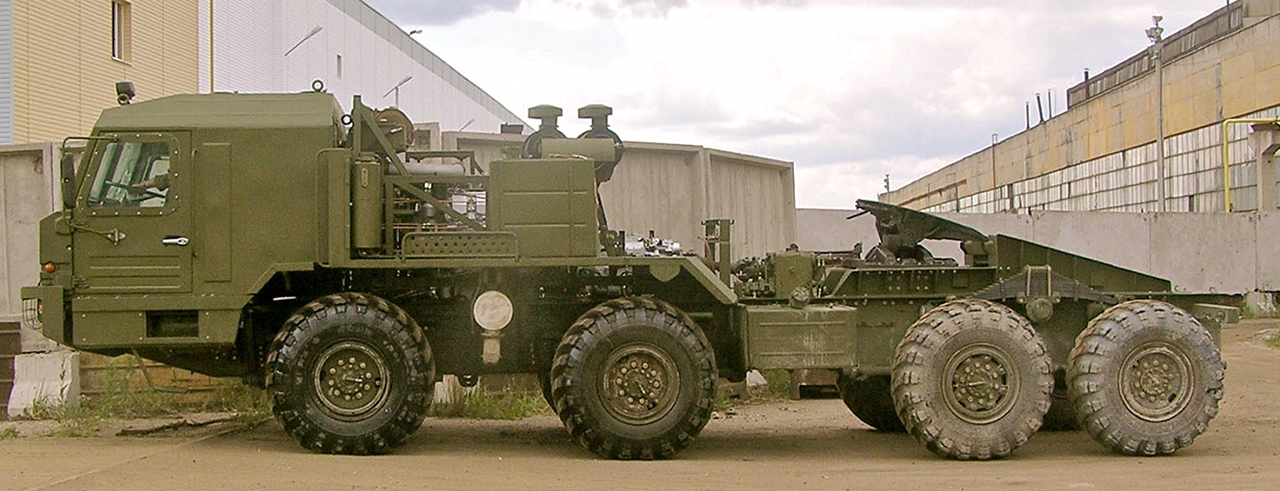 Late
production 91N6E
battle
management
radars are to be towed by the 8 x 8 BAZ-6403.01 tractor (image BZKT).
|
|||||||||||||||||||||||||||||||||||||||||||||||||||||||||||||||||||||||||||||||||||||||
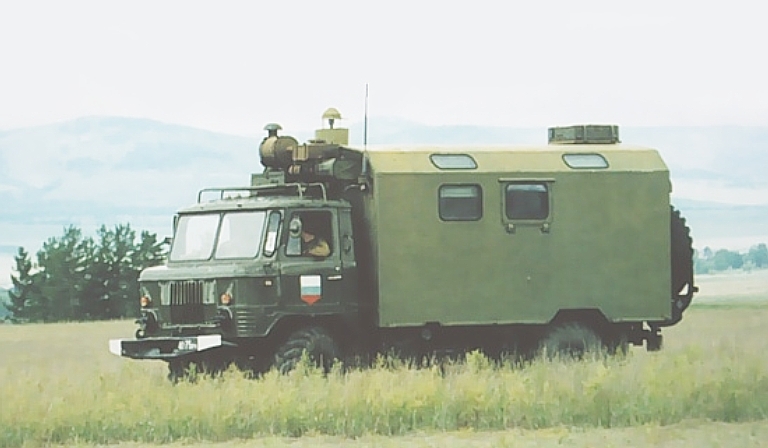
LEMZ 96L6-1/96L6E Acquisition Radar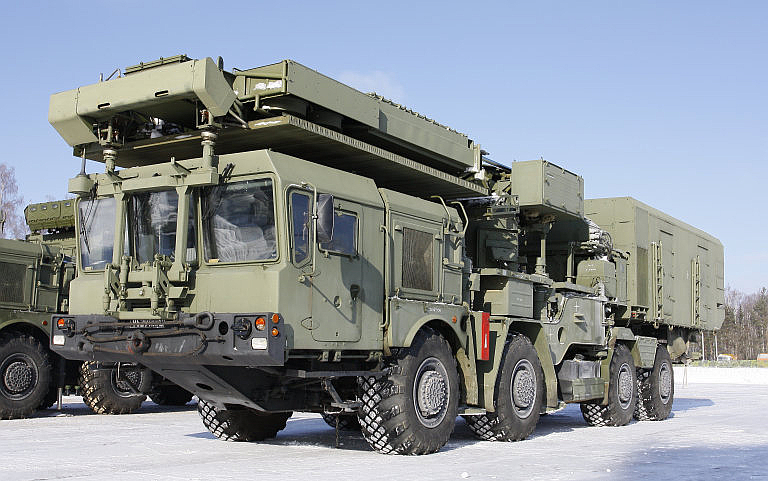 LEMZ 96L6-1 acquisition radar carried by an MZKT-7930 vehicle (© 2010, Yevgeniy Yerokhin, Missiles.ru). 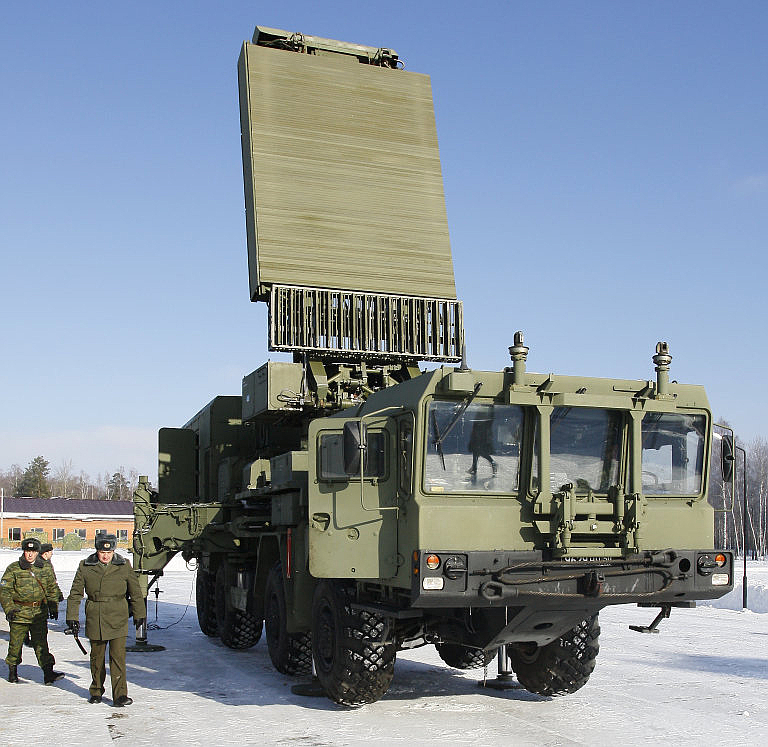 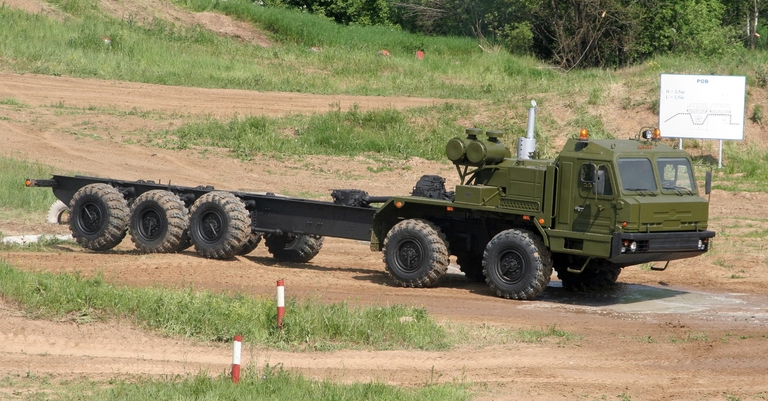 Late
production LEMZ
96L6-1 acquisition radars are to be hosted on a variant of the 10 x 10
BAZ-69096 (image © 2011 Michael
Jerdev).
|
|||||||||||||||||||||||||||||||||||||||||||||||||||||||||||||||||||||||||||||||||||||||
 |
|||||||||||||||||||||||||||||||||||||||||||||||||||||||||||||||||||||||||||||||||||||||
S-400 Operational Deployment
|
|||||||||||||||||||||||||||||||||||||||||||||||||||||||||||||||||||||||||||||||||||||||
As on May, 2010, two operational PVO units were
equipped with the S-400 / SA-21, with a third designated unit being
equipped.
|
|||||||||||||||||||||||||||||||||||||||||||||||||||||||||||||||||||||||||||||||||||||||
PVO Unit 61996 Elektrostal' February, 2010In February, 2010, Missiles.ru editor Yevgeniy
Yerokhin visited the former S-25/SA-1 Guild base at Elektrostal'
outside
Moscow, at the invitation of the Russian MoD. This site is now home to
the 3rd Surface to Air Missile Battalion of PVO Unit 61996,
equipped with early variants of the S-400 SAM system. Portions of the
extensive photo-essay are reproduced with permission.
 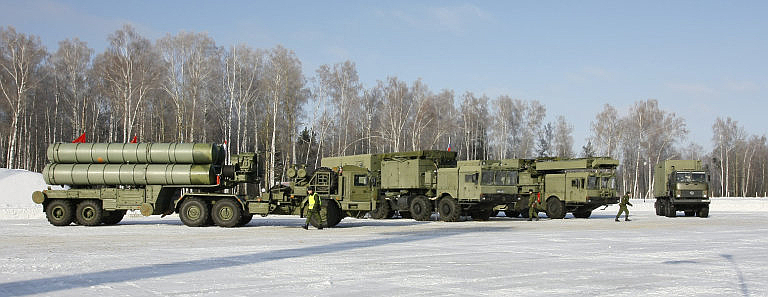 Above,
below:
S-400
battery
components.
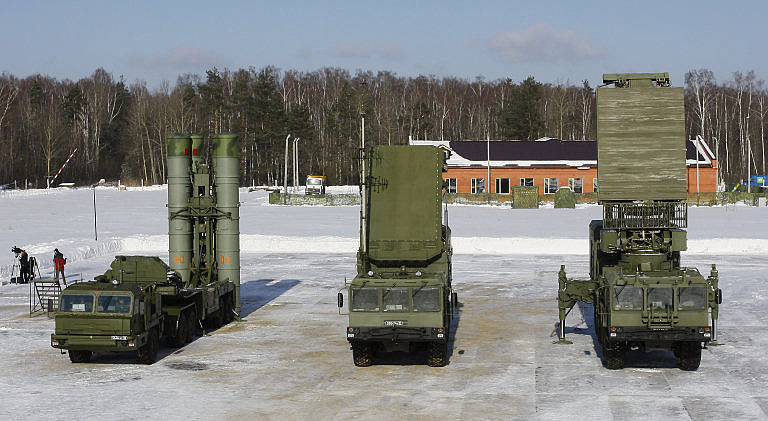 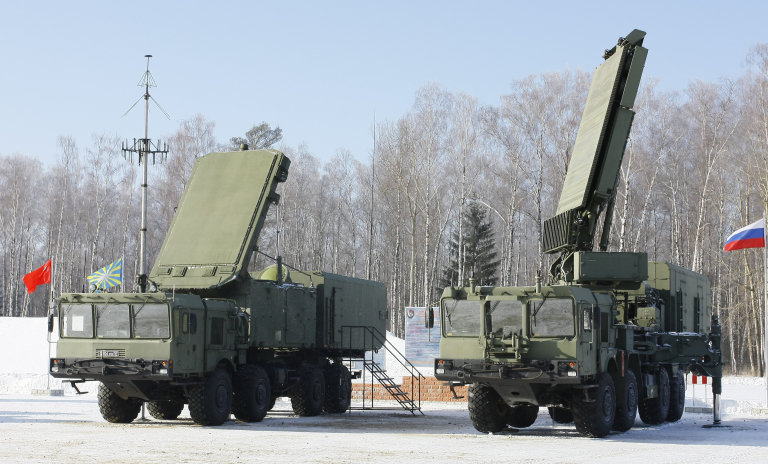 Above,
below:
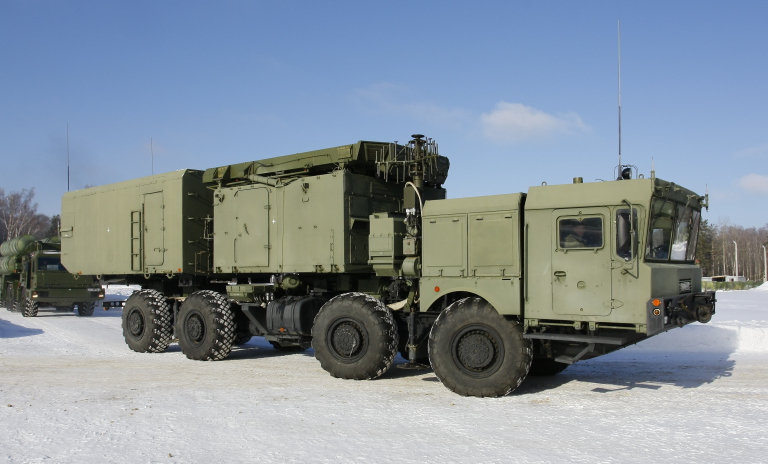
92N6
Grave
Stone and 96L6 radars deployed.
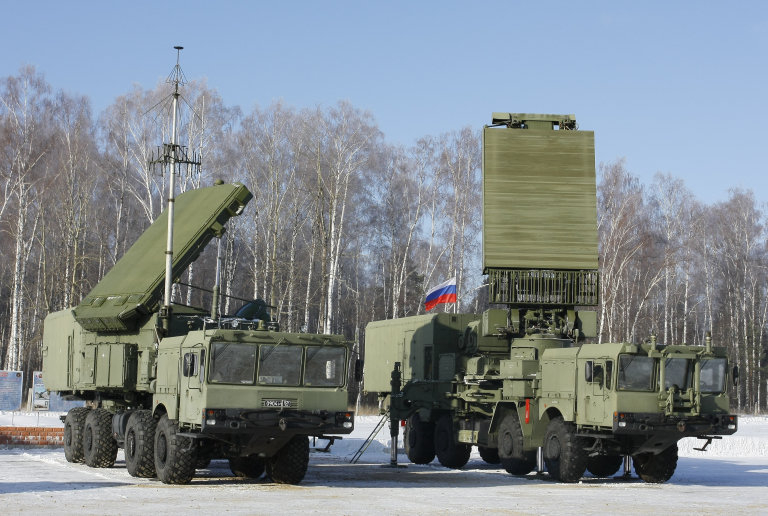 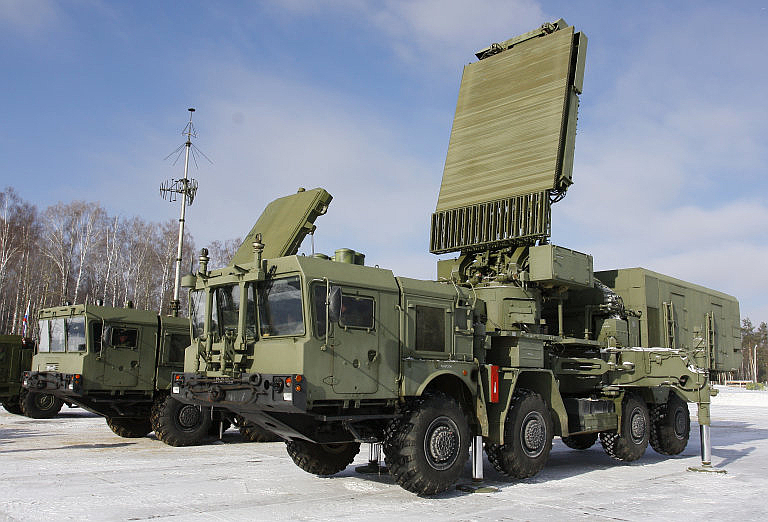 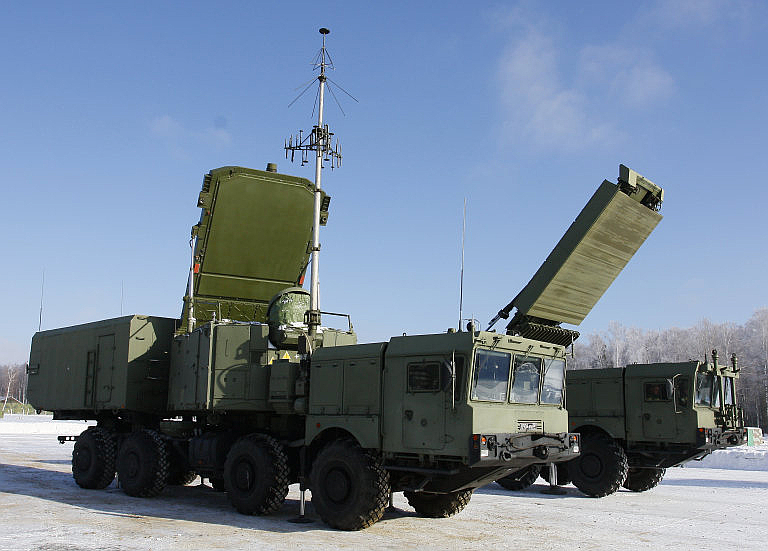 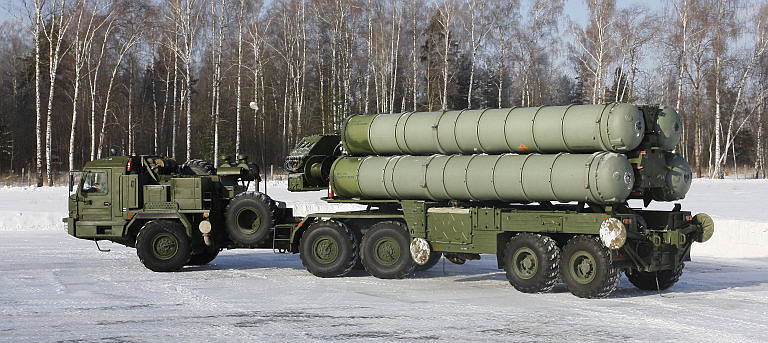 Above: new
5P85TM TEL design common to S-400 and S-300PMU2. Note the
stowed datalink mast and antenna.
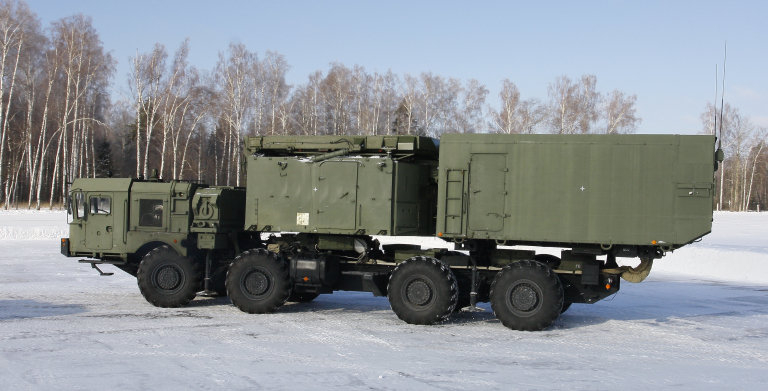
 Above,
below:
stowed
92N6
Grave
Stone.
 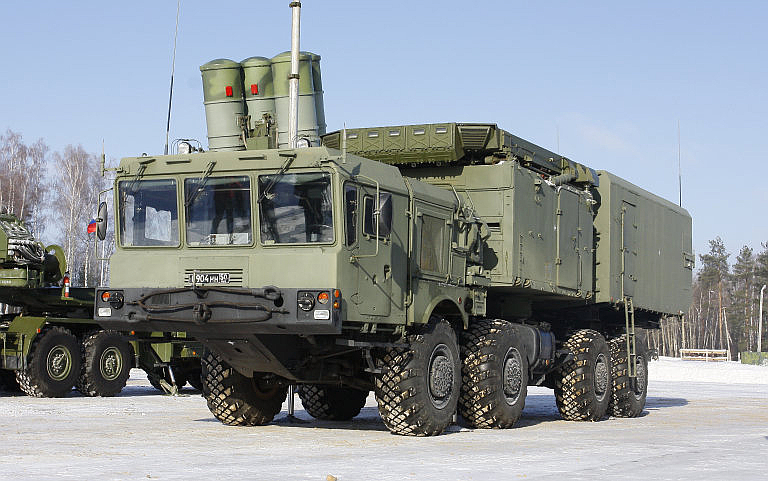 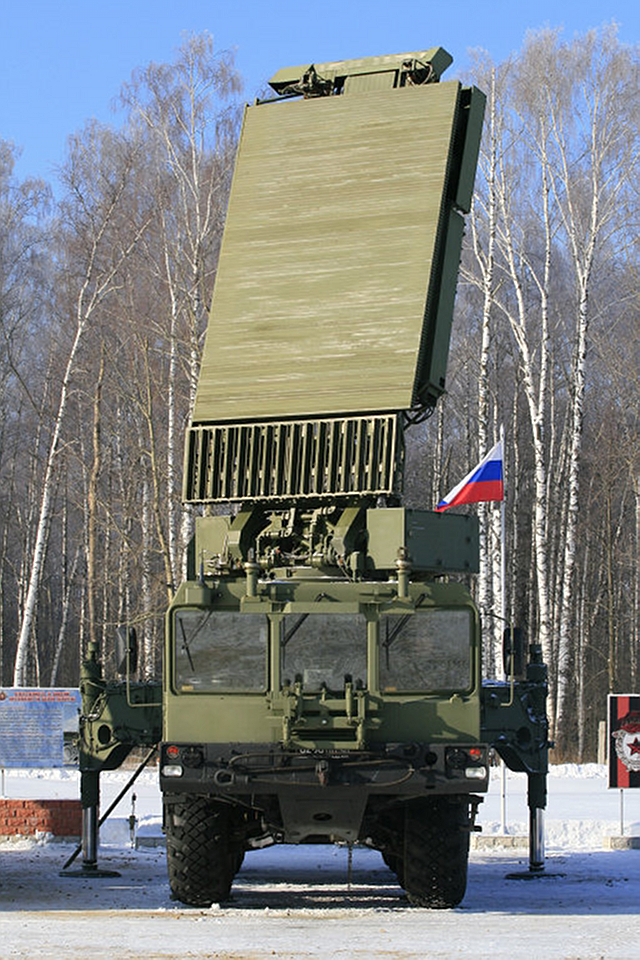 Above, below: 96L6 acquisition radar deployed and stowed. 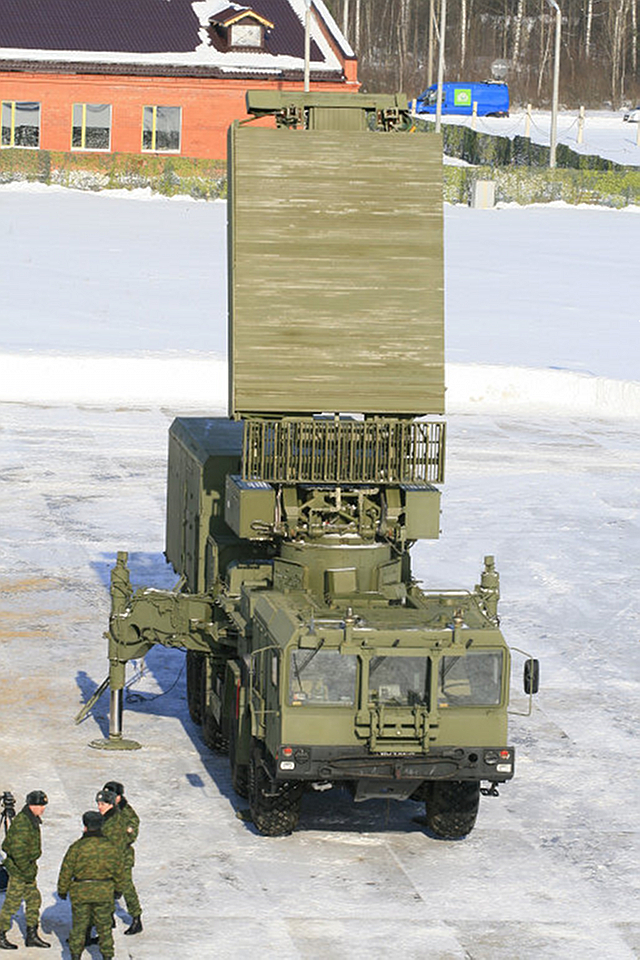 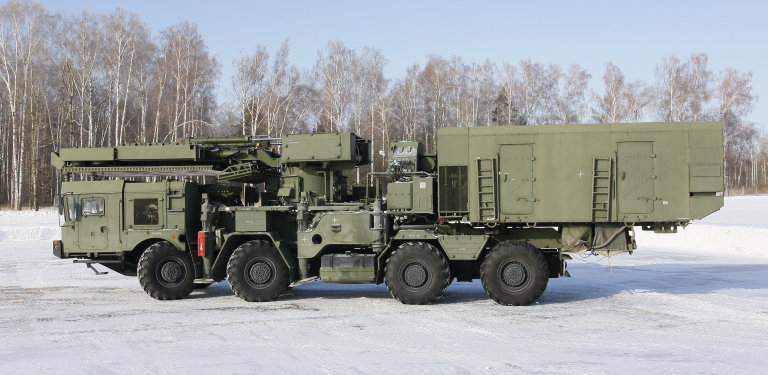 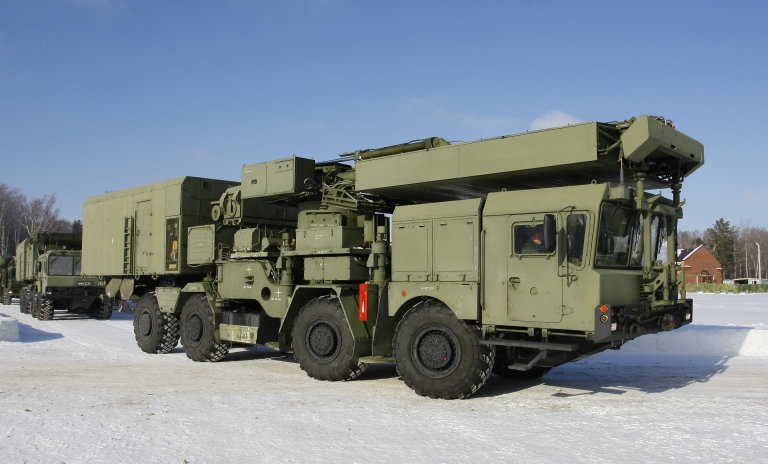 |
|||||||||||||||||||||||||||||||||||||||||||||||||||||||||||||||||||||||||||||||||||||||
PVO Unit 61996 Elektrostal' December, 2010 |
|||||||||||||||||||||||||||||||||||||||||||||||||||||||||||||||||||||||||||||||||||||||
|
In December, 2010, freelance photographer
Leonid Varlamov visited the Elektrostal' base outside
Moscow, and produced a series of high quality detail images of the 92N6
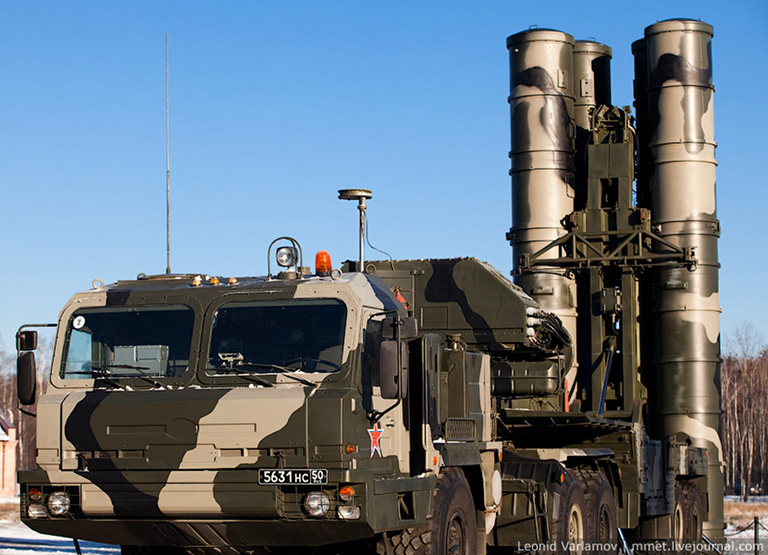
Grave Stone and 5P85TE2 TEL. Portions of the
extensive photo-essay are reproduced in compliance with the terms on
the author's website.
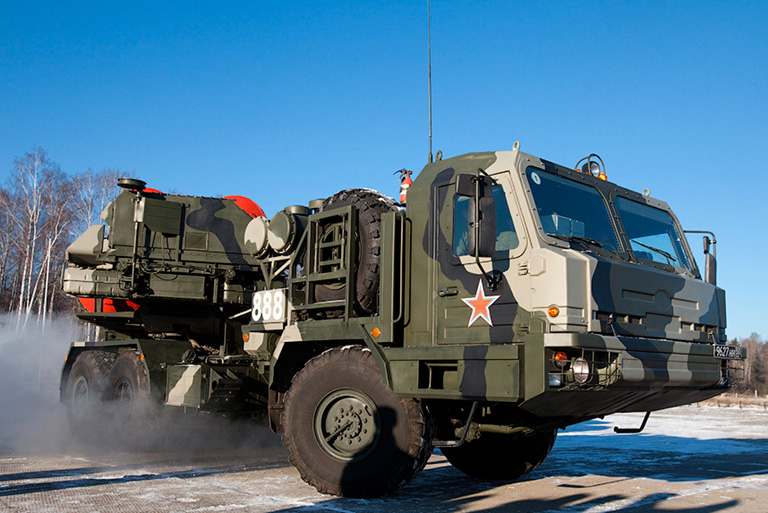
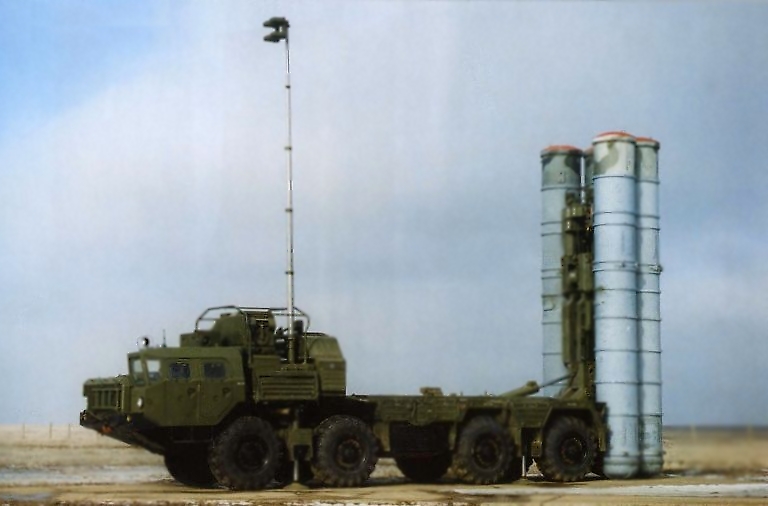
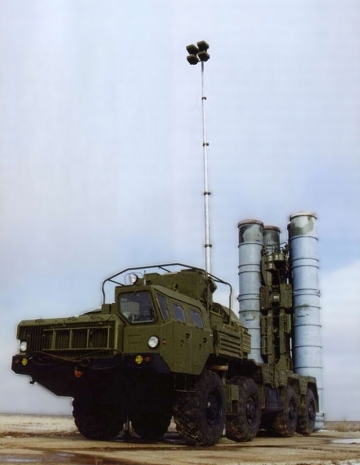
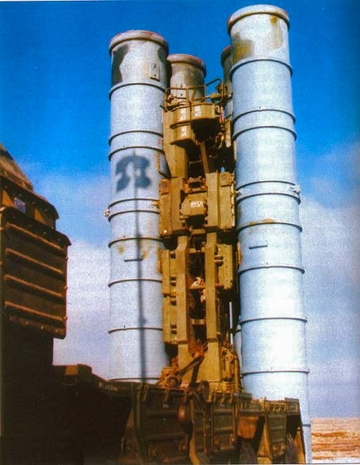
All images © 2010, Leonid Varlamov @ http://mmet.livejournal.com/ 5P85TM/TE2 / BAZ-64022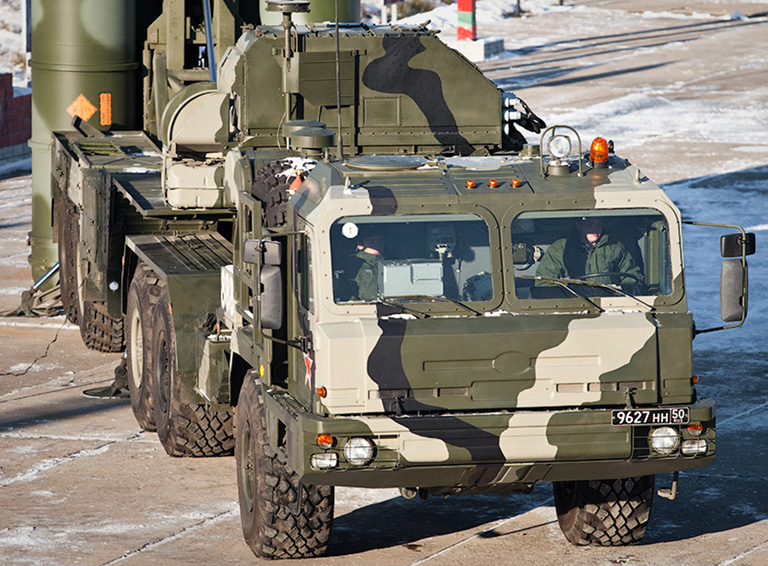 Detail views of BAZ-64022 tractor
in operational disruptive camouflage.
   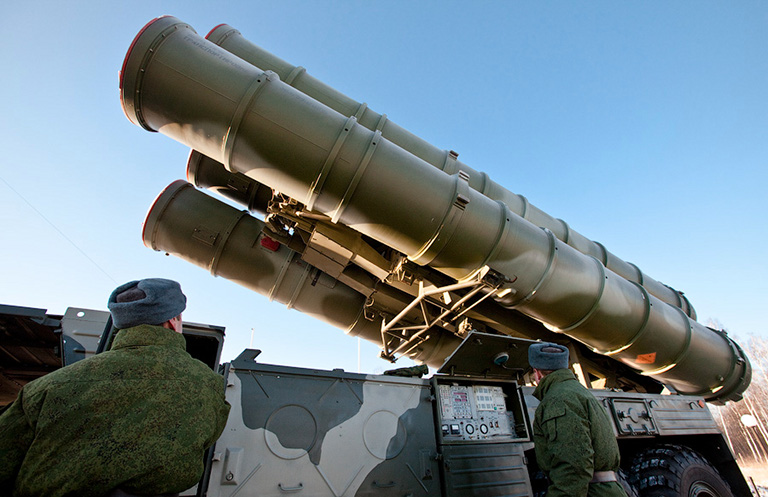 5P85TM/TE2 elevating the launch
gantry. The operator on the right is monitoring the TEL status and
control panel.
 Auxiliary Power Unit control panel
exposed.
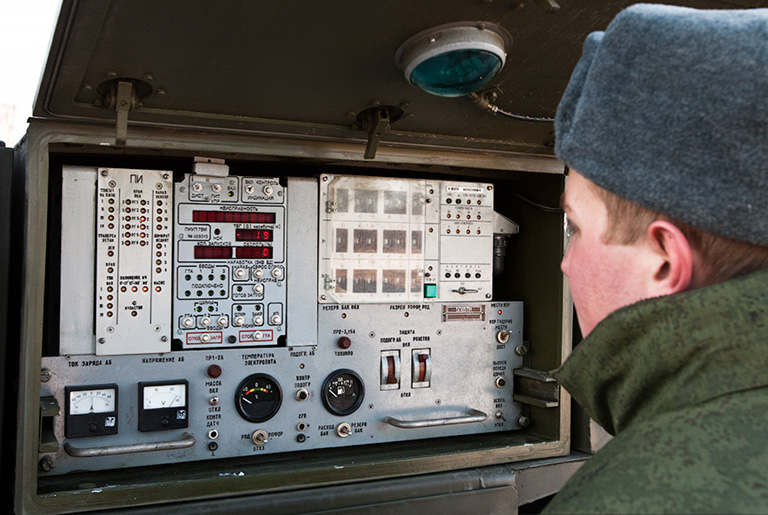 TEL main status and control panel
in detail.
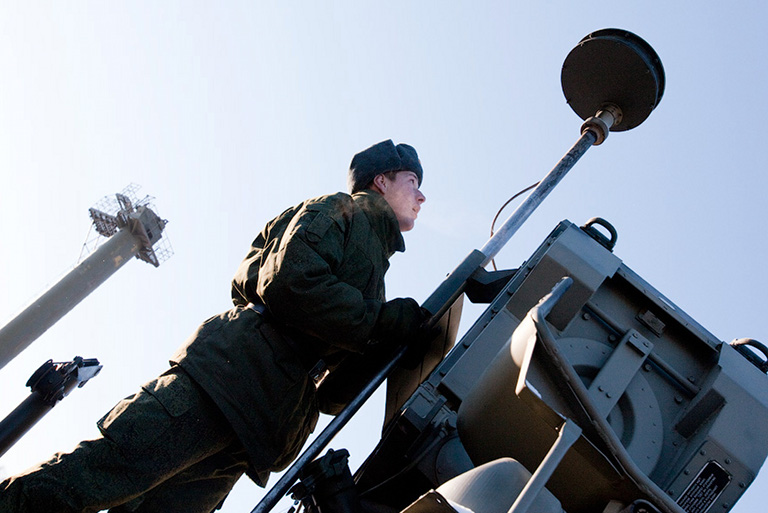 Above,
below: telescoping datalink antenna, common to late variants of
S-300PMU1/2 TELs. The design is clearly built to radiate with a
horizontal toroidal mainlobe.
  TEL status and control panels in
crew cabin.
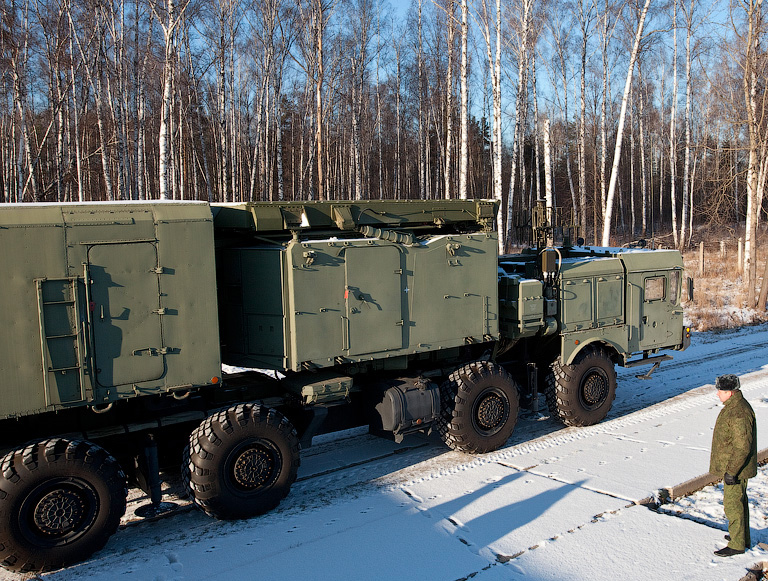
92N6E Grave Stone / MZKT-7930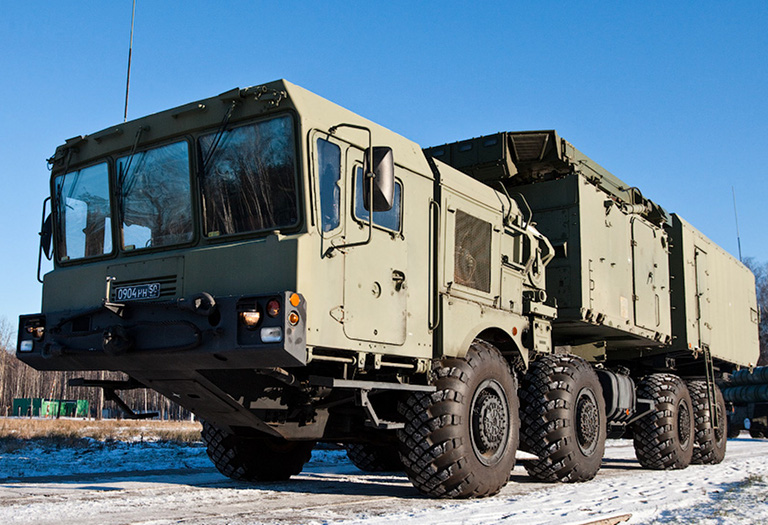 92N6E Grave Stone, stowed.
 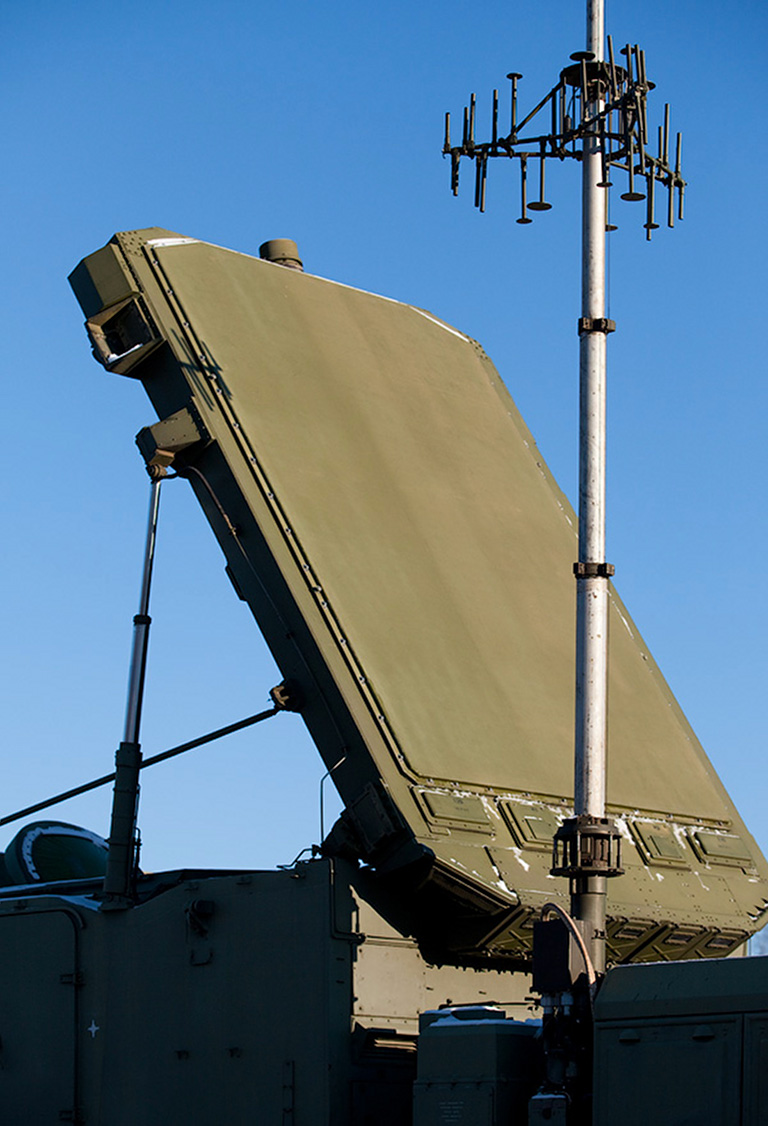 92N6E Grave Stone with space feed
primary antenna deployed, and telescoping datalink mast elevated. Note
the auxiliary apertures used for sidelobe cancelling and interferometry
along the base of the main transmissive array.
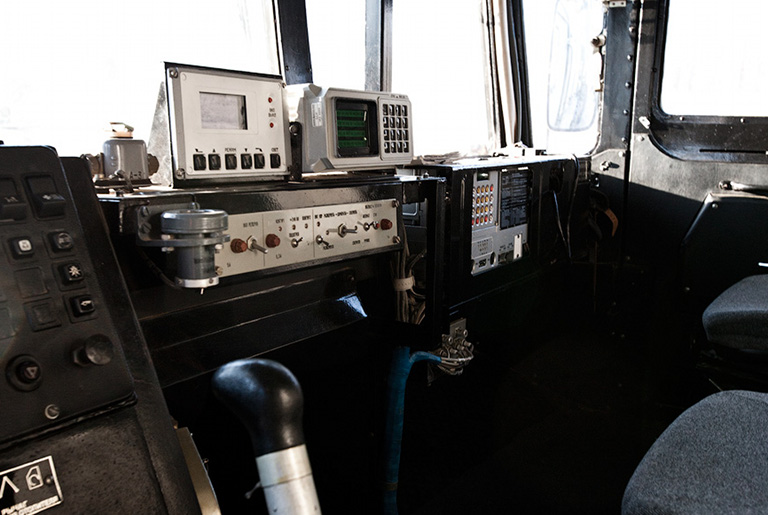 92N6E Grave Stone driver cabin.
 |
|||||||||||||||||||||||||||||||||||||||||||||||||||||||||||||||||||||||||||||||||||||||
Notes/References
|
|||||||||||||||||||||||||||||||||||||||||||||||||||||||||||||||||||||||||||||||||||||||
|
Technical
Report
APA-TR-2009-0503
|
|||||||||||||||||||||||||||||||||||||||||||||||||||||||||||||||||||||||||||||||||||||||
![[1]](PVO-S/5P85TE2-TEL-BAZ-64022-2S.jpg)
![[2]](PVO-S/5P85TE2-TEL-BAZ-64022-3S.jpg)
|
|||||||||||||
|
|
|
|
|
|
|
|
|
|
|
|||
|
|
|
|
|
|
|
|
|
|
|
|||
 |
|
|
|||||||||||
| Artwork, graphic design, layout and text © 2004 - 2014 Carlo Kopp; Text © 2004 - 2014 Peter Goon; All rights reserved. Recommended browsers. Contact webmaster. Site navigation hints. Current hot topics. | |||||||||||||
|
Site Update
Status:
$Revision: 1.753 $
Site History: Notices
and
Updates / NLA Pandora Archive
|
|||||||||||||
|
|
Tweet | Follow @APA_Updates | |||||||||||
|
|
|||||||||||||
|
|
|||||||||||||